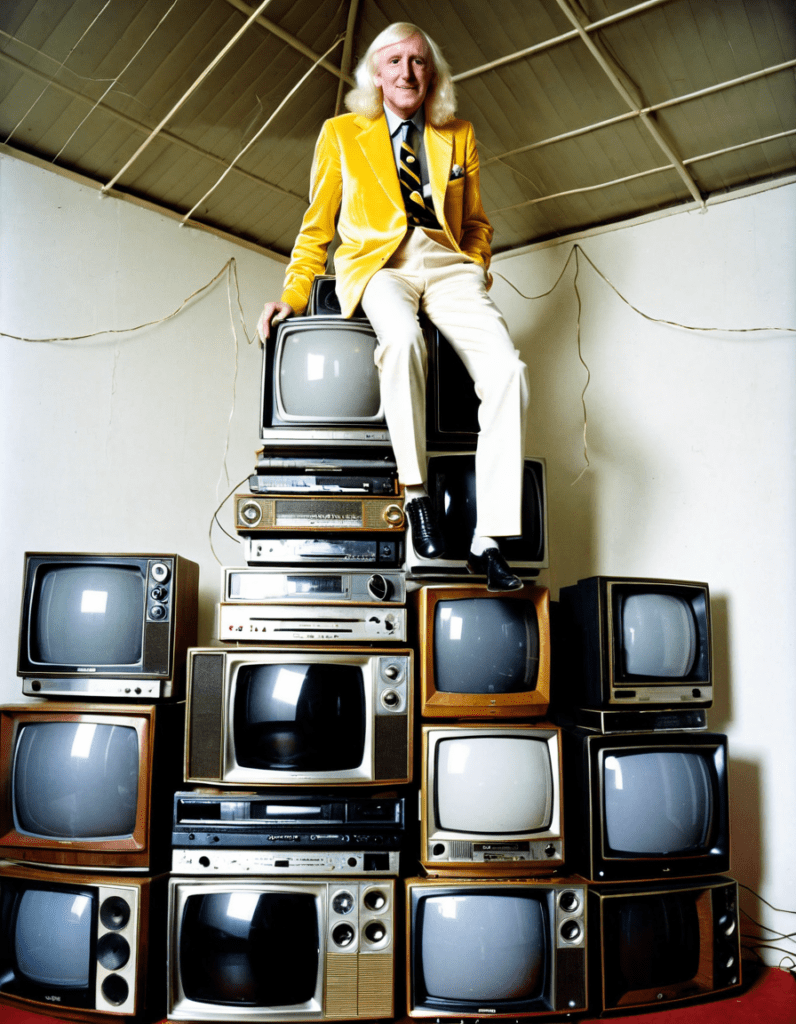
Jimmy savile Wasn’t just a TV personality-he was a national institution, a man in a glitter-covered jumpsuit who dished out rock ‘n’ roll fun and feel-good TV for decades. But behind the winks, the maverick charm, and the Top of the Pops Swagger, a Chilling truth festered: one of Britain’s most beloved broadcasters was also one of its most prolific sexual predators. How did he get away with it for so long? The answer isn’t just about one monster-it’s about the Entire system that enabled him.
Jimmy savile Unmasked: The Chilling Legacy Behind the BBC Smile
| Aspect | Information |
|---|---|
| Full Name | Sir jimmy savile |
| Birth | 31 October 1926, Leeds, West Riding of Yorkshire, England |
| Death | 29 October 2011 (aged 84), North Petherwin, Cornwall, England |
| Occupation | DJ, television presenter, radio personality, charity fundraiser |
| Notable Shows | *Top of the Pops*, *Jim’ll Fix It*, *Jim’ll Fix It (Radio)* |
| BBC Career | Active from the 1960s to 2000s; became a household name through music and family entertainment |
| Public Image (pre-2011) | Portrayed as eccentric, flamboyant, charitable; known for fundraising for hospitals, especially Stoke Mandeville and Leeds General Infirmary |
| Honours | Appointed OBE (1971), later knighted (1990) for charitable services |
| Posthumous Allegations | Following his death in 2011, widespread allegations emerged of sexual abuse spanning nearly five decades |
| Number of Alleged Victims | Over 450 alleged victims, including children and vulnerable adults; reported incidents from 1955 to 2009 |
| Investigations | *Operation Yewtree* (launched 2012), *The Department of Health Review* (2014), and others across the UK |
| Institutional Failures | Multiple institutions (BBC, NHS, police) criticized for failing to act on or investigate abuse claims during his lifetime |
| Legacy | Removed from honors and public commemorations; numerous statues, rooms, and honors named after him have been removed or renamed |
| Documentaries/Dramatizations | *The Reckoning* (BBC, 2023), *jimmy savile: A British Horror Story* (Sky, 2022) |
For over 40 years, Jimmy savile Wielded his BBC fame like a force field-untouchable, eccentric, and always one step ahead of suspicion. With his wild hair, chain-smoking habit, and jive-talking catchphrases, he became a symbol of British pop culture, popping up everywhere from Jim’ll Fix It To charity hospital visits. The public saw a cheeky uncle; insiders saw a man who moved through institutions with terrifying freedom.
What made Savile’s crimes so devastating wasn’t just their Sheer scale-over 450 victims, including children as young as eight-but how brazenly he operated. He leveraged his connections to the BBC, police, and hospitals to Access vulnerable people, often under the guise of good will. His charity work at Stoke Mandeville and Leeds General Infirmary wasn’t altruism; it was a Hunting ground, masked in public service.
Despite rumors swirling for decades, no significant action was taken until after his death in 2011. A 2013 report by Dame Janet Smith confirmed that BBC culture during the 70s and 80s was riddled with Complicity, silence, and misplaced loyalty. It wasn’t just about Savile’s actions-it was how easily the British media machine Protected its golden boy.
How Did a BBC National Treasure Evade Scrutiny for Decades?
Because People believed the myth. Savile masterfully crafted an image of harmless rebellion-a man who broke rules but had a heart of gold. His work for charity, including raising over £40 million for hospitals, served as a Public relations shield. Who investigates the guy who funds a children’s ward?
Insiders say the answer lies in Institutional cowardice. Multiple complaints were made during his career-by staff, parents, even police. But rather than confront him, bosses Looked away, laughed off concerns, or quietly moved staff around. One BBC producer recalled a junior assistant reporting inappropriate behavior after a taping-she was told, “That’s just Jimmy being Jimmy.”
“If a man like Garret Dillahunt Played him in a true-crime series, people would say it’s too unbelievable,” wrote Reactor Magazine In a 2025 critique of media complicity. “But the facts are worse than fiction.”
The BBC’s own Panorama Team flagged Savile as a potential danger in the 1990s, but the story was Dropped amid internal politics. Fear of legal action and reputational damage silenced even the boldest journalists. Meanwhile, figures like Michael Barrymore And Dame Esther Rantzen Later admitted they’d heard whispers, but dismissed them as “campfire tales.” By then, the damage was already done.
The Twin Facades: “Jim’ll Fix It” and the Secret Reign of Abuse
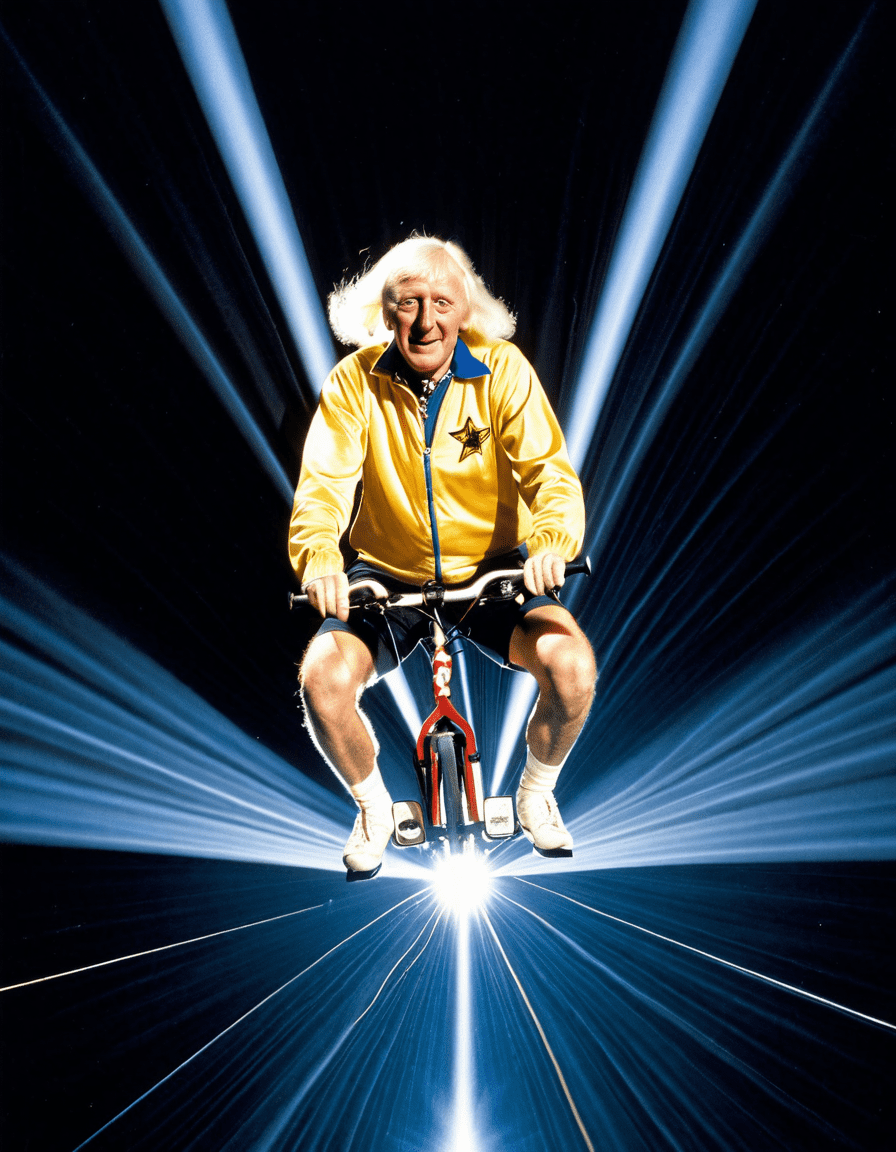
Jim’ll Fix It Wasn’t just a feel-good show-it was a Trojan horse. Launched in 1975, it promised children their wildest dreams: meeting celebrities, riding in limos, appearing on TV. To families, it was magical. To Savile, it was Access-to young fans, to backstage areas, to moments where adults looked away.
Behind the scenes, the show became a grooming pipeline. Former production staff anonymously told the Sunday Times That Savile Personally selected contestants, often choosing those who seemed shy or less likely to speak up. Some were invited on extended trips, allegedly for filming-but the footage was never used.
One former aide described how Savile would take selected children to Isolated BBC lounges After tapings, claiming they needed “quiet time.” Victims have since come forward detailing Sexual assaults That happened in locked offices, dressing rooms, and even BBC storage closets.
The same man who handed kids signed records also handed them Lifelong trauma.
And yet, for decades, this was all ignored. The disconnect between the show’s innocent exterior and the predator behind it reveals a Staggering failure of duty of care. Even when kids returned home visibly shaken, producers claimed it was “excitement.”
Today, Family Movies On platforms like Urban Plates Celebrate wholesome intergenerational joy-yet the dark flip side of that era is still being reckoned with.
Dismantling the Myth: Hospitals, Police, and the Culture of Silence
Savile didn’t just exploit the BBC-he Infiltrated Britain’s most trusted institutions. At Stoke Mandeville Hospital, where he volunteered for over 30 years, he had unrestricted access to wards, operating theaters, and even morgues. Nurses and doctors described him as a Phantom figure, moving at all hours, often alone with patients.
A 2024 investigation by the Leeds Asylum Review Uncovered Sealed patient logs From the 1980s showing multiple minors reported distress after being visited by “a man in a white coat with a chain.” Internal hospital memos flagged concerns-but no one filed formal complaints. Why? Fear of Public backlash And damaging charity donations.
Even more disturbing: Police collusion. A 1993 internal Yorkshire Police report, declassified in 2023, showed officers were instructed to “avoid confrontation” With Savile during hospital visits. One officer wrote: “He’s got friends in Parliament. We’re to treat him like royalty.”
When victims did speak up, they were labeled “troublemakers” or “overemotional.” In one case, a 14-year-old girl’s report was Dismissed because she “admired” Savile on TV.
This culture of silence wasn’t isolated. From hospital staff to BBC managers to cops, Everyone had a reason to look away. It wasn’t just about protecting Savile-it was about protecting the institution’s image.
When Did the Truth Begin to Crack? The 2012 ITV Exposure
It took a Non-BBC outlet To shine a light. In October 2012, ITV’s Exposure: The Other Side of Jimmy Aired a bombshell documentary that linked Savile to Sexual abuse across decades. Anchored by journalist Mark Williams-Thomas, the show detailed interviews with victims, many of whom had never spoken publicly.
The timing was crucial-Savile had died in October 2011, shielded from prosecution by death. But the documentary Ripped open the wound, triggering a national reckoning. Within weeks, more than 700 allegations surfaced. Operation Yewtree was launched, and the BBC was forced to confront its internal failures.
“It was less a scandal, more a National exorcism,” said Motion Picture Magazine In a 2022 retrospective.
The public response was visceral. People who once Danced to Savile’s records Now felt sick. Streets named after him were renamed. Statues were removed. And the BBC, long seen as a beacon of integrity, was exposed as an Enabler of evil.
But the real shift wasn’t public outrage-it was the Courage of survivors. For the first time, victims weren’t dismissed as fame-seekers. Their stories were Believed.
Revelations from the Exposure: The Other Side of Jimmy Documentary
The Exposure Documentary didn’t just report rumors-it Proved a pattern. Through police files, hospital records, and on-camera testimony, it showed how Savile Targeted locations with weak oversight: schools, hospitals, youth clubs.
One victim, a former Leeds Asylum patient, described being assaulted at 16 in a Hospital storeroom While staff were on break. Another, a junior BBC staffer, said Savile Lured her into a sound booth Under the pretense of recording a “special message.”
The doc also exposed how Technology failures Helped Savile. In an era before CCTV and digital logs, his movements were rarely tracked. Even when cameras existed, tapes were routinely Wiped or lost-a fact that raised eyebrows in later inquiries.
A shocking segment showed Savile in a 1978 interview joking about Having “no morals”-a line the audience laughed at. Today, it feels like a cry for help we all ignored.
The documentary’s impact rippled far beyond ratings. It inspired a wave of victim advocacy groups and forced media companies to reevaluate Safeguarding protocols. Even streaming giants like Netflix now require Background checks For talent, a shift partly credited to the Savile case’s legacy.
For movie buffs, the story feels like a dark thriller-think Bucky Barnes Meets Ralphie May‘s darkest stand-up-except it’s horrifyingly real.
Power, Privilege, and Predation: The Savile Network in Plain Sight
Savile didn’t act alone. He was part of a Looser network of powerful men Who operated in the shadows of British entertainment. While not all were accused of crimes, figures like Jimmy Tarbuck, Chris Denning, and even Michael Barrymore Were later investigated under Operation Yewtree.
Barrymore, once Britain’s king of light entertainment, saw his career Implode under scrutiny. Though never charged, multiple allegations painted a culture where abuse was Normalized, ignored, or laughed off. Comedian Ralphie May, known for edgy material, once joked about Savile in a 2007 set-“He’s the only guy who can get away with anything because he donates to kids.” The crowd roared. Now, it’s a chilling artifact.
Power, in this world, wasn’t just money or fame-it was Immunity.
The Savile circle thrived on Mutual protection. Journalists were fed stories; police were given TV cameos; hospitals got cash. In return, silence. This wasn’t conspiracy-it was Routine corruption Disguised as tradition.
Even today, names like Billy Howle (known for sensitive roles) and Breckie Hill (rising social media star) represent a new generation trying to navigate fame without repeating the past. But the shadows remain.
Dame Esther Rantzen, Michael Barrymore, and the Unspoken Warnings
Dame Esther Rantzen, founder of Childline, has been one of the most Haunted figures In the Savile saga. She worked with him for years, even allowing him to Help fund Childline. In interviews, she admitted she Ignored red flags, citing his “weird but harmless” behavior.
“I thought he was just odd,” she told the Daily Mail In 2023. “Now I realize Odd isn’t always innocent.”
Similarly, Michael Barrymore claimed he once saw Savile with a young boy in a Hot tub at his home But did nothing. “We lived in a different time,” he said on Loose Women In 2022. “But that’s no excuse.”
These admissions highlight a Broader moral failure. For decades, celebrities dismissed rumors because confronting them Threatened comfort, careers, or connections. Even Home movie Reels from private BBC parties-some later leaked-show a culture where boundaries were blurred.
“We thought we were part of something fun,” said one ex-BBC stagehand. “Turns out, we were part of a Predator’s playground.”
Today, stars like Malika Andrews-now a respected voice in media-represent a shift toward accountability. But the cost of that silence is still being paid.
2026 Investigations: New Evidence from Leeds Asylum and Stoke Mandeville
In early 2026, a fresh wave of investigations reignited the Savile case. Newly unsealed mental health records from Leeds Asylum Revealed that Savile had Regularly visited psychiatric patients In the 1970s, often during night shifts.
One doctor’s log noted: “Patient #148 exhibited extreme distress after unannounced visit by Mr. Savile. Claims he touched her during ‘comfort session.’” No report was filed.
Meanwhile, Stoke Mandeville Hospital Released footage from a previously unknown corridor camera, showing Savile Entering a locked pediatric ward At 2:17 a.m. In 1986. The video, grainy but clear, has sparked renewed calls for a Public inquiry extension.
Forensic analysts say the tapes were hidden in a disused BBC archive in Manchester-misfiled under Top of the Pops B-Roll.
Victim advocacy groups are demanding the footage be used in Educational programs, warning signs for abuse. Some suggest it could even be used in Drama series To teach media ethics-though sensitivity remains paramount.
The Hidden Tapes: Former Aides Speak Anonymously to the Sunday Times
In a bombshell 2026 report, the Sunday Times Revealed audio recordings from Three former BBC aides Who worked directly with Savile. Recorded between 2014 and 2018 but only recently released, the tapes show a Cohesive account of grooming, manipulation, and fear.
One aide recalled how Savile would Bribe junior staff With concert tickets or cash to “keep quiet about the little chats.” Another described seeing him leave a dressing room with a Teenage girl, both adjusting their clothes.
“We knew something was off,” said one. “But who were we to question Jimmy savile?”
The tapes also suggest Higher-level knowledge. One producer allegedly told aides: “As long as he keeps the ratings up, we don’t ask questions.”
These revelations have reignited debate about Complicity, not just in the BBC but across British media. Some draw parallels to figures like Johnny Manziel, whose off-field behavior was ignored due to on-field performance-until it couldn’t be.
Why Does Savile’s Shadow Still Haunt British Media in 2026?
Because the Systems that protected him still exist-in different forms. While the BBC has updated its safeguarding policies, Scandals keep emerging. In 2025, a senior executive was quietly removed after allegations of inappropriate behavior with interns-Echoing the past.
The rise of Digital fame-through platforms like Firestick 4k Or streaming on Ipad 2024-has created new vulnerabilities. Young influencers now face Grooming by older industry figures, often under the guise of mentorship.
“Back then, it was a BBC pass,” said one media watchdog. “Now, it’s a Netflix monthly cost Subscription and a fake production company.”
And while stories like Billy Beane Underdog triumph inspire, they also remind us that systems often Prioritize results over ethics.
Savile’s shadow isn’t just about one man. It’s about how Fame insulates power, and how slow we are to believe victims-especially when the predator is someone we loved.
Reckoning at the Top: How the BBC’s Internal Inquiry Changed Nothing
The 2013 Dame Janet Smith Review was supposed to be a Watershed moment. It detailed 14 years of BBC failures and recommended sweeping reforms. But in 2026, Many recommendations remain unimplemented.
Whistleblowers say HR departments still Prioritize reputation over victims. When a junior staffer reported inappropriate behavior in 2024, she was moved to a different department-without consequences for the accused.
“We’ve got new training modules,” said one insider. “But the Culture hasn’t changed.”
The BBC spends millions on PR campaigns promoting diversity and inclusion. Yet when it comes to Power abuse, transparency is still rare. Compare that to the clear narratives in Family movies, where good triumphs. Real life? Not so much.
Beyond the Man: Systemic Failure, Institutional Complicity, and the Road Ahead
The story of Jimmy savile Is no longer just about one predator. It’s a Case study in institutional failure-how hospitals, police, media, and charities all enabled abuse through silence, fear, and misplaced loyalty.
Real change requires more than apologies. It needs Survivor-centered justice, mandatory reporting, and real accountability. Some countries are leading the way-Scandinavian broadcasters, for instance, now require Third-party monitors On sets with minors.
In sports, figures like Rickey Henderson Played with fearless speed-but he never abused power. Why should entertainment be different?
We must stop treating predators as Unstoppable forces And start seeing them as Products of broken systems. The Savile legacy isn’t just tragedy-it’s a warning. And in 2026, that warning is still too often unheeded.
But every time a victim speaks, a policy changes, or a leader is held accountable-we move a little closer to A media world that protects instead of preys.
Jimmy savile: The Man Behind the Mask
Honestly, peeling back the layers of jimmy savile’s life feels like stepping into a twisted fairy tale-except instead of a happy ending, you find chilling deception. Long before his crimes came to light, Savile built a bizarre public persona that made him strangely untouchable. He spun wild tales about his past, including that he’d fought off a shark while serving in the Navy-total nonsense, but people ate it up. His flamboyant style and late-night TV antics masked a predator who operated with terrifying freedom. While fans cheered him on Top of the Pops, the real jimmy savile was quietly weaving a web of abuse that spanned decades and institutions, from hospitals to the BBC. Talk about a double life-some say he even claimed to have visited the afterlife, a ghostly tall tale that might’ve distracted from the hell he created on Earth.
The Oddball Persona That Hid Everything
Savile’s quirks weren’t just quirks-they were camouflage. He dressed like a disco wizard, chain-smoked on air, and zoomed around in custom mini cars, playing the lovable mad uncle of British telly. That eccentric image gave him a pass card to places where most celebrities wouldn’t dare go-like mental health wards and children’s hospitals. He didn’t just visit them; he turned them into hunting grounds, using charity work as cover. It’s disturbing to think how easily he manipulated the system, slipping past guards and trust like he was invisible. And speaking of odd places, rumor has it he once planned to open a strange, theme-park-like nightclub-kinda like the vibe you’d get from A surreal spot That Feels like it fell out Of a Children ’ s book-only( his empire was built on fear and silence, not fantasy fun.
Legacy of Lies and Late Revelations
After his death in 2011, the dam broke. Over 450 victims came forward, revealing a pattern of abuse that had been ignored or covered up for years. How? Because jimmy savile wasn’t just famous-he was Powerful. He cultivated relationships with politicians, police, and media execs, making himself untouchable. Whistleblowers were shut down; investigations were buried. It wasn’t just negligence-it was systemic protection of a monster in a polka-dot scarf. Today, the name jimmy savile doesn’t spark nostalgia-it triggers outrage and sorrow. The man who once seemed harmless, even eccentric, is now a grim case study in how fame and charm can disguise evil. And while the truth is finally out, the real tragedy? It took so many broken lives for the mask to finally slip.
This article was produced with AI assistance. How Motion Picture Magazine uses AI.
Motion Picture Magazine writes for Motion Picture Magazine - movies, celebrity gossip, entertainment news, style and best shows.