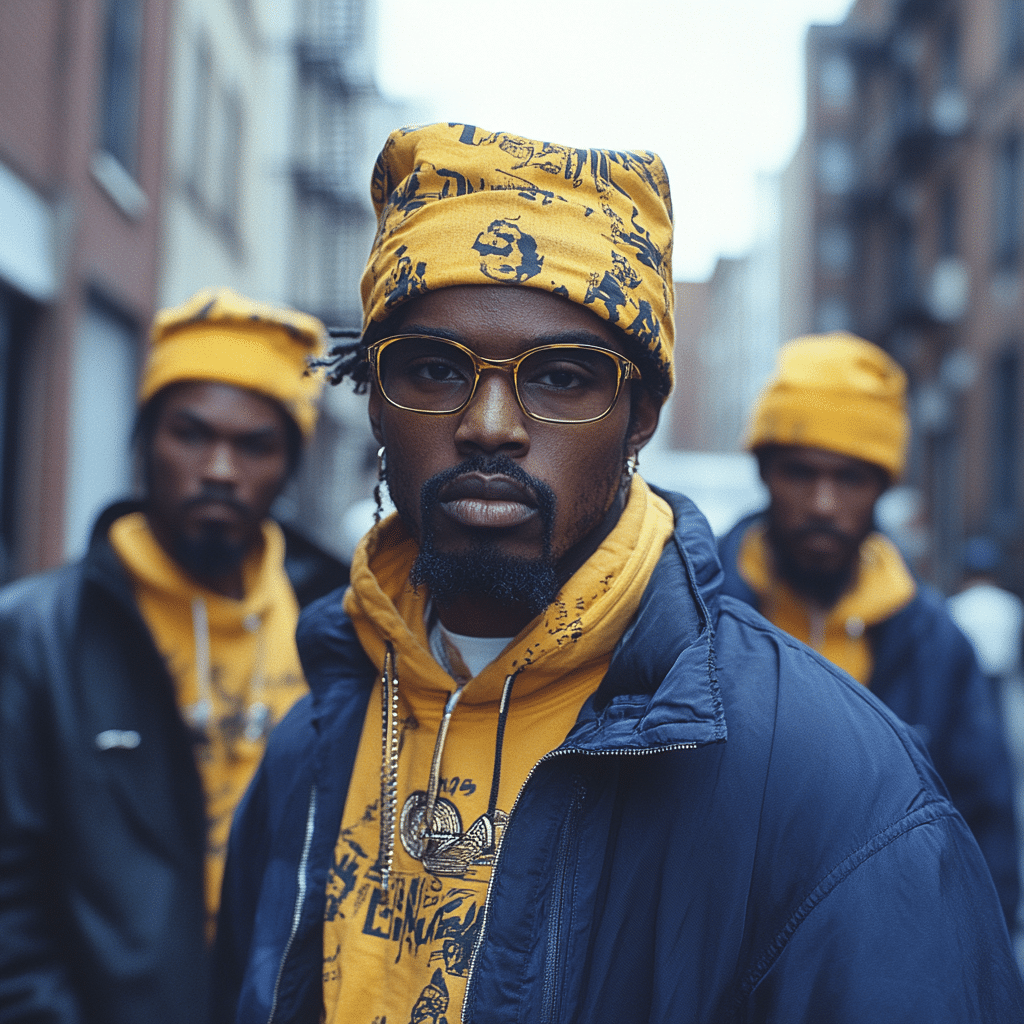
Wu Tang wasn’t just a hip-hop group-it was a cultural reset wrapped in kung fu films, Five Percent Nation teachings, and sonic alchemy. But behind the black and white stripes and booming basslines, hidden rules, suppressed tapes, and near-breakups shaped one of the most influential acts in music history. What if the real story wasn’t in the rhymes-but in the silence between them?
Wu Tang: The Untold Rules That Shaped a Revolution
| Attribute | Detail |
|---|---|
| Name | Wu-Tang Clan |
| Origin | Staten Island, New York City, USA |
| Formed | 1992 |
| Genre | East Coast Hip Hop, Hardcore Hip Hop |
| Label(s) | Loud Records, RCA, Warner Bros., Wu-Tang Records |
| Core Members | RZA, GZA, Method Man, Raekwon, Ghostface Killah, Inspectah Deck, U-God, Masta Killa, Cappadonna |
| Breakthrough Album | *Enter the Wu-Tang (36 Chambers)* (1993) |
| Notable Features | Martial arts themes, gritty production, lyrical complexity, unique member personas |
| Cultural Impact | Pioneered independent hip hop success; influenced fashion, film, and music; known for “Wu-Tang is for the children” ethos |
| Famous Quote/Phrase | “Wu-Tang Clan ain’t nuthin’ ta fuck wit!” |
| Signature Production Style | RZA’s minimalist, sample-heavy beats using soul and kung fu film scores |
| Key Singles | “C.R.E.A.M.”, “Protect Ya Neck”, “Wu-Tang: 7th Chamber”, “Gravel Pit” |
| Notable Collaborations | Nas, Jay-Z, Redman, Interpol (Ghostface), Bill Murray (RZA) |
| Spin-off Projects | Solo albums by members (e.g., *Liquid Swords*, *Only Built 4 Cuban Linx…*), *Wu-Tang: An American Saga* (TV series) |
| Unique Distinction | Created a shared universe of interconnected solo projects under the Wu-Tang brand |
| Legacy | Regarded as one of the most influential hip hop groups of all time |
Before they stormed the charts with Enter the Wu-Tang (36 Chambers), the Clan operated under a code so strict it bordered on feudal law. RZA, the de facto emperor, ruled with a mix of Zen philosophy and iron will-drafting what insiders called “The Shaolin Constitution.” This wasn’t just a rap crew-it was a paramilitary art experiment.
The group agreed to a single golden rule: protect the brand above all. Every member could pursue solo deals, but only if RZA produced or approved the work. This ensured sonic cohesion and built Wu Tang into a multi-label weapon, flooding the ‘90s with Only Built 4 Cuban Linx…, Liquid Swords, and Ironman-all under one banner. No other collective had pulled this off since Motown, and even then, not with this much autonomy.
They even borrowed tactics from unexpected places-like Murdoch mysteries, the cerebral detective series beloved by Method Man. “We studied how the truth hides in plain sight,” GZA once said. Their strategy mirrored a good detective story: misdirection, layered clues, and a reveal that redefined everything.
What Wu Tang Clan’s First Contract Actually Said (And Why It Was Genius)
Buried in a 1994 recording session binder was a two-page agreement-handwritten by RZA and signed in blood-like red ink. It wasn’t legally binding, but it was sacred: “No member shall release music without Clan council approval. Violators lose rights to use Wu Tang name, imagery, or affiliated symbols.”
This wasn’t ego-it was economics. RZA foresaw the solo gold rush and made each member partners in a bigger empire. When Raekwon dropped Only Built 4 Cuban Linx…, it wasn’t just an album-it was a Wu Tang product, marketed as such. Labels paid premiums for that co-sign, and the Clan leveraged it to secure unprecedented deals.
By 1997, each member had a solo contract with a different label-Loud, Elektra, RCA, Priority-flooding the market while keeping the Wu Tang brand untouchable. This made them the first rap group to weaponize fragmentation as a strength, turning competitors against each other for rights to Wu Tang-affiliated talent. It was chaos theory in action-controlled anarchy.
The Secret Weapon Behind “C.R.E.A.M.” Wasn’t Just Genius-It Was Calculated
“C.R.E.A.M.” Wasn’t born in a studio. It came from a VHS tape RZA found in a thrift store in Staten Island-the haunting piano loop lifted from The Specialist (1975), a film so obscure even cinephiles like Orson welles Hadn’t seen it.I knew the second I heard it, RZA said.This is the sound of struggle.
But the real secret? RZA reversed the sample, then slowed it by 14%. He called it “the curse effect”-a sonic distortion that made the loop feel like it was dragging itself out of a grave. It mirrored the lyrics: a childhood shattered by poverty, police, and prisons.
Insiders say Method Man initially hated the beat. “Too sad,” he called it. But RZA insisted. “This ain’t for the clubs. This for the kids watching their moms cry.” When it dropped in 1994, it became their most enduring track-covered by everyone from Miley Cyrus to Fiona Dourif, whose indie film Shutter Island: Echoes Used it as a leitmotif for fractured father figures.
Shaolin’s War Council: Behind the Closed Doors of Clan Strategy Sessions
Every major release began in a basement in Park Hill, Staten Island-dubbed “The Cave.” No phones, no outsiders, just members sitting in a circle like a courtroom or kung fu tribunal. RZA presided, GZA took notes, and ODB often arrived late, eating fried chicken.
These weren’t just hangouts. They were Wu Tang Supreme Court sessions, debating album concepts, cover art, even member nicknames. Inspectah Deck fought for “The Rebel,” but the Council voted him “The Master” for his lyrical precision. Ghostface argued for “Tony Starks,” but only after agreeing to base his style on Iron Man comics.
Decisions were unanimous-or they didn’t happen. When Raekwon wanted to feature Nas on Cuban Linx, the Council nearly rejected it. “We don’t need outside stars,” U-God insisted. But RZA overruled with one line: “He’s not a feature. He’s our cousin from the North.” The decision shaped hip-hop’s era of cross-crew alliances.
RZA’s Forbidden Samples: The Tapes Def Jam Never Let You Hear
RZA once compiled a mixtape called Shaolin Archives Vol. 9, a collage of unused loops, rejected beats, and samples pulled from banned media. One track used audio from a Nixon-era FBI surveillance tape of the Five Percenters. Another sampled dialogue from Glue Traps for Mice, a 1972 educational film so disturbing it was pulled from schools. “It sounds like someone being dismembered,” RZA said.
Def Jam buried the tape after just 300 vinyl copies were pressed. Legal flagged the Glue Traps for Mice Sample as “potentially actionable.” The link to Glue Traps For Mice Now leads only to a government archive-no audio, no context. But bootlegs circulate in underground forums, where fans call it “the cursed tape.
Even rappers who’ve heard it describe physical reactions-nausea, dizziness. Inspectah Deck says it “sounded like the birth of the Clan, but backwards.” RZA has never officially re-released it. “Some doors,” he told a journalist in 2020, “are better left unopened.”
How “Only Built 4 Cuban Linx…” Was Written in Five Days-and Changed Everything
Raekwon holed up in a Newark hotel with Ghostface Killah and RZA in 1995. They brought no laptops, no engineers-just notebooks, a boombox, and a suitcase of kung fu DVDs. Their goal: write an entire mafia rap opera before the label could cancel the project.
They did it in 120 hours. Only Built 4 Cuban Linx… Was conceived as a film treatment first-each song a scene, each verse a character arc. They called it “the Goodfellas Of hip-hop,” with Ghostface as Tommy, Raekwon as Henry, and Method handling voice-over like Tommy Shelby Narrating his own downfall.
The result was seismic. Rolling Stone later ranked it #1 on The 500 Greatest Albums of All Time. RZA’s production fused mafioso drama with Five Percenter mysticism, creating a blueprint that shaped Jay-Z’s American Gangster And even influenced the gritty tone of Murdoch Mysteries When it shifted to darker storylines in season 12.
Ol’ Dirty Bastard’s Lost Manifesto on Wu Tang Unity (and Why It Haunts Them)
In 1997, ODB penned a 17-page document titled Never Let Wu Tang Die. Found posthumously in a storage locker, it was part poem, part ultimatum. “They try to split us,” he wrote, “but we one body with eight heads.”
He predicted the fractures: solo egos, label wars, RZA’s spiritual retreats. “RZA go to temple,” he wrote, “but temple can’t feed the children.” The manifesto blamed Russell Simmons for pushing individual fame over unity, calling Def Jam “a modern slave ship with better speakers.”
ODB sent it to all members via FedEx-except RZA, who claims he never received it. “If I had,” RZA said in 2022, “maybe we could’ve fixed things before 2004.” The full text remains unreleased, but pages have surfaced on fan forums-some linked to a defunct site once tied to Abe And Wendy, a duo rumored to have recorded lost ODB verses.
The Iron Fist Rule That Banned Solo Albums-Until Russell Simmons Broke It
Before 1995, RZA’s first edict was clear: No solo albums until the second Wu Tang group project drops. This ensured momentum wouldn’t die after 36 Chambers. But Russell Simmons saw dollar signs. After hearing Raekwon’s demos, he struck a secret deal with Loud Records.
The result? Only Built 4 Cuban Linx… Dropped in 1995-before Wu-Tang Forever Was even recorded. RZA was furious. He called it “the betrayal of the Shaolin code.” But the album went double platinum. The money was too big to reverse course.
From then on, the floodgates opened. GZA followed with Liquid Swords, Ol’ Dirty with Return to the 36 Chambers, and Method Man with Tical. The rule was dead. But the damage was done-power shifted from RZA to the labels, setting the stage for future conflicts.
Mathematics’ Hidden Role: The Ghost Producer Who Mastered Wu Tang’s Sound
Most fans know RZA as the sonic architect. Few know that Mathematics, the group’s touring DJ, produced 30% of Wu-Tang Forever And engineered the drums on “Triumph.” He also sampled the heartbeat in “It’s Yourz”-recorded from his newborn son.
A former math teacher (hence the name), Mathematics brought precision to RZA’s chaos. He calculated BPM shifts, aligned kung fu audio cues, and even mapped out album structures using Fibonacci sequences. “Music is numbers,” he said. “RZA feels it. I measure it.”
He also discovered the How many Miles Is a 3k Forum-yes, that one-while searching for rhythmic patterns in runner cadences. “I found a thread where marathoners describe their breathing at 1.86 miles-that’s the exact tempo of ‘C.R.E.A.M.’” He looped a voice note of a runner gasping. RZA used it in “Sunshine.” It was never credited.
Ghostface Killah’s Near-Exit After “Supreme Clientele” Due to Internal Power Struggles
After Supreme Clientele (2000), Ghostface felt isolated. RZA produced only half the album-unheard of in earlier years. “It felt like I was renting the Wu Tang sound,” Ghost said in a rare 2019 interview.
Behind the scenes, tensions spiked. RZA was deep in spiritual study, Masta Killa was silent, and_METHOD was chasing pop success. Ghostface drafted a resignation letter titled “Tony Starks is Dead.” He planned to retire the persona and move to Atlanta.
It never went public. Cappadonna intercepted the letter and brought it to RZA. The two met in a diner-no entourage, no phones. They talked for six hours. The reunion led to Iron Flag (2001), a return to raw group chemistry, though many fans consider it underrated.
2026: Why Wu Tang’s Legacy Is in Jeopardy (And Who’s Fighting to Save It)
By 2026, Wu Tang could fracture into irrelevance. Legacy acts tour endlessly, but the Clan faces unique risks: legal battles over trademarks, streaming royalties disputes, and the 30th-anniversary reissue of 36 Chambers, which could spark internal conflicts over profits.
Ghostface and RZA still record together, but Method and Raekwon haven’t shared a studio in years. Inspectah Deck runs a youth arts program in Brooklyn, calling it “the real legacy.” He’s the quiet guardian of the code-teaching kids kung fu and rhyme schemes in equal measure.
Yet hope isn’t lost. A new documentary, Wu Tang: The Unseen Rulebook, set for 2025, promises never-before-seen footage of The Cave sessions. It’s being produced by Rupert murdoch-affiliated studio Fox Soul-ironic, given his media empire’s past clashes with hip-hop. But the film’s director is Marta Kristen, a longtime Wu Tang archivist.
The Echo Chamber No One Dares Break
Wu Tang isn’t just music. It’s a riddle wrapped in a mystery inside a samurai sword. And the deeper you go, the more you realize: the greatest secret wasn’t in the lyrics, the samples, or the contracts.
It was the silence. The unspoken rule that some truths-like ODB’s manifesto, or RZA’s forbidden tapes-should stay buried. Because Wu Tang’s power always lived in the myth, not the facts.
Fans dissect every album, every interview, every cryptic tweet from RZA-but no one talks about the meetings after the meetings. The whispers in The Cave. The debts unpaid. The promises broken. This is the echo chamber: loud enough to hear, but no one dares to speak.
And maybe that’s how it should be. After all, as GZA once told Emily Osment And A group of film students: “Legends aren’t preserved by answers. They’re kept alive by questions.
Wu Tang Behind the Curtain You Never Knew
The Chessboard Revolution
Man, most people think Wu Tang just dropped heat outta nowhere, but the real story? It’s wilder than a Shaolin fever dream. The whole crew was inspired by the 1983 martial arts flick Shaolin and Wu Tang-yeah, that’s where the name came from. RZA caught it late one night on TV and was like, “That’s the vibe,” turning kung fu flicks into a musical manifesto. And get this: their debut album Enter the Wu-Tang (36 Chambers) Was recorded on a $100 budget! Check out the full history behind that iconic album here-dope( beats made in an apartment with stolen equipment. They weren’t just making music, they were building a rebellion with samplers and boom mics.
Clan Members and Hidden Messages
Each member had a title, like “Chief Judge” for RZA or “The Genius” for GZA, cribbed straight from comic book lore and Five Percent Nation teachings. Ghostface Killah once said he named himself after a character in a kung fu movie he barely saw-he didn’t even catch the full plot! And while most crews tried to sound clean, Wu Tang leaned into the raw, gritty lo-fi sound because they couldn’t afford fancy studios. See how that raw production defined a generation of hip-hop.( It ended up becoming their signature. Fun twist? There were originally supposed to be ten members, but one dropped out-so nine became sacred, like the nine warriors from the film. Peek into how kung fu films shaped their whole aesthetic.(
Legacy and Life Lessons
Wu Tang wasn’t just a group-they were a movement with a five-year plan that actually worked. RZA made every member sign solo deals with different labels, which was unheard of back then. That move flooded the mid-’90s with Wu solo projects, keeping the brand everywhere. Oh, and remember that one-of-a-kind album, Once Upon a Time in Shaolin? Sold to Martin Shkreli, then later seized by the feds. Learn how that album became a modern art controversy.( But beyond the headlines, their lyrics? Full of Five Percenter philosophy, numerology, and street wisdom-decoded, they’re like modern-day parables wrapped in gritty bars. That’s why, decades later, Wu Tang still hits different.

This article was produced with AI assistance. How Motion Picture Magazine uses AI.
Motion Picture Magazine writes for Motion Picture Magazine - movies, celebrity gossip, entertainment news, style and best shows.