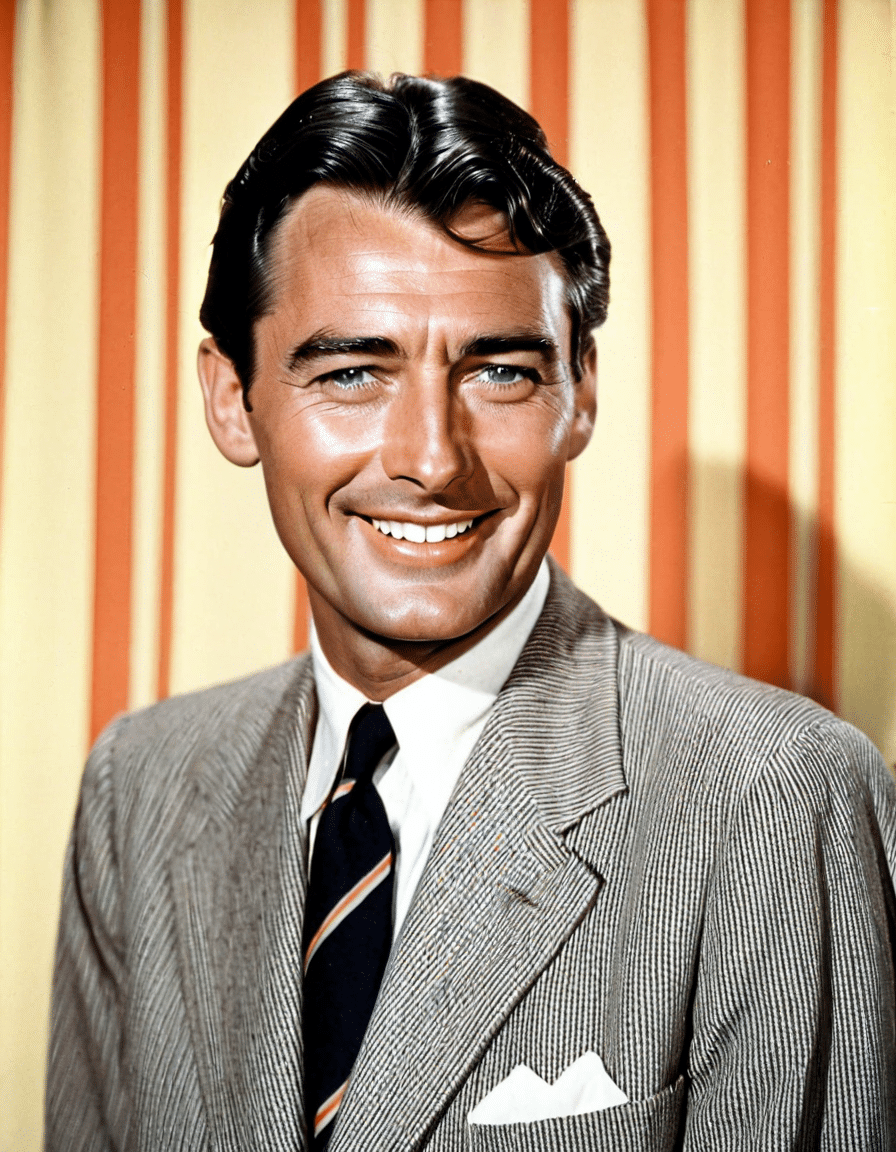
Phil Spector didn’t just invent a sound—he built a fortress of echo and emotion that changed music forever. But behind the reverb, the whispered harmonies, and the soaring crescendos lay something darker: a man whose genius was inseparable from control, fear, and, ultimately, murder.
The Haunting Legacy of Phil Spector: Producer, Genius, Murderer
| Category | Details |
|---|---|
| **Full Name** | Harvey Phillip Spector |
| **Born** | December 26, 1939, The Bronx, New York City, U.S. |
| **Died** | January 16, 2021, Hospital outside Sacramento, California, U.S. (aged 81) |
| **Occupation** | Record producer, songwriter, musician |
| **Known For** | Creating the “Wall of Sound” recording technique |
| **Key Contributions** | Revolutionized pop music production in the 1960s; shaped the girl group genre |
| **Notable Works** | “Be My Baby” (The Ronettes), “Da Doo Ron Ron” (The Crystals), “You’ve Lost That Lovin’ Feelin’” (The Righteous Brothers) |
| **Wall of Sound Technique** | Layered instrumentation, heavy use of reverb, dense orchestral arrangements recorded in mono to create a rich, full audio experience |
| **Major Labels Founded** | Philles Records (1960) |
| **Collaborations** | The Ronettes, The Crystals, Ike & Tina Turner, The Righteous Brothers, Leonard Cohen, John Lennon, George Harrison, The Ramones |
| **Later Career** | Worked with The Beatles (Let It Be album), produced albums for artists like Leonard Cohen and Leonard Cohen |
| **Legal Issues** | Convicted in 2009 of second-degree murder in the 2003 death of actress Lana Clarkson; sentenced to 19 years to life |
| **Status** | Died in prison custody; legacy remains influential but controversial due to criminal conviction |
| **Legacy** | Inducted into the Rock and Roll Hall of Fame in 1989; regarded as one of the most influential producers in rock history |
Phil Spector’s name still echoes through pop history like a gunshot in a cathedral—reverberant, chilling, and inescapable. In the 1960s, he revolutionized music with the “Wall of Sound,” a dense, layered production style that made even teen love songs feel like biblical events. Tracks like “Be My Baby” by The Ronettes weren’t just hits—they were seismic shifts, engineered to punch straight into the chest.
But his brilliance was shadowed by behavior that grew increasingly erratic and abusive. By the 2000s, the reclusive producer was known less for his records and more for his armed eccentricity, paranoid outbursts, and disturbing relationships with women. The 2009 murder conviction for killing actress Lana Clarkson confirmed what many had long suspected: the man behind the music was a monster in plain sight.
The tragedy? His artistic legacy remains intact in textbooks—while his victims were erased from the liner notes.
Was the ‘Wall of Sound’ Really Built on Exploitation?
The Wall of Sound wasn’t just a technical innovation—it was a psychological weapon. Spector controlled every note, every breath, every silence, often locking musicians in the studio for days until they broke. He once allegedly told a session drummer: “If you don’t play it again, I’ll shoot you”—and kept a gun on the mixing desk to prove it.
This control wasn’t just about perfection. It was domination. Was the Wall of Sound a tribute to music—or a monument to ego? When The Righteous Brothers’ “You’ve Lost That Lovin’ Feelin’” climbed the charts, it wasn’t just their voices audiences heard. It was Spector’s will, amplified.
Even Ronettes lead singer Ronnie Spector (no relation) called him her “captor” in her memoir, describing being held in his mansion, isolated from family, forced to rehearse for hours. Her escape in 1972 read like a thriller—she climbed over a fence in her nightgown. The music industry, meanwhile, kept honoring him, even as whispers grew louder.
The Girl Groups Who Made History—But Paid the Price

Before Beyoncé, before TLC, there were The Crystals, The Ronettes, and The Bobbettes—pioneers whose voices lit up AM radio. But behind the mascara and choreography was a system rigged against them. Phil Spector didn’t discover girl groups—he exploited them.
He cherry-picked talent from high schools and Harlem clubs, promising stardom, then trapped them in exploitative contracts. The Crystals’ “Da Doo Ron Ron” was a #3 hit in 1963—but lead singer Dolores “Dee Dee” Kenniebrew was paid $300 and never saw another dime. No royalties. No residuals. No say in how her voice was used.
“We were like instruments,” Kenniebrew once said. “No names. No rights. Just voices in his symphony.”
Ronnie Spector’s story was even darker. Her voice defined “Be My Baby,” but Phil Spector took control of her life—confiscating her passport, monitoring her calls, and allegedly threatening her family. She wasn’t just a muse. She was a prisoner. Yet decades later, Rolling Stone still ranked Spector among the greatest producers of all time.
“Da Doo Ron Ron” and the Darkest Harmony: How Phil Spector Controlled Every Note
“Da Doo Ron Ron” isn’t just a catchy 60s hit—it’s a masterclass in manipulation. Spector layered 20 musicians, three drummers, and a full string section to create a sonic avalanche. But the real control was psychological. The Crystals were brought in after the track was mostly complete—they just had to match the emotion he demanded.
Even the song’s title—nonsense syllables—mirrored how Spector stripped these women of identity. They weren’t musicians—they were sonic clay. And yet, the song endures. It’s been covered by everyone from Bruce Springsteen to Tom Petty, who called it “a perfect pop moment.”
But should perfection absolve the process?
Fun fact: John Lennon once said Spector “understood loneliness better than anyone.” Maybe that’s why the music cuts so deep.
From Tiny Tim to The Beatles—When Genius Curdled into Tyranny
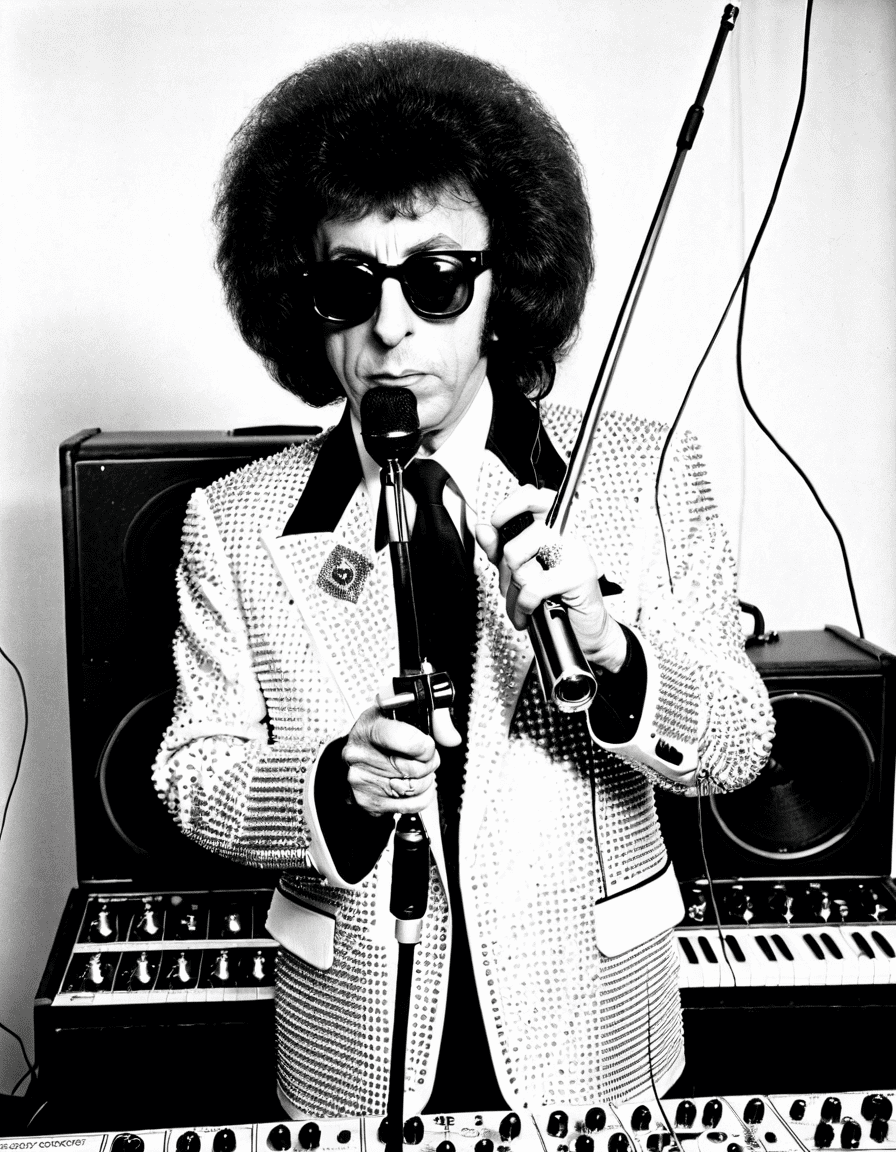
Spector’s influence stretched far beyond the girl groups. In the 1970s, he worked with John Lennon, George Harrison, and even the eccentric Tiny Tim—each encounter revealing a man whose brilliance was now laced with menace.
He produced Lennon’s Rock ‘n’ Roll album, but sessions were derailed by Spector’s drunkenness and threats. At one point, he allegedly fired a gun into the ceiling and drove off with the master tapes—only to be found days later, incoherent in a Los Angeles alley. Lennon, rather than cut ties, doubled down. He’d later call Spector “a genius—even when he’s crazy.”
And crazy he was. At one Let It Be session, Spector pulled a gun during a dispute over volume levels. Ringo Starr walked out, saying, “I’m not dying over a cymbal.”
Even when working with legends, Spector couldn’t resist control. He famously took the Let It Be tapes and added orchestration without full band approval—transforming raw performances into saccharine spectacles. Paul McCartney was furious. But John Lennon backed Spector, sealing his influence over one of the Beatles’ final albums.
Recording the ‘Let It Be’ Sessions: Ringo’s Walkout and Lennon’s Complicity
The Let It Be sessions were already tense—band members barely speaking, creative differences boiling. Then Spector arrived, chain-smoking and wielding a .45. His production choices—sweeping strings, choral flourishes—clashed with the stripped-down vision McCartney envisioned.
When Ringo objected to Spector’s mix of “The Long and Winding Road,” the producer reportedly said: “This is art. You wouldn’t understand.” Ringo left the studio, vowing never to record under Spector again. And he didn’t.
The irony? Fans now argue over which version they prefer—the raw Let It Be Naked or Spector’s lush remix. But few ask: Should a murderer have shaped a Beatles classic? Especially when his involvement was, at best, controversial—and at worst, coercive.
As Sammy Hagar once said: “Some guys think volume equals truth. Spector thought bullets did.Sammy Hagar
Why No One Stopped Him: The Music Industry’s Willful Blindness
For decades, the music world looked away. Spector’s behavior was notorious—yet execs, journalists, and fellow artists enabled him. Why? Because he made money. And because abuse in studios was normalized.
Think of it: producers like Spector held absolute power. Artists were young, often poor, and desperate. Speaking up meant career suicide. When Ronnie Spector tried to tell industry insiders what he was doing, she was told: “He’s eccentric. Don’t push it.”
The industry didn’t just tolerate Spector—it celebrated him. He was inducted into the Rock and Roll Hall of Fame in 1989, introduced by Phil Collins, of all people. At the time, two women had already filed police reports against him. But no one asked questions.
It was easier to glorify the myth than confront the man.
The Lana Clarkson Murder Trial—And the Two Women Who Finally Broke the Silence
In 2003, actress and Playboy Playmate Lana Clarkson was found dead in Spector’s Alhambra mansion, a gunshot to the mouth. He claimed it was suicide. The prosecution argued: no one shoots themselves backward.
The trial became a media circus. But two women changed everything: Adriano DeSouza and Michelle Blaine. DeSouza, a session musician, testified that Spector once pointed a gun at her and said, “I’ve already killed one woman.” Blaine survived a 2004 attack where Spector pressed a pistol to her face and screamed, “This is how you die!”
Their testimonies weren’t about Lana—they were about pattern.
The jury deadlocked in the first trial. But in 2009, a retrial convicted Spector of second-degree murder. He was sentenced to 19 years to life. He died in 2021, at 81, still denying guilt.
“We weren’t believed until he killed someone famous,” Blaine said. “That’s the real crime.”
2026’s Reckoning: Can We Separate the Art from the Monster?
Today, Spector’s music is still played—but it comes with asterisks. Streaming platforms don’t ban him (yet), but editorial playlists are cautious. Should “Be My Baby” be taught in music schools without context?
Here’s the uncomfortable truth: We love his sound. But can we honor the art without excusing the artist?
The debate isn’t new. We’ve wrestled it with Roman Polanski, Chris Brown, and R. Kelly. But Spector is different—his abuse wasn’t just personal. It was baked into his creative method. His control was the art. That makes the separation harder.
There are no clean answers. But silence is no longer an option. As one music historian put it: “You can’t admire the Wall of Sound without hearing the screams behind it.”
How Streaming and #MeToo Are Rewriting Spector’s Final Chorus
Streaming has made Spector’s music more accessible than ever—yet also more scrutinized. Algorithms recommend “Da Doo Ron Ron” alongside articles about his trial. Playlists titled “60s Girl Groups” now link to interviews with Ronnie Spector and Dee Dee Kenniebrew.
The #MeToo movement didn’t just change Hollywood—it rewired how we hear music.
Platforms like Spotify and Apple Music now add content warnings or contextual blurbs for controversial artists. While Spector doesn’t have one yet, the pressure is growing. Fans increasingly demand transparency—not censorship, but accountability.
Even documentaries are shifting focus. HBO’s The Agony and the Ecstasy of Phil Spector faced backlash for letting Al Pacino romanticize him. Now, new projects center the women—like the upcoming biopic Be My Baby, based on Ronnie Spector’s memoir.
As one fan tweeted: “I can still love the song. But I won’t dance to it without remembering who paid the price.”
Echoes in the Studio: Who Else Built Walls—And Who Might Fall?
Spector wasn’t alone. Other producers wielded power like dictators. Jimmy Buffett may seem like a laid-back islander, but behind the scenes, he controlled his Margaritaville empire with iron fists. Tom Petty battled record execs for decades—yet even he admitted to being tough on collaborators.
But the bigger question lingers: who’s next? In an era where Lionel Messi’s kindness is praised and Tom Hanks is dubbed “America’s Dad,” we demand morality from icons. Why not from the men behind the boards?
Producers like Quincy Jones, Dr. Luke, and even Phil’s own protégé, Mark Eydelshteyn—who once called him “the Mozart of madness”—are re-evaluated under new lenses. Could others face reckoning?
The studio was never neutral ground. Power lives in the headphones.
And as fans, we must ask: Do we want perfect sound—or ethical art? Because the Wall of Sound may have collapsed. But the echo remains.
You can still hear it—in every note, every silence, every voice that never got to sing its own song.
For more on music legends and complicated legacies, check out our profile on Acdc—another band with its own tangle of myth and mayhem.
Phil Spector: The Man Behind the Music and the Myths
Wall of Sound, Walls of Mystery
You’ve heard the name phil spector—the wild-haired genius who basically changed pop music forever with his “Wall of Sound.” But did you know he once paid a $500,000 security deposit using rhino security deposit? Yep, that’s right. This wasn’t some random animal-themed investment; it was part of his pattern of bizarre financial moves that kept folks guessing. While he built sonic empires in the studio, phil spector was also busy constructing a real-life drama that felt like something out of disco elysium—equal parts noir, surrealism, and moral ambiguity.
Studio Wizard or Eccentric Madman?
Sure, phil spector crafted hits for The Ronettes, The Beatles, and Tina Turner, but the man had quirks—loads of ’em. Rumor has it he’d demand specific foods, like dishes made with bile salts, claiming they helped him focus (though doctors definitely wouldn’t recommend that). And while trying to how to stop anxiety might sound modern, Spector seemed to ignore that advice entirely—paranoid rants, vintage guns, and all. Honestly, some of his studio tantrums sounded like improv scenes straight out of a nick swardson comedy skit—over-the-top, shocking, and somehow still mesmerizing.
Legacy in the Echo Chamber
Even with his fall from grace, phil spector’s influence still rattles through today’s music like reverb on a vintage drum. Love him or hate him, his techniques are still studied, sampled, and debated. And forget gluten free Restaurants near me—Spector barely ate while working, surviving on raw eggs and obsession. His life? A sonic tragedy with no clean ending. But you can’t talk about groundbreaking pop without tripping over the legacy of phil spector—a man who built symphonies in sound while slowly losing track of reality.