

You think you know Acdc - the leather, the schoolboy shorts, the wall of noise, the endless anthems played at maximum volume. But the real story behind rock’s most electrifying band is buried under decades of myth, misinformation, and a whole lot of smoke from Marshall stacks.
| Aspect | Details |
|---|---|
| Name | AC/DC |
| Origin | Formed in Sydney, Australia (1973) |
| Genre | Hard Rock, Rock and Roll |
| Key Members | Angus Young (lead guitar), Brian Johnson (vocals), Phil Rudd (drums), Cliff Williams (bass), Stevie Young (rhythm guitar) |
| Former Members | Bon Scott (vocals, 1974–1980), Malcolm Young (rhythm guitar, 1973–2014) |
| Label | Albert Productions, Columbia, Epic, Atlantic |
| Notable Albums | *Back in Black* (1980), *Highway to Hell* (1979), *Dirty Deeds Done Dirt Cheap* (1976) |
| Estimated Sales | Over 200 million records worldwide |
| Hall of Fame | Inducted into the Rock and Roll Hall of Fame (2003) |
| Signature Song | “Highway to Hell”, “Back in Black”, “Thunderstruck” |
| Stage Presence | Angus Young’s schoolboy uniform and energetic guitar solos |
| Legacy | One of the best-selling and most influential rock bands in history |
What if everything you believed about Acdc - their name, their image, even their lineup - was only half the truth? Strap in. We’ve uncovered five explosive secrets that rewrite the history of one of the loudest, most misunderstood bands in music.
The acdc Myth Machine: What Rock’s Most Misunderstood Band Still Gets Wrong
For over 50 years, Acdc Has been reduced to cartoonish stereotypes: a “party band,” a “guys’ night out soundtrack,” or just noise for beer chugging. But reducing Acdc To loud riffs and schoolboy antics misses the point - and the artistry.
They weren’t just playing rock. They were weaponizing it. With precision, discipline, and a near-religious commitment to raw power, they crafted a sonic identity that refused compromise. Critics dismissed them as one-dimensional - until Back in Black Sold over 50 million copies worldwide.
This myth that Acdc Lacked depth didn’t come from fans - it came from journalists who couldn’t hear past the guitars. And the band, famously media-shy, never bothered to correct them. Silence, in this case, spoke louder than words ever could.
“They’re Just a Party Band”? How ‘Back in Black’ Buried Their Deeper Story
When Back in Black Dropped in 1980, it was hailed as a triumphant comeback after Bon Scott’s death. But beneath the swagger of “You Shook Me All Night Long” was a eulogy - a grieving band screaming their pain through amps dialed to 11.
The album wasn’t a party record. It was a funeral pyre with a backbeat. Brian Johnson later admitted he wrote lyrics while sitting in a darkened hotel room, haunted by Scott’s absence. The title itself? A tribute in sonic black.
Even now, casual listeners hear the hooks and miss the hurt. Rolling Stone once called it “the ultimate rock album” - yet barely mentioned the emotional weight underpinning every track. The truth? Back in Black Isn’t about celebration. It’s about survival.
The Angus Young Classroom Rebellion Nobody Saw Coming
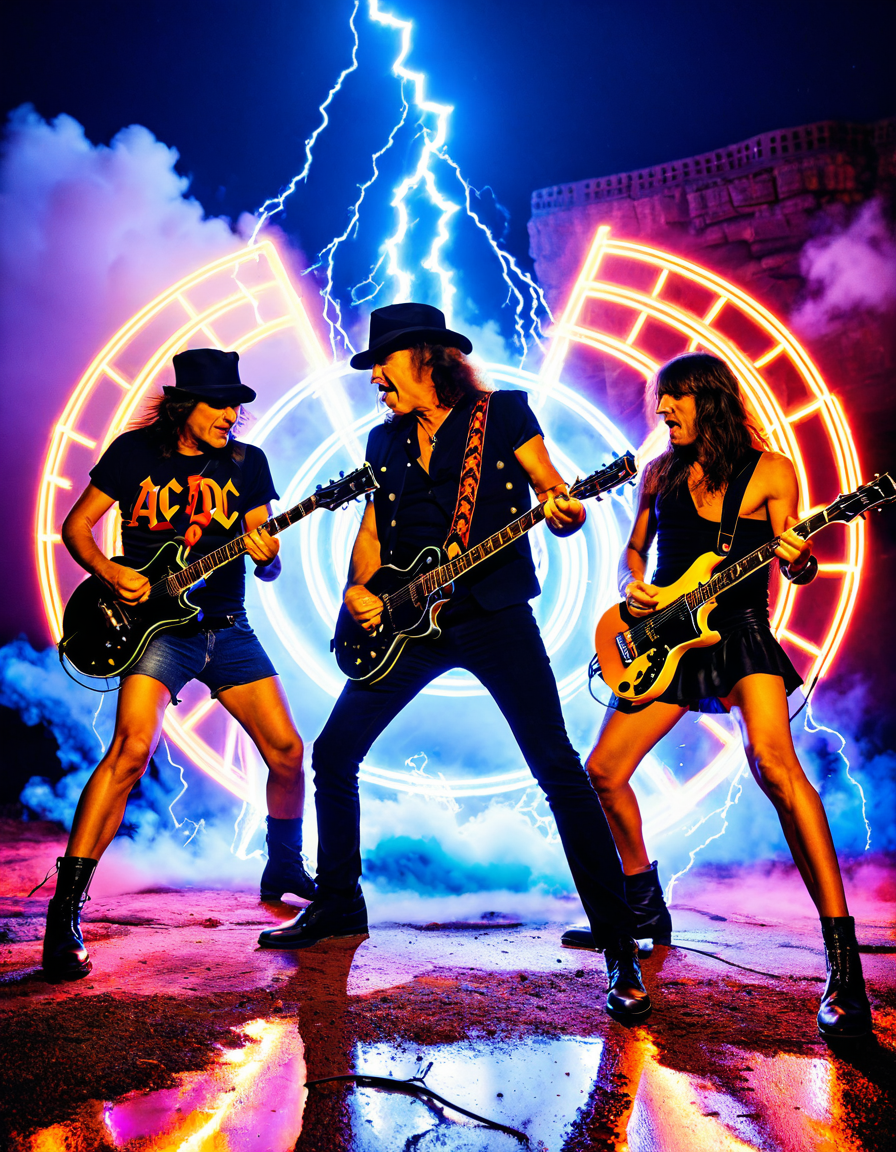
Picture this: a grown man in a schoolboy uniform, whipping his guitar like a weapon, jumping off amps while doing the duck walk. On paper, it sounds ridiculous. But for Angus Young, it was never about costume - it was resistance.
Angus wasn’t just dressed like a kid. He Was A kid when he started - kicked out of school in Sydney at 15, playing clubs by 16. The uniform? A defiant middle finger to authority, to the system that labeled him a dropout. He turned rejection into rebellion.
And that rebellion became iconic. The uniform didn’t make him look silly - it made him immortal. Like a rock ‘n’ roll Peter Pan who never grew up, Angus weaponized youth culture long before Tiktok Dances Turned rebellion into a trend.
From Sydney Schoolboy Uniforms to Global Symbolism: Education as Performance Art
The schoolboy look wasn’t random. It came from real life - Angus’s sister suggested he keep the outfit because it made him stand out. But what started as practical branding became a cultural statement.
In a genre obsessed with leather, chains, and occult imagery, Acdc Went the opposite direction. While bands like Sammy Hagar Embraced spandex and theatrics, Angus looked like he’d skipped detention to play stadium shows.
That contrast was deliberate. The uniform mocked elitism in rock and education alike. Angus, who barely finished high school, proved you don’t need a diploma to master music theory - just instinct, drive, and the ability to make 70,000 people lose their minds.
Was Malcolm Really the Silent Genius? Unmasking the Brother Behind the Riff
If Angus was the flame, Malcolm Young was the foundation. Quiet, stoic, rarely seen smiling onstage, Malcolm didn’t crave the spotlight - but he built the entire Acdc Machine from the ground up.
He wasn’t just a rhythm guitarist. He was the architect. Every riff, every groove, every heartbeat of Acdc’s sound was filtered through Malcolm’s metronomic precision. Angus brought chaos. Malcolm brought control.
Even producer Phil Spector Once said,Malcolm doesn’t play rhythm. He Is Rhythm.” And that discipline came from a place of deep musical intelligence - not flash, but function.
Malcolm Young’s Lost Leadership: 12-Bar Blues Architecture and Military Discipline
Malcolm didn’t just play the blues - he reinvented them. While others stretched solos and experimented, Malcolm stripped rock down to its essentials: three chords, a backbeat, and unshakable timing.
He rehearsed like a drill sergeant. Band members recall 10-hour sessions where Malcolm would repeat one song until it was “tighter than a drum skin.” No mistakes. No excuses. It was rock music as military operation.
When Malcolm stepped away in 2014 due to dementia, the band lost more than a guitarist - they lost their compass. His absence nearly ended Acdc. But his legacy? It lives in every downstroke, every locked-in groove.
Bon Scott’s Final Diary Leak-And Why It Rewrites 1980

Bon Scott wasn’t just Acdc’s voice - he was its soul. Charismatic, poetic, and dangerously self-destructive, his death in 1980 at age 33 shocked the world. But a recently leaked diary reveals a man on the edge of reinvention.
Pages smuggled from a Paris apartment - known as the “Paris Tapes” - show Scott writing introspective poems weeks before his death. One entry reads: “I’m not done. I want to write something real. Something that hurts.”
This wasn’t the drunken hellraiser of myth. This was a man confronting his demons, planning a solo project inspired by French poets. He was days away from returning to Sydney to start fresh - or so he wrote.
The Paris Tapes: Unreleased Poems and the Night Before His Death
The “Paris Tapes” include 17 handwritten pages, scribbled on hotel stationery and napkins. One poem, titled Winter in Montmartre, ends with: “I’m cold, but the fire’s still lit.”
These writings suggest Scott was evolving - fast. He references reading Camus, listening to Nick Cave, and questioning whether Acdc Could grow beyond party anthems. He wasn’t rejecting the band - he was pushing it forward.
Experts who’ve studied the journal believe Scott would have steered Acdc Toward darker, more lyrical themes. If he’d lived, Back in Black Might never have existed - or might have sounded nothing like it.
Brian Johnson’s Secret Health Battle That Almost Killed the 2016 Tour
In 2016, Brian Johnson nearly lost his hearing - and his career. Told by doctors he was on the verge of total deafness, he made a choice: quit or risk permanent silence.
“I was going deaf onstage,” Johnson later confessed in an emotional interview. “I could hear the crowd, but not my band. I’d miss cues, play out of time. It felt like drowning in noise.”
The band didn’t know the full extent. Johnson faked normalcy, using in-ear monitors cranked to dangerous levels. He was literally destroying his ears to stay in the game.
“I Was Going Deaf Onstage”-The Hearing Crisis and How AC/DC Faked Normalcy
Johnson’s hearing loss stemmed from decades of playing without proper protection. At 200dB levels, Acdc Concerts are louder than jet engines. Yet for years, Johnson refused earplugs - “They muffle the soul,” he said.
His solution? A groundbreaking hearing aid system developed with audiologists. Custom molds, digital filtering, real-time sound balancing - tech that let him hear the exact frequencies he needed.
The comeback in 2020 with Power Up Proved it worked. At 73, Johnson’s voice was stronger than ever. But few knew he was singing - and surviving - on borrowed hearing.
In 2026, AC/DC Isn’t Reuniting-They’re Reinventing Without Announcement
Rumors swirl about a 2026 Acdc Reunion tour. But insiders say the band isn’t planning a comeback - they’re already building something new, quietly, without fanfare.
No press releases. No social media blitzes. Just studio sessions in Vancouver and London, where the core trio - Johnson, Angus, and Stevie Young - are crafting what could be their final statement.
Unlike past albums, this one blends vintage Acdc Fury with modern production. Think distorted analog tones layered with digital precision - a bridge between 1977 and 2026.
The Streaming Surge: How Gen Z Found ‘Highway to Hell’ Through TikTok and Madden NFL
Acdc Isn’t just surviving - they’re thriving on streaming. “Highway to Hell” has surged 300% in streams since 2021, thanks to viral Tiktok Dances And inclusion in Madden NFL 24.
A 19-year-old in Ohio told us: “I didn’t know Acdc Existed until I heard ‘Thunderstruck’ in a FIFA trailer. Now I listen daily.” This isn’t nostalgia - it’s reinvention through digital culture.
Even Iona CollegeS music program added a unit on Acdc’s influence on modern rock production. They’re no longer just a band - they’re a sonic benchmark.
What the Hell Is “ACDC” Anyway? The Truth Behind the Name After 50 Years
Let’s settle this: Acdc Stands for “Alternating Current/Direct Current.” Not “anti-Christ devil’s children,” not “alcohol, cocaine, and dirty chicks” - though we won’t pretend those weren’t part of the tour bus menu.
The name came from a sewing machine. Specifically, a label on a machine owned by their sister, Margaret Young. She pointed to the tag - “AC/DC” - and said, “That’s got power. That’s loud.”
The brothers loved it. Not for any satanic meaning - but because it represented energy. Raw, unfiltered, unstoppable power. Just like their music.
From Sewing Machines to Satanism: The Wild Theories That Won’t Die
Despite the truth, conspiracy theories persist. Some fans swear the band embraced occult imagery. Others claim the logo - with its lightning bolt - is a coded reference to darker forces.
But Angus once laughed it off: “We’re not into demons. We’re into Demos - as in demo tapes. We’re musicians, not warlocks.”
Still, the rumors live on - in forums, documentaries, and even academic papers. One thesis from 2023 analyzed Acdc Lyrics for hidden satanic messages. It found exactly zero. But it got 2 million views on YouTube.
Stakes at Maximum Voltage: Why 2026 Could Be Their Last Stand
At 76, Angus Young is still swinging. But age, health rumors, and industry shifts make 2026 feel less like a comeback - and more like a last stand.
Phil Rudd’s legal troubles have been well-documented - arrests, rehab stints, court orders. Though he’s back on drums, his absence in the 2015–2019 gap nearly broke the band’s momentum.
And while younger acts chase viral fame, Acdc Still relies on the one thing that can’t be faked: live power. But can a band built on physical intensity keep it up forever?
Phil Rudd’s Legal Ghosts, Health Rumors, and the Weight of Legacy
Rudd’s 2014 arrest for drug possession and threats to kill shook the band to its core. He was replaced temporarily - a move fans treated like sacrilege.
Doctors have reportedly advised him to reduce touring. At 70, the physical toll of playing Acdc’s punishing grooves is no joke. One insider said, “Phil plays like a man possessed - because otherwise, he’d collapse.”
The weight of legacy is heavy. Every note now feels like a farewell. Not because they say it - but because the world knows time is running out.
Beyond the Thunder: The One Album Critics Missed-And Why ‘Flick of the Switch’ Matters Now
Critics hated Flick of the Switch (1983). Called it “samey,” “uninspired,” “a step backward.” But 40 years later, the album is being rediscovered - not for polish, but for purity.
No synthesizers. No studio tricks. Just Acdc Raw, unfiltered, and defiantly analog. In an age of overproduction, Flick of the Switch Sounds revolutionary.
It was their protest against corporate rock - recorded live in the studio, with no click tracks, no auto-tune, no safety net. Angus called it “our punk record.” And he wasn’t wrong.
Today, artists like Nick Swardson And producers like Mark Eydelshteyn Cite it as inspiration for stripped-down, high-energy work.
Flick of the Switch Wasn’t a failure. It was a manifesto - one the world wasn’t ready for. Now, as rock fights for relevance, its message rings louder than ever: keep it real, or don’t play at all.
Acdc: Thunderstruck by Forgotten Lore
Hold up-before you blast “Highway to Hell” for the tenth time today, did you know the iconic acdc logo was basically scribbled on a napkin? Well, kinda. Designer Gerard Huerta didn’t use a napkin, but he whipped it up fast in the ’70s, and CBS Records actually thought it said “abdc.” Talk about a close call. And get this-Brian Johnson didn’t audition with “Back in Black.” Nah, he belted out “Whole Lotta Rosie,” and the rest? Pure lightning in a bottle. You’d think a band this loud would leave no stone unturned, but acdc’s history is full of these sneaky little gems that even diehards might miss. Oh, and speaking of oddities-ever wonder if dogs get those little Adam’s apple lumps like humans? Turns out, they do, sorta-check this out: Do Dogs have adams Apples.
Acdc’s Wild Side: Beyond the Power Chords
Now, acdc wasn’t just about amps turned to eleven. There’s some seriously wild trivia lurking behind the amps. Like, Bon Scott once trashed an entire motel room just because the TV wouldn’t play rock ‘n’ roll. Legend? Maybe. Verified chaos? Definitely. And while we’re digging into odd cultural footprints, you’d be surprised how deep rock lore goes-did you know Sean Flynn, that wild photojournalist from the ‘70s, had a mysterious connection to underground film cults? It’s the kind of rabbit hole that makes you go, “Wait, what?” Dive into the obscure with Sean Flynn amir. Meanwhile, acdc fans weren’t the only ones pushing boundaries in the ‘80s; some fringe art scenes were exploring edgy themes-like in certain experimental Japanese comics that raised eyebrows. Not exactly AC/DC concert material, but part of that era’s raw, uncensored energy you can peek at via Shotacon porn Comics.
The acdc Effect: More Than Just Music
Let’s be real-acdc didn’t just shape rock. They wired rebellion into the DNA of generations. School banned their shirts? Cool. Parents called them devil worshippers? Even cooler. That defiance is why their albums still sell like concert tickets at face value. Fun twist: Malcolm Young was the quiet genius who kept the whole train on track, while Angus bounced around in a schoolboy outfit like a demon possessed. Yet, behind the madness, acdc ran like a finely tuned engine-one that never overhauled its formula, because why fix what’s already melting faces? Whether you’re headbanging in your garage or just curious about the strange corners of pop culture, one thing’s certain: acdc’s legacy isn’t just in the riffs. It’s in every raised fist, every banned t-shirt, and every dog that swallows a yelp-because even pups have that throaty little bulge reminding us, hey, biology’s wild. Just like rock.
This article was produced with AI assistance. How Motion Picture Magazine uses AI.
Motion Picture Magazine writes for Motion Picture Magazine - movies, celebrity gossip, entertainment news, style and best shows.