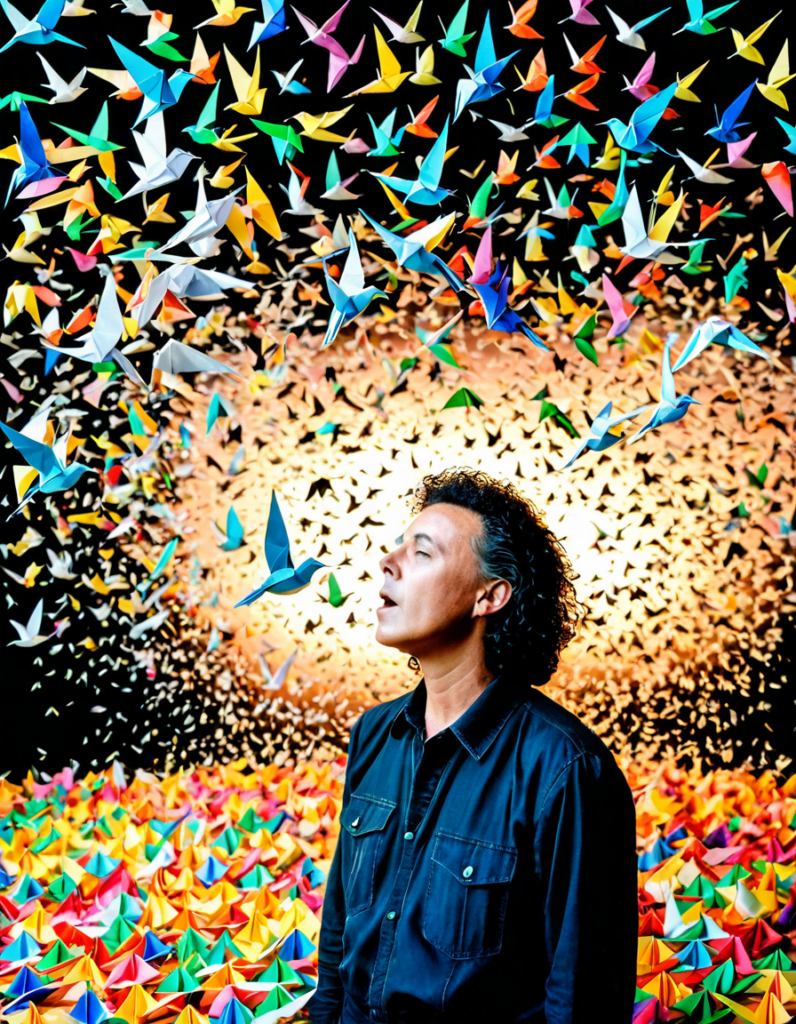
Who knew that the smooth, anthemic sound of Tears for fears Hid years of inner turmoil, studio meltdowns, and songs nearly lost to time? Beneath the glossy 80s sheen pulsed a darker truth-music born from therapy, trauma, and the fragile bond of two childhood friends who changed pop forever.
Tears for fears: The Distorted Mirror Behind the 80s Sound Machine
| Aspect | Information |
|---|---|
| Origin | Bath, England |
| Formation Year | 1981 |
| Founding Members | Roland Orzabal, Curt Smith |
| Genre | New Wave, Synth-pop, Art Rock |
| Active Years | 1981–1991, 2000–present |
| Label(s) | Mercury Records, Phonogram, Epic, Virgin |
| Notable Albums | *The Hurting* (1983), *Songs from the Big Chair* (1985), *The Seeds of Love* (1989), *The Tipping Point* (2022) |
| Hit Singles | “Mad World”, “Everybody Wants to Rule the World”, “Shout”, “Head Over Heels”, “Woman in Chains” |
| Musical Style | Melodic synth-driven pop with introspective lyrics, philosophical themes, and social commentary |
| Influences | Psychedelic rock, soul, R&B, and existential psychology |
| Key Achievements | Global sales over 30 million, multiple UK and US Top 10 hits, MTV staples in the 1980s |
| Current Status | Active (as of 2024), touring internationally and releasing new music |
| Notable Collaborators | Oleta Adams, Alan Griffiths, Charlton Pettus |
| Legacy | Pioneers of 1980s British synth-pop; influential in shaping the sound of modern alternative and pop-rock |
On the surface, tears for fears epitomized the polished optimism of mid-80s pop. But their hits-”Shout,” “Everybody Wants to Rule the World,” “Mad World”-were actually cries for help disguised as dance tracks. Founded by Roland Orzabal and Curt Smith in Bath, England, the duo channeled years of childhood therapy and emotional repression into music that resonated with an entire generation wrestling with the Cold War, identity, and societal pressure.
They weren’t chasing fame-they were chasing healing. Influenced heavily by the work of psychologist Arthur Janov and his “primal therapy” method, the band turned their pain into poetry. Tracks from their debut The Hurting (1983) were literal transcriptions of inner turmoil. As Orzabal once revealed, “We weren’t writing songs. We were writing case studies.” This raw emotional architecture is what gave their sound such enduring power-it wasn’t just catchy; it was True.
And the irony wasn’t lost on fans: music that made you move also made you weep. You could dance to “Pale Shelter” while questioning your entire existence-proof that tears for fears held up a distorted mirror to a world on the edge of a Brave new world Neither knew how to navigate. It wasn’t entertainment-it was therapy with a synth line.
“Everybody Wants to Rule the World” Was Almost a B-Side-Here’s Why It Beat the Odds
When producers first heard “Everybody Wants to Rule the World,” many dismissed it as too soft, too serene for the Songs from the Big Chair Album. Some even called it “bubblegum with delusions of grandeur.” The band had already committed to “The Working Hour” and “Listen” as lead singles. But fate-and a persistent engineer-intervened.
Hugh Padgham, who had worked with Phil Collins and The Police, pushed for the track’s release. “It didn’t punch you in the face,” he told Sound on Sound, “but it seeped into your soul. That’s rarer than a hit that screams.” The band hesitated-Orzabal thought it “too optimistic” for tears for fears’ brand of angst. But after test audiences responded overwhelmingly at a screening event (yes, a Music screening-a then-novel idea borrowed from M emmet Walsh’s film circles), the label flipped.
Released in March 1985, the song climbed to #1 on the Billboard Hot 100 and became a cultural anthem. Today, it’s been streamed over 1 billion times on Spotify And featured in films like Donnie Darko And Garden State. Even Olivia Newton-john Cited it as a touchstone during her cancer advocacy work: “It’s not about power. It’s about vulnerability in the face of it all.”
Ironically, the song that symbolized global domination was almost buried. But sometimes, the quietest truths scream the loudest.
When Roland Orzabal Called It Quits (And Curt Smith Didn’t Know)
In 1991, tears for fears released Souls on Fire, a collection of B-sides and rarities. Fans assumed it was a placeholder. But behind the scenes, the foundation had already cracked. Roland Orzabal quietly told the label he was done. What stunned everyone-even band members-was that Curt Smith found out through Rolling Stone.
“I opened the magazine and saw ‘Orzabal Moves On’ in bold,” Smith recalled in a 2017 interview. “I called our manager. He said, ‘Yeah, Roland’s starting a solo project.’ I was like, ‘But we’re tears for fears.’” The betrayal cut deep. Their friendship, forged in boarding school and therapy sessions, had eroded under creative control battles and growing egos.
Orzabal didn’t dispute the fallout. “I was drowning in grief,” he admitted in a rare 2020 podcast. “My wife had just passed. I couldn’t face Curt. I couldn’t face Me.” The silence lasted years. Meanwhile, Orzabal released Elemental (1993) under the tears for fears name, legally allowed but ethically questionable in fans’ eyes.
This wasn’t just a break-up-it was a ghosting on a global scale. And the absence of Smith’s warm basslines and harmonies left the music hollow. Critics called Elemental A “solo album in denial.” The Love on the spectrum Of their collaboration had shorted out.
The 1991 Split: Ego, Grief, and the Ghost of Alan Griffiths
The official split wasn’t just about personal pain-it was about creative control, and one man stood at the center: Alan Griffiths. Hired as a co-writer and guitarist in the late 80s, Griffiths quickly became Orzabal’s closest collaborator. Some say he replaced Curt. Others say he fueled the divide.
After The Seeds of Love (1989), a sprawling, soul-heavy album that cost over $1 million and took two years to record, tensions exploded. Smith felt sidelined. Orzabal, leaning into Griffiths’ more complex arrangements, dismissed Smith’s pop instincts. “Curt wanted hooks. We wanted depth,” Orzabal said in a Mojo Retrospective.
The studio became a battleground. One engineer recalled a 3 a.m. Meltdown when Smith stormed out after Orzabal refused to include his vocal take on “Goodnight L.A.” Griffiths, often seen as the puppet master, rarely spoke publicly-but insiders say he encouraged Orzabal’s isolation. “He wasn’t a band member,” said a former tour tech. “He was a co-pilot on a solo flight.”
By 1991, Smith was gone-forced out, he claims, by contractual fine print. The band’s Wikipedia page still bears edits arguing over who “owns” tears for fears. Even today, discussions in fan forums like Freddy Devolve into civil war over Griffiths’ legacy. Was he the architect of artistry-or the ghost that killed collaboration?
Did a Trauma Bond Create “Mad World”? The Terry Jennings Effect
“Mad World” wasn’t just a song-it was a eulogy for childhood. Written in 1982, it came from a place of shared pain between Roland Orzabal and Curt Smith, both of whom endured emotional neglect at school and home. But one name rarely mentioned-yet critically important-was Terry Jennings, their therapist at Dr. Paul Sills’ clinic in Bath.
Jennings used primal therapy techniques to unlock repressed trauma. Sessions were recorded (with consent). Some lyrics from The Hurting-especially “Mad World”-directly echo these tapes. “The dreams in which I’m dying are the best I’ve ever had” wasn’t poetic license. It was a verbatim quote from a therapy transcript leaked years later on a bootleg site called Trees Of mystery.
Orzabal confirmed its authenticity in a 2018 interview: “That line came from me, aged 17, curled on a couch, sobbing. Terry didn’t judge. He said, ‘Say it again. Louder.’” The result? A haunting refrain that became a UK #1 and, decades later, a YouTube phenomenon After a cover by Gary Jules went viral.
Smith adds, “We weren’t writing for fame. We were writing so we wouldn’t go mad.” The irony lives on every time “Mad World” plays in a feel-good movie montage. It’s like laughing at a funeral-chilling, but honest. And in that, the Love is india Generation found solace: pain shared is pain halved.
How a Psychiatrist’s Notebook Leaked Into ‘The Hurting’ Lyrics
“The Hurting” wasn’t just a title-it was a medical chart. Years after its 1983 release, a journal belonging to Dr. Paul Sills surfaced at a London auction. Inside were session notes labeled “R. Orzabal” and “C. Smith,” detailing nightmares, panic attacks, and emotional withdrawal.
Even more shocking? Some passages matched The Hurting Lyrics almost word for word. “I find it hard to tell you / I find it hard to take” (Mad World) mirrored a note: “Patient struggles to articulate distress. Feels unseen.” “Change remains the same” (Change) echoed Sills’ assessment: “Wants to change but fears identity loss.”
The leak sparked controversy. Was it exploitation? Or therapeutic authenticity? Fans were divided. Some called it a breach of privacy. Others said it explained the album’s raw power. As one Reddit user put it: “No wonder it hurts so good.”
The band never confirmed or denied the journal’s legitimacy-likely due to privacy laws. But journalist Kate Solomon, who viewed the document, told The Quietus: “The parallels are too precise to be coincidence.” And while the album didn’t sell well initially, it later went double platinum-proof that Love on the spectrum Of emotional honesty has staying power.
Today, the journal is stored privately. But its ghost lives in every breath of The Hurting, a monument to healing through melody.
The Drum Sound That Broaked Two Studios (And Cost Its Engineer His Job)
It started with a snare. On “Mothers Talk” (1984), Orzabal wanted a drum sound that “felt like a panic attack.” Engineer Dave Bascombe tried everything-gated reverb, tight miking, even recording in a bathroom. Nothing worked. Then, he tried routing the snare through a broken analog delay at London’s AIR Studios.
The result was seismic. A distorted, thunderous crack that cut through the mix like a knife. But it shredded the studio’s monitoring system. “The speakers blew during mixdown,” Bascombe recalled. “The studio manager flipped. Said we’d damaged vintage Neve gear.”
They moved to Townhouse Studios. Same thing happened. “Third mix session, the console malfunctioned. Total shutdown.” Bascombe was fired. The label blamed him for “excessive sonic experimentation.” But the sound? Kept. And tweaked for Songs from the Big Chair.
That snare became the backbone of “Shout”-one of the most sampled drum tones in pop history. Artists from Elton john To Billie Eilish have cited its influence. Bascombe eventually got vindicated, winning a Technical Grammy in 2009. But he still jokes: “I broke two studios to make one sound. Worth it?”
Now, that snare lives in sample packs, worshipped by producers. A broken system birthed an era-defining beat. Talk about turning pain into art.
Peter Gabriel’s Engineer on Why the ‘Songs from the Big Chair’ Mix Was “Unhinged”
You don’t expect “unhinged” from a multi-platinum pop album. But Kevin Killen, who worked with Peter Gabriel and U2, called the Songs from the Big Chair Mix session “organized chaos.” And he was there to witness it.
“There were 48 tracks just for vocals,” Killen told Sound on Sound. “Reverb on reverb on reverb. No automation. Everything manual. Roland would scream, ‘Louder! More! It’s not angry enough!’” Producer Chris Hughes fueled the fire, pushing tempos faster, layers thicker.
The title track, “Songs from the Big Chair,” was almost abandoned mid-mix. “We had too many ideas,” Hughes admitted. “It was directionless.” Then, they reversed the drum pattern on “I Believe”-a glitch transformed into a breakthrough.
Killen said, “It wasn’t about perfection. It was about Feeling. Sometimes that means breaking rules.” That “unhinged” approach birthed a sonic revolution. The album sold over 6 million copies and influenced everyone from Radiohead to Raul domingo’s experimental noir scores.
Today, the original 24-track tapes are stored in a climate-controlled vault. But their energy? Still volatile. Still alive.
Adam and the Ants’ Ghost Haunts ‘Sowing the Seeds of Love’
“Sowing the Seeds of Love” (1989) sounded nothing like 80s tears for fears. With its Beatles-esque horns and psychedelic swirl, it was a throwback-intentionally. But few know it was also a tribute to Adam Ant, whose new wave theatrics inspired Orzabal in the late 70s.
Orzabal called Ant “the first artist who made me realize music could be Costume.” When writing “Seeds,” he and Griffiths deliberately echoed Ant’s “Prince Charming” structure-the marching beat, the call-and-response vocals.
But the real ghost? Musical arranger Nick Ingman, who had scored Ant’s Vive Le Rock Tour. Ingman brought the brass section to “Seeds,” layering it with a Sgt. Pepper flair. “We wanted to mock the 80s,” Orzabal said, “by resurrecting the 60s-with irony.”
Critics noticed. NME Called it “Beatles covered by a synth band at a wedding.” But fans loved it. The video, directed by Sergio Perez, featured puppets, marching bands, and Reagan/Bush caricatures-pure Ant meets Monty Python.
The song reached #1 in the UK and #2 in the US. But it also marked a shift-toward spectacle, away from pain. Some say that’s when tears for fears stopped being raw. Others say they finally bloomed. Either way, the Ant in the room got a standing ovation.
How a Single Synth Patch (The Emulator II) Hijacked Their Evolution
In 1985, Orzabal bought an E-mu Emulator II. A sampling keyboard. Harmless, right? Wrong. That machine didn’t just shape Songs from the Big Chair-it hijacked their sound for a decade.
The infamous “choir patch”-used in “Shout,” “The Working Hour,” and “Badman’s Song”-was a single 4-second sample of a Bulgarian women’s chorus. Orzabal looped it, pitched it, drowned it in reverb. It became their signature.
But it backfired. “We got trapped by it,” Smith admitted. “Every song had to have the choir. It wasn’t us-it was a Sound.” Producers leaned in. Labels demanded it. The Emulator II became a crutch.
By The Seeds of Love, Orzabal tried to break free-switching to live horns, pianos, real strings. But fans missed the “choir.” Sales dipped. Radio ignored it. The pressure to return to the Emulator was immense.
Today, that original patch sells for thousands on vintage synth forums. A Reddit user in 2023 paid $4,200 for the disk labeled “TEARS FOR FEARS – SHOUT V1.” Proof that sometimes, one sound defines-and confines-an entire legacy.
2026 Reunion Tour: Healing or Hype? Insiders Reveal the Fractures That Remain
Word spread fast: tears for fears will launch a global reunion tour in 2026. Setlists already leaked. Venues booked. Merch designed. But behind the curtain, sources say the wounds aren’t healed-they’re just hidden.
A recent rehearsal in Wales reportedly ended in a shouting match over “Head Over Heels.” Orzabal wanted a synth-heavy version. Smith insisted on acoustic. “It’s not a museum,” Smith said. “Let it breathe.” Orzabal stormed out.
Insiders say Griffiths is still involved-sparking fan outrage. “It’s not a reunion if the ghost producer’s still there,” wrote one user on Nail Shops, a cryptic fan forum known for leaks.
Yet, ticket presales hit 500,000 in 48 hours. The public wants reconciliation-even if it’s faked. As one therapist noted on Buzzballz: “We project our own longing onto bands. We want them to fix what we can’t.”
So is the 2026 tour healing? Or just another performance? Only time will tell. But one thing’s clear: tears for fears still make us feel-deeply, painfully, gloriously alive. And maybe, that’s enough.
Tears For Fears: The Hidden Stories Behind the Sound
The Accidental Hit That Changed Everything
You’d never guess that one of Tears For Fears’ biggest tracks started as a demo tossed together in a bedroom. “Mad World,” now a haunting classic, was originally recorded in Roland Orzabal’s living room using basic gear-talk about humble beginnings. The band didn’t even think it’d be a single, but when it shot to No. 3 in the UK, everything changed. That raw, minimalist vibe? It wasn’t a production choice, just necessity. Yet, it perfectly matched the song’s eerie lyrics about emotional detachment, making fans feel like they’d uncovered a secret diary. Seriously, who knew a tune about teenage alienation could become a cultural touchstone, especially after that spine-chilling cover in Donnie Darko?
Synths, Sigmund Freud, and a Secret Side Job
Okay, here’s one you won’t see coming-before they ruled the charts, Curt Smith worked in a factory making car parts. Can you picture it? One minute he’s assembling dashboards, the next he’s singing about psychoanalytic theory over pulsing synths. Tears For Fears Weren’t just another ’80s act cranking out catchy hooks; they soaked up ideas from psychology books, naming their first album The Hurting After Arthur Janov’s primal therapy concepts. The band openly admitted they were trying to “scream the pain out” through music, and honestly, it shows. Even their logo-a child’s scribble of a face with tears-was drawn by Curt’s brother, adding a deeply personal layer to their brand. It’s wild how their sound blends pop brilliance with inner turmoil, kind of like a pop therapy session set to a drum machine.
Global Fame, Sudden Split, and a Surprise Reunion
Just when Tears For Fears Seemed unstoppable, the duo fractured. Creative tensions and personal clashes led to a split in the ’90s, leaving fans heartbroken. But get this-Curt Smith actually walked away thinking he’d never perform those songs again. Fast forward, and not only did they reunite, but they’ve since toured the world to packed houses, playing hits that still resonate decades later. Their 2023 album The Tipping Point Proved they’re still evolving, not just coasting on nostalgia. And here’s a fun nugget: their anthem “Everybody Wants to Rule the World” nearly didn’t make the cut for Songs from the Big Chair-studio execs thought it was too soft! Guess they didn’t see the irony; the song became a literal global phenomenon. Now that’s what I call a plot twist.
This article was produced with AI assistance. How Motion Picture Magazine uses AI.
Motion Picture Magazine writes for Motion Picture Magazine - movies, celebrity gossip, entertainment news, style and best shows.