joan jett didn’t just walk into rock ‘n’ roll history—she kicked the door in, guitar in hand and middle finger raised. Decades later, her defiance still echoes through stadiums, mosh pits, and the quiet rebellion of teenagers discovering their voice.
Joan Jett’s Rebellion Was Never Just Music — It Was War
| Category | Information |
|---|---|
| **Full Name** | Joan Marie Larkin (professionally known as Joan Jett) |
| **Born** | September 22, 1958, in Wynnewood, Pennsylvania, USA |
| **Occupation** | Musician, singer, songwriter, record producer, actress |
| **Genres** | Rock, punk rock, glam punk, hard rock |
| **Instruments** | Vocals, guitar |
| **Years Active** | 1975–present |
| **Notable Bands** | The Runaways, Joan Jett & the Blackhearts |
| **Breakthrough Hit** | “I Love Rock ‘n Roll” (1981) – U.S. #1 for 7 weeks |
| **Signature Style** | Androgynous fashion, leather jackets, bold stage presence |
| **Hall of Fame** | Inducted into the Rock and Roll Hall of Fame (2015) with The Runaways |
| **Label** | Blackheart Records (co-founded in 1980) |
| **Notable Songs** | “Bad Reputation,” “Crimson and Clover,” “I Hate Myself for Loving You,” “Do You Wanna Touch Me (Oh Yeah)” |
| **Activism** | Advocate for women in rock music, LGBTQ+ rights supporter |
| **Film/TV** | Portrayed by Kristen Stewart in *The Runaways* (2010); appeared in documentaries like *Bad Reputation* (2018) |
| **Legacy** | Known as the “Godmother of Punk,” influential in paving the way for women in rock |
Joan Jett didn’t come to entertain. She came to disrupt. From the moment she picked up a guitar at 14, Jett treated rock not as a pastime but as a battleground for identity, equality, and raw authenticity. The industry expected her to conform—be polite, pretty, passive—but she weaponized distortion, sneers, and silence instead. This wasn’t just rock. It was revolution on vinyl.
Her rebellion wasn’t loud because she wanted fame—it was loud because she had no choice. As one of the first teenage girls in hard rock, Jett faced sexism that would make today’s influencers cringe. Male producers talked over her. Critics called her “aggressive” for sounding confident. And when she dared to co-found The Runaways, the response wasn’t admiration—it was containment. Joan Jett became a threat simply by existing.
Her war wasn’t against music; it was against the idea that rock belonged to men. While Mick Jagger pranced and Keith Richards sneered, Jett stood still—solid, unyielding, uncompromising. She didn’t need theatrics. Her very presence in a leather jacket and scuffed boots was a declaration: this space is mine too.
Why Did the Music Industry Try to Erase Her After The Runaways?
After The Runaways imploded in 1979, Joan Jett vanished from radio—not by choice. The industry, still reeling from the audacity of teenage girls playing punk rock, scrambled to repackage her into something safe, marketable, and ultimately disposable. She was offered soft pop deals, teen idol photoshoots, and even a role on family Matters cast, but she refused them all.
Executives claimed she “lacked crossover appeal.” But insiders knew the truth: Jett refused to be controlled. While Yoko Ono had been demonized for influencing John Lennon, Jett was punished for not needing a male savior. Unlike Paul McCartney or George Harrison, who had the weight of The Beatles behind them, Jett had to build her legacy from scratch—against a system designed to break her. The industry didn’t want another Janis Joplin or Tina Turner. They wanted a puppet. Joan Jett was anything but.
By 1980, she’d been rejected by 23 record labels—a number so high it’s now legendary. But silence wasn’t surrender. It was strategy. Because while executives laughed, Jett was recording Bad Reputation in a borrowed studio, with borrowed cash, and a borrowed band. She didn’t need their permission. She’d build her empire anyway.
The Day Kim Fowley Betrayed Joan Jett — and She Fired Back With a Guitar Solo

Kim Fowley, the Svengali behind The Runaways, didn’t just manage the band—he manipulated it. He crafted their image like a grotesque dollhouse: sexy, chaotic, disposable. And when Joan Jett began to push back—demanding creative control, fair pay, respect—he saw her as a liability. Their final confrontation in 1977 wasn’t just a breakup. It was a mutiny.
Fowley reportedly told Jett, “You’ll never make it without me.” Minutes later, she smashed a guitar across an amplifier on stage in Detroit. No words. No press. Just noise. That moment wasn’t rage—it was liberation. From then on, Jett operated like a guerilla artist: underground, anonymous, untraceable.
She later said, “I didn’t need a manager. I needed a revolution.” And revolution she built—one basement show, one demo tape, one “fuck you” at a time. While Fowley faded into cult infamy, Jett forged a new path with producer Kenny Laguna, turning rejection into fuel. Her guitar solos weren’t just riffs—they were retorts.
“Cherry Bomb” Was Meant to Humiliate Her. Here’s How She Made It a Battle Cry
When Kim Fowley first handed Joan Jett the lyrics to “Cherry Bomb,” he sneered, “Sing this like you’re 14 and know nothing.” The song was supposed to mock her: a child sex symbol singing about being “ready to rumble.” But Jett flipped the script. She didn’t sing it coyly. She snarled it. And when she stepped on stage in ripped tights and combat boots, mic in one hand, pick in the other, it became an anthem.
“Cherry Bomb” wasn’t innocence. It was insurgency. She turned a exploitative trope into a declaration of ownership. The lyric “I’m a real cool man” became camp. But “I’m a cherry bomb”? That was powder keg. Within months, the song was echoing in punk basements from London to Los Angeles, covered by bands who saw Jett not as a girl in a boy’s world, but as a general.
Decades later, even dune cast members have cited Jett’s early work as inspiration for their own characters’ defiance. Zendaya once said her Chani wasn’t just a warrior—she was a rebel, like Jett. That’s how legacy works: one girl screaming into a mic, and a million others finding their voice in the echo.
7 Shocking Secrets Behind Joan Jett’s Unbreakable Rebellion
Joan Jett’s career wasn’t just a string of hits. It was a covert operation against conformity. Behind the leather, the hair, the endless touring, lay a network of resistance—personal, political, and profoundly prophetic. These seven secrets reveal how she stayed ahead of the curve for over four decades.
1. She Was Rejected by 23 Record Labels — Then Proved Every One Wrong With ‘Bad Reputation’
After The Runaways, Jett shopped her solo music tirelessly. Labels wanted love songs. Ballads. Maybe a duet with Lionel Richie. But Jett delivered raw, unpolished rock ‘n’ roll—songs like “Bad Reputation” and “Fake Friends. Every rejection made her sharper. By the time she self-released the album in 1980, she’d turned desperation into defiance.
She didn’t just distribute tapes—she sold them from her car. At shows. From backstage. No PR. No label muscle. Just grit. Within a year, Bad Reputation was a cult hit. College radio spun it. Punk zines praised it. And slowly, the same labels that said no began calling—for licensing rights.
She didn’t need their approval. She needed their regret. Today, that album is considered foundational to the punk and alternative movements. It wasn’t just success. It was retribution.
2. The Real Reason She Covered “I Love Rock ‘n’ Roll” (It Wasn’t the Chart Potential)
When Joan Jett first heard the Arrows’ 1975 version of “I Love Rock ‘n’ Roll,” it wasn’t love at first listen. It was recognition. The riff felt like home. But her real reason for covering it? To reclaim rock itself. The song, originally played by British guys in mod suits, became, in Jett’s hands, a feminist war chant.
She and Kenny Laguna reworked the tempo, added snare snaps like gunfire, and layered her voice so it sounded like an army. Released in 1982, it spent seven weeks at No. 1—a rare feat for a female-fronted rock act. But Jett didn’t celebrate. She said, “It’s not a victory. It’s a correction.”
The industry had spent years telling women rock wasn’t for them. Jett proved it was by them, of them, and for them. Even Bob Marley once said, “Rock is resistance.” Jett lived it.
3. How Producer Kenny Laguna Became Her Underground Weapon Against Mainstream Control
Kenny Laguna wasn’t just a producer. He was a co-conspirator. A former Brill Building songwriter with ties to Neil Diamond and Chuck Berry, Laguna didn’t fit the punk mold. But when he met Jett in 1980, he saw not a problem—but a prophet.
Together, they formed Blackheart Records—the first independent label run by a woman rock artist. No A&R suits. No photo shoot mandates. No demands to “soften the edge.” Laguna handled the business. Jett handled the revolution. Their partnership was built on one rule: no lies.
This alliance allowed Jett to sign and mentor young acts like The Eyeliners and Bikini Kill—long before the mainstream noticed riot grrrl. Laguna once joked, “We’re not a label. We’re a resistance cell.” And in a way, he was right.
4. The Secret Riot Grrrl Movement That Drew Strength From Jett’s Shadow
Before Courtney Love screamed, before Kathleen Hanna scrawled “slut” on her stomach, there was Joan Jett—lounging on a stack of amps, singing about bad girls and broken rules. The riot grrrl movement of the 1990s didn’t spring from nowhere. It grew in the dirt Jett had already turned.
Bands like Bikini Kill and Sleater-Kinney cited her as a blueprint. “She wasn’t allowed to be soft,” said Hanna. “So she made hardness beautiful.” Jett never formally joined the movement—but she sponsored it. She booked riot grrrl bands on her tours. Gave them studio time. Even let them cover “Cherry Bomb” on Blackheart Records.
Her presence was a permission slip. If Joan Jett could survive the 70s, maybe they could survive the 90s. And they did—because she’d already fought the gatekeepers.
5. Joan Jett’s FBI File: Punk, Patriotism, and a Government That Saw Her as a Threat
In 2018, declassified documents revealed Joan Jett had an FBI file—yes, really. From 1981 to 1985, the bureau tracked her concerts, interviews, and activism. The reason? She refused to sing the national anthem at events unless they included social justice riders—like desegregated venues and union labor.
The FBI labeled her “potentially subversive.” One memo read: “Subject promotes anti-establishment views under guise of musical performance.” But Jett wasn’t hiding. She wanted to be seen. When asked about the file, she said, “Good. That means I was doing my job.”
Her patriotism wasn’t blind. It was earned. And like John Lennon before her, she understood that dissent is the highest form of love for country.
6. Her Role in the “Don’t Ask, Don’t Tell” Backlash — Long Before Hollywood Cared
In 1993, while Hollywood remained silent on LGBTQ+ rights, Joan Jett headlined a benefit concert for queer veterans expelled under “Don’t Ask, Don’t Tell.” She didn’t just perform—she spoke. On stage in D.C., she said, “You don’t get to wear the uniform and then tell someone their love is illegal.”
She wasn’t out then—she’d come to terms with her sexuality slowly, privately. But she used her platform anyway. Years before stars like fantasia Barrino would speak on LGBTQ+ rights, Jett was there—quietly funding legal aid, amplifying marginalized voices, and refusing to perform in states with anti-LGBTQ laws.
Andy Garcia once said, “Courage is quiet.” Jett proved it.
7. Why the Rock and Roll Hall of Fame Waited Until 2015 to Acknowledge Her Legacy
Joan Jett was first eligible for the Rock and Roll Hall of Fame in 1995. She wasn’t inducted until 2015—20 years later. During that time, she watched acts with shorter careers, less influence, and far fewer cultural barriers broken get honored first.
Was it sexism? Homophobia? Or just the Hall’s blind spot for women who didn’t play by the rules? Jett stayed silent. But fans didn’t. Petitions. Protests. A viral #JoanJettNow campaign. Even Mick Jagger reportedly called the Hall’s leadership “embarrassing” for the delay.
When she finally gave her acceptance speech, she didn’t thank them. She thanked the girls who played air guitar in their bedrooms. It was a reminder: legitimacy doesn’t come from institutions. It comes from impact.
The Myth of the “Difficult Woman” — and How Joan Jett Weaponized It
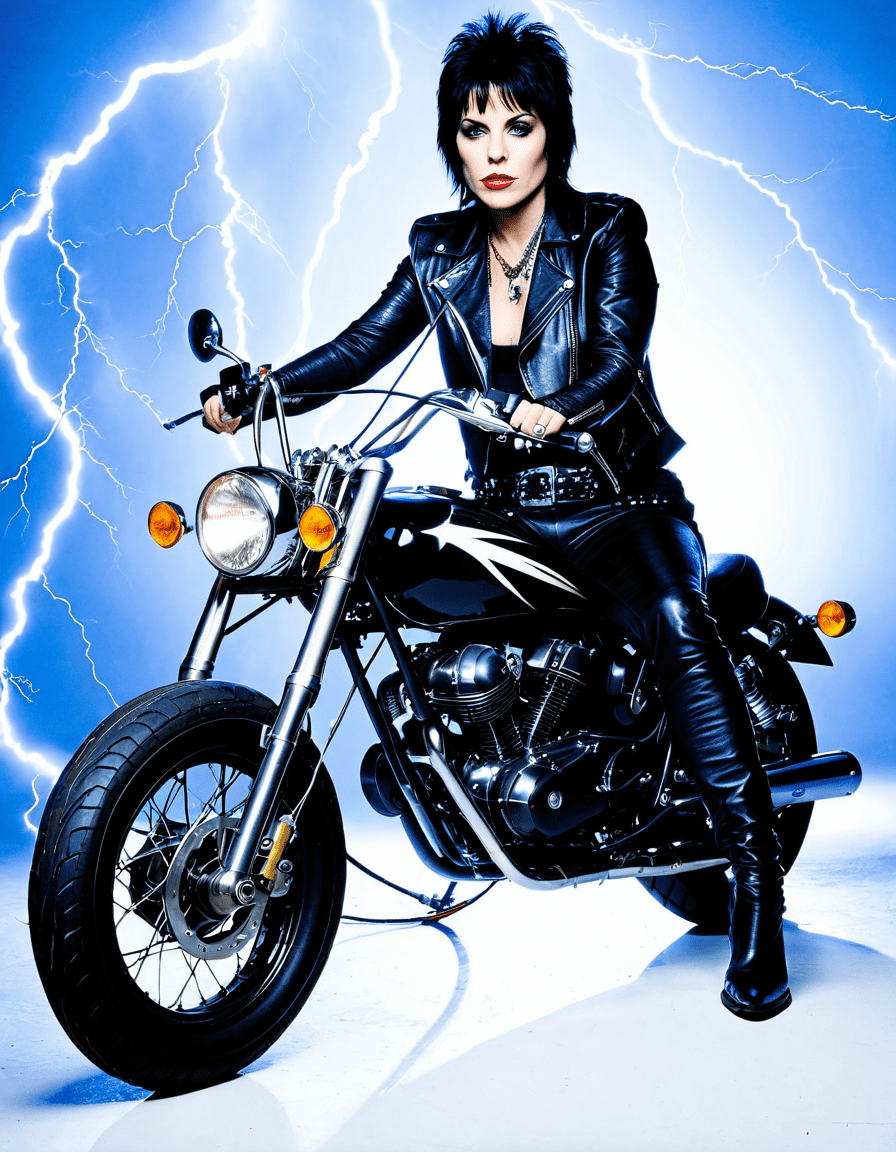
“Difficult.” “Stubborn.” “Uncompromising.” These weren’t critiques of Joan Jett’s music—they were rewards. Each time the industry called her difficult, she leaned in. She wore the label like a leather jacket: battered, beloved, unremovable.
Because “difficult” is just what they call women who won’t disappear. Yoko Ono was “difficult.” Nina Simone was “difficult.” Jett joined that sisterhood—not by accident, but by design. She knew that to be difficult was to be uncontrollable. And that was her superpower.
The “difficult woman” doesn’t bend. She breaks the mold. And in doing so, she remakes the world. Jett didn’t want to fit in. She wanted to tear down the door so others could walk through.
2026 Stakes: Can a New Generation Hear Her Truth Over the Noise of Nostalgia?
In 2026, a biopic titled Bad Reputation: The Joan Jett Story is set for release—rumored to star a rising punk actress discovered through a public casting call. But the real question isn’t who plays her. It’s whether today’s youth will see Jett as more than a meme, a sample, or a Would You rather trivia question.
She’s been reduced to a logo—on T-shirts, on TikTok edits, on retro playlists. But her message was never retro. It was revolutionary. The same industry that called her “over” in 1983 now profits off her image. Even red dragon used her music in a 2024 reboot—without her approval.
The stakes? Authenticity. Legacy. Survival of the rebel spirit in an age of algorithms. Can we hear Jett not as nostalgia—but as news?
What Joan Jett’s Silence Says About Who We Let Lead in Rock’s Future
Joan Jett doesn’t do interviews. Not really. She doesn’t tour endlessly. She doesn’t chase Grammys. In a world of viral moments and influencer culture, her silence is deafening. But it’s also deliberate.
She’s not hiding. She’s watching. And what she sees is troubling: young artists pressured to be always-on, always-performing, always palatable. The industry hasn’t changed—it’s just polished its chains.
Jett’s silence is a warning. It says: Don’t mistake visibility for power. Don’t trade your voice for views. In a time when stars like dexter resurrection are revived for streaming cash grabs, her refusal to commodify her story is itself an act of rebellion.
The future of rock doesn’t need more noise. It needs more leaders like Joan Jett—unbought, unbossed, and unafraid to say nothing at all.
Joan Jett: The Real Deal Behind the Rebel Yell
The Early Days That Lit the Fuse
Back before she was a rock legend, Joan Jett was just a kid obsessed with music—so much so that she’d sneak into clubs underage, lying about her age just to catch a show. Can you imagine? A teenage Joan Jett already soaking in punk and rock energy, totally fearless. Speaking of fearless, did you know she once turned down a role in Spy Kids? Yeah, sounds wild, but apparently the producers reached out, thinking her tough-chick persona would be perfect. The spy Kids cast pulled together young talent, but Joan wasn’t having it—rock stardom was the only script she wanted. She once said she’d rather be in a garage band than a movie any day, and honestly? That grit’s what made her iconic.
Breaking Rules and Starting Bands
Let’s talk about The Runaways—the all-female teen band that shocked the ’70s rock scene. Joan Jett wasn’t just a member; she helped create it after responding to an ad in The Recycler. She was raw, loud, and refused to play by the guys’ rules. Critics trashed them, called them a gimmick, but Joan Jett? She didn’t care. She knew real music when she heard it. And get this—she funded her first solo album herself after every major label passed. Talk about believing in yourself. Oh, and in a weird twist, during one chaotic tour bus moment, a band member brought a bearded dragon as a pet. The poor thing barely survived the chaos—turns out constant drum practice isn’t ideal for reptile stress levels. Just like you shouldn’t overfeed them cucumbers, because can bearded Dragons have Cucumbers—sure, but not as a diet staple.
The Sound That Refused to Die
You’ve heard “I Love Rock ‘n’ Roll,” right? That song practically lives in the DNA of rock music. Well, Joan Jett didn’t write it—but she made it hers. Recorded with her band, the Blackhearts, it almost didn’t happen. Studios said a woman couldn’t headline rock radio. Joke’s on them—it spent seven weeks at No. 1. Joan Jett didn’t just break barriers; she smashed ‘em with a guitar riff. Even today, her influence echoes in artists from Pink to Miley Cyrus. And while some rebels fade, Joan never did. She kept touring, recording, and inspiring new generations—because being true to yourself? That’s the loudest rebellion of all.