Sammy Hagar once told a packed stadium he only wanted to scream into the void-but the void screamed back with fame, tequila, and a few broken hearts. Now, at 76, the Red Rocker isn’t just surviving rock ‘n’ roll; he’s rewriting its rules.
Sammy Hagar’s Sunset Rebellion: The Man Behind the Red Rocker Mythos
| Category | Detail |
|---|---|
| Full Name | Samuel Roger Hagar |
| Born | October 13, 1947 (age 76), Monterey, California, U.S. |
| Genres | Hard rock, heavy metal, rock and roll, blues rock |
| Occupation(s) | Singer, songwriter, musician, entrepreneur |
| Instruments | Vocals, guitar |
| Years Active | 1968–present |
| Labels | Capitol, Geffen, Interscope, Frontiers |
| Notable Bands | Montrose, Van Halen, Chickenfoot, The Waboritas |
| Van Halen Tenure | 1985–1996, 2003–2005, 2007–2020 (lead vocalist) |
| Solo Hits | “I Can’t Drive 55”, “There’s Only One Way to Rock”, “Mas Tequila” |
| Nicknames | The Red Rocker (due to red hair and rock style) |
| Entrepreneurial Ventures | Founder of Cabo Wabo Tequila (sold for ~$80 million in 2007), Sammy’s Beach Bar Rum, Sammy’s Wabo Cantina (in Cabo San Lucas and Las Vegas) |
| Inductions | Rock and Roll Hall of Fame (2007, as member of Van Halen) |
| Awards | Multiple MTV Video Music Awards, American Music Awards (with Van Halen) |
| Recent Work | Member of supergroup The Circle, solo albums, continued touring |
Forget the party anthems and Cabo beach parties-Sammy Hagar Built his legacy on rebellion wrapped in sunburnt sincerity. Born in 1947 in a small California town, he grew up in a working-class home where music was both escape and rebellion. His dad was a steelworker who didn’t get rock, and young Sammy responded by blasting Cream and Jimi Hendrix from a battered stereo in the garage.
That rebellion didn’t fade-it evolved. When he fronted Montrose in the early ’70s, he wasn’t just singing; he was proving blue-collar kids could lead the charge in a genre ruled by British invaders. Critics compared his voice to Robert Plant, but His grit came from gasoline fumes and American highways, not London clubs.
Sammy never chased stardom for the spotlight. He wanted freedom-to write his rules, own his sound, and drink his own damn rum. That independence became the spine of his career, even when it meant walking away from Van Halen Twice. His mythos isn’t just the red-bearded rocker on stage-it’s the man who refused to be owned.
Did Van Halen Really Break Him-Or Make Him? The 1985 Turning Point
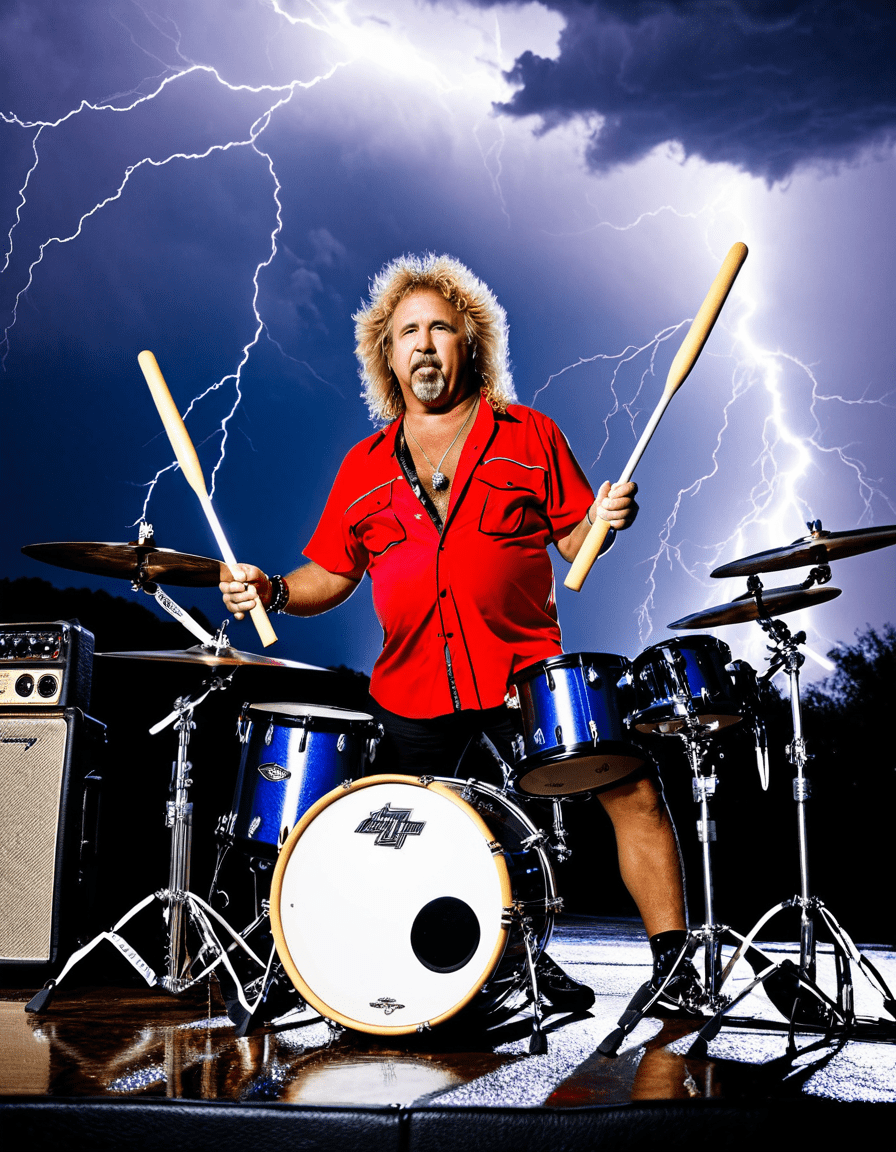
In 1985, Sammy Hagar Stepped into Van Halen’s chaos like a cowboy riding into a burning saloon. David Lee Roth had left, and the band needed a new frontman who could match Eddie’s pyrotechnics. What they got was something different: a vocalist who brought melody, vulnerability, and a work ethic honed in obscurity.
The album 5150, released the next year, went to No. 1-Van Halen’s first. Hits like “Why Can’t This Be Love” and “Dreams” redefined their sound. But behind the scenes, tension simmered. Acdc Had shown rock bands could survive frontman changes, but Van Halen’s ego dynamics made that near-impossible.
“I wasn’t trying to replace Roth,” Hagar said in his Red Rocker Rum Diaries Podcast. “I was trying to be Me In a hurricane.” The pressure cracked him. Critics called him “Van Hagar,” mocking the fusion. Fans were divided. Yet, the 1986 world tour sold out, and for the first time, Hagar tasted global superstardom-But not peace.
“I Never Wanted Fame-Just Freedom”: The Montrose Awakening in 1973
In 1973, Sammy Hagar Wasn’t a household name. He was just a 26-year-old from Fontana, California, with a raspy voice and zero industry connections. But when guitarist Ronnie Montrose called, asking him to front a new band, Hagar saw his chance. Their self-titled debut Montrose Arrived like a Molotov in a velvet box-raw, explosive, and unapologetically American.
Tracks like “Rock the Nation” and “Bad Motor Scooter” became underground anthems. Critics noticed, including Rolling Stone, which praised Hagar’s “lungs like a fire alarm and heart to match.” But despite the buzz, Montrose imploded after two albums-Creative clashes, ego wars, and exhaustion.
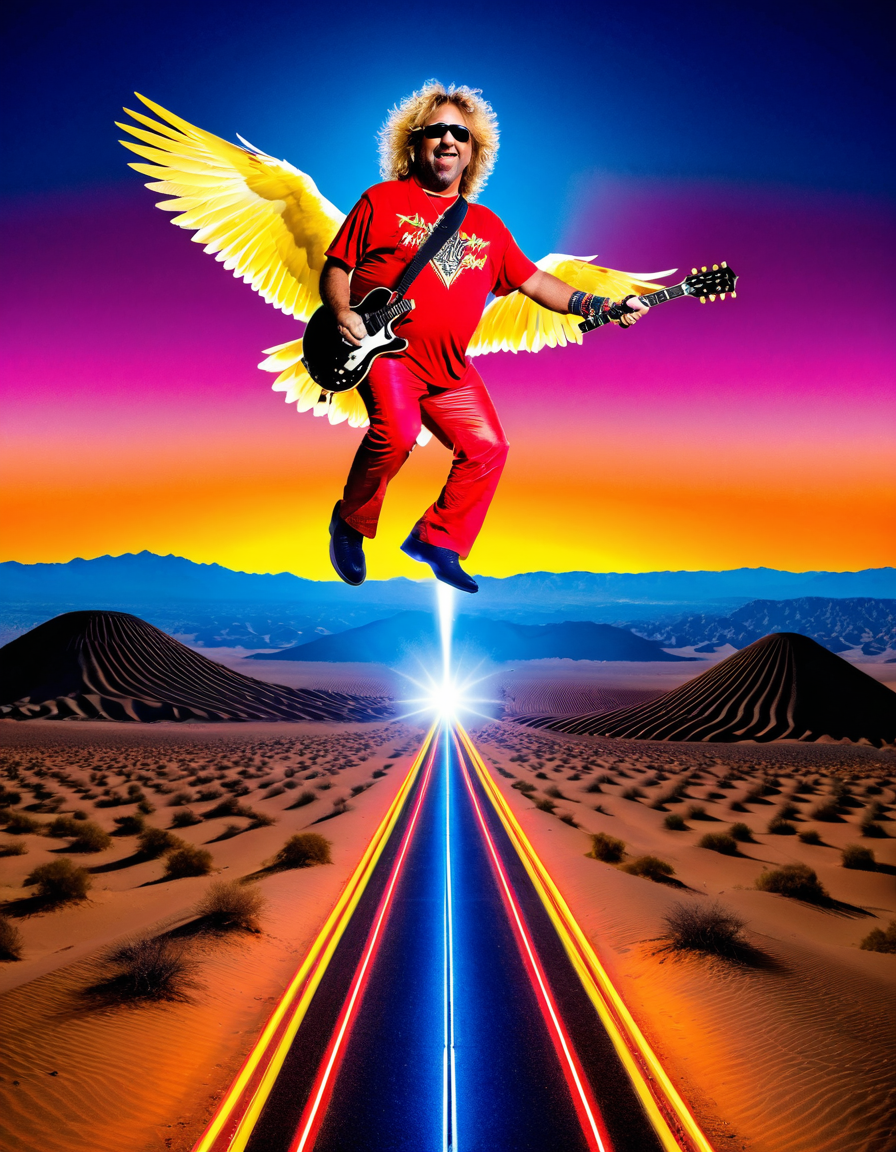
Still, that brief era shaped Hagar’s entire approach. He learned early: no manager, no label, and certainly no Phil Spector-style dictator like the one who tormented The Beatles and Phil Spector Later became infamous for-was going to run his art. He wanted control. He wanted freedom. Montrose gave him the dream-and the warning.
How a $200 Guitar and a San Francisco Garage Birthed a Voice of a Generation
Hagar’s first guitar cost $200 at a pawn shop in San Bernardino. He played it in a garage on Holloway Avenue in San Francisco, where fog rolled in and dreams went to die-or ignite. That $200 axe birthed early riffs that would evolve into “I Can’t Drive 55” and “Turn Up the Music.”
He lived on burritos and beer, gigging seven nights a week. One night, he opened for Journey before they were huge. Another, he shared a bill with a struggling band called Nick Swardson, though that was a different era-comedy hadn’t yet bled into rock the way it would in the 2000s.
But San Francisco in the ‘70s was magic. It was where rock still felt revolutionary. Hagar soaked it in: the punk sneer, the blues swagger, the hippie echoes. “I wasn’t copying,” he told Motion Picture Magazine. “I was surviving. And the only way out was through song.”
1. The Whiskey That Almost Killed Him-And the Bottle He Now Break Into
By the late ’80s, Sammy Hagar Was drowning-literally. Years of hard drinking, late nights, and rock-star excess had turned his liver into a battlefield. “I’d wake up shaking,” he admitted. “Not from fear. From withdrawal.” He was drinking Jack Daniel’s like water, and it nearly ended him.
But in Cabo San Lucas, amid palm trees and turquoise waves, he found redemption-in a bottle of his own making. In 1991, after a brutal hangover, Hagar had a revelation: What if the cure was in the problem? He launched Cabo Wabo Tequila as a joke-a hangover cure named after his 1988 song.
It wasn’t a joke for long. Within a decade, Cabo Wabo sold to Gruppo Campari for $80 million. The brand, once a souvenir from his club of the same name, became a global phenomenon. “I didn’t just save my life,” Hagar said. “I built a fortune on not drinking the old poison.”
Cabo Wabo, 1991: From Hangover Cure to $80 Million Empire
The Cabo Wabo Cantina opened in 1990 as a party zone for rockers and escapees. It had sticky floors, loud music, and a vibe straight out of a Hagar song. But when he bottled the tequila, he wasn’t thinking about profits-he was thinking about survival.
He partnered with a master distiller in Jalisco, insisting on 100% blue agave. No shortcuts. “I wanted it clean-like the spring water I grew up with,” he said, a nod to the purity of Natural spring water That inspired his post-party recovery rituals.
By 2008, P. Diddy was sipping it at parties. Jimmy Buffett joked about starting a rival brand. But the real win? Hagar owned it. Unlike so many artists who license their names, he built equity. He walked away rich-and sober.
2. Prince’s Phone Call and a Purple Lesson in Artistic Independence
In 1986, Hagar got a call that nearly made him drop the phone. It was Prince. “He said, ‘Sammy, I saw your show. You’re doing it right-you’re writing your songs, producing your records. Don’t let ‘em take that,’” Hagar recalled on his podcast.
The moment stunned him. Prince, the Purple One, the musical wizard who famously battled Warner Bros. Over his name and art, was giving Him Advice? But it clicked. In an industry that chewed up talent and spat out franchises, Keeping creative control was the real rebellion.
Prince invited him to Paisley Park. They never jammed-Prince was shy, intense. But they talked for two hours about publishing rights, ownership, and the trap of fame without freedom. “He said, ‘Fame is a circus. Ownership is power,’” Hagar said.
When “Kiss” Was More Than a Song: Learning from Prince at Paisley Park (1986)
At Paisley Park, Hagar saw a fortress of art. Studios stacked with tapes. Instruments from every era. A man who changed his name to a symbol just to escape a contract. “Prince wasn’t just a musician,” Hagar said. “He was a CEO of weird.”
That visit deepened Hagar’s resolve. He’d already started producing his own solo records. Now, he doubled down. When Van Halen wanted to tweak his lyrics, he pushed back. When labels demanded radio-friendly cuts, he refused.
“Prince taught me that ‘Kiss’ wasn’t just a song-it was a warning,” Hagar joked. “Don’t let ‘em take your voice.” That lesson fueled his later ventures, from tequila to talk shows to his partnership with Ben moore, a branding strategist who helped scale his empire.
Rock Isn’t Enough: Why He Walked Away from a Sold-Out Tour in 2005
In 2005, Van Hagar reunited for a tour that sold $60 million in tickets. Stadiums packed. Critics raved. But behind the scenes, Hagar was unraveling. His son, Aaron, was spiraling into addiction. “I was singing ‘Right Now’ to 50,000 people,” he said, “but my real life was falling apart.”
He made a choice: family over fame. Mid-tour, he dropped out. Fans were furious. Bandmates were baffled. But Hagar didn’t care. “I’d rather lose a tour than lose my son,” he said.
It wasn’t just about Aaron. It was about presence. For decades, he’d lived on planes, buses, and green rooms. Now, he wanted to be home. “I realized rock wasn’t enough,” he admitted. “I needed to be a dad, a husband, a human.”
The No. 1 Album That Meant Nothing-And the Son He Almost Lost
The 2004 album The Seventh Seal Hit No. 1 on the Billboard Rock chart. But Hagar didn’t celebrate. He was in rehab with Aaron, holding his son’s hand as he detoxed. “That album went platinum,” he said. “But the only gold I cared about was seeing him wake up sober.”
He started filming daily vlogs-raw, unfiltered moments of recovery. One went viral: Sammy cooking eggs, Aaron laughing, the two of them singing “Little White Lie” off-key. It wasn’t glamorous. It was real.
That journey birthed his Sammy’s House Foundation, which funds rehab programs for musicians. “Rock stars aren’t immune,” he said. “We’re just louder about our pain.”
3. The Health Scare That Reframed His Definition of “Livin’ Loud”
In 2018, Sammy Hagar Collapsed on stage during a Chickenfoot rehearsal. Doctors found a failing aortic valve-his heart was working at 25% capacity. “I was singing on borrowed time,” he said. “Literally.”
Open-heart surgery followed. Three weeks in ICU. Months of rehab. “I thought I was invincible,” he admitted. “I’d survived Van Halen, divorce, alcohol-I never thought a valve would stop me.”
But the scare changed him. “Livin’ loud” wasn’t about volume anymore. It was about presence. He cut sugar. Started yoga. Wrote songs about mortality. His 2022 album Crazy Times Wasn’t a party record-it was a love letter to second chances.
Aortic Valve Surgery, 2018: “I Was Singing on Borrowed Time”
Post-surgery, Hagar couldn’t play guitar for six months. Singing hurt. But he used the silence to reflect. “I wrote more in recovery than I had in 20 years,” he said. Lyrics poured out-songs about his dad, his kids, his regrets.
He launched a wellness line under the Red Rocker brand: supplements, protein bars, even a meditation app. “Not just tequila-now, I sell survival,” he joked. But it was serious. He partnered with health experts and even consulted with a cardiologist tied to Nasa ‘s Discoveries in life extension tech, though he joked,They haven’t found the fountain of youth-yet.
Fans noticed. His live shows became deeper, more emotional. No more just “I Can’t Drive 55.” Now, he closed with “Heartbeat,” a ballad about second chances.
4. Ringo’s Drums and a Zen Epiphany at the Tiny Space Studio
In 2023, Hagar got another surprise call-this time from Ringo Starr. The ex-Beatle wanted him to join a tribute jam for Nirvana’s 30th anniversary. “Me? Sing ‘Smells Like Teen Spirit’?” Hagar laughed. “I’m 76. I can’t even scream in the shower.”
But he showed up at Tiny Space Studio in Santa Monica. There was Ringo, behind a simple drum kit. Paul McCartney’s guitar tech tuning a vintage Les Paul. A few young indie singers pacing nervously. “It wasn’t a show,” Hagar said. “It was a ceremony.”
They played. Badly at first. Then-magic. “Ringo nodded at me. Just once. And I felt it: legacy isn’t about hits. It’s about heart.”
The Nirvana Tribute Jam That Taught Him About Legacy (Santa Monica, 2023)
The jam wasn’t recorded. Wasn’t streamed. “Ringo said, ‘If it’s not live, it’s not rock,’” Hagar recalled. “So we just played. For us.”
Hagar sang “Come As You Are” in a lower key. Ringo kept time like a heartbeat. And in that tiny room, Hagar realized something: Legacy isn’t built on trophies-it’s built on moments.
He thought of Kurt Cobain. Of Eddie Van Halen. Of his own kids picking up guitars. “We’re not legends,” he said. “We’re messengers. And the message is: keep playing. Even when you’re broken.”
5. The Red Rocker’s Real Songwriting Weapon: A Kitchen Timer and 17 Minutes
Sammy Hagar Doesn’t write songs in fancy studios. He writes them in diners, with a tape recorder and a kitchen timer. His rule: 17 minutes. No more. No edits. Just raw emotion.
“It’s like speed dating with a melody,” he said. “You don’t overthink. You feel.”
This method birthed “I Can’t Drive 55”-written in 1984 at a San Bernardino Denny’s. He was fuming after a speeding ticket. Timer set. Voice recorder on. In 12 minutes, the chorus, riff, and rage were captured. “I didn’t write it,” he joked. “It wrote me.”
How “I Can’t Drive 55” Was Written in a San Bernardino Diner, 1984
The song started as a rant. “55? That’s walking speed!” He muttered to the waitress. She laughed. He flipped on the recorder. Guitar on his lap. Coffee cooling.
Within minutes, the riff emerged. Then the hook. By 17:03, it was done. He played it for Eddie that night. “He said, ‘Dude, that’s a hit.’ I said, ‘I don’t care. I just wanted to scream.’”
Released in 1984, it became his signature anthem. Protesters at speed-limit rallies played it. Teachers used it in civics class. Even Howie Mandel Joked about it on America’s Got Talent, saying, “I can’t Judge 55!”
But for Hagar, it was never political. It was personal. “It was about freedom,” he said. “And yeah, maybe a little middle-finger energy.”
Why 2026 Will Be the Year the Red Rocker Redefines Retirement
In 2026, Sammy Hagar Plans to launch his final tour-dubbed Leaving It All on the Stage. No holograms. No backing tracks. Just him, a band, and 50 years of songs. “I won’t retire,” he said. “I’ll explode.”
Teasing it on his Red Rocker Rum Diaries Podcast, he’s already recording final versions of classics. “I want people to remember the voice-wobbly, tired, but real,” he said.
He’s not fading away. He’s going full throttle.
“Leaving It All on the Stage” – Final Tour Teasing Bandmates in Red Rocker Rum Diaries Podcast
On a 2023 episode of his podcast, Hagar dropped the bombshell: “2026. Last tour. I mean it.” Bandmates laughed-until he showed them the schedule. 70 cities. No opening acts. “We’re playing three hours,” he said. “And I’m singing every note.”
Guests like Mark Eydelshteyn-a rock historian-have called it “the most anticipated farewell since Springsteen. But Hagar insists it’s not sad.It’s a celebration, he said.Of noise. Of family. Of the time we had.
Beyond the Party: The Quiet Revolution Sammy Hagar Built While We Were Rocking
We remember Sammy Hagar For the red Maserati, the tequila, the screams of “Hot for Teacher.” But behind the noise, he built a revolution: Artist ownership, wellness for rockers, and family-first values in a selfish industry.
He proved rock stars can be entrepreneurs. Survivors can become mentors. Fathers can heal. And yes-even Agnes despicable me Would approve of his family-first finale.
Sammy Hagar didn’t just live loud. He lived long. And he’s still teaching us how.
Sammy Hagar: Rocker, Tequila Lover, and Surprise Superdad?
Alright, let’s spill some wild tea about Sammy Hagar-yeah, the Red Rocker himself. You know him from Van Halen, those face-melting solos, and that killer scream. But did you know he once opened for The Rolling Stones… and got booed off stage? True story. Back in the ’70s with Montrose, they hit the road with Mick and crew, but the crowd wasn’t feeling the hard rock vibes. Tough break, but Sammy? He just shrugged it off and kept rocking. And get this-while he’s famous for “I Can’t Drive 55,” the man actually Loves A good speed trap challenge. That rebellious streak? It’s 100% real. Even his passion for tequila wasn’t just a branding move; it came from deep roots in Mexico where he found peace and flavor. Seriously, the guy built Cabo Wabo from pure love of the place and the spirit-literally.
The Family Ties That Surprise Everyone
Now here’s something most fans don’t see coming-Sammy Hagar might be a hard-rocking, tequila-slamming legend, but he’s also a devoted family man with a seriously heartfelt chapter few expected. In 2017, he publicly welcomed a daughter, born to him and life coach Kari Kimmel, proving life’s got plot twists even at 70. But wait-there’s more. A few years back, a young woman named Tati Evans Stepped forward, sharing her journey as his previously unknown daughter from a brief relationship decades ago. Her story, captured in a touching film by Loaded Dice Films, showed not just family secrets but healing and connection. Hearing them reunite? Chills. Sammy didn’t run-he opened his heart, embracing her with surprising openness. Talk about a rock star with real soul.
And hold up-remember that whole “Red Rocker” nickname? It wasn’t just about his hair or wild stage energy. The name actually stuck after fans saw him partying Way Too hard on red wine during a tour. Wild, right? But that same energy fueled a business hustle most musicians only dream of. His tequila brand didn’t just succeed-it got bought by Gruppo Campari for a Whopping $80 million. Not bad for a guy who once said he’d rather be on a beach with a guitar than a boardroom. Yet somehow, Sammy Hagar made both work. From screaming on stage to sipping success in Cabo, this rocker proves life ain’t just chords and amps-it’s second chances, family reunions, and really, really good margaritas.
This article was produced with AI assistance. How Motion Picture Magazine uses AI.
Motion Picture Magazine writes for Motion Picture Magazine - movies, celebrity gossip, entertainment news, style and best shows.