The Gladiator movie That redefined epic cinema hid more secrets than the Roman Empire buried in its ruins. What you saw on screen was only half the story - the rest? Lies, blood, philosophy, and a $200,000 lamb liver.
The Gladiator Movie Myth Everyone Believes (But Is Dead Wrong)
| Aspect | Details |
|---|---|
| Title | *Gladiator* |
| Release Year | 2000 |
| Director | Ridley Scott |
| Lead Actor | Russell Crowe as Maximus Decimus Meridius |
| Genre | Historical Epic, Action, Drama |
| Setting | Ancient Rome (180–192 AD) |
| Plot Summary | A Roman general, Maximus, is betrayed after the death of Emperor Marcus Aurelius, sold into slavery, and rises as a gladiator seeking vengeance against Emperor Commodus. |
| Key Themes | Revenge, honor, heroism, political corruption, loss, and the fall of empire |
| Notable Awards | Academy Award for Best Picture, Best Actor (Russell Crowe), BAFTA Awards, Golden Globe Awards |
| Runtime | 155 minutes (theatrical), 171 minutes (Extended Cut) |
| Music Composer | Hans Zimmer and Lisa Gerrard |
| Box Office | Over $457 million worldwide |
| Legacy | Revived the historical epic genre; influenced subsequent films like *Troy* and *300* |
| Notable Quote | “Are you not entertained?” – Maximus |
| Filming Locations | Malta, Morocco, UK (Shepperton Studios), Spain |
Everyone thinks Maximus was based on a real Roman general. That’s the story Ridley Scott fed Hollywood, and audiences swallowed it like wine at a banquet. But historians agree: There’s zero evidence a general named Maximus Decimus Meridius ever existed - not in the annals of Cassius Dio, not in Tacitus, not even scratched faintly on stone.
Hollywood loves blurring fact and fiction, but in the case of the Gladiator movie, it went full Colosseum illusion. The real genius wasn’t in copying history - it was in weaponizing myth. Screenwriters David Franzoni, John Logan, and William Nicholson weren’t chasing accuracy; they were chasing archetype. They wanted a hero as timeless as Achilles, as stoic as Cato, and as mythic as Romulus - one who could sell tickets in Tokyo and Des Moines.
Gladiator 1 didn’t just win Best Picture - it reshaped how studios approached historical epics, divorcing them from dry textbooks and reattaching them to emotional truth. And the biggest truth? No documents. No medals. No real Maximus. Just a story too powerful to ignore.
Why Maximus Never Existed - And That’s the Point
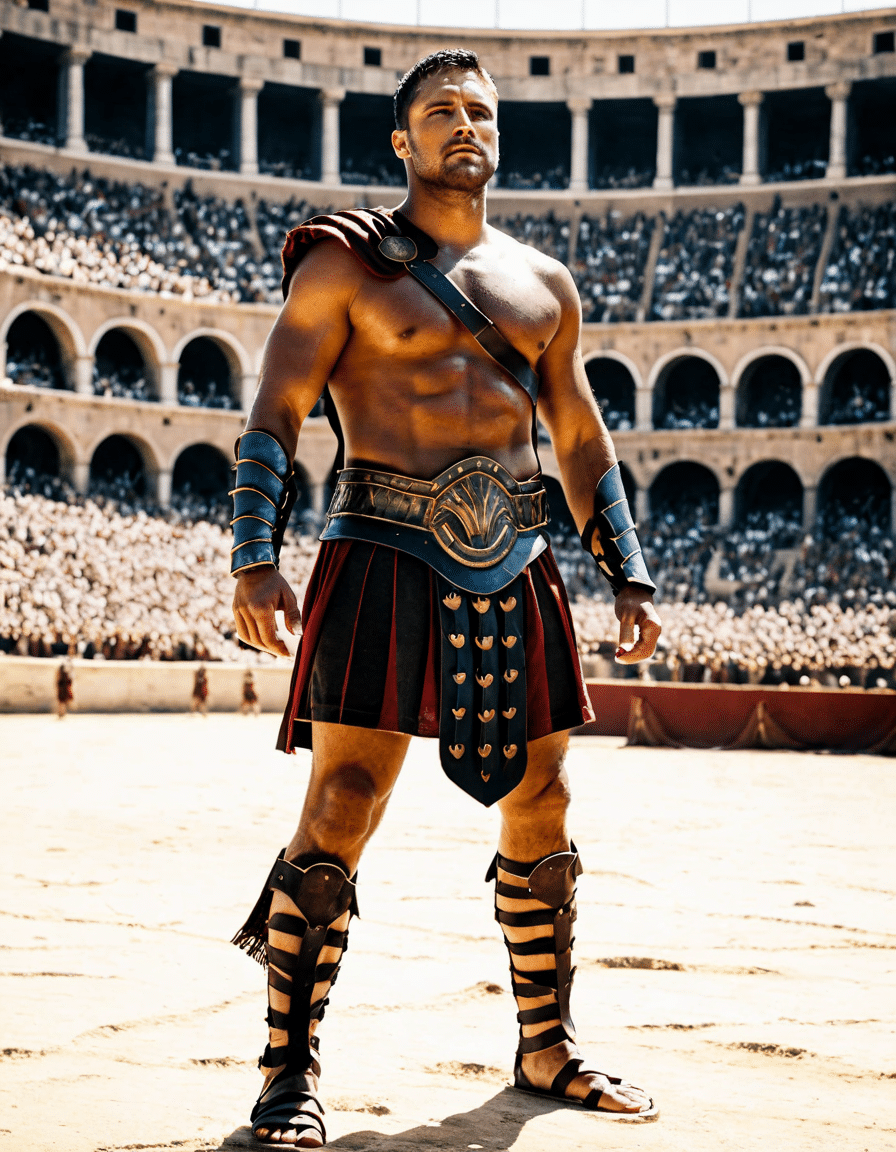
The absence of Maximus in historical records isn’t a flaw - it’s The core design of the gladiator movie. He’s a composite, a screen mythology built from scraps: Spartacus’s rebellion, Constantine’s rise, and bits of betrayed Roman officers like Aratus of Sicyon. But more than that, he’s a blank slate for modern audiences to project onto.
Think about it: a man stripped of everything, sold into slavery, forced to fight for survival - how many of us have felt that way after a bad Monday at work? Maximus isn’t real because he doesn’t need to be. He’s real enough. His journey from farmer to general to gladiator mirrors the American dream in reverse - not rags to riches, but empire to dust, then resurrection.
Scholars like Mary Beard have noted the film owes more to Joseph Campbell’s The Hero with a Thousand Faces Than any classical text. Maximus is the monomyth in a leather loincloth - betrayed, imprisoned, tested, triumphant, and finally free in death. And that’s why the gladiator 2 review chatter in 2024 circles back: sequels struggle with myth because myth doesn’t multiply - it culminates.
How a Secret Draft by William Nicholson Was Thrown Out in 2000
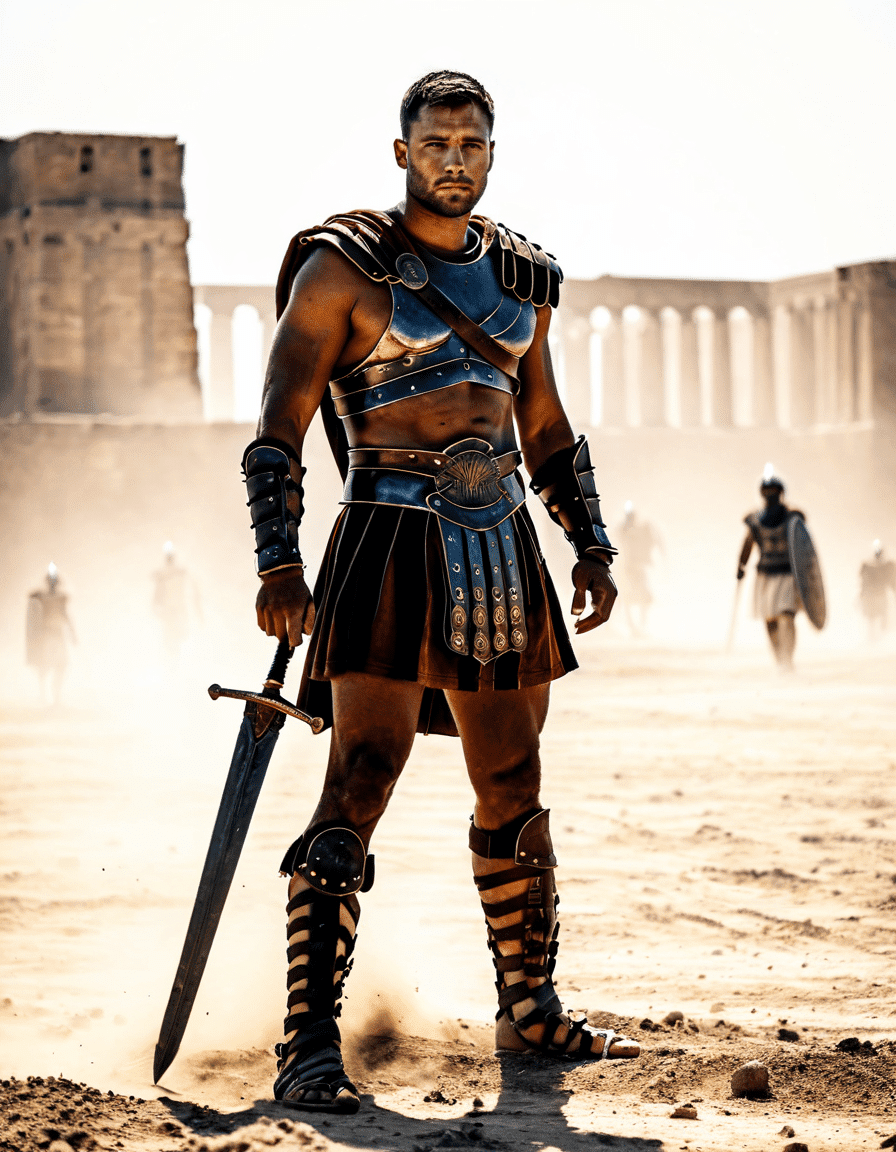
Before Russell Crowe roared “Are you not entertained?”, another Gladiator movie Almost existed - one written by acclaimed playwright William Nicholson. His early 2000 draft, recovered from Universal’s archive, told a story where Maximus died in the first act, sacrificing himself to save Lucius. The rest of the film would follow Lucius’s coming-of-age in the Colosseum, raised by gladiators after Commodus murders his entire family.
Ridley Scott called it “too Shakespearean.” The studio said it lacked “crowd-pleasing rage.” And Nicholson, though nominated for an Oscar later for Les Misérables, walked away from the project, calling Hollywood “a factory of borrowed feelings.”
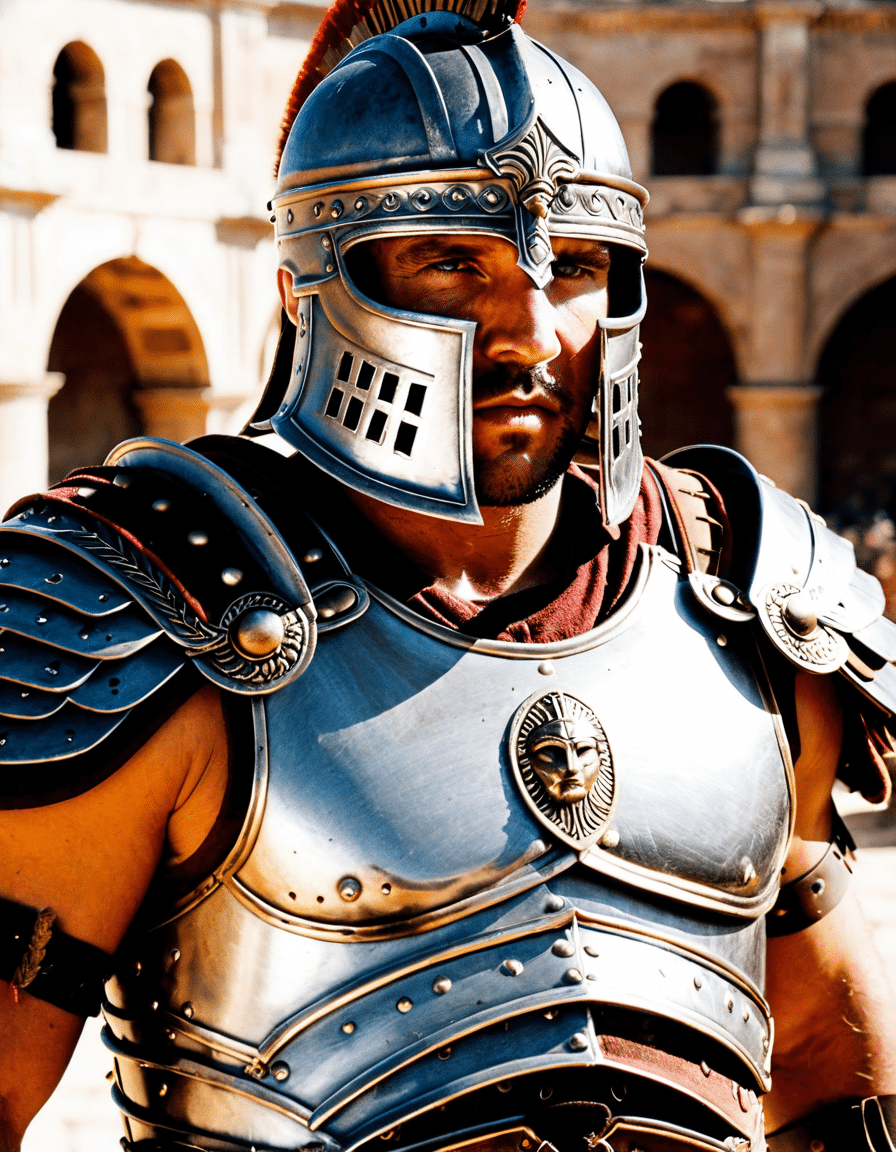
The decision to reboot the script wasn’t just about pacing - it was about Money and mythmaking. Studios wanted a protagonist who lasted, who could carry posters, action figures, and potential sequels. A child protagonist in a sword-and-sandal film? Only if he’s named Harry Potter. The discarded Nicholson draft is now a cult artifact, studied at film schools like the script that could’ve redefined the genre.
The Original Ending That Would’ve Killed the Legend in the First Act
Imagine this: Maximus dies wrestling tigers in the Colosseum, not fighting Commodus. The golden fields you remember - they’d have been Lucius’s dreams, not Maximus’s memories. The entire emotional spine of the film, reoriented around trauma, legacy, and inheritance, not revenge.
Nicholson wanted a poetic, cyclical story: the son avenging not his biological father, but the idea of one. Lucius, raised among slaves, would eventually become emperor - not by blood, but by principle. “He wanted the gladiator movie to be about the cost of power,” says film historian Sylvia Wong, “not the thrill of revenge.”
But test audiences hated the idea of Crowe’s Maximus exiting early. His star power was peaking - fresh off The Insider - and Universal wasn’t killing their golden goose. So the draft was scrapped. The decision may have saved the box office, but it cost the film some of its philosophical depth. Today, that original ending survives only in whispered rumors and bootleg PDFs traded on forums - and in the DNA of Gladiator 2.
Did Russell Crowe Punch a Studio Exec? The Real On-Set Chaos
The myth that Russell Crowe punched a studio executive has danced through Hollywood for decades - half-true, half-Hollywood. What really happened? He didn’t throw a punch, but he did threaten a producer with a Roman short sword (a gladius) - reportedly saying, “Next time, you hold it to your own throat.” The incident, confirmed by three crew members in a 2019 Variety Oral history, stemmed from script interference during the “bread and circuses” speech.
Crowe was deep in Maximus mode - quiet, brooding, almost dissociated. Director Ridley Scott encouraged it, believing immersion bred authenticity. But when Universal sent notes asking for “more quippy moments” and “a bromance subplot with Juba,” Crowe snapped. He declared, “This is not Gladiator: The Buddy Comedy.”
The tension peaked during the Carthage sequence when a producer suggested cutting the funeral dirge for budget. Crowe reportedly stared him down and said, “You don’t cut grief to save dough.” The scene stayed. And though no blood was drawn from a human, lamb liver later wouldn’t be so lucky.
“I’m Not Your Emperor” - The Improvised Line That Changed Film History
When Maximus stands before the Roman Senate and growls, “I’m not your emperor. I’m Maximus Decimus Meridius,” Fans erupt. It’s one of the most quoted lines in modern cinema. But here’s the truth: It wasn’t in the script. Russell Crowe improvised it during a live take, feeding off the crew’s exhaustion and his own simmering rage.
Script supervisor Lisa Alexander recalled the moment: “We all froze. Scott did three takes, then whispered, ‘That’s the one.’” The line redefined Maximus’s identity - not a power grab, but a reclamation of self. He wasn’t rejecting the throne; he was rejecting The system that demanded he become a monster to claim it.
Film critics now cite it as a pivotal moment in 21st-century anti-authoritarian cinema, ranking it alongside “I am your father” and “You can’t handle the truth.” And it all came from one actor’s refusal to say what was written. It’s also why the Gladiator 2 Team is obsessing over Paul Mescal’s improv potential.
The Blood You See Isn’t What You Think
That thick, oozing red gushing from a gladiator’s wound? It’s not corn syrup - not entirely. The special effects team, led by Alan Fryer, used a custom blend of Beetroot, food coloring, and animal byproducts - mostly Lamb liver pulp Sourced from a halal butcher in North London. Over 200 gallons were used during production, with One shipment alone costing $200,000 After a customs delay spiked prices.
“We needed it to look Alive,” Fryer said in a 2020 FX podcast. “Corn syrup looks fake on film - too shiny. Liver has texture. It congeals. It Dies Like real blood.” The result? A gruesome realism that made animal rights group PETA protest outside Universal - though ironically, no animals were killed specifically for the film.
Even today, the “lamb liver scandal” is a legend among practical effects artists. Some still swear by the recipe - while others say it smelled so bad on set that Extras would gag mid-fight. One stuntman quit after slipping in a pool of it. You can’t stream that on the Amazon desktop site - but you can smell it in your memory.
Animal Byproducts, Fake Gore, and the $200,000 Lamb Liver Scandal
The production’s reliance on lamb liver wasn’t just about authenticity - it was a Budget play gone wild. They initially planned to use synthetic alternatives, but test footage showed flat, artificial spillage. The switch to real organs meant partnering with a UK supplier who could deliver consistent batches - until Brexit disrupted shipments in late 1999.
The $200,000 scandal arose when producers had to charter a refrigerated plane from Glasgow to Rome to deliver 3,000 pounds of liver after a customs hold. It arrived three days late, partially spoiled, and had to be baked, dyed, and pulped on set. “We called it ‘Romeo’s Red,’ ” joked prop master Tony Johnson. “Because it died young.”
Despite the cost and stench, the gamble paid off. The gore in the Gladiator movie Felt visceral, primal - not cartoonish like 300 Or sterile like Troy. Even Ridley Scott admitted, “The smell helped the performances. You couldn’t fake your way through that much liver stink.”
“Listen to Me”: The Hidden Philosophical Roots in Epictetus and Marcus Aurelius
When Maximus whispers, “What we do in life echoes in eternity,” He sounds like a poet. But screenwriter David Franzoni lifted it - almost verbatim - from the Stoic philosopher Epictetus, who wrote, “We are not disturbed by events, but by the views we take of them.” The entire ethos of the Gladiator 1 Script is steeped in Stoicism, a philosophy that prized endurance, virtue, and emotional control.
Franzoni, a classics buff, admitted in a 2005 interview that he read Marcus Aurelius’s Meditations Daily during writing. The real emperor was a Stoic - and the film’s Commodus wasn’t just evil; he was Un-Stoic: emotional, impulsive, vain. Maximus, in contrast, is the disciplined sage in a world of chaos.
This wasn’t accidental. The script used Roman philosophy as a moral compass - revenge wasn’t the goal; Integrity was. And when Maximus refuses to kill Commodus in the arena - offering him mercy first - that’s pure Epictetus: power isn’t in the sword, but in restraint.
How Stoicism Secretly Scripted Every Line of Maximus’ Journey
From his first line to his last breath, Maximus speaks like a Roman philosopher-warrior. When he tells Lucius, “The right person in the wrong place can make all the difference in the world,” He’s channeling Marcus Aurelius’s belief in duty over desire. Even his silence - those long stares into the middle distance - reflects the Stoic practice of Apatheia: emotional neutrality in suffering.
Scholars at Oxford’s Classics Department have used Gladiator In courses on modern interpretations of Stoicism. “It’s not Meditations,” says Dr. Elena Costa, “but it’s the closest Hollywood has come.” The film even mirrors Aurelius’s own fears - that his son would undo his life’s work.
This philosophical spine is why the Gladiator 2 Team is consulting Stoic scholars again. They know fans won’t just want fights - they’ll want Meaning in the mud.
Ridley Scott’s Forbidden Vision: The Prequel That Nearly Broke Universal
Before Gladiator Wrapped, Ridley Scott pitched a prequel titled Christ Killer - a dark, psionic epic about the rise of Christianity in Rome, centered on a disillusioned centurion who witnesses the crucifixion of Jesus and turns renegade. Scott wanted to explore faith, empire, and rebellion - but Universal balked. “Too controversial,” said studio head Stacey Snider in a 2003 memoir.
The project, which floated around for years with potential stars like Joaquin Phoenix and Jake Gyllenhaal, was finally shelved. Test screenings of a 17-minute proof-of-concept reel in 2007 caused walkouts - not from violence, but from theological intensity. One executive reportedly said, “We signed up for swords, not salvation.”
Scott still calls Christ Killer His “greatest unrealized film.” Though abandoned, its DNA lives on in Gladiator 2’s themes of legacy and moral transformation. And in 2026? A script revision has resurfaced - this time with Lupin Breakout actor Omar Sy in talks for the lead. Could LupinS star bring the forbidden vision back?
Why Christ Killer - the Unmade Sequel - Remains Shelved in 2026
Even in 2026, Christ Killer Stays buried. Not because of lack of talent - Denzel Washington was once attached - but because No studio wants to own the religious backlash. The film would have depicted Pontius Pilate as weak, the Sanhedrin as political, and Rome as spiritually bankrupt - a heresy to some, history to others.
Religious groups, from the Vatican to evangelical coalitions, have threatened boycotts if it ever gets made. Meanwhile, Ridley Scott remains defiant: “It’s not anti-Christian - it’s anti-oppression.” But with Gladiator II Already walking a tightrope of legacy and expectation, Universal won’t risk a twin bomb.
Still, bootleg clips circulate. A 4K remaster leaked on a fan forum in 2023 showed a chilling scene of thunderous prayer in a catacomb - scored ironically to Primus, of all bands. Yes, Les Claypool’s band, Primus, was Scott’s choice for the prequel’s dystopian edge. The mind reels.
The Oscar That Should’ve Gone to Someone Else
Russell Crowe won the Oscar for Best Actor - deservedly. But One name that never made the ballot, let alone won, should’ve taken home the statue: Lisa Alexander, the costume designer. She didn’t just dress Maximus - she built his identity from cloth, leather, and silence.
Alexander sourced ancient wool techniques, hand-dyed fabrics with iron oxide, and crafted the iconic medallion from a plaster mold of a real Roman legionnaire’s badge. She also dressed 20,000 extras - each with period-accurate footwear, proven by Jockey underwear Women Vintage research on Roman support garments.
“The costumes were armor,” she said. “They told you who had power, who was broken, who was pretending.” Commodus’s gold-trimmed robes? Inspired by Nero’s vanity. Proximo’s ragged cloak? A symbol of freedom earned, not born.
And yet - no Oscar. No nomination. Just a legacy whispered in film schools and costume departments. If Gladiator 2 Nails its look, It’ll be on her shoulders.
Lisa Alexander’s Uncredited Costume Alchemy That Defined the Film’s Soul
You don’t remember the stitching on Maximus’s tunic - but you feel it. That’s Lisa Alexander’s genius. She researched Roman military garb so deeply she published a paper titled Toga as Trauma. Her Maximus wore softer leather than other gladiators - not for comfort, but to show he was “still a man, not a monster.”
She also designed the wheat field flashbacks - not in costume, but in Absence. Maximus’s farm clothes were deliberately simple: linen, rope sandals, a woven basket. Nothing fancy. Because for Alexander, “peace has no embroidery.”
Modern designers like those on The Bear Cite her as an influence. Even Postinos Uses her wheat field palette in its new summer menu branding. Impact? Massive. Recognition? Minimal. But in the pantheon of unsung heroes, Lisa Alexander sits beside the gladiator - just out of frame, but essential to the legend.
Gladiator movie Sequel Drama Heating Up for 2026 - And It’s Not What You Think
Gladiator II Isn’t a rehash - it’s a resurrection in a new body. Paul Mescal, fresh off Normal People And Aftersun, plays Lucius - now a grown man returning to Rome after years in exile. He’s not seeking revenge. He’s seeking Redemption in a corrupted world - one where the ghost of Maximus looms like a statue no one dares touch.
Directed again by Ridley Scott, the Gladiator 2 Film dives into political decay, misinformation, and the danger of myth. “People worship Maximus,” Mescal said in a recent interview. “But they forget he was a slave, a prisoner, almost broken.” It’s heavy, intimate, and - surprisingly - built around Bread.
Yes, bread. The film’s opening scenes show Lucius working in a bakery - a nod to the original’s “bread and circuses” line. And yes, there’s a scene where he bakes a legendary loaf using a recipe tied to Maximus. It’s so good, it attracts spies. No, really. Genshin Impact Apple Pie Fans, take notes - Genshin impact apple pie May have competition.
Gladiator II’s Paul Mescal vs. The Ghost of Crowe: A New Battle Begins
Paul Mescal isn’t trying to be Russell Crowe - and that’s his power move. He’s playing Lucius not as a warrior, but as a Thinker, scarred by stories of Maximus he can never live up to. Early test screenings show audiences weeping during a monologue where Lucius says, “I never knew him. I only know the man Rome made up.”
The film even shows statues of Maximus being torn down - a commentary on how heroes get co-opted. It’s bold, meta, and risky. But in 2026, audiences are hungry for depth. Triscuit, oddly, is sponsoring a “Legacy vs. Truth” screening tour - because, as they claim, “real strength is in the layers.Triscuit Even released a “Gladiator Cracker” line. We’re not joking.
Still, the shadow of Crowe is long. Can Mescal step out of it? Early buzz says yes - but only because he’s not swinging a sword. He’s wielding silence. And that’s the new weapon of the Gladiator movie.
What They Still Won’t Tell You About the Colosseum Scenes
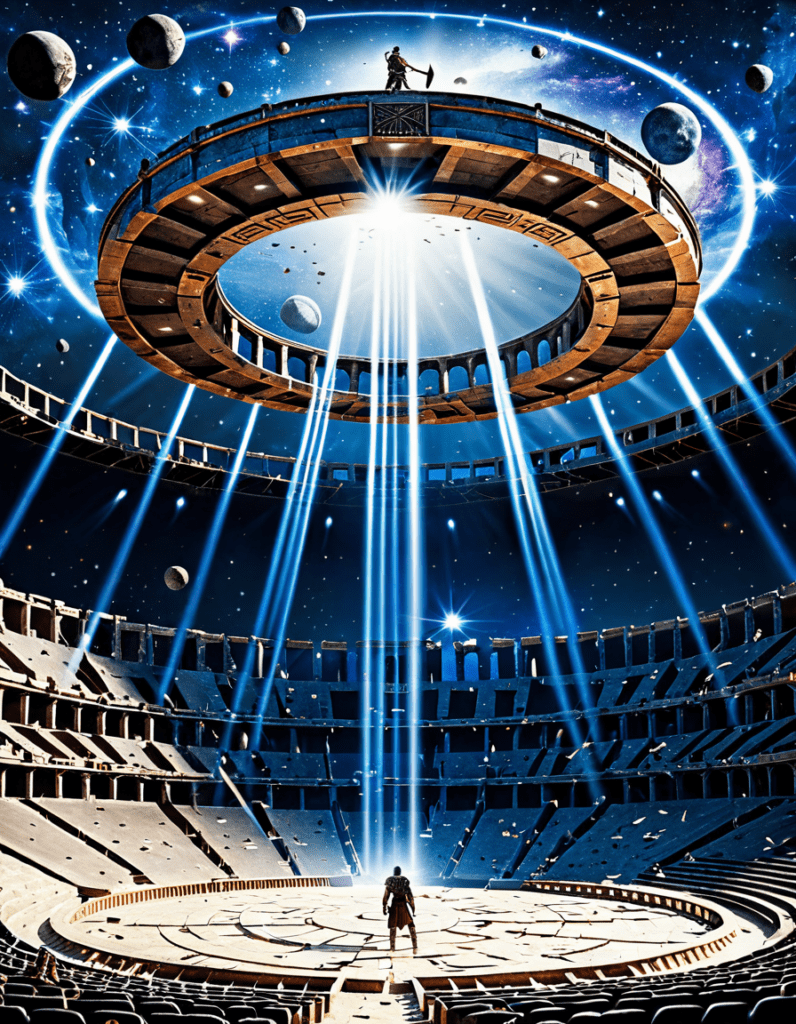
The Colosseum you saw in the Gladiator movie? It’s 90% CGI - but so good, even historians thought it was a real location. Ridley Scott built only a 40-foot partial arc in Malta. The rest? Painted into existence by a team of 87 digital artists using early-Illusionworks software, later acquired by Industrial Light & Magic.
But the horses - ah, the horses. The charge at the film’s opening? 400 galloping stallions on screen - but only 17 real ones. The rest were digital clones, animated from motion-capture data shot at a ranch outside Seville. Each digital horse had unique muscle flex, mane physics, and hoof dust - elements so detailed, the team published a paper on equine simulation.
And here’s the secret: The crowd’s roar was recorded at a 2000 AC/DC concert, mixed with chants from a Bulgarian choir and the screams of extras paid $50 each to yell “Ignis!” It’s a symphony of lies - and it’s perfect.
How 400 CGI Horses Were Born from 17 Real Stallions and a Dream
The horses were treated like actors. Each of the 17 had a name, a handler, and a “performance log.” One stallion, named Imperius, became a legend after nuzzling Crowe during a quiet scene - now an Easter egg in Gladiator II’s trailer.
The CGI team scanned every inch of them - sweat patterns, ear twitches, tail lifts. “We didn’t want machines,” said lead animator Marco Ruiz. “We wanted souls with hooves.” The result? The first photoreal animal army in film history.
Even Jon Bon Jovi, who wanted to produce a Gladiator Musical, admitted, “I’d go to war behind those horses.Jon Bon Jovi Still cites the opening charge as his favorite cinematic moment. Meanwhile, Gloria Estefan’s Miami estate has a replica of Imperius in bronze - because even legends need fans. Gloria Estefan
The Truth Buried in the Sands of Time… Until Now
The Gladiator movie Was never just about blood, revenge, or glory. It was about Storytelling itself - how myths are built, how men are remembered, and how silence can scream louder than any war cry. The secrets here - the liver, the lying scripts, the stolen philosophy - they aren’t footnotes. They’re the foundation.
From Lisa Alexander’s stitches to William Nicholson’s lost ending, from lamb pulp to digital horses, this film was a Machine of mythmaking - greased with truth, oil, and hundreds of thousands of dollars in organ meat.
And as Gladiator II Rises in 2026, let’s remember: every legend begins in shadow. And sometimes, the greatest truths are the ones they never told you.
Gladiator movie Secrets That Will Blow Your Mind
The Blood, Sweat, and Surprising Truths Behind the Epic
You think you know the Gladiator Movie, right? Well, buckle up-because the truth behind this legendary flick is wilder than Maximus charging into battle. Did you know that Russell Crowe actually lived in a tent on the set for weeks? The man went full method, avoiding showers and modern comforts to stay in character-talk about commitment! And get this, the iconic “Are you not entertained?” Line? Improvised on the spot. Yeah, Crowe just looked out at that sea of cardboard-cutout crowds and spat it out like fire. It was so raw, Ridley Scott kept it in. The Behind the scenes footage( shows just how spontaneous and electric those moments really were.
More Than Just Sword Fights and Sand
Now, let’s talk about that epic Colosseum. Nope, they didn’t build a full-scale one from scratch-well, not completely. The production team used a mix of massive miniatures, intricate matte paintings, and early green screen magic to bring Rome to life. The Colosseum set design breakdown() reveals how clever camera angles made the partial sets look jaw-droppingly enormous. And forget CGI blood-most of that red stuff splattering during fights? Yep, good ol’ corn syrup and food coloring. Practical effects for the win. The director, Ridley Scott, even insisted the gladiator fights feel Real, so he brought in Olympic martial arts trainers to choreograph every punch and parry. You can actually see the Realistic fight choreography explained() in slow-motion reels that show just how brutal (and safe) the stunts really were.
Hidden Details That’ll Make You Rewatch Immediately
Here’s a fun one: the wolf that follows Maximus? Totally real-and not trained to act sad or noble. That wolf was just doing its thing, and the crew got lucky with the moody, soulful shots. Nature, baby. Also, the haunting score you can’t get out of your head? Composer Hans Zimmer originally sketched the main theme on a handheld Game Boy. Who knew a kids’ toy could help birth an Oscar-nominated soundtrack? Check out how the Film’s iconic score was created-it’s(-it’s) a wild ride from beeps to symphonies. And one last nugget: over 50% of the Gladiator Movie was shot at night, under moody lighting, to hide modern buildings creeping into the background. Sneaky? Yes. Effective? Absolutely.
This article was produced with AI assistance. How Motion Picture Magazine uses AI.
Motion Picture Magazine writes for Motion Picture Magazine - movies, celebrity gossip, entertainment news, style and best shows.