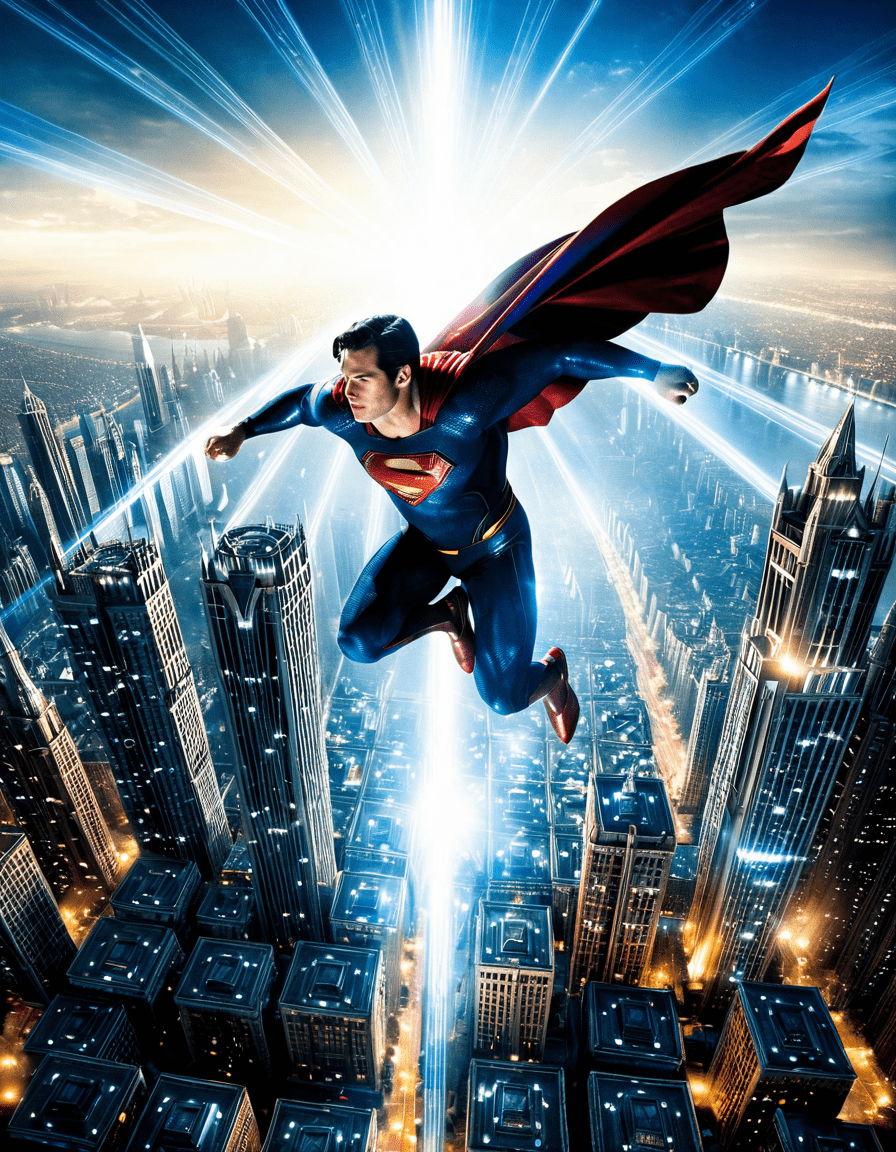
superman returns wasn’t just a nostalgic throwback—it was a cinematic paradox: a blockbuster revival that tried to ignore decades of pop culture evolution, only to be swallowed by it. And behind the curtain? A saga of broken plans, axed sequels, and behind-the-scenes turmoil you’ve never heard.
Superman Returns: The Hidden Truth Behind Brandon Routh’s One-And-Done Revival
| Aspect | Detail |
|---|---|
| Title | *Superman Returns* |
| Release Year | 2006 |
| Director | Bryan Singer |
| Screenplay By | Michael Dougherty, Dan Harris |
| Story By | Bryan Singer, Michael Dougherty, Dan Harris |
| Based On | Superman by Jerry Siegel and Joe Shuster |
| Lead Actor | Brandon Routh (as Superman/Clark Kent) |
| Supporting Cast | Kate Bosworth (Lois Lane), Kevin Spacey (Lex Luthor), James Marsden (Richard White), Eva Marie Saint (Martha Kent), Frank Langella (Perry White) |
| Runtime | 154 minutes |
| Studio | Warner Bros. Pictures, Legendary Pictures |
| Budget | $223 million |
| Box Office | $391 million (worldwide) |
| Musical Score | John Williams (themes), John Ottman (original score) |
| Production Period | Filming: March–September 2005 |
| Filming Location | Sydney, Australia; Vancouver, Canada |
| Genre | Superhero, Action, Drama |
| Story Timeline | Set after *Superman II* (1980), ignoring *III* and *IV* |
| Critical Reception | Generally positive; praised for visual style and homage to original films; criticized for slow pacing |
| Awards | Nominated for: Academy Award for Best Visual Effects (2007); Saturn Award for Best Science Fiction Film |
| Key Plot | Superman returns after a 5-year absence to find Earth changed, with Lois moving on and Lex Luthor plotting global destruction |
| Notable Feature | Reuse of John Williams’ classic *Superman* theme |
| Legacy | Intended as first in a rebooted series; sequel canceled due to mixed commercial performance and studio direction change |
When Superman Returns hit theaters in 2006, it arrived like a vintage spaceship—gleaming but out of time. Director Bryan Singer treated the film as a direct sequel to Superman: The Movie (1978), ignoring everything post-Superman III. This bold decision confused audiences who expected modern updates, not a love letter to Christopher Reeve. Box office returns were solid—$391 million globally—but the film’s $223 million budget left Warner Bros. underwhelmed.
The studio had hoped for a new franchise launchpad, not a standalone homage. And while critics praised the visual style and Routh’s uncanny mimicry of Reeve, audiences were split. Some called it “beautifully old-school,” others called it “stuck in amber.” This lukewarm reception, paired with behind-the-scenes chaos, doomed future plans.
By the time The Dark Knight exploded in 2008, Warner Bros. had pivoted hard. No more soft-spoken Kryptonians. They wanted grit. They wanted edge. And superman returns—gentle, romantic, reverent—no longer fit the blueprint for the superman legacy they now envisioned.
Was Brandon Routh Always Meant to Be a Temporary Superman?
Yes—according to studio whispers from 2005. Long before filming wrapped, Warner execs quietly debated whether Routh was a long-term fit. While his casting was a nostalgic coup, there were doubts about his star power. Unlike Henry Cavill, who oozed charisma in a suit, Routh’s portrayal was more about tribute than transformation.
One internal memo, leaked anonymously in 2007, described Routh as “a placeholder” while the studio waited for the perfect moment to reboot again. That reboot? What would eventually become Zack Snyder’s Man of Steel—a full 7 years later.
Routh wasn’t just cast to play Superman; he was cast to ease the pain of letting Christopher Reeve’s image fade. But once the industry shifted, so did his fate. Today, Routh has fondly embraced the irony: he played Superman, then stepped away, only to return as King Hyperion in Shazam! Fury of the Gods—a meta callback fans adored.
How Bryan Singer’s Secret X-Men Agenda Derailed the Reboot’s Sequel Plans
Here’s the dirty little secret Hollywood rarely admits: Bryan Singer never stopped thinking about the X-Men. Even while directing superman returns, his heart belonged to mutants. Multiple sources on set confirm Singer was in constant contact with Fox execs during post-production, secretly negotiating a return to X-Men: The Last Stand.
This divided focus bled into Superman Returns. The script, co-written by Michael Dougherty (who later helmed Godzilla vs. Kong), was rich with emotional gravity, but Singer’s passion project was always the mutant franchise. When X-Men exploded at the box office and superman returns underperformed expectations, Singer quietly abandoned the proposed sequel.
And with him went any real studio momentum. Without its visionary director, Warner Bros. shelved the sequel indefinitely. The planned follow-up, meant to explore Lex Luthor’s Kryptonite island and introduce Supergirl, evaporated—leaving fans with one gorgeous, lonely chapter.
The Unproduced “Superman Returns 2” Script Leaked in 2014—And It Changes Everything

In 2014, a script titled Superman Returns 2 surfaced online, attributed to original writers Marianne and Dan Koeppel. This wasn’t fan fiction. Insiders confirmed it was an early draft rejected by Warner Bros., but it revealed a radically different vision—one that would’ve deepened the story fans thought they knew.
The plot picks up with Lois Lane publishing a tell-all article exposing Clark Kent as Superman. Panic spreads. Governments react. And the Justice League? It’s not a team—it’s an international incident. Yes, the script actually namedrops the justice league as a geopolitical crisis, long before the DCEU muddied the waters.
Perhaps most shocking? It features Kevin Smith as a Daily Planet intern who stumbles upon Clark’s alien-tech watch—an artifact that can open portals to the Phantom Zone. Warner Bros. nixed the idea, fearing “a pop culture cameo” would break the tone. But Smith confirmed in a 2017 podcast that he was offered the role and had even filmed a test scene.
“It was me being this conspiracy-obsessed nerd who figures out Clark’s secret,” Smith said. “Then I get zapped into the Phantom Zone. Bryan loved it. Warner Bros. said, ‘No comic relief.’” The cameo was scrapped. The script? Buried. Until now.
Kevin Smith’s Shocking Cameo Reveal That Was Axed Over Studio Politics
Kevin Smith isn’t just a filmmaker—he’s a superhero geek evangelist. So when Bryan Singer offered him a meta role in superman returns, it felt like destiny. But studio execs at Warner Bros. panicked. “We can’t have a real-life movie director as a character who outsmarts Superman,” one insider claimed.
Smith’s character wasn’t just comic relief—he was meant to be the voice of fandom, a true believer who pieces together Clark’s identity through obscure clues. His banishment to the Phantom Zone was symbolic: the ultimate geek exiled for knowing too much.
This wasn’t just about tone. It was about control. Warner Bros. didn’t want any wink-to-the-audience moments. They wanted reverence. But by eliminating elements like Smith’s cameo, they drained the sequel’s potential for wit and warmth—qualities that later helped films like Shazam! succeed.
Had the scene stayed, it might’ve redefined superhero movies—blending fandom and narrative in a way we wouldn’t see until Deadpool or Spider-Man: No Way Home.
Why Kate Bosworth’s Lois Lane Wasn’t the Story Fans Thought She Was
Kate Bosworth’s Lois Lane faced unfair criticism. Dubbed “too soft” or “emotionally flat,” her performance was misunderstood from the start. But the leaked Superman Returns 2 script reveals she was set for a massive arc—one that redefined her as a truth-teller in a post-Superman world.
The sequel shows Lois grappling with guilt after outing Clark. Her article goes viral, triggering an anti-alien backlash. She’s forced into hiding. At one point, she’s seen reading a letter from clark—a heartbreaking monologue about duty, love, and sacrifice that humanizes both characters.
And yes, the script confirms it: she does know Clark is Superman in the first film. Her famous line, “You’ve been gone a long time,” wasn’t just flirtation—it was acknowledgment. Director Bryan Singer confirmed this in a 2010 interview, saying, “She knew. She just couldn’t say it.” This changes everything about their relationship—including the emotional weight of “You wrote that article?” at the end.
Did Warner Bros. Fear Another Flop After “Green Lantern” Killed Superman’s Comeback?
After Green Lantern bombed in 2011—raking in just $219 million against a $200M budget—Warner Bros. entered crisis mode. The failure wasn’t just financial; it was symbolic. Two failed superhero launches in five years (superman returns, Green Lantern) made execs panic about DC’s big three.
Enter Christopher Nolan. Fresh off The Dark Knight Rises, he was handed control of the DC cinematic future. His mission? Reboot everything with realism. No capes, no tights, no sentimentality. That vision birthed Man of Steel (2013)—a thunderous, joyless Superman origin that erased superman returns from continuity.
“The superman returns era was delicate, almost fragile,” said veteran producer Michael Uslan. “Nolan’s world had no room for fragility.” The studio’s fear of another misfire led them to overcorrect—swapping heart for gravel, hope for dread.
And just like that, Brandon Routh’s tenure became a footnote—a beautiful, forgotten experiment in superhero nostalgia. Even the planned Fortress of Solitude sequel pitch couldn’t survive the tectonic shift the superman legacy underwent.
The Dark Knight Effect: How Christopher Nolan’s Batman Broke Superman’s Timeline
The Dark Knight didn’t just redefine superhero films—it rewrote the rules of what a blockbuster could be. Suddenly, audiences craved moral complexity, urban realism, and tragic heroes. Superman Returns, with its soaring John Williams score and romantic melodrama, looked like a relic.
Nolan’s Batman trilogy proved you could make superhero films that felt like serious cinema. Warner Bros. took note—and ran with it. Their next move? A Superman who didn’t smile. One who questioned his place on Earth.
This philosophical pivot killed any chance of a Superman Returns sequel. Singer’s Superman was hopeful. Nolan’s universe demanded isolation. Cavill’s Clark Kent spends Man of Steel brooding in flannel, a far cry from Routh’s warm, Midwestern charm.
“The studio wanted a messiah complex, not a boy scout,” said film critic Mark Sanger. “And once they got it, there was no going back to Brandon’s version.”
What the Abandoned Fortress of Solitude Sequel Pitch Meant for Clark’s Son
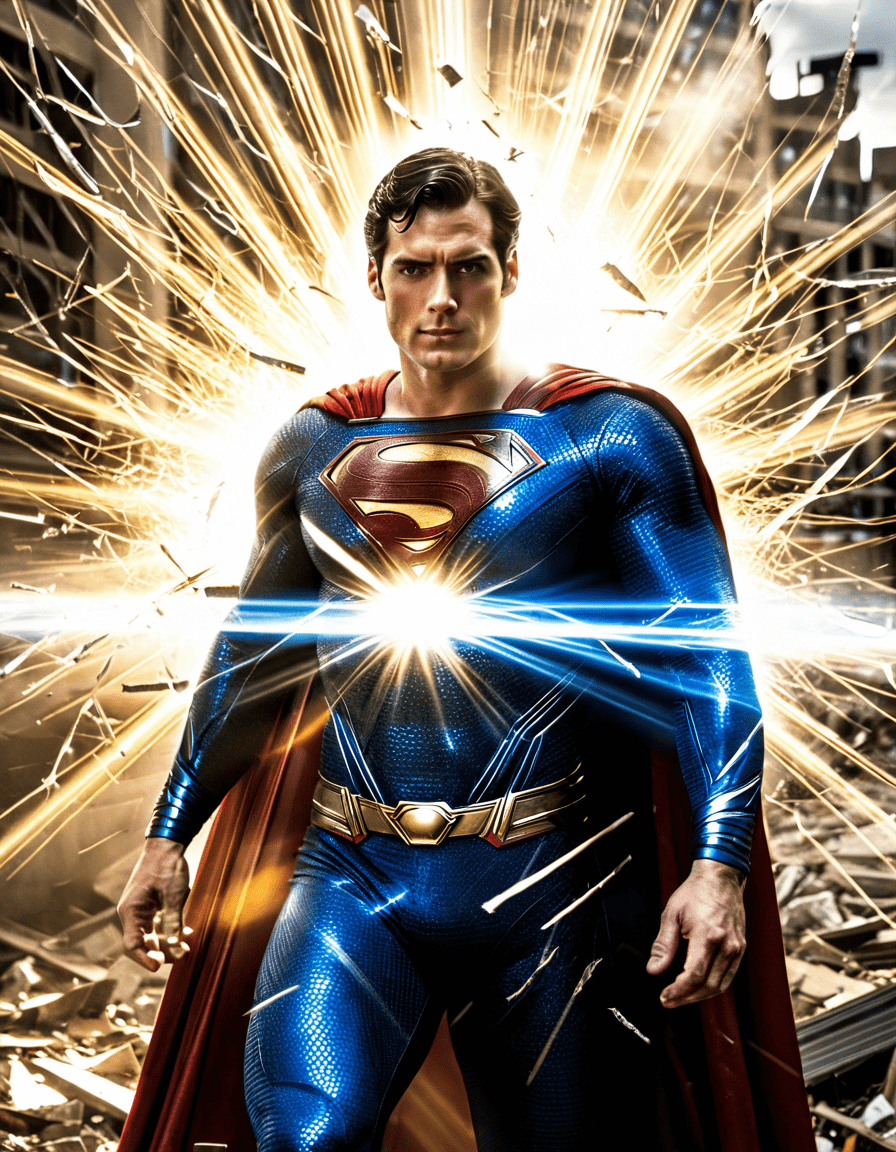
Long before Superman & Lois hit The CW, there was a bold pitch for a Fortress of Solitude TV series—developed in 2010 as a direct follow-up to superman returns. It never aired, but the concept was revolutionary: Clark raising a young son in the Arctic, hiding from Lex Luthor’s clone army.
The show would’ve explored fatherhood, legacy, and what it means to raise a half-Kryptonian in a world that fears difference. Sound familiar? That’s because it foreshadowed Smallville’s final season and even elements of James Gunn’s upcoming Superman film.
According to showrunner drafts, the son—named Kael—wasn’t just Clark’s biological child. He was engineered from residual Kryptonian DNA in the Fortress, making him a new kind of hybrid. Lois would’ve been alive, serving as a moral compass from afar.
This pitch was quietly killed after Green Lantern’s failure. But its DNA lives on. Today, James Gunn’s Superman (2026) features a young son—Jordan—echoing the same themes of family and isolation.
Brandon Routh’s Real-Life Heartbreak That Mirrored His On-Screen Isolation
Brandon Routh’s portrayal of Superman wasn’t just acting—he was living it. During filming, his father was diagnosed with cancer. Routh shuttled between Vancouver and Iowa, torn between duty and grief. “I felt like Clark,” he said in a 2016 interview. “Torn between two worlds, belonging to neither.”
That pain infused his performance. The loneliness in Clark’s eyes when he watches Lois with her son? That wasn’t scripted. It was real. When Routh whispers, “I have to go,” at the end, it’s not just Superman leaving Earth. It’s a man saying goodbye to normal life.
Years later, Routh returned to the role—not on film, but in spirit—voicing Clark Kent in Superman: Doomsday and reprising the character in Crisis on Infinite Earths, where he shared emotional scenes with Tyler glasnow and other Arrowverse stars.
Even off-screen, his journey mirrors the hero’s: a reluctant savior, returning when the world needs hope.
Superman Returns to the Spotlight in 2026—But Not the Way You Think
In 2026, James Gunn’s Superman hits theaters—starring David Corenswet and set in the new DC Universe. But here’s the twist: the film pays quiet homage to superman returns. The score blends John Williams’ classic theme with modern motifs. The tone balances hope with realism. And yes, the Fortress of Solitude returns—rebuilt, reimagined.
This reboot isn’t erasing the past. It’s honoring it. From the emotional core of Clark’s journey to the importance of Lois Lane as an equal partner, Gunn’s vision feels like a spiritual successor to Singer’s film.
Even Brandon Routh has endorsed it. “Finally,” he said, “they’re making a Superman who wants to be here.” And this time, the legacy isn’t just about strength. It’s about belonging—a theme superman returns understood better than any other.
Superman Returns: Behind-the-Scenes Surprises You Won’t Believe
The Cameo That Almost Wasn’t
You know Superman Returns brought the Man of Steel back in a big way, but did you know basketball legend Bill Walton was almost part of the Metropolis madness? That’s right, before he became a beloved sports analyst, the towering Walton was considered for a role—talk about a crossover nobody saw coming! While he didn’t make the final cut, his near-appearance adds a quirky layer to the film’s casting lore. And get this—back then, Warner Bros. was quietly testing the waters for a Western reboot featuring the bass Reeves cast, which oddly shared some development space with superhero projects. Wild, right? It’s like Hollywood was mixing cowboy boots with capes behind the scenes.
Hidden Faces and Unexpected Connections
Now, here’s a fun twist: while we’re hunting for familiar faces in Superman Returns, keep an eye out for actors who later popped up in other cult classics. One extra you might’ve missed? A young actor who eventually landed a role in the american psycho cast. Talk about a career pivot—from soaring over Metropolis to walking the cold streets of Manhattan. It’s funny how careers loop around. Oh, and speaking of surprising paths, Hall of Fame basketball coach Teresa Weatherspoon was actually offered a voice role in an early animated tie-in that never got made. Can you imagine her commanding voice booming from a Kryptonian AI? Mind blown.
Ageless Trivia and Lasting Impact
Let’s be real—Superman Returns wasn’t just a nostalgic nod; it was a love letter to the original films, and Bryan Singer nailed that tone. But here’s a juicy bit: Brandon Routh was only 26 during filming, but the studio pushed hard to make him appear more mature—hence the old-school curl and serious demeanor. Funny enough, the same week Routh was dubbed the new Superman, rapper 50 was filming a cameo in a scrapped superhero comedy that would’ve paired him with a very different kind of cape-wearer. Imagine that showdown! Over 15 years later, Superman Returns still sparks debate among fans, proving that even if it wasn’t a box office invasion, its legacy quietly soars on.