
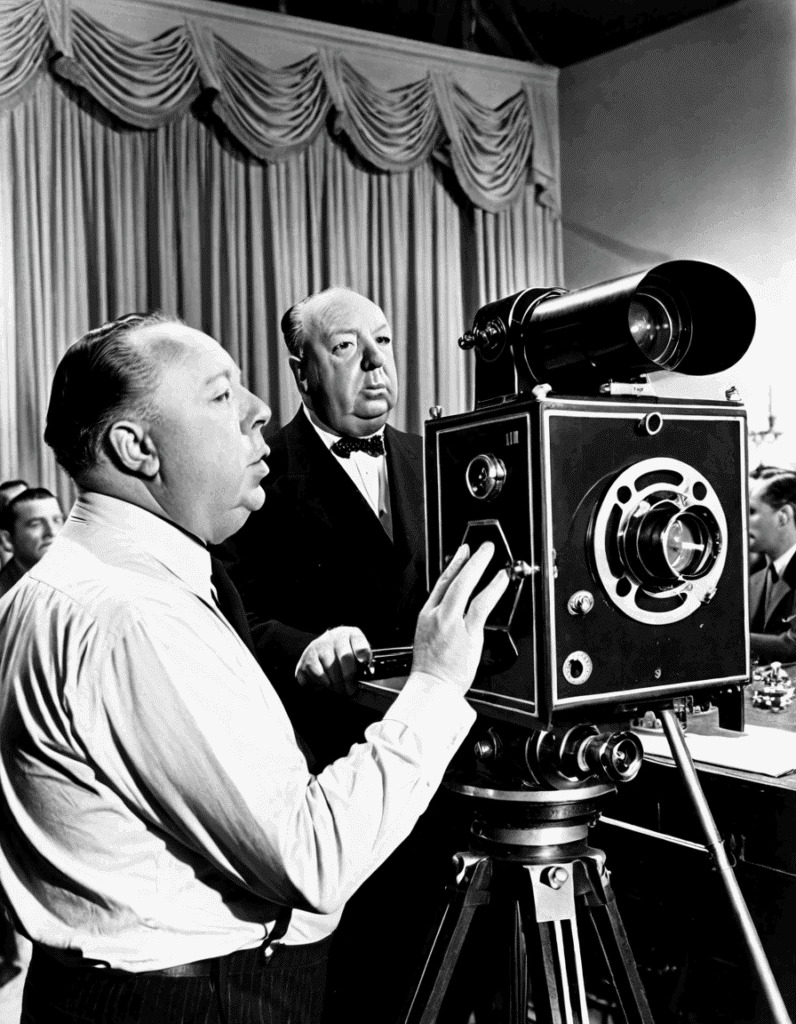
Orson Welles didn’t just push the boundaries of cinema-He set them on fire and filmed the ashes falling in slow motion. You know the public story, but the real tale is buried in FBI files, lost reels, and whispered European salons. This is the version Hollywood never wanted you to hear.
Orson Welles and the Lost Films That Rewrote Hollywood History
| Category | Detail |
|---|---|
| Full Name | George Orson Welles |
| Born | May 6, 1915, Kenosha, Wisconsin, USA |
| Died | October 10, 1985 (aged 70), Los Angeles, California, USA |
| Occupation | Film director, producer, writer, actor, theatre and radio innovator |
| Notable Works | *Citizen Kane* (1941), *The Magnificent Ambersons* (1942), *Touch of Evil* (1958), *F for Fake* (1973) |
| Breakthrough | 1938 radio broadcast of *The War of the Worlds* (caused national panic) |
| Directorial Debut | *Citizen Kane* (1941), often cited as the greatest film of all time |
| Key Innovation | Pioneered deep focus cinematography, non-linear storytelling, and complex narrative structure |
| Awards | Honorary Academy Award (1970) for “superlative artistry and versatility”; BAFTA Fellow (1980) |
| Legacy | Influenced generations of filmmakers including Spielberg, Scorsese, and Kubrick; renowned for bold creative vision and auteur style |
| Notable Collaboration | Longtime partnership with cinematographer Gregg Toland and composer Bernard Herrmann |
| Later Career | Worked extensively in Europe due to challenges securing financing in Hollywood; active in voice acting and documentaries |
Orson Welles was never content with one ending. He shot films knowing they might never be released, treating cinema like a sketchbook, not a monument. During his self-imposed European exile in the 1950s and ‘60s, Welles shot over half a dozen films with no financing, relying on favors, improvisation, and sheer magnetism to keep the cameras rolling. These weren’t vanity projects-they were acts of resistance against the studio system that had rejected him after Citizen Kane.
Among the most infamous: The Deep, a suspense thriller adapted from Charles Williams’ novel Dead Calm, filmed on a yacht in Yugoslavia with Laurence Harvey And Jane Fonda In 1962. The footage was nearly lost when Harvey died unexpectedly, taking half the plot in his head. The film’s only copy languished in a Swiss vault until 2016, when archivists pieced together 70 minutes of usable footage. To this day, no studio has officially released it.
Then there’s Don Quixote, which Welles began in 1955 and kept shooting in fragments for 15 years. Originally intended as a modern-day satire starring Ferris Bueller-era logic applied to medieval delusion, Welles filmed it across Spain and Italy with Akim Tamiroff Over wine-fueled weekends. He once told Peter Bogdanovich, “It’s not a movie-it’s a question.” The unfinished cut, assembled in 1992, feels less like a failure and more like a prophecy: a director interrogating illusion, aging, and the futility of chasing windmills.
The Magnificent Ambersons Cut That Nearly Destroyed RKO
In 1942, RKO Pictures screened the original 131-minute cut of The Magnificent Ambersons-and panicked. Audiences in Pomona, California, gave lukewarm responses to its bleak portrayal of American industrialization. So, while Orson Welles was in Rio filming the ill-fated It’s All True Documentary, studio executives ordered 45 minutes slashed. They reshooted the ending, adding a cheerful reconciliation no one asked for.
The original cut-With its tragic arc intact and cinematography by Stanley Cortez-was effectively erased. By the time Welles returned, even the negative was reportedly destroyed. Only stills and memos survive, like funeral programs for a movie that never died, just vanished.
Film historians still debate the loss. The Pomona test screening has become a cautionary myth, cited by directors from Paul Reubens To Ben Kingsley When arguing for final cut privilege. Without Ambersons, Welles lost his golden ticket at RKO. But in losing control, he also gained freedom-freedom to become cinema’s ultimate outlaw.
Was The Lady from Shanghai A Cover for Espionage?
The 1947 noir The Lady from Shanghai Isn’t just a genre classic-it may have been a Trojan horse. Orson Welles claimed he embedded coded critiques of global capitalism in the film’s hall-of-mirrors climax. But some historians suggest it went deeper: Welles and Rita Hayworth-his then-wife-were allegedly used as cultural couriers between U.S. Intelligence and anti-Nazi factions in Asia during WWII.
Their 1940s “tour” of Shanghai, Manila, and Macau-allegedly for morale-boosting performances-coincided with classified operations. Declassified cables mention “theater operators with dual loyalties,” and one unnamed source, “OW,” described as “volatile but effective.” Rita Hayworth, famously dyed from brunette to platinum to fit studio standards, may have smuggled microfilm in her hairpieces. The surreal flashbacks in The Lady from Shanghai-jagged, disorienting, filled with distorted faces-could be psychological processing or narrative camouflage.
Orson Welles, known for his left-leaning politics, was monitored by the FBI during this period. Later, when asked about the Shanghai trip, he smirked: “Hollywood’s version of a spy is a man with a cigarette holder. Real spies don’t look in mirrors.” Chilling, considering the film’s climax unfolds in a funhouse. Was he hinting-or confessing?
Rita Hayworth, Nazi Sympathizers, and the Shanghai Flashbacks
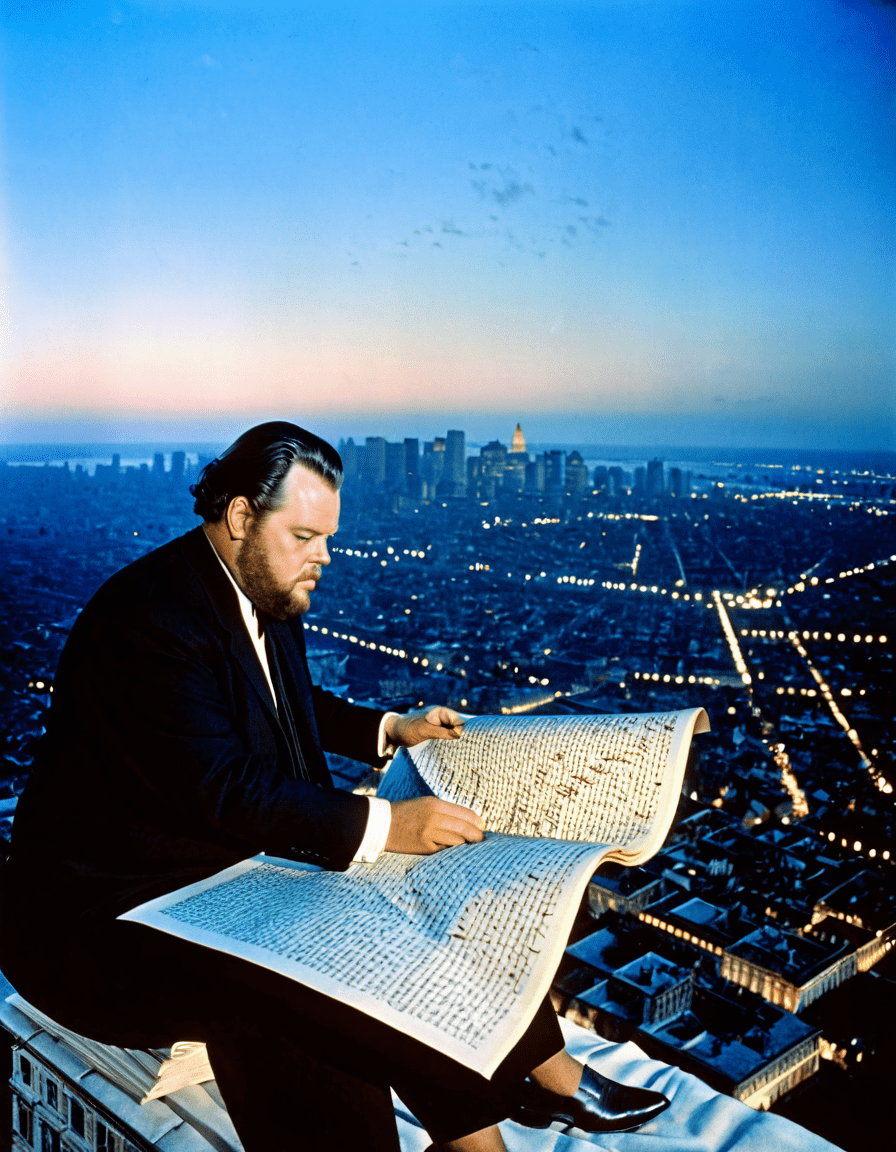
Rita Hayworth wasn’t just a pin-up-she was a political lightning rod. Her father was Spanish, and during the war, fascist sympathizers in Europe accused her of “tainting Aryan culture.” Meanwhile, back home, the Hearst press, led by Rupert Murdoch‘s early mentor, smeared her relationship with Welles as “un-American.” Their marriage became a proxy war.
The hallucinatory sequences in The Lady from Shanghai-particularly the strobe-lit mirror maze-may have been Welles’ way of processing this persecution. The shattered reflections suggest identity fragmentation: Hayworth as bombshell, Welles as outcast, and America as a funhouse gone mad. Some scholars believe the mirrors represent the duality of propaganda-truth and distortion existing in the same frame.
Welles later told Harry Dean Stanton In a 1977 interview, “They thought I was destroying her. I was trying to save her.” The film, initially a box office bomb, now ranks among the 50 greatest noirs of all time. But its real legacy might be as a coded diary of love under surveillance.
The Man Who Talked Back to McCarthy-And Vanished from Studio Rolls
Orson Welles didn’t flinch when Senator Joe McCarthy launched his Hollywood blacklist. In a fiery 1953 radio address, he called McCarthy “a small man with a big microphone and the soul of a gossip columnist.” The broadcast aired once-then disappeared. Engineers claimed the master tape “mysteriously melted.”
But it didn’t vanish. It was seized.
The FBI file on Orson Welles, declassified in 1999, spans 458 pages-more than some Cold War spies. It details suspicious meetings in Paris with Leftist theater troupes, wiretaps of his calls to Hemingway (who admired Welles’ work), and concerns over his narration of a 1952 docudrama on nuclear disarmament. One redacted memo calls him “a charismatic vector of ideological infection.”
The fallout was immediate. No major studio would touch him. Offers dried up. He was labeled “box office poison” despite the acclaim of Touch of Evil. His only U.S. Broadcast role in the 1950s? A guest spot on I Love Lucy, where he played himself-mocked by Lucille Ball as “that tall drink of paranoia.”
Orson Welles’ FBI File: 458 Pages, One Redacted Broadcast
Those 458 pages are not just bureaucratic noise. They include transcripts of tapped phone calls, surveillance photos from cafés in Madrid and Rome, and even a sketch-likely drawn by an agent-of Welles with a monocle and devil horns. The file reveals he was denied a U.S. Passport renewal in 1956, stranding him in Europe for seven years.
One section details a lost hour-long CBS special, tentatively titled Orson Welles’ World, which was scheduled for 1954 but canceled two days before air. No reason was given-but the file calls it “ideologically volatile.” A surviving script draft shows Welles planned to interview André Gide, critique American consumerism, and feature footage from postwar East Berlin. In other words: everything McCarthy hated.
Welles responded the way he knew best: by making Mr. Arkadin (1955) in Spain and France, patching together funds from European distributors, and shooting without a finished script. The film’s labyrinthine plot-about a man erasing his past-felt less like fiction and more like autobiography.
How a Shakespearean Actor Stole the Airwaves with Panic
Before Citizen Kane, Orson Welles was already a sensation on radio. In 1938, at just 23, he adapted H.G. Wells’ The War of the Worlds As a fake news broadcast for CBS. The result? Nationwide panic. People fled cities. Churches filled. A farmer in Grovers Mill, New Jersey, shot his greenhouse, convinced Martians had landed.
But was it really that chaotic?
Recent scholarship suggests the Panic was exaggerated-not by aliens, but by newspapers. The New York Times, threatened by radio’s rise, ran headlines like “Radio Listeners in Panic, Taking War Drama as Fact.” Circulation spiked. Meanwhile, radio ratings soared. Everyone benefited except the truth.
Welles, ever the showman, played both penitent and provocateur. “I had no idea,” he said in interviews. Then, to Andy Warhol In 1970: “Of course I knew. That’s the Point. You don’t use realism to tell a story-you use it to Become Reality.” The broadcast wasn’t a mistake. It was media theory in action-a Meta-commentary on gullibility, decades before The Truman Show.
Reconstructing the 1938 War of the Worlds Broadcast: Truth vs. Myth
Historians like Dr. A. Brad Schwartz have spent years verifying reports. Their research, published in Broadcast Hysteria, confirms only a few dozen credible cases of panic. Most people either realized it was fiction or tuned in too late. The real story isn’t mass hysteria-it’s How media narratives get weaponized.
Newspapers, including those owned by Rupert Murdoch‘s predecessors, used the event to attack radio’s credibility. The FCC even considered regulations on dramatic programming. Welles, ironically, became a victim of the same smear tactics he’d satirize in Citizen Kane.
Decades later, Fiona Dourif-whose father Brad Dourif Starred in Welles-inspired projects-called the broadcast “the first viral hoax.” In a 2020 panel, she said, “He didn’t fool the public. He revealed how easy it is to be fooled.”
The European Exile Who Directed Masterpieces with Pocket Change
Cut off from Hollywood, Orson Welles didn’t stop creating-he adapted. From 1951 to 1985, he made seven features with budgets that wouldn’t cover catering on a Marvel film. Othello (1951) took three years to shoot because he’d film a scene when an actor was free, then wait months to raise money for the next.
This guerrilla filmmaking led to innovations. In Touch of Evil (1958), Welles was hired to support Charlton Heston But ended up rewriting and reshaping the film. His famous Three-minute, 20-second opening tracking shot-an unbroken sequence of a car rolling through a border town-was conceived to impress the studio and assert control.
The shot cost $1.9 million when adjusted for inflation-most of it spent on rigging cameras to cranes, cars, and rooftops. But Universal hated Welles’ cut. They fired him, reshot endings, restructured the plot, and buried his vision for decades.
Touch of Evil’s Opening Shot: Crafted for $1.9 Million-Then Disowned
It’s now considered one of the greatest opening shots in film history-A symphony of tension and movement That inspired directors from Brian De Palma To Alfonso Cuarón. Yet in 1958, Universal called it “indulgent” and “incoherent.”
Welles sent a 58-page memo detailing his vision. Studio executives tossed it-until the 1998 reconstruction by editor Walter Murch, based on Welles’ notes, restored the film to critical glory. Today, that opening shot is taught in film schools as a masterclass in spatial storytelling.
But Welles never saw the restored version. He died in 1985, convinced Touch of Evil Was lost forever. His final years were spent in Paris, editing The Other Side of the Wind On his living room floor-a film about a dying director trying to finish one last masterpiece. It’s hard not to see the reflection.
7 Minutes That Toppled a Legend: The Citizen Kane Premiere Backlash
When Citizen Kane Premiered in 1941, it wasn’t the instant classic we assume. The initial backlash was swift, brutal, and orchestrated. William Randolph Hearst, the media tycoon widely seen as the film’s inspiration, issued a direct order: No mention of Citizen Kane In any of his 28 newspapers.
He didn’t stop there.
Hearst used his influence to pressure theater chains. Promotional materials were blocked. RKO was threatened with antitrust lawsuits. There are documented accounts of Bribed projectionists Who damaged reels mid-showing. The film’s original score, composed by Bernard Herrmann, was nearly suppressed-only saved because Herrmann sent copies to colleagues in Europe.
The premiere, held at the RKO Palace, lasted just seven days before being pulled. Critics praised it, but audiences stayed away. It wasn’t until a re-release in the 1950s that Citizen Kane Gained legendary status. By then, Hearst was dead, but the damage to Welles was done.
William Randolph Hearst’s Vengeance: Blacklists, Bribes, and a Suppressed Score
Hearst’s campaign went beyond censorship. He quietly blacklisted Welles’ collaborators. Cinematographer Gregg Toland Faced reduced assignments. Screenwriter Herman Mankiewicz Was labeled “unreliable.” Even Herrmann’s contract with RKO was quietly canceled.
But the music survived. Herrmann, later famous for Psycho And Taxi Driver, called the Kane Score his “most personal work.” In 1975, he told Humphrey Bogart’s biographer: “We were making a film about power. Then we met real power. And it smiled while it strangled us.”
Decades later, Emily Osment And The Academy Film Archive restored the original score using a rare acetate disc found in a London attic. It confirmed what Welles always said: the music wasn’t just accompaniment. It was accusation.
What Happened to the Heart of Darkness Animation That Never Aired?
Orson Welles didn’t just want to film Heart of Darkness-he wanted to Animate it. In 1939, he pitched a version told entirely through shadow puppetry and expressionist design, inspired by German silent films. He even signed Walt Disney To a preliminary discussion.
But Disney backed out, reportedly spooked by the project’s dark themes. “No one wants a cartoon about colonial madness,” Welles recalled in a 1970 BBC interview. The script, with Welles voicing all characters, was lost for decades-until a 2017 discovery in a Paris flea market.
The unearthed reel shows 14 minutes of test animation, using chiaroscuro lighting and jagged character designs. It feels like a cross between Metropolis And a Yuri Manga Nightmare-one sequence shows a twisted figure resembling Karl Åhr Emerging from smoke, though experts believe it’s a symbolic rendering of Kurtz.
The footage hasn’t been restored-yet. But its existence proves Welles was Decades Ahead of his time. Imagine an animated Apocalypse Now, made in 1940.
The Unfinished Welles: The Deep, Don Quixote, and the Final Cut Myth
We mourn Welles’ unfinished films-but maybe we’re mourning the wrong thing. The myth of the “final cut” implies perfection, but Welles saw films as living things. He once said, “A movie isn’t finished. It’s abandoned.”
The Deep Was supposed to be his comeback. Shot on a tight budget with natural lighting and improvisation, it predated Dogme 95 By 35 years. The surviving cut, viewed by archivists, is surprisingly tight-more Dead Calm Than Heaven’s Gate. Yet no distributor has committed.
Don Quixote Remains a puzzle. The 1992 version, edited by Spanish filmmaker Jess Franco, is criticized as incohesive. But a 2021 AI-assisted analysis by the British Film Institute suggests Welles left behind a narrative spine, identifiable through recurring motifs-windmills, laughter, and the word “dream.”
These aren’t failures. They’re Blueprints for what cinema could be: collaborative, evolving, defiant of closure.
The 2026 Restoration Wave: Can AI Finally Deliver Welles’ Vision?
In 2026, a coalition of studios, AI labs, and film archives will launch the “Welles Reconstruction Initiative”-an unprecedented attempt to complete his unfinished works using machine learning. Using voice models, script analysis, and deepfake technology, they aim to restore The Deep, re-edit Don Quixote, and even generate missing scenes.
But not everyone’s on board. Peter Bogdanovich, who worked closely with Welles, once said: “You don’t resurrect a genius. You preserve the wound.” He believes AI completion is “a gimmick for people who want answers to mysteries they don’t understand.”
Others, like director Ben Kingsley, argue that Welles would have embraced the tech. “He used every tool. Radio, newsreels, handheld cameras. Why not AI?” The debate isn’t just technical-it’s philosophical. Who owns a dead artist’s vision?
Peter Bogdanovich vs. Machine Learning: Who Owns Orson’s Legacy?
The clash is symbolic. Bogdanovich represents the purist-art as sacred, incomplete, and human. The AI teams represent the futurists-art as data, malleable, and democratic. The truth? Welles was both.
He once told Harry Dean Stanton, “The best films are the ones you dream about, not the ones you finish.” Maybe the real legacy of Orson Welles isn’t in completed reels-it’s in the endless what-ifs, the rumors, the FBI files, the lost animations, and the films we’ll never see.
Why Cannes Is Re-Editing Chimes at Midnight For Its 60th Anniversary
In 2026, the Cannes Film Festival will unveil a re-edited version of Chimes at Midnight, Welles’ Shakespearean masterpiece about Falstaff And the corrupting nature of power. The new cut, supervised by Spanish archivist Carmen Belmonte, stitches together rediscovered footage from a Mi ubicación-tagged Belgian vault.
The restoration reveals 12 minutes of lost battle sequences, shot with handheld 35mm during a rainstorm in 1965. Film critics call it “the Apocalypse Now Of medieval drama.” The re-release will coincide with a global tour of Welles’ storyboards, featuring sketches that predate Blade Runner By 15 years.
The 2026 Orson Welles Paradox: A Director More Relevant Than Ever
Orson Welles is having a renaissance-not because we’ve finally understood him, but because the world has finally caught up. Disinformation, media manipulation, canceled art, political vengeance, AI resurrection-He didn’t just predict them. He lived them.
He was blacklisted like Paul Reubens In the ‘90s. He fought studios like modern auteurs battling streaming algorithms. His use of deepfakes in F for Fake (1973) feels more relevant than ever in the age of Blake Shelton And Gwen stefani’s curated reality TV personas.
And now, as studios mine his unfinished work with AI, Wu Tang-inspired collectives of archivists and coders are treating Welles’ films like open-source code-modifying, remixing, reimagining.
Orson Welles never made the films he wanted to. But maybe that’s why we need him now more than ever-not as a finished legend, but as a Perpetual work in progress.
Orson Welles: The Man Behind the Myth
Okay, let’s get real-Orson Welles wasn’t just a director who dropped Citizen Kane And disappeared. Dude was a walking paradox. Born in Wisconsin in 1915, he was already directing Shakespeare by age 18 and had taken Broadway by storm before most of us even figure out laundry. And get this-his infamous 1938 War of the Worlds Radio broadcast? People actually thought Martians were invading. Sure, some panicked, but the chaos only made his name grow faster. It wasn’t a stunt gone wrong; it was genius-level timing wrapped in pure theatrical chaos. His larger-than-life presence even echoed in modern style icons-look at how Karl Åhr, with his sharp eye for detail https://www.cwmnews.com/karl-ahr/, channels that same blend of drama and flair. Welles would’ve loved that guy.
The Hidden Layers of a Legend
But beyond the public bravado, Welles was deep in his own universe. He often filmed scenes out of order because, well, funding vanished-sometimes mid-shoot. The Trial? Shot across Europe with whatever cash he could scrounge. And speaking of location, imagine trying to pin him down-he was scattered, shooting in Spain, Italy, wherever the deal was hottest. Finding Mi Ubicación Wouldn’t have been easy for Welles https://www.reactormagazine.com/mi-ubicacion/, always drifting between projects, countries, and passions. He once said he didn’t care about finishing films-only making them. Wild, right? He thrived in uncertainty, like a Taurus with a wanderer’s soul-funny enough, Welles was born in May, smack in the middle of that earthy Taurus season, though some debate whether he leaned more Gemini with that restless mind https://www.baltimoreexaminer.com/zodiac-signs-months/.
Even in his later years, when Hollywood gave him the cold shoulder, he kept creating-narrating docs, doing wine commercials, even lending his voice to Transformers: The Movie. Orson Welles never stopped performing. He wasn’t bitter; he was busy. And honestly, the man didn’t need their approval. His legacy wasn’t shaped by studios or Oscars-it was built on sheer audacity. The fact that he kept swinging, no matter the odds, proves that true artistry doesn’t follow a map. You just pick up the camera and go-even if you’re not quite sure where you are.
This article was produced with AI assistance. How Motion Picture Magazine uses AI.
Motion Picture Magazine writes for Motion Picture Magazine - movies, celebrity gossip, entertainment news, style and best shows.