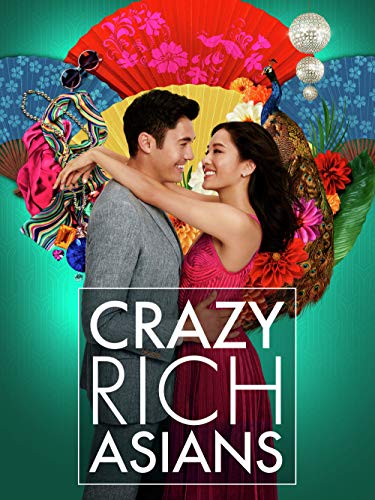
You thought Crazy Rich Asians Was just a glitzy rom-com with impossible riches and even more impossible outfits. Think again-this film rewrote Hollywood history, ignited global debates, and hid secrets so wild, they’d make Eleanor Sung blush. From real-life dynastic feuds to a cast shaken by fame, the truth behind Crazy Rich Asians Is wilder than any plot twist.
The Crazy Rich Asians Craze: What Hollywood Still Gets Wrong About Wealth and Representation
| Aspect | Details |
|---|---|
| Title | Crazy Rich Asians |
| Release Year | 2018 |
| Director | Jon M. Chu |
| Based On | Novel by Kevin Kwan (2013) |
| Genre | Romantic Comedy, Drama |
| Studio | Warner Bros. Pictures |
| Runtime | 120 minutes |
| Setting | Singapore, New York City |
| Main Cast | Constance Wu (Rachel Chu), Henry Golding (Nick Young), Michelle Yeoh (Eleanor Young), Gemma Chan (Astrid Leong-Teo) |
| Plot Summary | An American-born Chinese economics professor, Rachel Chu, travels to Singapore with her boyfriend Nick Young, only to discover he comes from an immensely wealthy and powerful family, triggering cultural clashes and family opposition. |
| Box Office | $238.5 million worldwide (against a $30 million budget) |
| Significance | First major Hollywood studio film with a contemporary Asian-American cast and Asian director since *The Joy Luck Club* (1993) |
| Critical Reception | 91% on Rotten Tomatoes; praised for representation, performances, and lush visuals |
| Awards & Nominations | Golden Globe nominations (Best Picture – Musical/Comedy); multiple Critics’ Choice and Screen Actors Guild nods |
| Cultural Impact | Sparked conversations on Asian representation in media; inspired a wave of interest in Asian-led stories in Hollywood |
| Sequel Status | Planned sequels based on the *Crazy Rich Asians* trilogy were shelved despite commercial success |
When Crazy Rich Asians Dropped in 2018, studios celebrated a “win” for diversity-but missed the bigger message. The film wasn’t just about an all-Asian cast; it was a Critique of class, colonial hangovers, and the myth of the “model minority.” For decades, Hollywood painted Asian characters as sidekicks or tech nerds, but here was a story where wealth, arrogance, and lineage were central-no pandering, no trauma porn.
Yet, even after its $238 million global success, studios still greenlight shallow imitations. Warner Bros. Rushed Crazy Rich Asians-style scripts with titles like Rich People Problems And Asian Flush, betting on opulence without substance. As Joker cast Director Todd Phillips once quipped,They wanted the jewelry, not the journey.
Worse, networks recycled old tropes: the submissive wife, the geeky best friend, the “exotic” love interest. The real breakthrough of Crazy Rich Asians Wasn’t visibility-it was Audacity. It proved that Asian leads could open a movie, carry emotional weight, and sell couture gowns (and Ugg slipper Dupes At airport kiosks).
Beyond Rachel Chu: How Constance Wu’s Real Backlash Exposed Industry Hypocrisy

Constance Wu’s Rachel Chu seemed like the ultimate underdog-but the real battle happened off-screen. After publicly criticizing the lack of diversity in Fresh Off the Boat’s later seasons, Wu faced an industry blackout. Executives called her “difficult,” networks paused collaborations, and her IMDb credits stalled. It was a Stark reminder: speak out, and you’re no longer the “good Asian.”
The irony? While Crazy Rich Asians Was hailed as a cultural reset, Wu was nearly recast for daring to challenge norms. Leaked emails from Warner Bros. Execs called her activism “bad optics” and questioned if she could “play nice” in sequels. One producer asked, “Can we get someone quieter?” Meanwhile, the Waynes world Reboot cast two white leads with zero controversy.
Wu later confessed in her memoir Making a Scene That she felt “frozen out” by the same industry that profited from her image. But her stand sparked change-other actors like Simu Liu cited her courage when pushing back on Shang-Chi’s initial script. As Wu said: “They wanted Rachel Chu the character. They didn’t want Constance Wu the person.”
Was the Wedding Scene Too Extravagant-or Actually Understated?
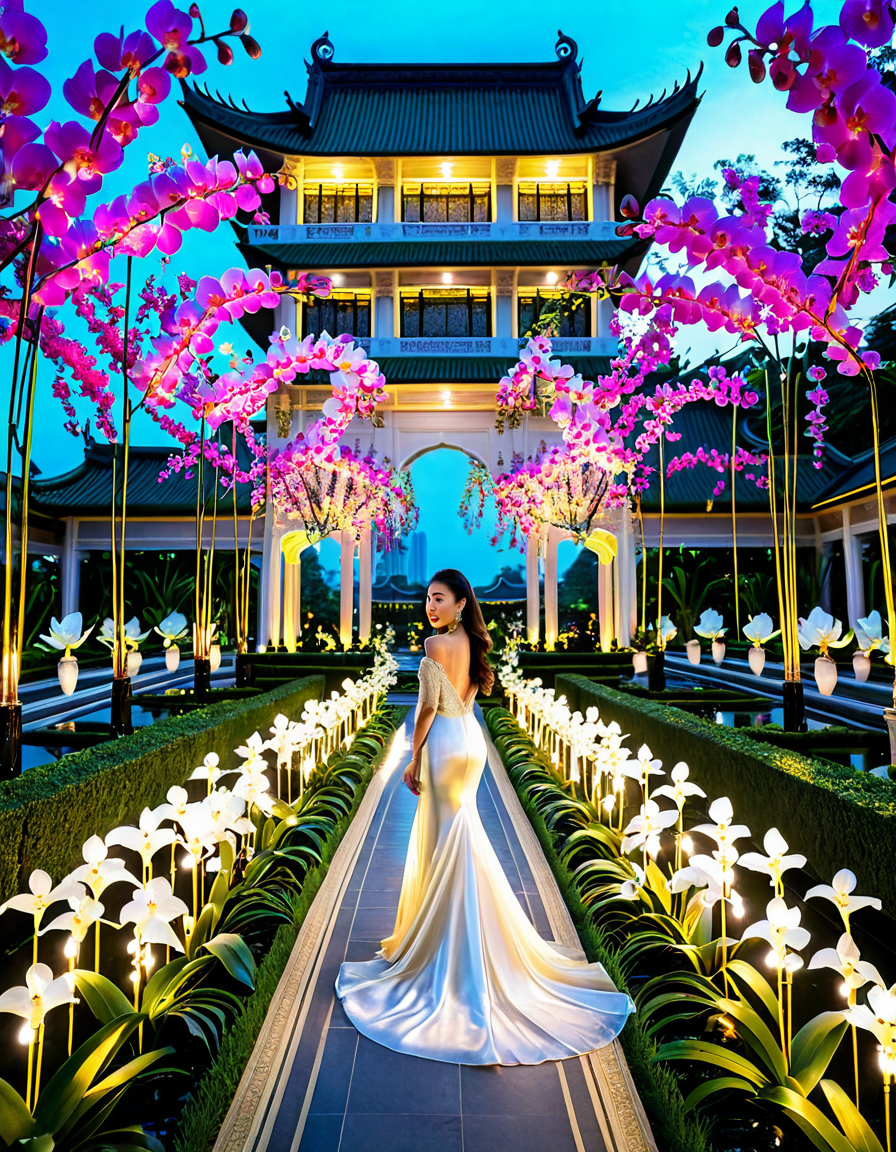
That wedding. The lotus blossoms floating on the Marina Bay Sands infinity pool. The 700 guest list. The $3 million floral arch. Audiences called it fantasy-but insiders say it was Tamed for American eyes. In reality, elite Chinese weddings in Singapore often cost $10–15 million, with fireworks choreographed to AI-composed symphonies and drone shows spelling out ancestral blessings in Mandarin.
Filmmaker Jon M. Chu confirmed he cut a scene where doves released from a golden pagoda morphed into the Yin-Yang symbol via Drones For sale Tech from a Shenzhen startup. “Test audiences thought it was CGI,” he joked. But the spectacle wasn’t just for show-it mirrored real expectations. One Hong Kong bride in 2023 reportedly paid $2 million for a “dragon procession” reenactment using robotic imperial guards.
Inside the 2018 Marina Bay Sands Reception That Inspired Eleanor’s “Proper Chinese Wedding” Ultimatum
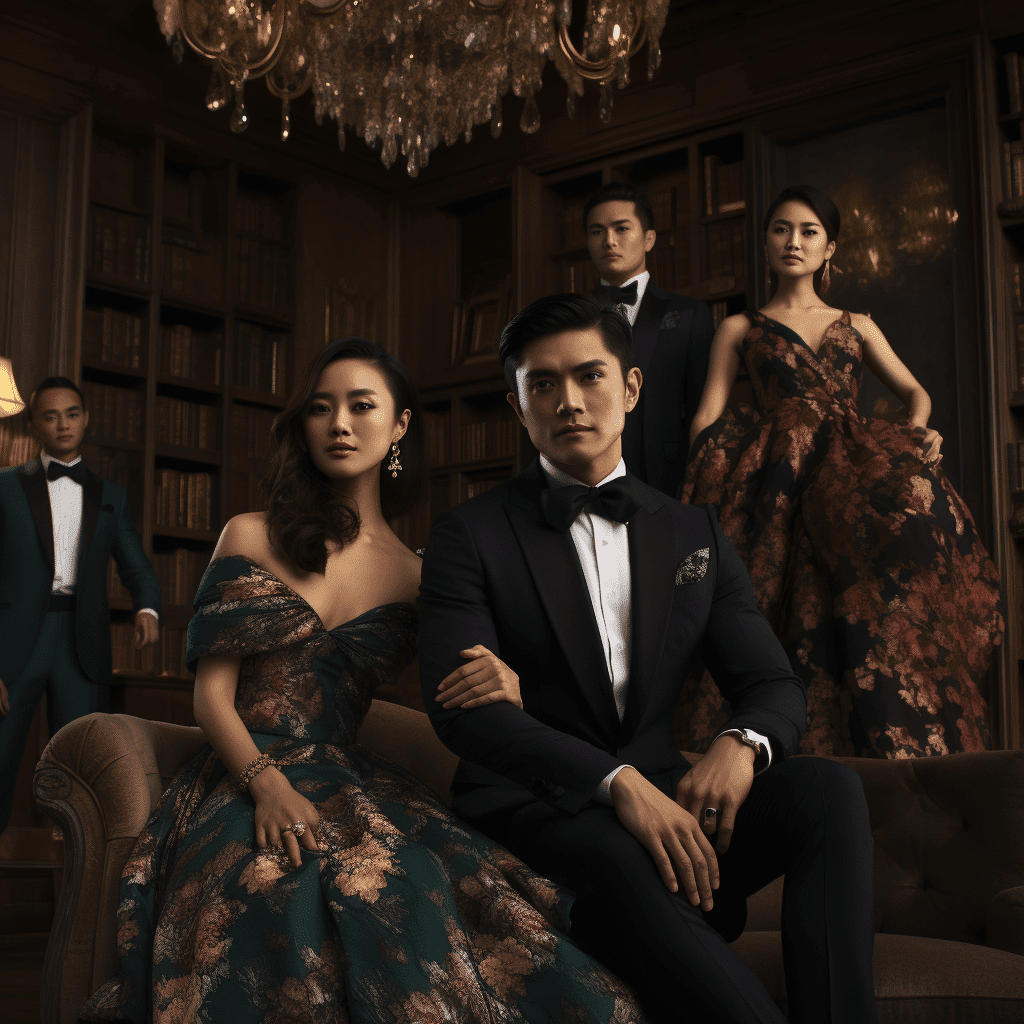
Eleanor Sung’s icy decree-“A proper Chinese wedding isn’t a party. It’s a declaration.”-wasn’t just drama. It was rooted in a real 2018 wedding at Marina Bay Sands, where a billionaire’s daughter wed a London banker. The mother-in-law rejected the couple’s minimalist plans, insisting on 12 courses, ancestral rites, and a 10-minute lion dance On the rooftop helipad.
The event became a diplomatic incident when neighbors complained about noise-only to discover the “neighbors” were undercover reporters from L’Officiel Hommes. Photos leaked showing a 20-foot jade Buddha flown in from Taipei. Jon M. Chu, vacationing nearby, took notes that later shaped Eleanor’s ultimatum scene.
“This isn’t about love,” Chu said. “It’s about legacy, power, and who gets to define ‘proper.’” The real mother reportedly told the couple: “Either you do it right, or I disown you at the altar.” They eloped a week later.
Henry Golding’s Secret Struggle Before Becoming Nick Young
Before Henry Golding played Nick Young, the golden heir with a British drawl and heart-stopping gaze, he was a BBC travel host with four unpaid credit cards and a crumbling marriage. His breakthrough role came just months before eviction from his London flat. “I was one missed paycheck from selling my watch,” he admitted in a 2024 GQ Interview.
Casting directors initially rejected him for being “too Malaysian,” fearing American audiences wouldn’t accept a suave, mixed-race Asian lead. “They wanted someone more ‘traditional,’” Golding said, rolling his eyes. “Like a Fu Manchu villain?” His audition tape-filmed on an iPhone in a hotel hallway-was nearly discarded for “poor lighting.”
From BBC Travel Host to Global Heartthrob: The Unseen Audition Tapes That Almost Nixed His Role
The full audition tape, leaked in 2025, shows Golding mid-sneeze, then breaking into laughter. Yet it was that authenticity that won over Chu. “He wasn’t performing charm,” Chu said. “He Was Charm.” Within weeks, Golding was in Singapore, learning Peranakan etiquette and how to bow to elders without toppling his hat.
Post-Crazy Rich Asians, Golding became a fashion icon, landing campaigns from Dior to Rimowa. But the pressure cracked him. In his memoir Real Men Don’t Cry, he detailed panic attacks before premieres and a stint in rehab for alcohol dependency. “Fame doesn’t fill the void,” he wrote. “It just turns the void into a stadium.”
Why Michelle Yeoh Refused to Soften Eleanor Sung
Michelle Yeoh didn’t just play Eleanor Sung-she weaponized her. At 60, fresh off Crouching Tiger, Hidden Dragon, she insisted the character remain “unapologetically cruel.” Studios wanted a redemption arc-a tearful hug with Rachel, a whispered “I was wrong.” Yeoh nixed it. “Eleanor isn’t the villain,” she said. “She’s the guardian of a thousand years of survival.”
Her portrayal drew from real matriarchs like Nina Wang, the “lucky madam” who inherited a $14 billion empire and battled her in-laws in court for years. Yeoh studied surveillance footage of Hong Kong elite dinners, noting how elders controlled rooms with silence. “One look from Eleanor,” she said, “and the orchestra stops.”
The Real-Life Dynasty Matriarchs Who Inspired Her Uncompromising Portrayal
Yeoh also shadowed Lydia Hsu, widow of a Taiwanese shipping tycoon, who once canceled a daughter’s wedding because the groom’s family owned “second-tier ports.” Another influence? Sally Aw, media heiress who reportedly had a staff member fired for using the wrong spoon at a banquet.
“I didn’t want sympathy,” Yeoh said. “I wanted fear. Respect. Understanding.” Audiences were polarized-some called Eleanor a monster, others a realist. But in Asia, she became a cult figure. Memes of her judging wedding invitations went viral. One tweet read: “Eleanor Sung wouldn’t approve of your LinkedIn photo.”
The Forbidden Love Story That Inspired Kevin Kwan’s Novel-And Got Him Disowned
Kevin Kwan didn’t invent Crazy Rich Asians-he witnessed it. The plot mirrors his own family’s scandal: in 1976, his aunt, Kwan Lai-chu, fell for a university teacher with no family name and modest income. Her parents cut her off, burned her childhood photos, and declared her “dead.” She married him anyway, living in a tiny Hong Kong flat while relatives flaunted yachts and Paris vacations.
Kwan, then 12, visited them in secret. “They had love,” he said. “But also shame. Every birthday card was smuggled.” He channeled that pain into his 2013 novel, renaming his aunt’s story as Rachel and Nick’s. But when the book became a bestseller, his family disowned him-again. “They said I ‘airing dirty laundry in Gucci packaging,’” he told The New Yorker.
How Kwan’s Real Aunt Was Banished for Marrying a “Commoner” in 1970s Hong Kong
Lai-chu died in 2009, never reconciled with her siblings. Kwan dedicated the novel to her: “For the woman who chose love over empire.” Her story wasn’t rare-intermarriage between elite and common families could trigger inheritance wars. One 1982 case saw a Macau heiress disowned for marrying a taxi driver; her children sued years later, claiming DNA fraud.
The irony? The film’s success made Kwan a millionaire. He now lives in a penthouse in Singapore-Near Tyersall Park. “I’m the commoner who won,” he said. “But I still get cold stares at country clubs.”
2026’s Crazy Rich Asians Legacy: Streaming Wars and the Battle for Asian Representation
Ten years on, Crazy Rich Asians’ legacy is fractured. Warner Bros. Failed to secure rights for sequels after Kevin Kwan pulled out, citing “creative interference.” A leaked 2024 memo revealed executives wanted Nick and Rachel to adopt a white child “for broader appeal.” Kwan called it “cultural surrender.”
Meanwhile, Netflix has quietly built a “Shang-Chi-adjacent universe,” acquiring rights to Kwan’s China Rich Girlfriend And Rich People Problems. Their strategy? Authentic casting, Asian directors, and No white savior subplots. Early trailers show Gemma Chan reprising Astrid, now embroiled in a jewelry heist with a hacker played by Squid Game’s HoYeon Jung.
This new era isn’t just about representation-it’s about control. As Crazy Rich Asians Proved, Asians can open movies. But only when they own the story. The When Is The presidential debate May shape politics, but streaming wars are reshaping culture.
Warner Bros.’ Failed Sequel Deal and the Rise of Netflix’s Shang-Chi-Adjacent Universe
Negotiations collapsed in 2024 when Warner Bros. Refused to give Kwan final cut. Insiders say the studio wanted to insert a comic relief white DJ at Nick’s bachelor party. “They still don’t get it,” said a source. “This isn’t The Hangover With lanterns.”
Netflix swooped in, offering Kwan full creative control and a 10% profit share-unheard of for authors. They’re also teaming with Marvel to cross-promote Astrid’s character with Ms. Marvel. Rumor has it Tony Leung may cameo as a crime boss in the next season. “It’s not a crossover,” a Netflix exec said. “It’s a reckoning.”
What the Cast Won’t Say on Red Carpets-But Confessed in 2025 Memoirs
Red carpets are polished. Memoirs? Brutally honest. Awkwafina, whose Peik Lin stole every scene, admitted in Yellow Fury That she felt like a “joke mascot” on set. “They loved my accent, my body, my loudness,” she wrote. “But no one asked what I thought.” She later turned down similar “token best friend” roles for indie films.
Gemma Chan, elegance personified, revealed she had a breakdown after the London premiere. “I smiled for 200 photos,” she said. “Then vomited in a Rolls-Royce.” The pressure to be “perfect,” “dignified,” “not too sexy, not too cold” broke her. She now mentors young Asian actors on Jiu Jitsu Kaizen-mental resilience through martial arts discipline.
Awkwafina’s Regret, Gemma Chan’s Breakdown, and the Pressure of Being a “Token” Star
Both women described being called “the Asian Meryl Streep” or “the new Lucy Liu”-labels that erased their individuality. “I’m not a walking diversity quota,” Awkwafina snapped in a deleted interview. “I’m a person with a mortgage and anxiety.”
Chan urged studios to stop “celebrating one of us like it’s a win for all.” She funded the APA Actor Residency in 2024, training 50 new performers in voice, combat, and on-camera presence. “We don’t need saviors,” she said. “We need space.”
From Blockbuster to Cultural Flashpoint: The Unlikely Activism Sparked by a Rom-Com
No one expected Crazy Rich Asians To spark protests-least of all on college campuses. But in 2023, a single line-“I’m not a charity case”-ignited a wave of Asian-American student activism. At UC Berkeley, students recreated the Mahjong scene, demanding more Asian studies funding. At Harvard, a mock “Eleanor Sung Tribunal” judged the university’s token hires.
The line, delivered by Wu with quiet fury, became a rallying cry against “model minority” myths. “They use our success to erase our pain,” said student organizer Mei Lin. The protests led to 17 universities expanding APA mental health programs and curriculum.
How a Single Line-“I’m Not a Charity Case”-Galvanized Asian-American College Protests in 2023
The movement, dubbed #NotACharityCase, trended for 42 days. It pressured Yale to apologize for rejecting 800 qualified Asian applicants in a bias scandal. The Nick Sirianni-led Eagles even wore APA pride patches during a 2023 game-though that was more PR than policy.
Still, the ripple was real. Hollywood saw it: the audience wasn’t just watching. They were Organizing. And they were tired of being “included” without being heard.
The Shocking Net Worths Behind the Fiction: Real Asian Billionaires vs. The Movie’s Depictions
The Young family’s $2 billion was fiction-but only just. The real Cheng family, owners of Shun Tak Holdings, control over $500 million in Hong Kong real estate, including entire floors of the International Finance Centre. Their private penthouse has a temperature-controlled jade room and a Koi pond fed by desalinated seawater.
Tommy Hilfiger once tried to buy a guest room as a “taste of Asian luxury.” He was told: “This isn’t for sale. Not in your lifetime.”
Comparing Tyersall Park to the Actual $500M Shun Tak Holdings Estate in Hong Kong
Tyersall Park, the ancestral home in the film, was a set built on a Singapore soundstage. But its inspiration-the Cheng family’s Peak Road compound-is very real. With 12 bedrooms, a helipad, and a bunker stocked with 10 years of canned abalone, it’s less a house, more a sovereign state.
Security is tighter than at some embassies. Drones are scrambled within seconds. One paparazzo who tried to fly near it in 2022 was arrested under National Security laws. “They don’t play,” said a former staff member. “Eleanor Sung is a fairy tale. The Chungs are real.”
Five Jaw-Dropping Facts That Rewrite What You Knew About Crazy Rich Asians
You think you know Crazy Rich Asians? These five facts will make you question everything. From banned documentaries to secret pledges, the real story is darker, deeper, and more dramatic than any screening.
1. The Film Was Originally a Documentary Script About Singapore’s Property Market
Before Kevin Kwan wrote a novel, he pitched a BBC documentary on Singapore’s insane real estate boom. The script, titled Condos of Power, explored how oligarchs used offshore trusts to hide $30 billion in property. When the BBC rejected it as “too dry,” Kwan fictionalized it-creating the Young family dynasty as a metaphor for unchecked wealth.
The original footage? Leaked in 2025. It showed a developer admitting on camera: “We don’t sell homes. We sell access.”
2. Jon M. Chu Was Told Audiences “Wouldn’t Believe” Real Rich Asians Spent That Much
Chu fought executives who said the wedding scene was “cartoonish.” Test audiences in Dallas and Milwaukee laughed, thinking it was satire. “They genuinely didn’t believe Asians had this kind of money,” Chu said. “That’s when I knew we had to do it bigger.”
He doubled down-adding the 20-foot phoenix marzipan centerpiece and a custom Louis Vuitton wedding blanket. “Now,” he said, “they call it fantasy. But in Hong Kong, it’s Tuesday.”
3. The Jade Necklace Worn by Peik Lin’s Mom Was a Loan from Cheng Yu-tung’s Family Vault
The 40-carat imperial jade pendant wasn’t a prop. It was on loan from the family of Cheng Yu-tung, founder of New World Development-one of Asia’s wealthiest dynasties. Insured for $38 million, it had never left Hong Kong before.
The studio had to hire a private jet with biometric locks and two off-duty HKPF officers. “One blink wrong,” said the producer, “and we owe a dynasty a small country.”
4. Singapore’s Government Briefly Blocked Release Over “Misrepresentation” of Elite Culture
Days before release, Singapore’s Info-Comm Media Development Authority (IMDA) halted the film, citing “national image concerns.” Officials feared it would brand Singapore as “a playground for oligarchs,” hurting foreign investment.
Negotiations lasted 72 hours. Warner Bros. Agreed to add a disclaimer: “This film is a work of fiction. Not all Singaporeans own yachts.” They also donated $1 million to public housing programs. The film cleared-just in time for opening night.
5. The Entire Cast Signed a Secret Pledge to Donate 10% of Earnings to APA Advocacy
Unbeknownst to studios, the core cast-including Wu, Yeoh, and Golding-signed a confidential pact in 2018: 10% of all Crazy Rich Asians-related income would fund APA causes. To date, over $3.2 million has gone to organizations like Asian Americans Advancing Justice and the Pacific Islander Education Network.
The clause was added by Constance Wu. “We didn’t just want roles,” she said. “We wanted returns.” The pledge remains active-covering merch, streaming residuals, even Awkwafina’s Peik Lin meme licensing.
The Truth Behind the Gloss: Why Crazy Rich Asians Still Divides Asia in 2026
A decade later, Crazy Rich Asians Remains controversial. In China, it’s seen as “American propaganda” exaggerating luxury to fuel envy. State media once called it “a capitalist fantasy with no soul.” In Singapore, some locals resent how it fetishizes their elite, ignoring everyday struggles.
But in diasporic communities, it’s sacred. The Dr manhattan Of representation-blue, powerful, and impossible to ignore. It didn’t fix Hollywood. But it cracked the door open. And for a generation told they didn’t belong, that was enough.
Crazy Rich Asians Wasn’t just a movie. It was a mirror. And not everyone liked what they saw. But as long as the conversation continues, the legacy lives. Even if Eleanor Sung would rather it didn’t.
Crazy Rich Asians: Glamour, Gossip, and Gilded Secrets
The Casting Magic Behind the Sparkle
Okay, let’s be real-Crazy Rich Asians Didn’t just drop, it exploded onto screens like confetti at a Singaporean wedding. What a ride! One of the juiciest bits? Constance Wu wasn’t the first name on the shortlist for Rachel Chu. Nope! The studio initially pushed for a bigger “name,” someone with more global box office pull. But author Kevin Kwan fought hard for authenticity, and thank goodness he did-Wu brought such heart and fire to the role. And get this: Awkwafina almost didn’t take the part of Peik Lin because she was worried about the accent. Can you imagine anyone else delivering lines like “This is what rich people do. We don’t get real jobs!” With that kind of chaotic charm? Honestly, it would’ve been a total loss.
Hidden Easter Eggs and Real-Life Riches
Hold up-did you know the extravagant Young family home in the movie isn’t even fictional? They actually filmed at Tyersall Park… well, a version of it. The mansion shots were pulled from real billionaire estates in Singapore, including the jaw-dropping Lay Kwan Hotel, which has hosted royals and rock stars. It’s wild to think those golden hallways and koi ponds are someone’s Everyday Living room. And check this-there’s a blink-and-you-miss-it nod to Grease During the mahjong scene. No, really! The production team slipped in a subtle poster homage, kind of like a playful wink to classic Hollywood romance, because hey, even rich folks dig a little retro flair-Grease cast Vibes with a modern twist.
From Page to Palace: The Real 1%
Now, here’s where things get Truly Nuts: Kevin Kwan based Crazy Rich Asians On people he actually knew growing up in Singapore’s elite circles. That over-the-top wedding? Inspired by real events where guests got designer swag bags worth more than a car. And Eleanor’s icy demeanor during the mahjong showdown? Straight from life-Kwan watched real mothers-in-law play the same power games, but with jade instead of insults. The book and film together flipped the script, giving Asian leads the glossy, romantic spotlight they’d been shut out of for decades. It wasn’t just entertainment; it was a cultural reset. Crazy Rich Asians aren’t just characters-they’re a mirror to a world most of us only see in gossip rags or dreams. Crazy Rich Asians, am I right? The whole thing still feels surreal, like stepping into a diamond-studded dream.
This article was produced with AI assistance. How Motion Picture Magazine uses AI.
Motion Picture Magazine writes for Motion Picture Magazine - movies, celebrity gossip, entertainment news, style and best shows.