Sauron always feels larger than life on the page and the screen — shadow, eye, absolute menace — but the truth is richer, stranger, and far more human. Read on and you’ll see how deception, craftsmanship, politics, and a catastrophic bargain with power make Sauron one of fiction’s most terrifyingly plausible villains.
1. Sauron: Shape-Shifting Origin — How Annatar Fooled Even the Elves
Quick snapshot — Mairon the Maia, servant of Aulë (Silmarillion; Unfinished Tales)
| Aspect | Details |
|---|---|
| Name / Original name | Sauron (originally Mairon) |
| Nature / Origin | A Maia (lesser Ainur) associated originally with Aulë; corrupted by Melkor (Morgoth) and became his chief lieutenant. |
| Aliases & Titles | Sauron, Mairon, Gorthaur the Cruel, Annatar (“Lord of Gifts”), the Necromancer, Dark Lord, Lord of the Rings. |
| Role / Alignment | Principal antagonist of the Second and Third Ages of Middle‑earth; seeks domination and order through domination of wills and artefacts. |
| Major artifacts & creations | The One Ring (crafted and bound to his power), instrumental in the forging/corruption of the Rings of Power; Barad‑dûr (Dark Tower); leader/creator of the Nazgûl. |
| Powers & abilities | Great sorcery and craft (ring‑lore), domination of minds and will, long‑lived spiritual power, command of armies; formerly shapeshifting and fair guises (lost after Númenor). |
| Weaknesses & limits | Overconfidence and pride; dependence on the One Ring for full potency; after loss of fair form cannot easily deceive by beauty; can be undone by destruction of the Ring. |
| Key events / timeline (condensed) | First Age: servant of Morgoth; Second Age: rises as lieutenant, appears as Annatar, helps create Rings, forges the One Ring, fall of Númenor, defeats and retreat to Middle‑earth; Last Alliance defeats him and Isildur cuts the One Ring from his hand; Third Age: regains strength, provokes War of the Ring; final defeat when the One Ring is destroyed in Mount Doom (3019 TA). |
| Major literary sources | The Lord of the Rings (1954–55), The Silmarillion (posthumous compilation 1977), Unfinished Tales, The History of Middle‑earth, selected Letters of J.R.R. Tolkien. |
| First published mention | Hinted as the “Necromancer” in The Hobbit (1937); fully developed in The Lord of the Rings. |
| Notable adaptations / portrayals | Peter Jackson’s The Lord of the Rings films (visualized as the armored Dark Lord and the Great Eye); Amazon’s The Rings of Power (season 1 depiction as Halbrand, played by Charlie Vickers); many radio, game and stage adaptations. |
| Themes & symbolism | Corruption by power, the nature of evil as domination and order imposed by force, deception versus true craftsmanship, loss of beauty through moral decay. |
Sauron began life as Mairon, a Maia of Aulë the Vala, whose skill and order-loving temperament made him “admirable” rather than monstrous. As Mairon he prized craftsmanship, logic, and systems — traits that later became tools for domination once he fell under Morgoth’s sway. That origin matters: Sauron’s methods came from a mind trained to shape things, not merely from a hunger for chaos.
Primary sources — The Silmarillion, Unfinished Tales, Letters of J.R.R. Tolkien (Annatar episode)
Tolkien’s primary texts — notably The Silmarillion and Unfinished Tales — give us the backbone of Annatar’s deception in Eregion. Tolkien’s Letters elaborate on the psychology behind Sauron’s disguise and why Celebrimbor trusted the “Lord of Gifts.” Those accounts show that Sauron’s success hinged on Credibility: he offered expertise, respect, and apparent generosity, not just brute force.
Key players named — Celebrimbor, the smiths of Eregion, Curumo (Saruman) parallels
Celebrimbor and the smiths of Eregion are central: their skill and curiosity made them susceptible to a polished teacher. Saruman — Curumo — provides an ironic mirror; both used craft and learned language to seduce, and both show how expertise can curdle into domination. The interplay of these figures frames Sauron as strategist and con artist, not a one-note evil overlord.
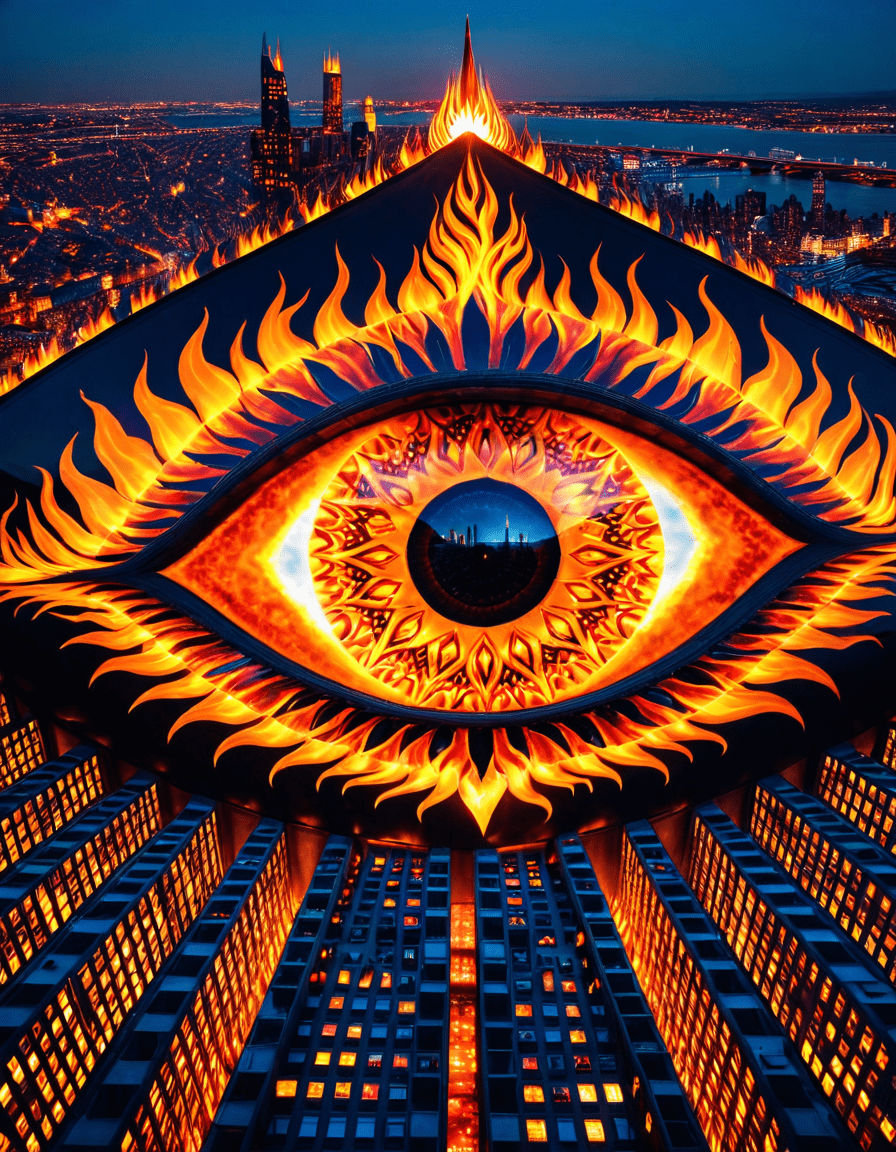
2. The Eye was a PR move — Sauron’s corporeal forms and why the “Eye” lies

What Tolkien wrote — corporeal defeats and loss of shape (Númenórean captures, final defeat in The Lord of the Rings)
Tolkien often emphasizes that Sauron lost the ability to assume pleasing forms after Númenor and later defeats; his power waned and his physical presence fragmented. He could still manifest partially — the Necromancer’s shadow, or “a great Eye, lidless” as metaphor — but Tolkien’s prose treats the Eye as a symbol of will and watchfulness as much as a literal organ. The crucial fact: Sauron’s threat is sustained will, not a single, invincible body.
Film versus text — Peter Jackson’s Eye imagery vs. Textual accounts; Sala Baker and practical performance notes
Peter Jackson turned the Eye into unforgettable iconography — a literal blazing focal point — aided by Sala Baker’s physical presence and cinematic effects. It worked brilliantly on-screen for dramatic shorthand, but it simplified Tolkien’s careful distinction between presence and personhood. Film condenses nuance: where Tolkien gives gradual loss of form, cinema often sells instant terrifying imagery.
Scholarly angle — Tom Shippey and Verlyn Flieger on metaphor vs. Literal embodiment
Scholars like Tom Shippey and Verlyn Flieger have wrestled with metaphor versus corporeality in Tolkien. Shippey reads the Eye as an evolutionary symbol of surveillance and moral pressure; Flieger explores how loss of form indicates spiritual diminishment. Both remind us: the Eye resonates because it’s a moral and political symbol, not only a monster effect.
3. Mairon to Monster: the name that betrays his original aims
Linguistic secret — “Mairon” (“the Admirable”) and the Maia of Aulë backstory
Names matter in Tolkien. “Mairon” literally suggests admiration and order. That origin signals a craftsman who prized excellence — not obvious evil — and it frames his fall as tragic intellectual corruption rather than birthright wickedness. The shift from Mairon to Sauron is therefore a moral and semantic collapse.
Moral arc — why a craftsman’s Maia turned to order via domination (Aulë → Morgoth influences)
Mairon’s temperament — a love of order and system — provided the hinge for his turn toward domination. Tolkien shows how a desire to impose order can mutate into tyranny when untethered from humility and the common good. Morgoth’s influence offered the promise of perfect order, and Mairon took the bait, swapping craft for control.
Textual anchors — references in The Silmarillion, Unfinished Tales, Letters
Tolkien’s narratives and letters repeatedly anchor this arc. The Silmarillion gives the mythic skeleton; Unfinished Tales fills in the practical steps of his deception as Annatar; Tolkien’s Letters provide authorial insight into the temptation of power. Together they make Mairon’s descent feel almost unsurprising — except in its moral horror.
4. He poured himself into the One Ring — the literal price of power

Direct evidence — Tolkien’s letters on Sauron investing his power into the Ring
Tolkien wrote explicitly that Sauron invested a great part of his native power in the One Ring to dominate other Rings and their bearers. That act was not symbolic: it was metaphysical tethering, a technical transfer of being into an artifact. The Ring therefore became both weapon and Achilles’ heel.
Consequences — why Isildur’s cutting and the Ring’s survival mattered beyond plot mechanics
Isildur’s cutting of the Ring wasn’t just drama; it severed Sauron’s anchored power and allowed his spirit to persist. The Ring’s survival meant Sauron could not be destroyed easily and could regain shape if the Ring endured. This is why the Ring is central — destroy the Ring, and you sever the tether; leave it, and Sauron’s will remains dangerous.
Technical anatomy — Celebrimbor’s smithing, forging process in Eregion, and the Rings’ hierarchy
Celebrimbor and the Eregion smiths forged Rings under Annatar’s guidance, producing the Three, Seven, and Nine, with the One created to rule them. The hierarchy mattered: the One had a special property designed to bind the others, and Celebrimbor’s craft is the tragic vehicle. Tolkien’s detailed metallurgy-language frames the Rings as both artisan objects and metaphysical anchors.
5. How Sauron toppled Númenor — prisoner, propagandist, kingmaker
Historical arc — Sauron’s captivity, rise in Númenor, counsel of Ar-Pharazôn (Akallabêth)
Sauron’s capture by Númenórean forces and his subsequent rise in Númenor is one of Tolkien’s most chilling political tales. He transformed from prisoner into counselor, using rhetoric, false piety, and cultural manipulation to warp an island civilization toward hubris. Sauron’s work in Númenor culminated in Ar-Pharazôn’s folly and the island’s doom in Akallabêth.
Primary texts — Akallabêth in The Silmarillion; implications for Númenórean decline
Akallabêth lays out Sauron’s strategy: turn prosperity into envy, then into thirst for immortality, then into worship of a false god. That arc reads like a primer in political corruption — cultural value-shifts, propaganda, and the seduction of novelty over tradition. For Tolkien, Númenor’s fall is both mythic and a cautionary political parable.
On-screen treatment — The Rings of Power’s Númenor storyline (showrunners J.D. Payne & Patrick McKay)
Amazon’s The Rings of Power makes Númenor a central dramatic battleground, showing how a patient manipulator can bend institutions. The showrunners dramatize Sauron’s influence through court intrigue and spectacle, which translates the mythic lesson into serialized TV: power works through image, patronage, and slow cultural erosion. Think less sword battle, more long con.
6. Were the Nazgûl once kings? The tragic human stories behind the Ringwraiths
Canon facts — the nine kings of Men who accepted Rings (Appendix B; Unfinished Tales)
Tolkien is clear that the Nazgûl were once nine mortal kings who accepted Rings of Power and were gradually consumed by them. They retained will but were increasingly bound to Sauron’s will through the Rings, sliding from sovereignty into servitude. Their story is a slow death of agency, a crucial moral vignette about the cost of absolute power.
Known names and mysteries — Khamûl the Easterling; gaps Tolkien left intentionally
We know one name: Khamûl the Easterling, second-in-command among the Nazgûl; Tolkien intentionally left many gaps — an artistic choice that amplifies dread. The omissions matter: they force imagination and make the Nazgûl institutional terrors rather than detailed biographies. That fog also lets filmmakers and writers fill in human contours, sometimes with mixed results.
From kings to wraiths — mechanics of corruption and loss of will (textual passages)
The Rings link mortality and domination: prolonged Ring use erodes the wearer’s physicality and ethical center. The Nazgûl’s transformation exemplifies Tolkien’s thesis that power promised as protection becomes a prison, and that immortality under domination is a spiritual corpse. Their tragedy is moral, not merely supernatural.
7. You’ve been reading Sauron wrong — myths, allegory, and the 21st‑century Sauron
Tolkien’s own view — rejection of direct allegory (Letters); moral complexity over caricature
Tolkien rejected strict allegory in his Letters and emphasized applicability instead: you can read his work through many lenses, but he resisted one-to-one political allegory. That said, Sauron embodies ethical problems — the misuse of technical skill, bureaucratic domination, and the seduction of order over freedom — making him stubbornly relevant without being a single-issue symbol.
Critic and scholar takes — Tom Shippey, John Garth, Catherine M. Ruane on political/ethical readings
Modern scholarship has expanded how we see Sauron. Shippey reads language and propaganda; John Garth situates Tolkien in his social milieu and wartime memory; Catherine M. Ruane explores political themes and ethical ambiguity. These voices push us to see Sauron as a complex antagonist who reveals faults in societies and individuals rather than a cardboard villain.
Pop-culture evolution — from 1950s Cold War metaphors to streaming-era reinterpretations
Sauron’s image shifted across decades: early readers saw Cold War resonances; later retellings turned him into cinematic iconography (the Eye) or serialized schemer (The Rings of Power). Pop-culture adaptations reframe him for their times — much like varied celebrity narratives in outlets across the web — think a quirky animated menace in Invader Zim Or the melodramatic arcs around celebrity youth such as Brooklyn Beckham That show how storytelling shapes reputations. Today’s readers — whether a student in Accra named kofi or a veteran Tolkienist — find new applications in Sauron’s tactics: propaganda, co-option, and the peril of technological overreach.
Bold wrap-up: Sauron is not just a dark lord to be beaten with swords; he’s a cautionary study in how expertise becomes coercion, gifts become chains, and political seduction outlasts military might. Share this with a friend who thinks the Eye is the whole story — they’ll thank you and maybe stop watching only the trailers.
If you want smart, unexpected reads on screen villains that expose real-world power tactics, our archive ranges from obscure fandom deep dives to glossy feature interviews — because stories teach better than slogans. And if you’re craving a tangential mood-lift, we cover culture-wide curiosities from career profiles like Santana To the weird and wonderful.
Sauron: Fun Trivia & Shocking Facts
Origins & Form
Sauron began life as a Maia named Mairon, a spirit of craft who flipped allegiance and became Morgoth’s lieutenant, which makes sauron less a simple villain and more a corrupted genius; he could change shape and charm elf-smiths before his fair guise burned away, so that later sauron was mostly presence and craft, not a normal body. Surprisingly, Tolkien left the flaming Eye idea mostly to interpretation, so much of what we “see” of sauron is readers’ imagination or filmmakers’ choices, which tells you how flexible the legend really is, eh? Also, sauron’s skill with rings comes from deep knowledge of smithing and sorcery—he forged the One to control others, a move that rewrote Middle-earth politics for ages.
On-screen Legends & Lesser-Known Bits
Film trivia: Peter Jackson’s movies made sauron iconic with an Eye and looming armor, yet concept work explored many options, proving that sauron’s menace can be sold in a dozen visual styles; the One Ring’s voice and influence were emphasized to show how sauron survives defeat through will, not just flesh. A neat bit—sauron’s original name, Mairon, means “Admirable,” which is ironic given how sauron uses that admiration for domination; and modern casting choices and adaptations keep reshaping how audiences imagine him, so sauron stays terrifying in fresh ways.
Who was Sauron before he was evil?
He started out as a Maia named Mairon, a spirit-servant of the Vala Aulë who loved order and craft, but he was seduced by Morgoth and turned to evil.
Who is Sauron in the Bible?
He’s not in the Bible — Sauron is a fictional villain created by J.R.R. Tolkien, not a biblical figure or character.
Is Sauron an elf or a human?
Neither — Sauron is a Maia, an immortal spirit like an angel, not an elf or a human, though he could take humanoid forms.
How is Sauron related to Gandalf?
They’re both Maiar, the same order of immortal spirits, but they’re on opposite sides: Sauron turned to evil while Gandalf came to Middle-earth as an Istari to oppose him.
Who was Sauron before he was evil?
Who is Sauron in the Bible?
Is Sauron an elf or a human?
How is Sauron related to Gandalf?
Who was Sauron before he was evil?
He started out as a Maia named Mairon, a spirit-servant of the Vala Aulë who loved order and craft, but he was seduced by Morgoth and turned to evil.
Who is Sauron in the Bible?
He’s not in the Bible — Sauron is a fictional villain created by J.R.R. Tolkien, not a biblical figure or character.
Is Sauron an elf or a human?
Neither — Sauron is a Maia, an immortal spirit like an angel, not an elf or a human, though he could take humanoid forms.
How is Sauron related to Gandalf?
They’re both Maiar, the same order of immortal spirits, but they’re on opposite sides: Sauron turned to evil while Gandalf came to Middle-earth as an Istari to oppose him.
This article was produced with AI assistance. How Motion Picture Magazine uses AI.
Motion Picture Magazine writes for Motion Picture Magazine — movies, celebrity gossip, entertainment news, style and best shows.