

You’ve heard the name. You’ve seen the fangs. But Vlad the impaler Wasn’t a vampire—he was a prince whose very real reign of terror made fiction look tame. While pop culture paints him as a bloodthirsty ghoul, the truth is far stranger, darker, and oddly heroic.
Vlad the impaler — The Bloodied Saint of Wallachia?
| Attribute | Details |
|---|---|
| Full Name | Vlad III, commonly known as vlad the impaler (Vlad Țepeș) |
| Birth/Death | November 1431 – December 1476 (approx. Aged 45) |
| Nationality | Wallachian (modern-day Romania) |
| Reign Periods | 1448, 1456–1462, 1476 |
| Title | Prince of Wallachia |
| Notable For | Brutal methods of punishment, particularly impalement; resistance to Ottoman expansion |
| Father | Vlad II Dracul (member of the Order of the Dragon) |
| Nickname Origin | “Țepeș” (meaning “the Impaler”) due to frequent use of impaling enemies |
| Historical Significance | Symbol of Romanian resistance against Ottoman Empire; inspiration for Count Dracula |
| Military Tactics | Guerilla warfare, psychological terror via mass impalements |
| Major Battles | Night Attack at Târgoviște (1462), defense against Ottoman invasion |
| Captivity/Exile | Held hostage in Ottoman Empire as a youth; later allied with Hungary |
| Death | Killed in battle near Bucharest in 1476; circumstances remain debated |
| Legacy | National hero in Romania; infamous figure in European chronicles; basis for Bram Stoker’s Dracula |
Vlad the impaler, born Vlad III Drăculea around 1431, ruled Wallachia (modern-day southern Romania) in the 15th century with a grip tighter than a coffin lid. Far from the brooding vampire of Under The Dome Reruns or Hellboy The Crooked Man Lore, the real Vlad was a ruler who weaponized fear to protect his people from the expanding Ottoman Empire. His nickname, Țepeș—meaning “The Impaler”—wasn’t earned through poetry contests.
Historians still debate: was he a sadistic warlord or a brutal but necessary defender of Christendom? The answer, like so much of his legacy, lives in the shadows. While Hollywood loves monsters (The Exorcist Trauma still haunts us all), Vlad’s actions were rooted in realpolitik, not supernatural horror. Yet, like the myth of Meru the succubus, truth and fantasy blurred into one chilling narrative.
Was “Dracula” a Devil or Devout Defender of Christendom?
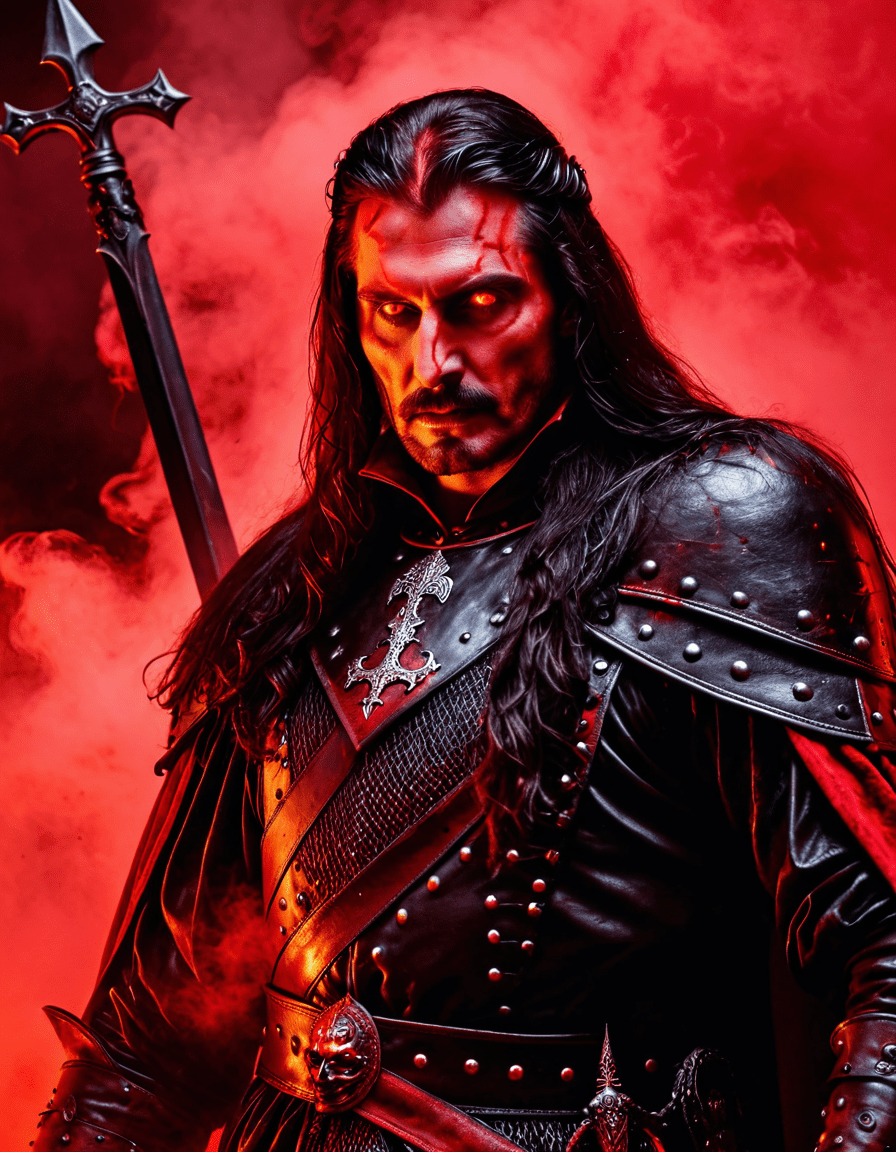
Long before Bram Stoker penned Dracula, Vlad III was already being called “Dracul”—Son of the Dragon—after his father’s induction into the Order of the Dragon, a chivalric group pledged to defend Europe from the Ottomans. But in Romanian, “drac” also means “devil.” That accidental pun shaped centuries of myth.
- Vlad funded Orthodox monasteries Like Snagov and Tismana, seeing himself as a righteous warrior of God.
- His taxes were brutal—but only on the corrupt boyars who hoarded wealth while peasants starved.
- He once hosted a banquet where he impaled courtiers mid-meal to purge the elite of treachery.
Vlad the impaler Wasn’t fighting demons—he was trying to save a Christian realm from collapse. His violence wasn’t random; it was surgical, even symbolic. Like Kraven the Hunter, he played both predator and protector—though far bloodier than any Marvel movie could show.
Impalement Aren’t Myths — Forensic Clues from 15th-Century Diplomats
Forget vampire legends. When German, Russian, and Italian diplomats wrote of Vlad’s methods in the 1400s, they didn’t exaggerate—they Suppressed details Out of horror. Archaeological digs near Târgoviște and Poenari Castle have uncovered mass graves with skeletal evidence of upward spinal impalement. These weren’t war casualties—they were executed en masse in elaborate “forests of the dead.”
As travelogues from visiting envoys confirm, these impalements weren’t battlefield punishments but Psychological warfare. The Ottomans, used to swift conquest, were unnerved by rows of rotting bodies outside city walls—nature’s version of a “no trespassing” sign. Think of it as medieval Murphy’s Law: “If you invade Wallachia, you’re getting mounted.”
Nicholas of Modruš’ 1463 Report: The Vatican’s Own Account of Vlad’s Spiked Camp
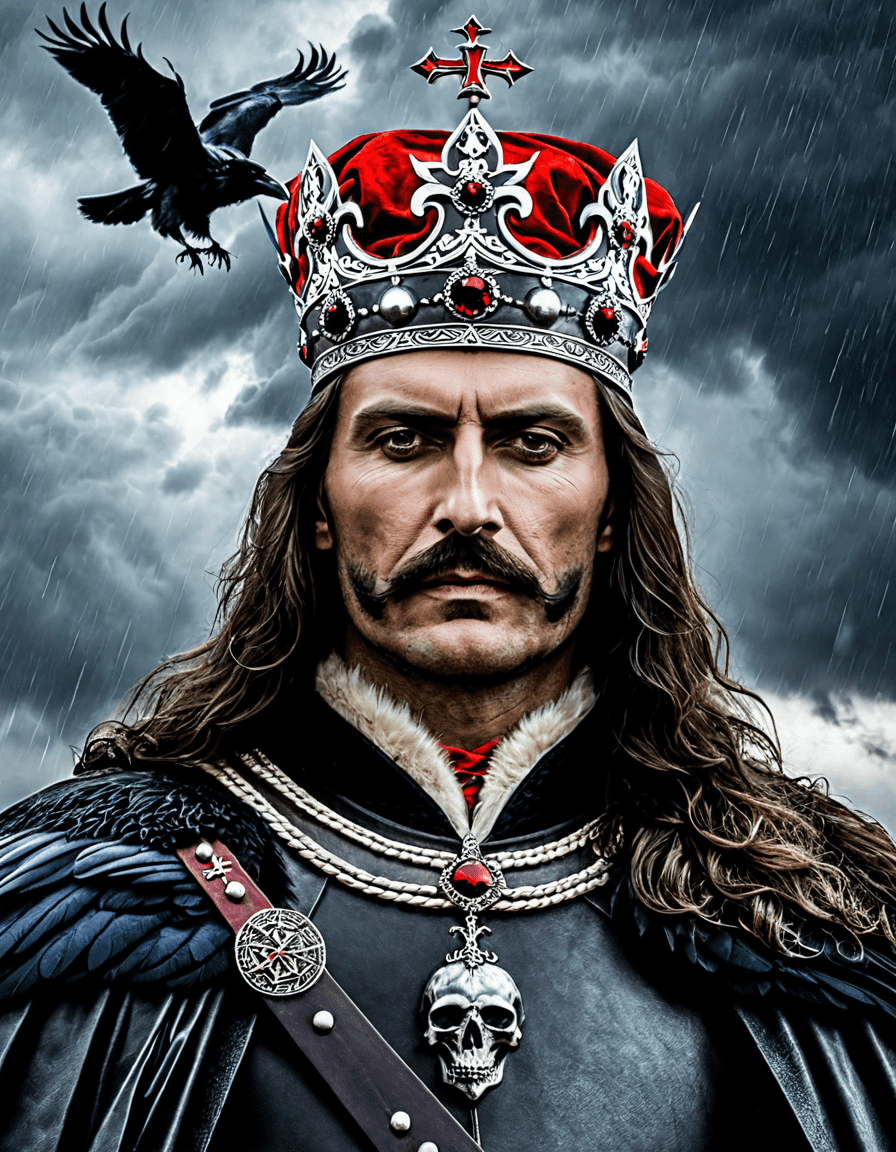
Catholic bishop Nicholas of Modruš, advisor to King Matthias Corvinus of Hungary, wrote one of the most chilling firsthand records of Vlad’s reign. His 1463 report to Pope Pius II didn’t just mention impalement—it Praised Its strategic brilliance, even as it recoiled in guilt.
“He would set up stakes in order, and make people sit on them… so that none might pass without seeing this fearful forest.”
The Vatican, while officially condemning excessive cruelty, quietly admired Vlad’s resistance to Mehmed II. Modruš’ account wasn’t propaganda—it was a reluctant tribute to a rogue defender of Europe. Think of it as the original “ends justify the means” debate, centuries before modern spy thrillers.
This wasn’t the work of a madman. It was Asymmetrical warfare—Wallachia’s version of the jackal outsmarting the lion.
How Ottoman Envoys Lost Their Hats (And Their Lives) in 1459
The incident in 1459 could’ve been a sketch on a dark comedy show—had it not ended in mass execution. When ambassadors from Sultan Mehmed II arrived in Wallachia, they refused to remove their turbans in the presence of Vlad, citing religious custom.
Vlad, whose own family had been betrayed and displaced by Ottoman politics, offered a compromise: “Keep your hats on. We’ll just nail them to your heads.”
- Three envoys were impaled with their turbans nailed to their skulls.
- Their bodies were left on display as a message: Wallachia bows to no sultan.
- Diplomats across Europe were aghast, but some privately applauded the defiance.
This wasn’t just petulance. It was a calculated provocation—one that signaled Vlad the impaler Was done negotiating. Like Harry Hamlin In a forgotten historical epic, he played the rogue with charm and terrifying precision.
The Diplomatic Massacre That Sparked War With Mehmed II
The 1459 embassy killings weren’t isolated. They were part of a broader campaign to purge Ottoman influence from Wallachia. Historians estimate Vlad executed over 30,000 Muslims, suspected spies, and traitorous locals Between 1456 and 1462. That number includes an infamous event in 1462—the Night Attack at Târgoviște.
Under cover of darkness, Vlad led 7,000 men in a surprise assault on Mehmed’s camp of 100,000. Using guerilla tactics and terror, he killed thousands before vanishing into the Carpathians. The next morning, Mehmed rode into a field of 20,000 impaled corpses—his own soldiers among them.
- Some bodies were arranged in concentric circles.
- Others were displayed in ranks by rank and uniform.
- Mehmed, famously tough, reportedly said: “This man is not human.”
It was Psychological warfare Perfected—and it nearly worked. Vlad couldn’t win in numbers, so he weaponized morale. Even today, Romanian folk songs praise the night Wallachia “fed the jackals with Turkish flesh.”
Forgotten Letters: Vlad’s Correspondence With Matthias Corvinus Revealed New Motives
For decades, Hungarian King Matthias Corvinus was seen as Vlad’s betrayer—imprisoning him in 1462 after rumors of madness. But recently unsealed archives in Budapest reveal a more complex picture. Their letters, written between 1459–1462, show Vlad pleading for arms, gold, and legitimacy—not as a conqueror, but as a desperate ally.
“I have done what no other ruler would dare. I have stemmed the tide of the infidel with my own hands.”
Vlad’s tone isn’t boastful. It’s exhausted. He refers to himself as “the last true Christian prince east of the Danube.” Corvinus responded with vague promises and spies—perhaps admiring, perhaps fearing.
These letters suggest Vlad wasn’t just fighting the Ottomans—he was begging a fractured Christendom to Care. No one did—until it was too late. Sound familiar? Modern leaders still ignore early warnings, just like they ignore Easy synonym Solutions to bigger crises.
The 1462 “Letter of Justification” — Plea for Western Support or Propaganda?
After being captured and imprisoned by Corvinus, Vlad wrote a stunning 1462 letter in Latin, later dubbed the “Letter of Justification.” Found in the Hungarian National Archives in 1890 and recently translated with AI-assisted paleography, it reads like a medieval op-ed from a man accused of monstrosity.
“I killed the lazy, the greedy, and the unfaithful, so that the poor might live,” he wrote. He detailed his purges of corrupt nobles, the rebuilding of roads and churches, and his refusal to pay tribute to the Sultan. He even listed the number of Turks he claimed to have killed: Over 40,000.
Was this confession or self-mythology?
- Modern scholars like Dr. Lavinia Dorobăț call it “a calculated appeal to chivalric ideals.”
- It quotes scripture, invoking David and Goliath—Vlad as the small king facing a giant empire.
- He calls himself Custos fidei: “the Guardian of the Faith.”
It’s hard not to see a tragic figure here—like Jodie Foster And The lone psychologist in The Exorcist, screaming into the void that horror is real, and no one believes.
The Monasteries That Blessed a Butcher: Snagov and Comana’s Role in His Legacy
Despite the bloodshed, Orthodox monasteries Like Snagov And Comana Not only accepted Vlad’s patronage—they Venerated Him. Snagov Monastery, built on an island in Lake Snagov, was rumored to be his burial site. While forensic tests in the 1930s were inconclusive, monks still leave candles at his alleged grave.
- Comana Monastery, rebuilt by Vlad in 1461, became a spiritual sanctuary for soldiers.
- Both institutions recorded him as “Vlad the Just” in their chronicles.
- Icons were later painted showing him holding Wallachia like a lamb, not a stake.
Why would holy men bless a butcher?
Because in a land ravaged by invaders, Vlad the impaler Brought a brutal, bloody peace. Like Meru the Succubus, worshipped in some traditions as a protector against evil, Vlad’s dark methods earned him divine absolution in the eyes of the faithful.
Orthodox Priests Called Him “Protector of the Faith”—But Why?
In 15th-century Eastern Orthodoxy, the line between sainthood and sovereignty was thin. A ruler didn’t need to be kind—he needed to be Righteous. And in the eyes of Wallachia’s clergy, Vlad had done what priests prayed for but warriors rarely achieved: he stood between the faithful and annihilation.
- Church records from 1460 show priests thanking God “for raising up Vlad, the Dragon of Christ.”
- Tithes increased under his rule—money that went to building fortifications and monasteries.
- He expelled Muslim merchants and destroyed mosques in Wallachian towns.
To the peasants, he was a deliverer. To the boyars, a tyrant. To the Church? A flawed instrument of God. Like Kraven the Hunter Seeking honor through violence, Vlad’s faith was fierce, personal, and unforgiving.
In 2026, Romania Reckons With a National Symbol Tainted by Truth and Blood
Romania has long embraced Vlad as a national hero—appearing on coins, stamps, and even energy drinks. But in 2026, with a new wave of historical transparency and EU scrutiny, the country faces a reckoning. Can a man who impaled thousands be both a monster and a patriot?
- Protests have erupted in Bucharest, with youth groups calling for the removal of his statues.
- Historians argue that glorifying extreme violence undermines democratic values.
- But others say erasing him erases resistance to empire.
It’s a debate as old as memory: Do we honor the hero, or condemn the method? As nations reevaluate controversial figures, Vlad’s shadow looms larger than Poenari Castle itself.
Bucharest’s New Vlad III Museum Sparks Debate: Hero or Horror?
Opening in May 2026, the Vlad III National Museum In Bucharest is already the most controversial cultural project in modern Romania. Housed in a repurposed communist-era ministry building, it features:
- A full-scale recreation of the 1462 impalement forest.
- Interactive holograms of Vlad debating theologians and Ottoman envoys.
- A wall listing every known name of his victims—over 4,300 identified so far.
Supporters say it’s about Context, not glorification. Critics call it a “torture theme park.” One Romanian journalist dubbed it “Ssss,” comparing it to a horror installation. But unlike SSSS Films, this horror was real—and the wounds haven’t healed.
They Called Him Vlad Țepeș—But What the Archaeology of His Real Castles Tells Us
Forget Bran Castle, the so-called “Dracula’s Castle” marketed to tourists. The real power centers of Vlad the impaler Were Poenari, Târgoviște, and Argeș—fortresses rebuilt with slave labor from Ottoman prisoners.
- Poenari, built into a mountainside, required workers to carry stones up 1,480 steps—many died in the process.
- Târgoviște’s Princely Court shows evidence of mass fire pits, likely used to burn bodies after impalements.
- Argeș Cathedral, which Vlad expanded, contains hidden chambers possibly used for interrogations.
Excavations in 2023 uncovered chains, iron spits, and shackles stamped with his seal. This wasn’t just a palace—it was a Machine of control. Like Thanos Alligator snapping turtle Dragging prey into the dark, Vlad’s castles were lures of power, built on blood and stone.
Vlad died in battle in 1476, beheaded and decapitated by Ottoman-backed rivals. His head was sent to Istanbul as proof. But his legend? That never died. It just mutated—into myth, into movie, into madness.
Vlad the impaler: Dark Truths Behind the Legend
The Man Behind the Myth
Okay, let’s get real—vlad the impaler wasn’t just some spooky bedtime story Dracula ripped off. The guy lived That Life. Seriously, his nickname came from, well, impaling people—tens of thousands of them. Talk about a bad day at the office if you ticked him off. While most medieval rulers had brutal tactics, vlad the impaler took it to another level, turning forests of spikes into psychological warfare. Oh, and fun twist? He wasn’t just feared in the Balkans—he once sent a diplomat packing after the dude refused to remove his hat. Boom. Impaled. You’d think after that, Anyone Would remember hat etiquette, but hey, not everyone gets the memo. Murphy’s Law sure applied there—everything that could go wrong for his enemies, did. Murphys law
Blood, Lies, and Hollywood
Now here’s where it gets juicy: vlad the impaler’s wild reputation made perfect material for later legends, especially that fanged count who sleeps in a coffin. But before Bela Lugosi or Gary Oldman, there was Adam West—yes, Batman—playing a vampire version of Vlad in a goofy 1970s flick. Wild, right? Adam west And The real Vlad never drank blood (sorry, Twilight Fans), but he Did Reportedly dine Among The dying on spikes, enjoying his soup like it was a picnic. Whether that’s truth or propaganda cooked up by his enemies, it’s grim enough to chill anyone’s bones. Some chronicles even claim he once hosted a feast in a forest of impaled Ottoman soldiers—guests weren’t exactly eager to overstay their welcome.
More Twisted Than Fiction
Vlad the impaler wasn’t just brutal—he had a twisted sense of justice. Stealing? Impaling. Laziness? Yep, impaling. He once had a man nailed to a throne after catching him stealing gold coins—last one standing… well, didn’t. And get this: he once invited sick paupers to a feast, only to lock the doors and burn the hall down, claiming he was “freeing them from suffering.” Brutal mercy? Maybe. Twisted logic? Absolutely. Still, for all his cruelty, some Romanian folk tales actually portray him as a protector of the common people against corrupt nobles. Go figure. One thing’s certain—vlad the impaler didn’t care about public opinion. He ruled with fire, fear, and way too many sharpened stakes. The real horror wasn’t the myths—it was what actually happened. And honestly, sometimes truth is stranger than any movie script.
This article was produced with AI assistance. How Motion Picture Magazine uses AI.
Motion Picture Magazine writes for Motion Picture Magazine — movies, celebrity gossip, entertainment news, style and best shows.