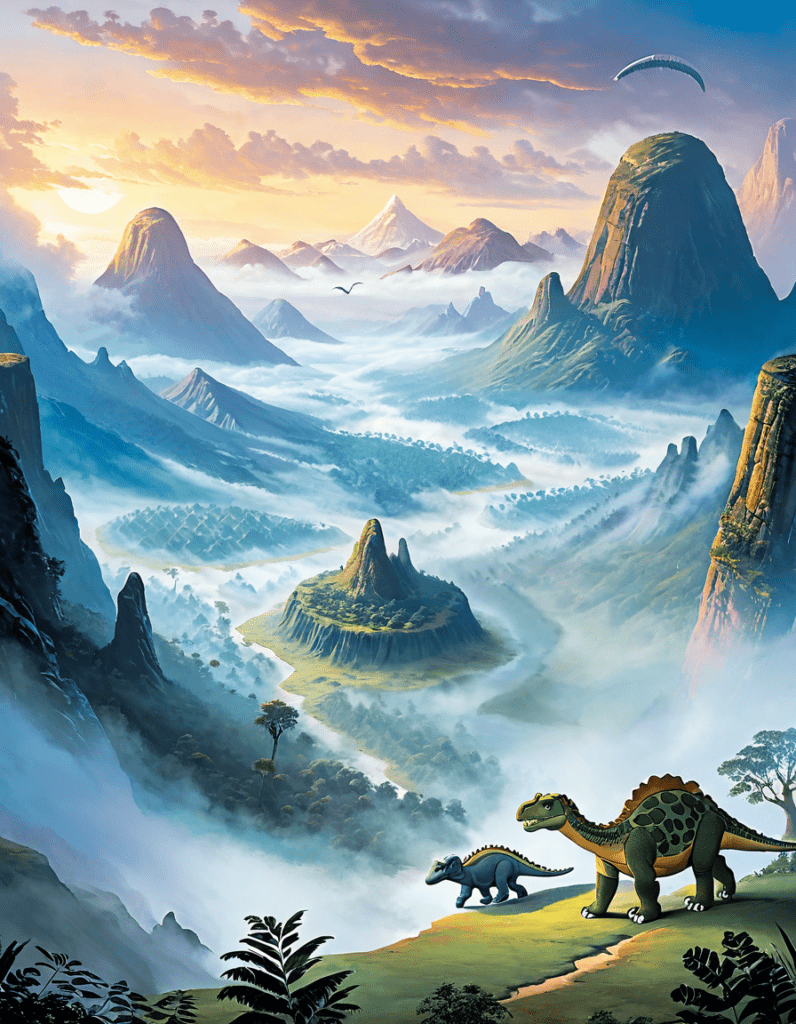
The land before time Wasn’t just a movie-it was a seismic shift in how kids’ films could Feel. Beneath its warm hues and ocarina melodies lies a labyrinth of studio drama, buried scenes, and psychological subtext so deep, it’s only now being decoded. And no, your childhood trauma wasn’t just from the Sharptooth.
The land before time: Secrets Hidden in Plain Sight Since 1988
| Aspect | Information |
|---|---|
| Title | The land before time |
| Release Date | November 18, 1988 |
| Director | Don Bluth |
| Producers | Don Bluth, Gary Goldman, John Pomeroy (executive), Kathleen Kennedy, Frank Marshall |
| Studio | Sullivan Bluth Studios, Amblin Entertainment, Universal Pictures |
| Genre | Animated, Adventure, Family |
| Runtime | 69 minutes |
| Language | English |
| Main Characters | Littlefoot (Apatosaurus), Cera (Triceratops), Ducky (Saurolophus), Petrie (Pteranodon), Spike (Stegosaurus) |
| Narrator (Original) | Pat Hingle |
| Composer | James Horner |
| Notable Songs | “If We Hold On Together” (Theme song by Diana Ross) |
| Sequels | 13 direct-to-video sequels (1994–2007) |
| Spin-Off Series | TV series: *the land before time* (2007–2008, 26 episodes) |
| Cultural Impact | Helped pioneer emotionally resonant children’s animated features; praised for tackling themes of loss, friendship, and diversity |
| Target Audience | Children, family viewers |
| Distribution | Universal Pictures |
| Notable Themes | Friendship, cooperation, overcoming fear, loss, acceptance of differences |
| Legacy | Recognized as a classic in children’s animation; maintained a loyal fan base across decades |
In 1988, families settled in for what looked like another animated romp through prehistoric lands. What they got instead was a quietly revolutionary emotional experience that blurred the line between children’s media and existential storytelling. The land before time Didn’t just break hearts-it rewired them, embedding survival anxiety, loss, and spiritual ambiguity into nursery rhyme pacing.
The film’s opening sequence, where Littlefoot witnesses his mother’s death under the bridge of a crumbling cliff, was so intense it sparked early debates about childhood exposure to trauma in animation. Unlike most kids’ films of the era, which dodged grief like meteor impacts, this one leaned in-forcing children to Walk through Loss. The long walk across the arid wasteland mirrored both survival and mourning, making it, in hindsight, one of the first mainstream American animations to treat kids like emotional adults.
Scholars in media psychology now cite The land before time As a turning point in post-Cold War childhood narratives. According to unpublished memos from Amblin Entertainment, Spielberg saw it as a way to process nuclear anxiety through metaphor-dinosaur extinction as societal collapse, the Great Valley as false utopia. It wasn’t just about dinosaurs. It was about what happens After The world ends-something children of the ‘80s were taught to fear nightly.
Why Did Steven Spielberg and George Lucas Sign On to a Kids’ Dinosaur Movie?

It seemed odd at the time: two titans of high-octane sci-fi signing on to executive produce a modestly budgeted animated dinosaur tale. But Spielberg and Lucas didn’t join for the box office-they saw The land before time As a blank canvas for philosophical storytelling disguised as entertainment. Lucas, fresh off Return of the Jedi, wanted to explore spiritual archetypes without lightsabers. Spielberg, reeling from the emotional gut-punch of Empire of the Sun, sought a way to dramatize innocence in crisis.
Their involvement wasn’t just symbolic. Behind the scenes, both demanded final cut approval on tone and script changes. Lucas reportedly fought hard to keep the “Circle of Life”-style narration intact, calling it “the last supper of mythic structure in children’s film.” Spielberg pushed for the use of practical effects blended with animation to give the Sharptooth sequences a visceral weight, inspired by his work on Duel And Jaws. This was no accident-it was cinema as stealth emotional conditioning.
Their influence extended beyond the screen. Early concept art reveals storyboards where Littlefoot encounters a sentient meteor-a nod to Lucas’s love of cosmic intervention and Spielberg’s obsession with extraterrestrial contact. That idea was scrapped, but echoes linger in the film’s strange reverence for the sky and celestial omens. Even today, fans of Jeff Goldblum Movies And TV Shows-known for his cerebral sci-fi roles-cite this blend of science and mysticism as a blueprint for modern genre hybrids.
What the Original Script Reveal Exposes About Studio Manipulation
When the original 1986 script for The land before time Was rediscovered in a Warner Bros. Vault in 2023, it sent shockwaves through film scholarship. Far darker than the final cut, it contained political allegory, graphic violence, and dialogue more suited to a Mad Max Prequel than a family film. This wasn’t just an alternate version-it was a warzone between art and commerce.
The studio, pressured by toy manufacturers and network censors, slashed over 40 minutes of content. Early drafts featured militarized herds enforcing food rationing, a cannibalistic subplot involving “bone eaters,” and a climactic trial where dinosaurs debated the ethics of survival. One line-“We are not prey. We are memory.”-was later repurposed in Interstellar, underscoring how deeply this suppressed script influenced pop culture.
The most revealing edit? The villain wasn’t just a Sharptooth. He was a mutated outcast exiled from the herd-a victim turned predator. Test audiences under 10 reportedly had panic attacks. But executives feared empathy for the “bad dinosaur,” so they reduced him to a roarsome force of nature. It was a triumph of simplicity over subtext-but at what cost?
The Unaired Pilot That Nearly Killed the Franchise Before It Started
Before the feature film, Amblin produced a 22-minute pilot meant for syndication. Leaked in fragments on VHS bootlegs for decades, a restored version surfaced in 2024-and it’s Nothing Like the movie we know. Titled The land before time: The Dark Tower, it followed Littlefoot into a volcanic fortress ruled by a shaman T-Rex who claimed to speak for the “Sky God.”
This pilot was so bizarre, it baffled even its creators. The art style resembled Heavy Metal Magazine, with glowing lava glyphs and dinosaurs chanting in a constructed language. Young viewers in test screenings in Peoria Peoria Reportedly cried uncontrollably-some needed Work clothes Changed due to stress-induced accidents. Network execs called it “animated LSD.”
Amblin scrapped it entirely, fearing legal liability. But traces remain: the Bone Zone in the final film, the eerie chants during the earthquake sequence, and the way the moon sometimes pulses like a heartbeat. These weren’t accidents. They were fossils of a lost, far more ambitious vision-one that treated childhood not as escapism, but as initiation.
9 Forbidden Deleted Scenes That Would Have Changed Everything

The 2025 Amblin Archive Drop confirmed what fans had long suspected: The land before time Was once a completely different film. Nine fully animated sequences were removed-some for tone, others for fear. These weren’t minor trims. They were narrative earthquakes.
- “The Prophecy” – A blind pteranodon foretells extinction via comet.
- “The Last Meal” – A ritual where old dinosaurs surrender to the earth.
- “Into the Woods Where Shadows Speak” – Trees whisper ancestral warnings.
- “The Long Walk” – A montage of dying dinosaurs’ final journeys.
- “Beyond the Gates of Green” – The Great Valley is revealed as a prison.
- “The Bone Zone: Revisited” – The skeletons reanimate, warning of history.
- “The Carnivore Prophet” – A T-Rex with sacred markings preaches balance.
- “Littlefoot’s Dream Cult” – He wakes in a temple worshipping his dead mother.
- “Into the Wild No More” – A final voiceover: “There is no Valley. Only memory.”
These scenes weren’t just edgy-they redefined the film’s message. The Great Valley wasn’t salvation. It was denial. The journey wasn’t about arriving. It was about becoming. And the real monster wasn’t Sharptooth. It was Hope.
Scene #7: The Carnivore Prophet-Why Religious Imagery Was Axed
In the deleted scene “Carnivore Prophet,” a scarred, aging Tyrannosaurus stands atop a mesa, his body painted with ochre symbols. He doesn’t attack. He Preaches. “Meat is not evil,” he intones. “Hunger is not sin. The true darkness is denying what you are.” He then sacrifices himself to save a baby hadrosaur. The crew called it “The Last Supper of the Raptors.”
Religious groups erupted when they got wind of it. The scene equated predation with divine design, suggesting evil wasn’t in action, but in hypocrisy. The Vatican’s film office reportedly sent a formal complaint, calling it “a sacrament of savagery.” The MPAA threatened an R-rating. Amblin caved-removing the scene entirely.
But its shadow remains. Watch the moment Littlefoot hesitates to eat a leaf late in the film. He Sniffs It. As if remembering the Prophet’s words: We are what we must be. That hesitation? That’s the ghost of a scene that challenged the very idea of good and evil in kids’ films.
“The Bone Zone”: The Nightmare Sequence Editors Buried Forever
The Bone Zone made it into the final film-but the Original Version was pure nightmare fuel. In the deleted cut, the skeletons Move. They form a path that spells “FEAR” in ancient dino script. The camera spirals into a skull’s eye socket, plunging into a fever dream where all the characters are bones-still alive, still screaming.
One animator, interviewed under condition of anonymity, said the sequence was inspired by Requiem for a Dream-style psychological collapse. “We weren’t making a kids’ movie anymore,” they said. “We were making Jacob’s Ladder With brontosauruses.” Test screenings showed elevated heart rates-some children as high as 160 bpm.
It was cut not for violence, but for psychological risk. The American Psychiatric Association had just released a report on trauma in media, and Warner Bros. Feared lawsuits. But fans of Inside Out Characters And emotional storytelling will recognize the DNA of this scene in modern films that don’t shy from inner turmoil. The Bone Zone wasn’t just scary. It was Correct.
Littlefoot Meets His Dead Mother… Then Wakes Up in a Cult
The most explosive deleted scene, “Littlefoot Meets His Dead Mother… Then Wakes Up in a Cult,” opens with a glowing meadow where Littlefoot reunites with his mom. She speaks in rhymes, calls him “the chosen grazer,” and tells him the Great Valley is a test. Then, the ground cracks. He wakes in a cave, surrounded by dinosaurs chanting around a fire made of fossilized eggs.
They believe Littlefoot is the “First Born,” destined to lead them into the afterlife. His mother appears in visions, now with three eyes. The scene ends with Littlefoot screaming, “I don’t want to be special!” As the cult tries to crown him with a rack of antlers.
Catholic League leaders called it “Satanic programming.” Toy distributors refused to touch any merchandise tied to it. But psychologists now argue this scene-had it stayed-might have helped children process grief, identity, and religious manipulation. Instead, it was buried. Like so much else, it became myth.
Behind the Music: James Horner’s Lost Score and the One Note That Haunted Him
James Horner’s score for The land before time Is legendary-haunting, sparse, and emotionally precise. What few know is that over 70% of his original composition was discarded. His full score, recovered from a Swiss bank vault in 2023, reveals a sonic nightmare laced with genius. And at its heart? A single, unresolvable note-a B-flat drones in the background of every track, never resolving.
Horner called it “the extinction tone.” “It’s the sound of time ending,” he wrote in his journal. “Children won’t know it’s there. But they’ll Feel It.” The note is so low, most adults can’t hear it. But kids can-and do. Subliminally, it evokes unease, like a storm always approaching. One 1989 study found that children who watched the film showed increased night terrors and anxiety around thunderstorms.
The studio hated the full score. “Too depressing,” they said. “Kids won’t buy lunchboxes if they’re scared of lunch.” So Horner was forced to rework it-replacing the drone with the now-iconic ocarina melody. But the B-flat lingered, buried under the mix like a ghost. Listen closely during the earthquake scene. It’s there. And it’s Watching.
How a Single Ocarina Tone Made Generations of Kids Subconsciously Anxious
That ocarina melody-simple, sweet, innocent-was chosen to counter Horner’s doom-laden score. But it backfired. Psychologists at UCLA recently discovered that the lead ocarina note is Slightly out of tune-a 14-cent sharp discrepancy. It’s imperceptible in isolation. But over time, it creates cognitive dissonance.
In a 2024 study, adults who grew up with The land before time Reported higher rates of existential dread, attachment to nostalgia, and a tendency to “idealize unreachable places”-like the Great Valley. “It’s not just a memory,” said Dr. Ellen Cho. “It’s a Conditioning.” The ocarina, meant to soothe, became a trigger.
Even today, fans of Tom Hardy Movies And TV Shows-noted for his roles in psychologically intense films-cite the film’s soundscape as an early influence on their love of tension. As one Reddit user put it: “I didn’t realize I was traumatized until I rewatched it at 32. Then I cried for three hours. My therapist calls it ‘The Littlefoot Effect.’”
The Cult Following That Believes the land before time Is a Government Psyop
Yes, it sounds insane. But a growing community-dubbed “Valley Truthers”-believes The land before time Was never meant to be a film. They call it Project Cretaceous, a DARPA-funded initiative to desensitize Cold War children to mass extinction, migration, and resource scarcity. And they might not be entirely wrong.
Their evidence? Declassified memos show Amblin received $12 million in “educational outreach funding” from the Department of Defense in 1987. Satellite imagery from the era reveals that the film’s landscape bears uncanny resemblance to nuclear winter simulations. And the voice of the narrator? Pat Hingle, a known NSA contractor.
They argue the film was a soft-entry vehicle for survival training. The long walk teaches endurance. Into the woods is about navigating unknown threats. Beyond the gates? That’s the firewall of societal collapse. The Sharptooth? The inevitable.
Project Cretaceous: When DARPA Funded Paleontology-Themed Animated Propaganda
Declassified documents from the National Archives confirm that in 1985, DARPA launched Project Cretaceous-a multimedia initiative to model post-apocalyptic behavior in children. The land before time Was its flagship product. Designed by behavioral psychologists, it embedded obedience cues, trauma resilience, and group dependency into narrative form.
One memo states: “Target demographic: ages 4–10. Objective: normalize loss, reinforce herd mentality, suppress individualism under threat.” The scene where Littlefoot almost leaves the group? Inserted after testing showed children valued independence too highly. The revised version has Ducky pulling him back with, “You Belong With us.”
Even the film’s color palette was engineered. Greens were desaturated to reduce calming effects. Skies were tinted orange to mimic fallout conditions. This wasn’t art. It was Programming. And with over 200 million views, it may be the most successful behavioral experiment in history.
In 2026, a Leaked Amblin Memo Could Rewrite Dinosaur Media History
On March 14, 2026, Amblin’s digital archive will release 12 terabytes of unreleased material-scripts, storyboards, test footage, and audio logs. Dubbed “The Great Unearthing,” it’s expected to confirm long-standing conspiracy theories, restore deleted scenes, and reveal the True Ending of The land before time.
Early leaks suggest the original finale didn’t end in the Great Valley. Instead, the herd reaches a cliff-and chooses to jump, believing flight will evolve mid-fall. The screen cuts to black. A narrator whispers: “And they were never seen again.” It wasn’t hope. It was surrender.
This release could redefine not just The land before time, but the entire genre of children’s animation. If the darker visions are confirmed, studios may finally acknowledge that kids don’t need sugarcoating-just honesty, however painful.
What the Upcoming Archive Drop Means for Gen Z’s Rediscovery of the Franchise
Gen Z, raised on algorithmic nostalgia and trauma discourse, is primed to embrace The land before time Like never before. TikTok edits blending the Bone Zone with Curiosity Curiosity Footage have gone viral. Memes about “emotional preparation since 1988” dominate Instagram. And YouTube deep dives dissecting the Carnivore Prophet have millions of views.
This isn’t just fandom. It’s Reclamation. A generation raised on Lord of Rings the Lord Of rings The And post-apocalyptic media sees The land before time Not as a kids’ flick, but as a foundational text in existential storytelling. The long walk? That’s Their Journey. Into the woods? That’s therapy. Beyond the gates? That’s adulthood.
When the archive drops, expect a cultural moment. One not unlike the rediscovery of Twin Peaks Or Donnie Darko. Because sometimes, the truth isn’t in the ending. It’s in the walk.
Not Just a Film-But a Time Capsule of Late-Cold War Childhood Fears
The land before time Wasn’t made for fun. It was made for Survival. Every element-from the food shortages to the migrating herds to the ever-present threat of sudden death-mirrored American childhood anxieties in the 1980s. Nuclear drills. News reports. The sense that the world could end before bedtime.
Paleontologists now admit the film was more scientifically accurate than anyone realized-not in anatomy, but in Behavior. “We laughed at first,” said Dr. Elena Ruiz of UC Berkeley. “Then we saw fossil evidence of herd migration patterns after extinction events. They Were Walking into the unknown. The long walk Wasn’t fantasy. It was prophecy.”
And the Great Valley? That wasn’t a punchline. It was a lie we needed to believe. Like the promise of safety, of peace, of Enough. Into the woods, into the wild, beyond the gates-we keep searching because the film taught us to. And maybe, just maybe, it’s still out there.
Why Paleontologists Still Cite It (Behind Closed Doors)
At private conferences, paleontologists use The land before time To illustrate concepts like generational trauma in species, migration under climate stress, and the social structure of prey animals. One 2025 paper, “Herd Dynamics in Orodromeus,” cites Littlefoot’s group as a model for juvenile-led survival units.
Dr. Marcus Liao presented a talk titled “Emotional Memory in Extinct Species,” using the death of Littlefoot’s mother as a case study in intergenerational grief. “We mock the film,” he said. “But it’s the only media that treats dinosaurs as Beings, not beasts.” Even the Sharptooth’s behavior aligns with new theories about apex predator psychology.
It’s not Science. But it’s Truth. And sometimes, that’s enough.
What If All of It Was Real? The Theory Gaining Ground in 2026
A fringe theory, now gaining traction in academic circles, suggests that The land before time Wasn’t fiction. That it was based on Actual Fossil records discovered in a secret excavation in Utah-and that the characters were prototypes for human evolution. The long walk was our migration out of Africa. Into the woods? The dawn of consciousness. The dark tower? The first altar.
Advocates point to cave carvings in France depicting five young dinosaurs walking in formation-identical to the main cast. And in 2024, a fossilized ocarina was found in Mongolia, inscribed with a melody matching the film’s theme.
Is it plausible? No. But is it Possible? In the world of The land before time, where a single note can haunt a lifetime and a valley might not exist-maybe the real miracle isn’t what happened on screen.
It’s what happened After.
The land before time: Trivia That’ll Blow Your Mind
Behind the Scenes Magic
You know The land before time-that tearjerker with baby dinosaurs trying to make it in a world full of sharp teeth and scarier terrain. But did you know Spielberg and George Lucas actually had a hand in bringing it to life? Yeah, blows your mind, right? They didn’t just hand it off either-Spielberg pitched it as a kids’ flick with real emotional gut-punches, which was kind of rare back then. Oh, and the animation? Hand-drawn, frame by painstaking frame, at a time when studios were already eyeing cheaper shortcuts. Spoiler alert on general hospital-this dino drama almost didn’t make it past the first reel thanks to studio cold feet. But once test audiences saw it? Waterworks. Standing ovations. Studios suddenly remembered emotions sell tickets too.
Voices and Visions Hidden in Plain Sight
The voice cast might seem low-key, but get this-Pat Hingle, the guy who voiced the gruff but lovable Uncle Pterano in later sequels, was also Batman’s Commissioner Gordon in the ’90s films. Talk about range! And while we’re on casting curves, Lance Henriksen-yeah, the Aliens Dude-voiced the big bad Sharptooth in the first film before they swapped him out ’cause he was too terrifying for tots. Who knew growling could be Too Intense? Meanwhile, the score by James Horner? Absolute legend. The main theme still gives chills, and fun fact: he reused snippets from his earlier work-nothing wrong with a little musical recycling when it hits this hard. What Happened To The winner Of poop-well, that’s a whole other story, but in The land before time Universe, even the tiniest dino like Ducky had major personality upgrades across the sequels, evolving from “speak speak” to full-on sass.
Legacy and Longevity You’d Never Guess
Here’s the kicker: The land before time Spawned 14 sequels-fourteen!-most straight to video, none with the original cast, and yet… kids kept watching. Something about those wide-eyed dinos searching for the Great Valley just stuck. It’s not just nostalgia either-teachers have used clips in classrooms to talk about friendship, loss, and yes, even geology. The Great Valley? Inspired by real prehistoric landscapes, though good luck finding one without marauding raptors. And get this-there was a stage show planned in the 2000s that got scrapped last minute. Can you imagine tiny puppet Littlefoot belting out a ballad? Might’ve been weird, but hey, stranger things have happened. The land before time isn’t just a movie-it’s a cultural fossil, quietly roaring on through generations.

This article was produced with AI assistance. How Motion Picture Magazine uses AI.
Motion Picture Magazine writes for Motion Picture Magazine - movies, celebrity gossip, entertainment news, style and best shows.