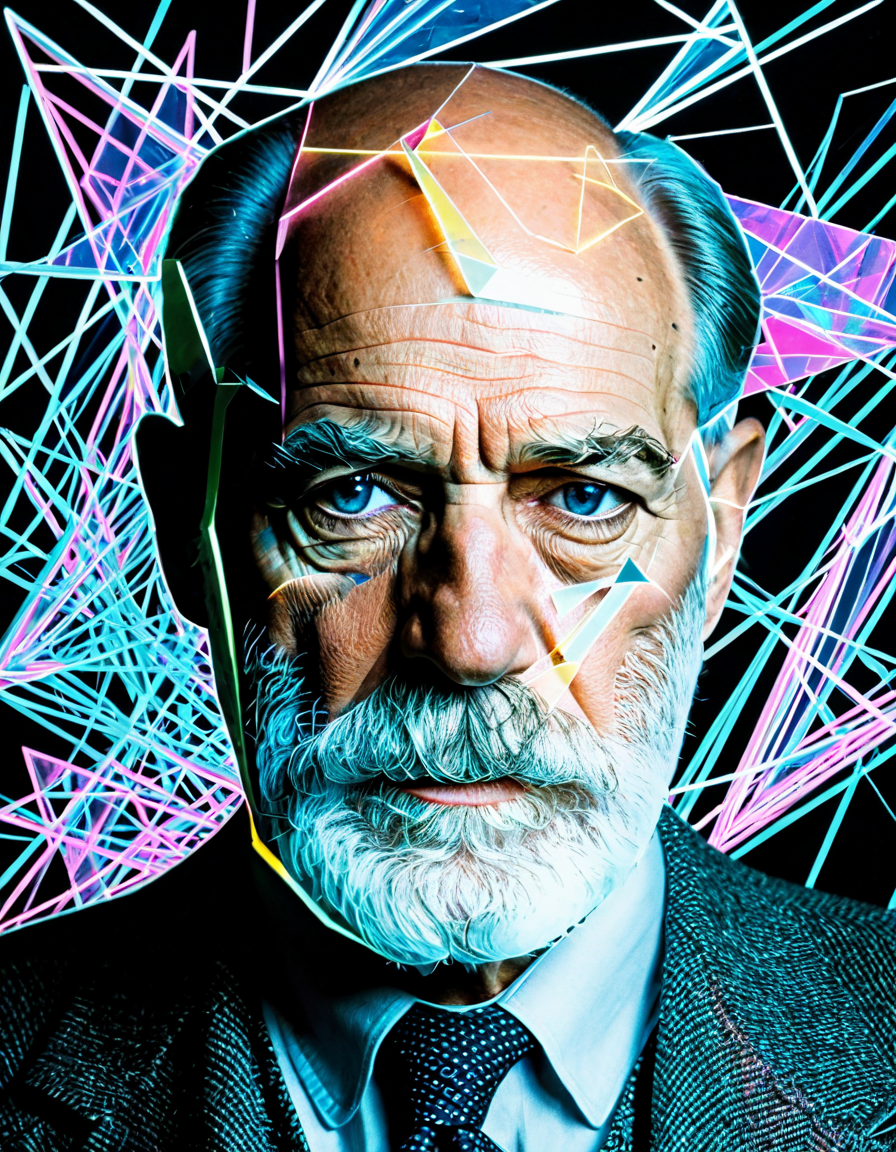
sigmund freud changed the way we talk about desire, dreams, and the hidden scripts of the self — but beneath the genius were episodes that still shock historians, clinicians, and storytellers. This article pulls the curtain back: scandals, missteps, cultural ripples, and the surprising ways 2026 neuroscience and AI reframe Freud for filmmakers and therapists alike.
1. sigmund freud: The Cocaine Years — He Advocated a Drug You’d Never Expect
Quick snapshot — 1884 paper “Über Coca” and Freud’s early prescriptions
| Topic | Details |
|---|---|
| Full name | Sigmund Freud |
| Born / Died | Born 6 May 1856, Freiberg in Mähren, Austrian Empire (now Příbor, Czech Republic); died 23 September 1939, London, UK |
| Nationality / Background | Austrian (Austro-Hungarian Empire), Jewish heritage |
| Occupation / Field | Neurologist, founder of psychoanalysis; theorist in psychology, psychiatry, culture |
| Education | MD, University of Vienna (1881) |
| Institutions / Practice | Private psychiatric practice in Vienna; founder/leader of the psychoanalytic movement and Vienna Psychoanalytic Society |
| Major works (selected) | The Interpretation of Dreams (1899/1900), The Psychopathology of Everyday Life (1901), Three Essays on the Theory of Sexuality (1905), Jokes and Their Relation to the Unconscious (1905), Totem and Taboo (1913), Beyond the Pleasure Principle (1920), The Ego and the Id (1923), Civilization and Its Discontents (1930) |
| Core theories / concepts | The unconscious; id, ego, superego; psychosexual development (oral, anal, phallic, latency, genital); Oedipus complex; dream symbolism; defense mechanisms; repression; transference |
| Clinical methods | Free association, dream analysis, interpretation of slips and symptoms, analysis of transference and resistance (talk therapy model) |
| Notable case studies | “Dora” (Ida Bauer), Little Hans, the Rat Man, the Wolf Man — used as clinical exemplars in his writings |
| Influence / Legacy | Transformed psychotherapy and clinical practice; major influence on psychiatry, psychology, literature, art, film, cultural and literary criticism; spawned numerous psychoanalytic schools and offshoots (Jung, Adler, Anna Freud, Lacan, etc.) |
| Controversies / Criticisms | Scientific validity and empirical support questioned; heavy emphasis on sexuality and early childhood; perceived gender bias and cultural determinism; many concepts revised or rejected by later research |
| Personal life | Married Martha Bernays (1886); father of six (including Anna Freud, pioneering child psychoanalyst) |
| Final years / Death | Fled Nazi-annexed Austria in 1938 to London; suffered long-term oral cancer; died 23 Sept 1939 with physician-administered morphine for terminal illness |
| Quick summary | Pioneering but polarizing figure: established psychoanalysis and introduced enduring concepts about the unconscious and therapeutic talk, while sparking ongoing debate about theory, method and scientific status. |
Freud published his 1884 essay “Über Coca” after experimental work with the coca alkaloid, believing it might cure morphine addiction and various ailments. He called cocaine a “magical” tonic in letters and even prescribed it to colleagues, a choice that later critics labeled reckless. This early advocacy shows Freud as a clinician still learning the limits of intervention, not yet the architect of a theoretical empire.
Patient story — Ernst von Fleischl-Marxow and the morphine/cocaine tragedy
Ernst von Fleischl-Marxow, a Viennese physician and friend, developed a severe morphine addiction after an operation; Freud recommended cocaine as a remedy. Tragically, Fleischl’s condition worsened, and he ultimately died, a sequence biographers link to Freud’s misguided treatment plan. The episode exposed the human costs of experimental therapeutics and shadowed Freud’s reputation for decades.
Correspondence and hubris — letters to Wilhelm Fliess urging cocaine’s therapeutic use
Freud’s letters to Wilhelm Fliess brim with confidence about cocaine’s promise and reveal a young clinician eager for solutions. The tone oscillates between scientific excitement and personal conviction, showing how hubris can travel in ink. These letters are an early sign that Freud’s clinical enthusiasms would sometimes outpace prudence.
Aftermath — how this episode haunted Freud’s reputation in later biographies (Peter Gay, Jeffrey Masson)
Later biographers like Peter Gay and critics such as Jeffrey Masson revisited the cocaine years to parse how ethical missteps shaped Freud’s career trajectory. Gay treats the episode as a youthful error within a larger life, while Masson interprets it as indicative of deeper professional blind spots. The cocaine years remain a cautionary tale: innovations carry moral weight, and reputations get rewritten by the harms they precipitate.
2. How Freud’s Private Letters Blew Up — The Fliess Correspondence Scandal?
Who was Wilhelm Fliess and why his letters matter to Freud’s method
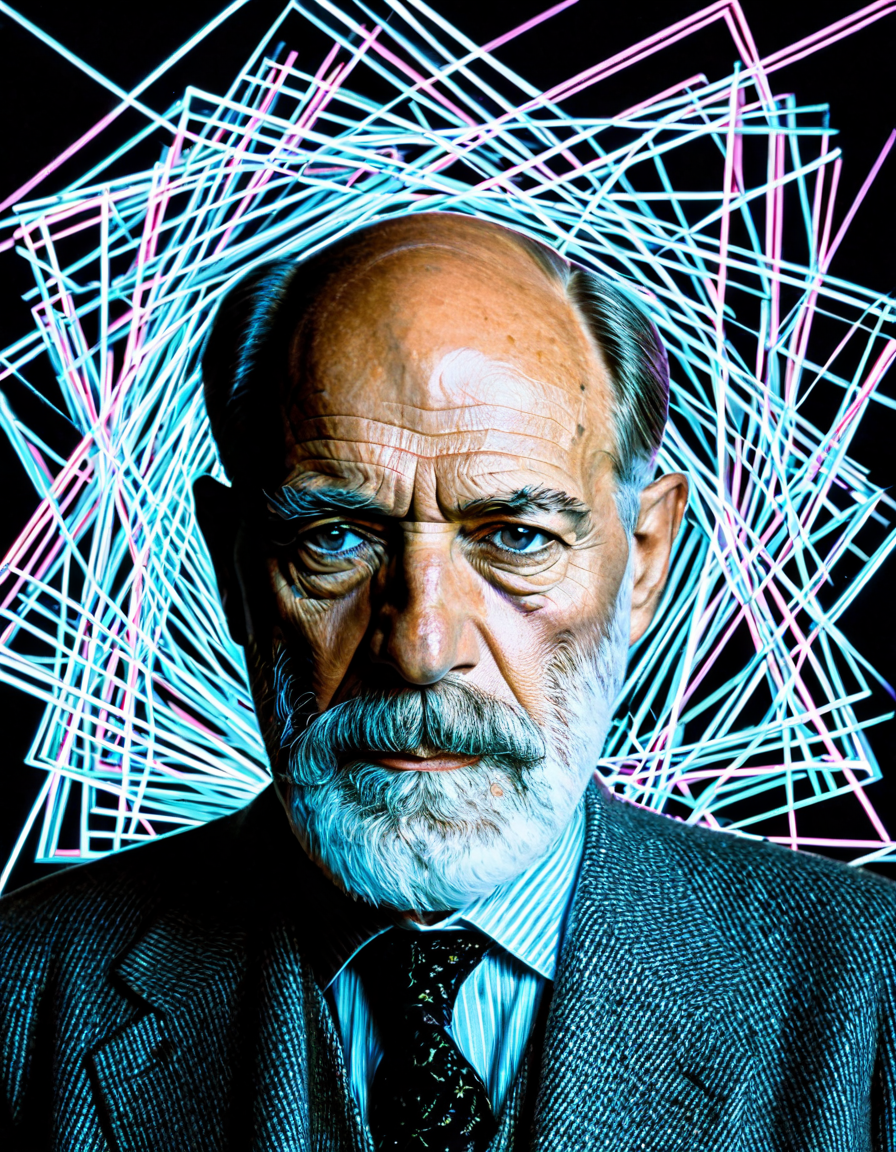
Wilhelm Fliess was an ENT doctor and Freud’s intimate correspondent; their letters are a rare window into Freud’s private reasoning. Fliess proposed speculative “biorhythms” and shared profound confidence in psychoanalytic breakthroughs, which influenced Freud’s clinical thinking. The correspondence shows Freud testing ideas in private before polishing them for public consumption, revealing the iterative — and sometimes messy — birth of theory.
The Emma Eckstein affair — nasal operations, hemorrhage, and what Freud admitted (case details)
Emma Eckstein, one of Freud’s earliest female patients and a collaborator of Fliess, underwent a nasal operation recommended by Fliess that left her with severe hemorrhage. Freud later acknowledged partial responsibility for deferring to Fliess’s surgical judgment; the episode raises serious ethical questions about authority and patient safety. Eckstein’s case illustrates the human cost when charismatic clinicians and speculative science collide.
Publication history — how the Fliess papers reshaped 20th-century Freud scholarship
When scholars published the Fliess correspondence, it forced a reevaluation of Freud’s methods, chronology, and self-presentation. The letters challenged tidy timelines and showed Freud shaping narratives for colleagues and posterity. This archival turn gave historians the tools to reconstruct influence networks and to understand psychoanalysis as a social project as much as a science.
Cultural echo — cinematic and literary portrayals of the scandal (references to biographies and historical dramas)
The Fliess letters and the Emma Eckstein saga echo through dramatizations and biographies that dramatize Freud’s moral ambiguities. Films and theater pieces about Freud’s circle often stage these private moments as turning points in modern thought. Sometimes the scandals read like dark comedy — a reminder that even intellectual revolutions carry scenes fit for dramatic adaptation, a tone that can feel as absurd as a clip of a reality show where actors pick funny Usernames for anonymous confessionals.
3. The “Dora” Case — What He Never Told the Public About Ida Bauer
Primary source — “Fragment of an Analysis of a Case of Hysteria” (1905) summarized
In 1905 Freud published the “Dora” case, a clinical fragment about Ida Bauer, a young woman he labeled hysteric and whose treatment he terminated early. Freud’s published account is tightly edited: he emphasized dreams, transference, and sexuality in a narrative that made psychoanalytic method look precise and revelatory. Yet the fragmentary nature of the report hints at selective storytelling — what he included, omitted, and framed shaped generations of readers.
Ida Bauer (Dora): the patient’s life beyond Freud and later critiques of his retelling
Ida Bauer’s life after Freud tells a different story: she left therapy, married, and lived away from the psychoanalytic limelight, which complicates Freud’s claim to therapeutic success. Feminist critics and historians argue Freud silenced her voice and used her as a vehicle for theory rather than a partnered client. The discrepancy between lived outcome and theoretical utility exposes ethical tensions in case-based writing.
Feminist and historiographical challenges — voices from Juliet Mitchell to Jeffrey Masson
Scholars from Juliet Mitchell to Jeffrey Masson interrogated Freud’s use of Dora, arguing that gendered assumptions and selective citation distorted clinical reality. Feminists criticized Freud’s focus on sexual interpretation over social context, while later historians probed archival gaps. These critiques forced psychoanalysis to confront the politics of narrative and the ethics of representation.
What the case reveals about Freud’s method: selective quotation and narrative control
Dora’s fragment demonstrates Freud’s ability to craft clinical stories that served pedagogic ends, sometimes at the expense of patient voice. He edited dialogue, emphasized certain dreams, and used selective quotation to support theoretical claims. For historians and practitioners, the lesson is clear: case reports are arguments, not only records, and they need scrutiny.
4. Dreams, Not Just Sex: The Interpretation of Dreams’ Unexpected Cultural Ripples
Book basics — The Interpretation of Dreams (1900) and the unconscious as visual drama
In The Interpretation of Dreams Freud proposed the unconscious communicates in symbolic imagery governed by processes like condensation and displacement. He described dreams as the “royal road” to unconscious wishes, reframing inner life as cinematic and pictorial. This visual turn made the book fertile ground for artists and filmmakers seeking language to represent inner turmoil.
Surrealist tie-in — Salvador Dalí, André Breton and Freud’s influence on visual art
Surrealists like Dalí and André Breton openly mined Freudian imagery; they treated dreams as templates for visual shock and psychic truth. Dalí’s melting clocks and uncanny landscapes echo Freud’s ideas about hidden associations and latent content. Cinematic dream sequences later borrowed Surrealist grammar, translating Freud’s prose into image.
In film — Alfred Hitchcock’s Spellbound (1945) dream sequence by Dalí and psychoanalytic imagery in cinema
Hitchcock’s Spellbound literally imported a Surrealist dream sequence designed by Dalí, a vivid instance of psychoanalytic aesthetics shaping Hollywood. Freud’s concepts appear in quieter cinematic ways too: characters on screen often enact repressed wishes, transfers, and symbolic gestures that echo analytic logic. Contemporary directors reference psychoanalysis when they want internal states externalized — whether in prestige dramas or the surreal beats of a film prime for cult debate, a pattern as odd as a viral piece about a Blackstone pizza oven showing up on a therapist’s kitchen table.
Theoretical pivot — how Freud’s dream work anticipated later cognitive and predictive theories
Surprisingly, Freud’s model of unconscious processes as dynamic and meaning-making anticipated modern ideas about predictive processing and simulation. Researchers now describe the brain as generating predictions and minimizing error — a conceptual cousin to dreaming as hypothesis-testing. Freud’s imagery-rich account remains influential as a metaphor and a heuristic even when modern neuroscience reframes the mechanisms.
5. Freud’s Patients Who Became Famous — Wolf-Man, Little Hans, Emma Eckstein
Sergei Pankejeff, the “Wolf-Man”: symptoms, dream text, and later life
Sergei Pankejeff, the so-called “Wolf-Man,” presented a dream about wolves that Freud read as evidence of infantile trauma and primal scenes. Freud used the case to support psychoanalytic developmental claims; subsequent scholarship has questioned the case’s interpretation and representativeness. Pankejeff lived into old age and later commented ambivalently on his fame, revealing the human toll of becoming a textbook case.
Little Hans (Herbert Graf): the phobia study and how case reports shaped child psychology
Little Hans’ phobia of horses became one of Freud’s most cited child analyses, used to argue for Oedipal dynamics in early childhood. Clinicians and researchers used such single case studies as seeds for wider theory, sometimes overgeneralizing from unusual patients. Still, Little Hans shaped early child psychology and offered a model for interpreting symbolic play and fear.
Emma Eckstein and Ida Bauer: ethics, surgery, and the real human costs behind clinical fame
Both Emma Eckstein and Ida Bauer remind us that case fame often masks suffering: Eckstein endured dangerous surgery and long-term consequences, while Bauer’s life choices disappear behind Freud’s narrative. Ethical scrutiny now demands we see patients beyond clinical fodder for theory. These stories push clinicians to prioritize consent, voice, and long-term welfare over analytic myth-making.
Hollywood & stage — how these cases inspired films and plays (A Dangerous Method, stage adaptations)
These famous cases inspired films like A Dangerous Method and numerous stage adaptations that dramatize psychoanalytic conflict. Filmmakers find rich material in the interpersonal dramas, ethical dilemmas, and charged sexuality at the heart of early psychoanalysis. Even performers known for intense, psychologically complex roles (think of the energy in some willem dafoe movies) illustrate how actors translate psychic tensions onto screen.
6. Did Freud Misogynize Psychoanalysis? The Hysteria Debate with Horney and de Beauvoir
Karen Horney’s critique of penis envy and revised theories of neurosis
Karen Horney rejected Freud’s notion of innate penis envy, arguing instead that social and cultural conditions shape neurosis. She reframed female psychology around power dynamics and cultural deprivation rather than anatomical lack. Horney’s work forced psychoanalysis to wrestle with sociocultural causation and expanded clinical options for women.
Simone de Beauvoir and “The Second Sex”: midcentury feminist rejection of Freudian determinism
Simone de Beauvoir’s The Second Sex critiqued biological determinism and psychoanalytic claims that grounded female destiny in biology. She reinterpreted women’s oppression through existentialist and historical lenses, challenging Freud’s purported universals. The debate pushed intellectuals to separate clinical observation from cultural bias.
Alternative schools — Melanie Klein, object relations, and how women theorists rewrote the canon
Melanie Klein and the object relations school retooled psychoanalytic theory to emphasize early relationships and internal objects rather than crude sexual drives. Women theorists broadened the field and introduced models that better described caregiving, attachment, and relational trauma. These alternatives show that psychoanalysis evolved through critical engagement, not static dogma.
Contemporary take — where modern psychotherapy keeps, discards, or transforms Freud on gender
Today clinicians retain Freud’s emphasis on unconscious processes and transference but often discard deterministic claims about gender. Modern therapy integrates attachment science, trauma-informed care, and social-contextual awareness. Filmmakers depicting therapy in 2026 often consult a blend of traditions to avoid caricature while honoring complexity — an approach as eclectic as the mashups of media you might spot between profiles of creators like Roald dahl and character studies.
7. Rewrite Your Mind: How 2026 Neuroscience and AI Finally Salvage (—or Sink) Freud
Neuropsychoanalysis update — Mark Solms, neural correlates of dreaming and unconscious processing
Neuropsychoanalysis, championed by Mark Solms, seeks bridges between Freudian constructs and measurable brain processes, especially in dreaming. Solms and colleagues find neural correlates for dream generation that make some Freudian claims empirically testable. The field now frames Freud as a theorist of function whose metaphors sometimes map onto neural data.
Predictive processing & Karl Friston — reframing repression as prediction error and priors
Karl Friston’s predictive processing describes brain function as hierarchical prediction and error correction; repression can be framed as a weighted prior that suppresses certain predictions. This reframing preserves the intuition that unconscious processes shape perception while translating it into computational language. Freud’s metaphors gain new traction when expressed as precision-weighted priors.
Memory reconsolidation, decision‑making, and Joseph LeDoux/Antonio Damasio lines of evidence
Research on memory reconsolidation (Joseph LeDoux) and affective neuroscience (Antonio Damasio) highlights how emotional memories reshape behavior outside conscious awareness. These findings resonate with Freud’s emphasis on formative unconscious experiences, offering mechanisms for symptom persistence and change. Clinicians now combine reconsolidation techniques with psychodynamic insight to target entrenched patterns.
AI mirrors of the unconscious — large models, latent representations, and cultural implications
Large AI models operate with latent vector spaces that, in practice, encode associations without explicit rules — a technical echo of the unconscious as associative network. Filmmakers and theorists debate whether these models genuinely mirror psyche or merely replicate statistical patterns. The analogy invites ethical questions about interpretation, projection, and the stories we tell about autonomy — an urgent concern for storytellers making human-focused narratives or whimsical features like a contemporary adaptation of the wild robot movie.
Practical stakes for clinicians and filmmakers in 2026 — what to keep from Freud and what to retire
Clinicians should keep Freud’s attention to narrative, transference, and the symbolic life while retiring deterministic claims unsupported by data; integrate trauma work, attachment science, and reconsolidation techniques for efficacy. Filmmakers can keep Freud’s dramaturgical toolbox — dreams, slips, and metaphor — but must apply them with nuance and avoid caricature. Directors who stage psychological realism often borrow production touches to anchor scenes — sometimes as mundane as a prop on set or a view of the kitchen hosting a late-night argument next to a Blackstone pizza oven — details that make interior life feel lived-in.
Filmmakers and critics still mine Freud for dramatic possibilities: think of how animated or family films use inner transformation motifs — even a tale like movie The Emperors new groove stages identity shifts that invite symbolic readings. And when pop culture riffs on therapy, from offbeat comedies to serious dramas, the public learns psychoanalytic vocabulary — sometimes through unlikely channels, whether a viral essay or a surreal TV episode about a trickster like Roger american dad. That cultural cross-pollination means Freud’s fingerprints appear where you least expect them: in a controversial nightclub drama like Showgirls, a children’s fantasy, or a biopic casting choices reminiscent of actors with raw psychological gravitas, a quality some see in performers like willem dafoe.
Before you hit publish, consider this: Freud’s greatest legacy is not a set of incontrovertible facts but a set of lenses — dream-work, transference, the idea that much of mind spins below awareness. New science and AI give those lenses higher resolution, even if they blur some contours. If you’re a clinician, filmmaker, or curious reader, keep the boldest pieces of Freud — attention to narrative, the symbolic, the relational — and leave behind the unproven claims. And if you want an odd modern aside to share at a party, note how archival eccentricities — letters, surgeries, and cocaine prescriptions — read like plot points in a biopic that still hasn’t been made, even as contemporary culture reuses Freud’s themes in unexpected places, from celebrity profiles to quirky pieces on ready lift or actors’ backgrounds like Chris Odonnell.
Bold takeaways:
– Freud rewrote our language for the inner life; he was brilliant, fallible, and human.
– Modern neuroscience and AI refine his metaphors into testable hypotheses — sometimes rescuing him, sometimes retiring a claim.
– For creators and clinicians in 2026, Freud is best used as a creative and clinical spark, not a final authority.
If you’re a reader who loves deep dives that bridge history, science, and pop culture, share this with a friend who still thinks “hysteria” is a punchline — they’ll thank you, eventually.
sigmund freud: Fun Trivia & Shocking Facts
Early life oddities
Believe it or not, sigmund freud once championed cocaine as a wonder drug and even prescribed it to friends and colleagues, a risky chapter that reshaped his reputation later on. Oddly enough, sigmund freud started his career influenced by neurology and only drifted into psychoanalysis after wrestling with patients whose symptoms had no clear physical cause. Quick aside: his famous cigar habit wasn’t just a quirk — freud joked that sometimes a cigar is “just a cigar,” yet that line fed decades of debate about his theories on sexuality and symbolism.
Strange influences and legacy
By the way, sigmund freud loved archaeology metaphors, likening the mind to layers to be dug up, which helped popularize dream analysis in plain language for the masses. Less known, sigmund freud’s couch was central to his method; sittings on that couch, often silent and intense, turned clinical observation into cultural myth. That said, his ideas kept evolving, sparking films, jokes, and academic feuds that show how sigmund freud still gets under our skin, big time.