movie the emperors new groove didn’t arrive on screens as the lean, joke-laden caper we know — it almost became an operatic Disney epic. That dramatic metamorphosis left behind story reels, unreleased songs and behind-the-scenes drama that still make fans and historians giddy. Read on: these seven secrets peel back the curtains on a wildly different Disney that nearly existed.
1. movie the emperors new groove started life as the lost musical Kingdom of the Sun
Quick snapshot — the original epic-musical concept vs. the final comedy
| Field | Details |
|---|---|
| Title | The Emperor’s New Groove |
| Year | 2000 |
| Type / Genre | Animated family comedy / buddy comedy / adventure |
| Director | Mark Dindal |
| Producer | Randy Fullmer |
| Writers | Screenplay by David Reynolds; film retooled from an earlier musical project, Kingdom of the Sun |
| Main cast (voices) | David Spade (Kuzco), John Goodman (Pacha), Eartha Kitt (Yzma), Patrick Warburton (Kronk), Wendie Malick (Chicha) |
| Studio / Distributor | Walt Disney Feature Animation / Walt Disney Pictures (Buena Vista distribution) |
| Release date (US) | December 15, 2000 |
| Runtime | 78 minutes |
| Country / Language | United States / English |
| MPAA rating | G (general audiences) |
| Music | Score by John Debney; end-credits song “My Funny Friend and Me” performed by Sting |
| Budget | Approx. $100 million (production retooling contributed to costs) |
| Box office | Moderate commercial success — roughly $160–170 million worldwide (approx.) |
| Plot (one line) | A selfish Incan emperor is turned into a llama by his ex-advisor and must team up with a humble peasant to reclaim his throne. |
| Reception | Generally positive: praised for sharp, self-aware humor, voice performances, and quick pacing; a departure from traditional Disney musicals. |
| Legacy / Spin-offs | Direct-to-video sequel: Kronk’s New Groove (2005); TV series: The Emperor’s New School (2006–2008); strong cult following for characters and quotable comedy. |
| Notable production notes | Began as a more serious musical (Kingdom of the Sun) with songs by Sting; substantial reworking produced the final comedic film. |
| Home media / Availability | Released on VHS/DVD and later Blu-ray; commonly available for digital purchase and on Disney’s streaming service (Disney+). |
| Audience / Selling points (features & benefits) | Short, fast-paced runtime; family-friendly, adult-appealing humor; standout voice performances; good for repeat viewing and group families/young audiences. |
| Typical purchase price (retail) | Varies by format and retailer; commonly found as a digital purchase (~$9.99–$14.99) or via Disney+ with subscription (prices vary). |
The earliest incarnation, titled Kingdom of the Sun, was pitched as a sweeping, mythic musical in the grand Disney tradition: big set pieces, emotional arias and a serious romantic throughline. By contrast, the released movie the emperors new groove is a tight 78-minute buddy comedy with razor-sharp timing and self-aware gags. That tonal U-turn is why the film feels so unusually crisp — Disney literally ripped out the musical heart and rebuilt the movie from the ground up.
Who was involved: Mark Dindal, early creative teams and the switch in direction
Mark Dindal ultimately directed the finished film, but Kingdom of the Sun’s early development involved multiple story teams and a rotating slate of writers. Sting was brought on to write pop-inflected songs for the musical version, which is one of the best-documented reasons the project had such a different initial identity. When studio brass decided the epic wasn’t working in early test screenings, they greenlit a radical retool — replacing musical set pieces with quick, comedic beats and recasting the film’s emotional center.
Concrete artifacts: storyboards, concept art and footage that survive in DVD/extras and archives
If you own the DVD/Blu-ray extras or hunt archival reels, you’ll find surviving storyboards, concept art and even partial story reels that hint at lost sequences. These artifacts show sprawling palace sequences, extended relationships between Kuzco and a maiden-figure, and sequences set in high-altitude temples that never made the final cut. For collectors and researchers, those materials are the smoking gun proving the film’s dramatic past.
Why the overhaul mattered: tone, pacing and why Disney pulled the ripcord
Disney executives pulled the ripcord because early cuts ran long and felt tonally mismatched with what test audiences expected from a contemporary animated comedy. The studio had to decide whether to salvage months (or years) of costly animation or pivot to a compact, character-driven piece — they chose the latter. That decision delivered a film with lightning pacing and a distinct comedic voice, and it also left us with the tantalizing “what if” of Kingdom of the Sun.
2. How Sting’s songs almost made this a full-blown Disney musical
The Sting connection — demos recorded for Kingdom of the Sun and the end-credit track “My Funny Friend and Me”
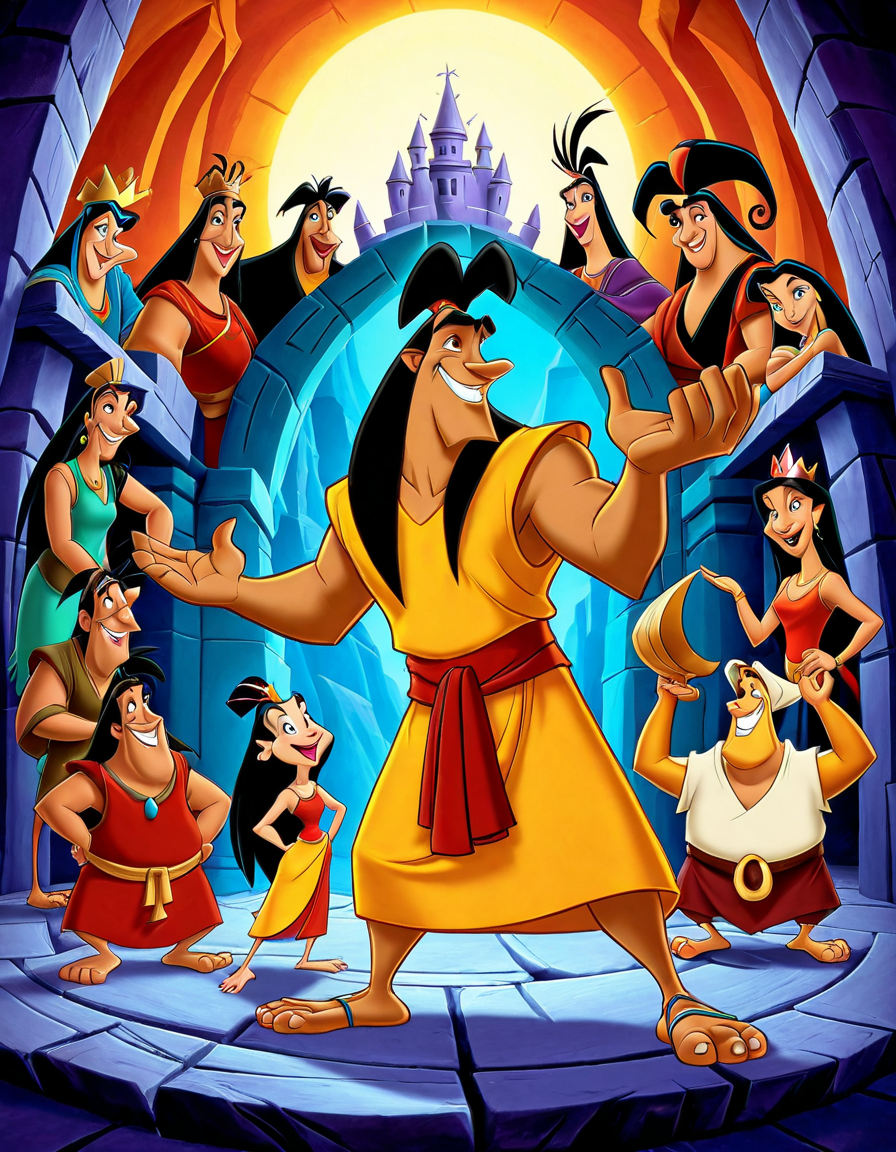
Sting’s involvement is legendary: he wrote multiple songs intended for Kingdom of the Sun and recorded demos that circulated among production staff. One song did survive the overhaul in modified form — the end-credit ballad “My Funny Friend and Me,” sung by Sting and used to anchor the old musical ambitions while acknowledging the new tone. The presence of a mainstream rock songwriter like Sting showed Disney’s intention to make a crossover pop-musical, not merely a kids’ cartoon.
Examples of surviving demos (e.g., “Snuff Out the Light”) and where fans have heard them
Demos such as “Snuff Out the Light” and other unreleased tracks leaked into the fan community through soundtrack sessions and behind-the-scenes features. Fans have heard snippets on DVD extras and in fan-hosted archives; these demos reveal harmonic and lyrical motifs that never reached the finished screenplay. Listening to them, you can practically hear the Kingdom of the Sun that might have been — sweeping strings, melancholy refrains and lyrical exposition that would have lengthened the film considerably.
What the songs reveal about scenes that were cut or radically rewritten
The lyrics and instrumentation in those demos point to entire scenes that were cut — extended palace confrontations, emotional reconciliations and musical set pieces that would have slowed the modern film’s breakneck comic pace. In short, Sting’s songs are fingerprints: they show Disney once planned a film with large emotional stakes rather than the comedic farce we got.
3. The casting curveball: David Spade, John Goodman, Eartha Kitt and Patrick Warburton reshaped characters
Casting choices and tone — how Spade’s Kuzco drove the film’s snark
David Spade’s casting as Kuzco was catalytic. His sarcastic, deadpan delivery reoriented the protagonist from tragic monarch to comic antihero, and the script was rewritten to let Spade’s snark define the movie. Kuzco’s breaking-the-fourth-wall narration and impatient humor are arguably the single biggest reason the movie the emperors new groove reads like a modern comedy rather than a tragedy.
John Goodman as Pacha — grounding the comedy with big-hearted weight
John Goodman brought warmth and a grounded presence as Pacha, which balanced Kuzco’s narcissism. Goodman’s big-hearted delivery allowed the film to keep emotional resonance without returning to full-scale musical melodrama; his scenes with Spade became the emotional spine. That chemistry — snark over kindness — is what sells the retooled script’s moral arc.
Eartha Kitt’s Yzma and Patrick Warburton’s improv-heavy Kronk — specific moments and ad-libs that stuck
Eartha Kitt’s Yzma is pure cartoon villainy: stylized, flamboyant and deliciously theatrical, Kitt layered camp menace with high-fashion menace. Patrick Warburton turned Kronk into comedic gold through timing and improvisation: the shoulder angel/devil bit and the spinach puffs gag felt partly born of Warburton’s instincts. Many of Kronk’s funniest beats were improv or adjusted in recording sessions, and the character’s popularity led to later spin-offs.
Offshoots: Kronk’s popularity leading to Kronk’s New Groove (2005) and The Emperor’s New School (2006–2008)
Kronk’s breakout success spawned the direct-to-video Kronk’s New Groove and the TV series The Emperor’s New School, keeping the characters in circulation and expanding the film’s cultural footprint. Fans who wanted more of the world had options, and those offshoots helped sustain the movie’s fandom into the streaming era. The franchise persistence proves a small character can outgrow a mid-budget animated film.
4. Hidden art and cultural design: more Incan influence than you might expect
Visual research — pre-Columbian motifs, textile patterns and background design choices
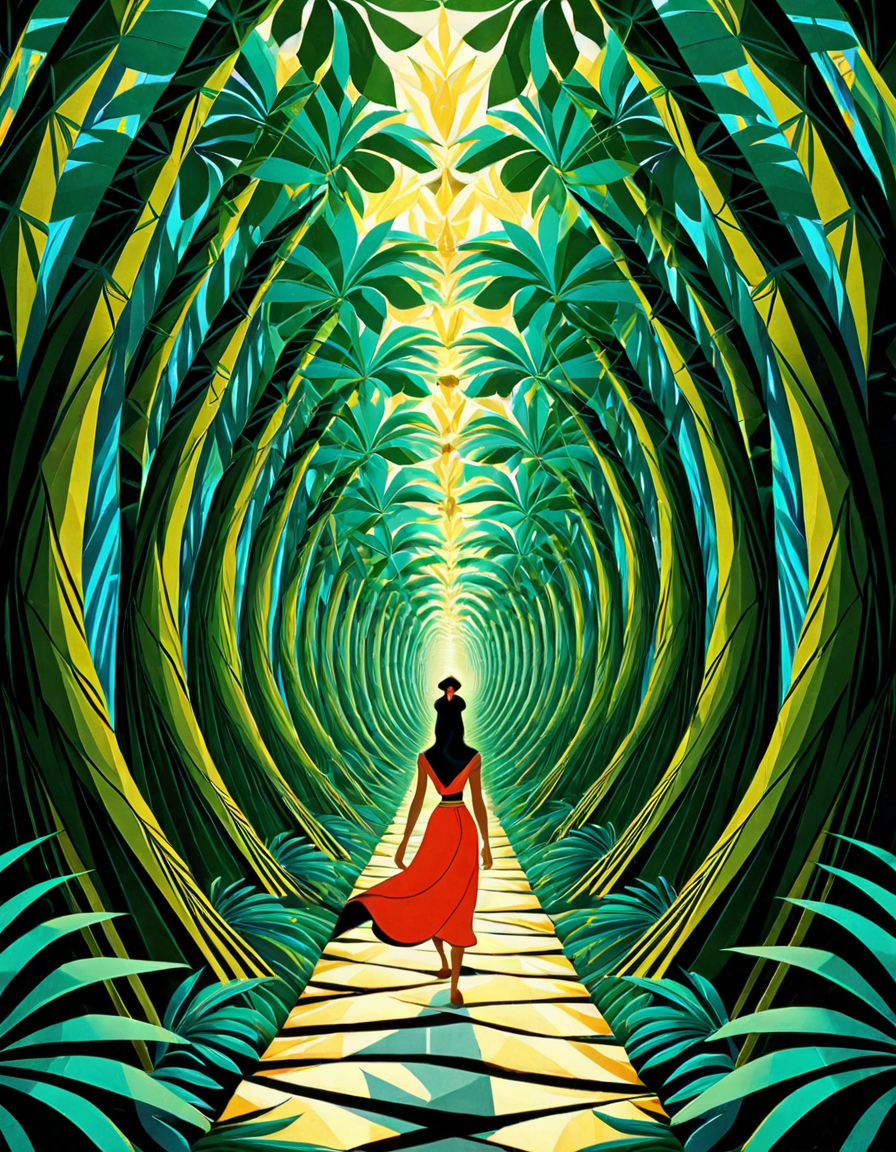
Art direction pulled from pre-Columbian motifs, Andean textile patterns and stylistic references to Incan geometry more than many viewers realize. Background artists mined museum references and archaeological illustrations to design patterns that read as authentic while remaining stylized and accessible to kids. The result is a layered visual language: authentic inspiration filtered through mid-century cartoon modernism.
Concrete examples in the film: Kuzco’s throne room, Pacha’s village and temple imagery
Look closely at Kuzco’s throne room — stepped motifs, bright, repeating textiles and gold accents nod to Andean design without being literal. Pacha’s village features woven patterns, communal stonework and slopes that evoke highland settlements; temple ruins in the movie use simplified lintels and geometric stone patterns. These choices create a sense of place that’s informed by research but deliberately anachronistic.
How stylization turned research into cartoony, anachronistic worldbuilding
Rather than attempting ethnographic fidelity, the filmmakers translated visual cues into an energetic, anachronistic world that supports jokes and sight gags. That stylization let the creative team play with scale, color and exaggeration—matching the movie’s comedic intentions. The tradeoff is a world that feels culturally inspired but remains a cartoon playground, which has pros and cons for modern viewers and cultural critics alike.
5. Deleted scenes, alternate climaxes and ‘what if’ endings — who cut what and why?
Notable deleted beats: expanded Kuzco/Pacha scenes and musical sequences left on the cutting-room floor
Several deleted beats survive as storyboards and audio reels: longer Kuzco/Pacha bonding moments, extended Yzma henchman sequences and full musical numbers that would have dramatically increased runtime. Fans have tracked these excisions to the studio’s push for brevity and to the desire for sharper comedic pacing. The deleted material often reveals a more sentimental, slower-moving film.
The alternate Kingdom-of-the-Sun climax as seen in story reels and early screenings
Story reels from the Kingdom of the Sun era show alternate climaxes with more epic stakes—temple confrontations, wider community involvement and musical reconciliation. Those sequences were never animated fully for theatrical release but appear in rough reel form in collector circles and on some extras. They exist as a fascinating glimpse at narrative choices that were ultimately abandoned in favor of a more intimate finale.
Where to view the remnants: DVD/Blu-ray extras, special features and archival clips
If you want to watch the remnants, the best places are official DVD/Blu-ray special features and curated archival clips included in anniversary packages. Some reels have also surfaced online in fan communities and film archives; digging through special features rewards the curious viewer. For comparative context, modern retrospectives occasionally include sidebars on unrelated pop-culture subjects like The Olsen twins and broader casting histories, which help frame Disney’s decisions in a larger industry pattern.
6. Why the film’s weird, adult-friendly humor still shocks Disney purists
Examples of fourth-wall gags and self-aware jokes (Kuzco’s commentary, direct-aside timing)
movie the emperors new groove frequently breaks the fourth wall: Kuzco speaks directly to the audience, reacts to storytelling beats and even comments on cast size and plot convenience. Those meta-gags—timed like sitcom punchlines—were unusual for a Disney feature at the time and still feel refreshingly contemporary. The humor skews adult with quick cultural references and sarcasm, so it landed differently on various audiences.
How that humor affected marketing, reviews and the studio’s handling of the property at release
Marketing leaned into the film’s quirkiness because the studio sensed a distinct, younger-adult audience for the jokes. Reviews were mixed but often praised the comic voice and the film’s brisk energy; some critics, particularly traditionalists, found the self-aware tone jarring. That mixed reception influenced Disney’s handling of merchandise and sequels: the property was nurtured, but cautiously — a pattern echoed in how studios promote tonal outliers even today (think seasonal oddities like the krampus movie in side-by-side release strategies).
The ripple effect: what The Emperor’s New Groove taught Disney about post-90s animated comedy
The success of a tight, comedic reinvention taught Disney that animated features could be lean, referential and adult-friendly without losing kids. The film’s template—snarky lead, brisk runtime, pop-culture awareness—would inform later animated projects across studios. The lesson: animation could be a platform for theatrical comedy as much as sweeping musical drama, and that flexibility expanded creative possibilities.
7. In 2026: the movie’s legacy, streaming resurgence and the fandom that keeps secrets alive
Modern rediscovery — Disney+ viewership, TikTok clips and meme culture around Kuzco and Kronk
In the streaming era the film enjoys renewed life: clips of Kuzco’s snappy lines and Kronk’s baffled expressions regularly go viral on TikTok and meme pages. Disney+ viewership spikes during anniversary months and when creators use the film for comedic remixes; the short-form platform has introduced the movie to a whole generation that missed its 2000 release. Fans remix deleted scenes and audio, turning leftover artifacts into new micro-content that keeps the discussion alive.
Official continuations and merchandise (Kronk’s spin-offs, TV series) that extended the brand
Kronk’s popularity, as mentioned earlier, produced a direct-to-video sequel and a TV series, cementing the character’s place in the studio’s expanded universe. Merchandise ranges from plush toy runs to collector editions; occasional reissues (and accompanying special features) push the film back into cultural conversation. For further context on how studios manage legacy IP, industry coverage sometimes cross-references other talent pages like Chris Odonnell or experimental adaptation discussions such as wild robot movie.
Why these seven secrets still matter to creators, historians and new audiences alike
These revelations matter because they show animation as a living process — one full of radical rewrites, deleted art and surprising casting pivots. The movie the emperors new groove is a case study in adaptation under pressure: how a near-failure reemerged as a cult classic through brave editorial choices and bold comedic reframing. For creators, it’s a reminder that tonal clarity can rescue messy production histories; for historians, it’s a trove of what-if artifacts; for new audiences, it’s simply a damn funny movie with heart.
If you want to go deeper, explore archival write-ups and oral histories; you’ll find references and tangential threads that connect to everything from TV casting case studies like hogan Heroes cast to modern pop-culture pieces like Zhao Lusi and editorial takes in outlets such as dispatch. Even academic or psychoanalytic reads of character motivation occasionally nod to canonical thinkers like Sigmund freud when describing narcissistic comedy, and longform retrospectives sometimes mention literary influences as broad as Roald dahl to illustrate tonal lineage. For a sense of how projects morph across media and time, see comparative coverage from features like perfect match season 2 cast and other Motion Picture Magazine examinations of IP evolution such as The Olsen twins.
The Emperor’s New Groove is a rare animated film that earns rewatching not just for jokes but for the ghost of another movie it once was. Its backstory is a lesson in the messy, marvelous art of making movies — and that’s why these seven secrets still drop jaws.
movie the emperors new groove
Behind-the-Scenes Gems
Believe it or not, movie the emperors new groove began life as an epic musical called Kingdom of the Sun, and when that big shift to comedy happened, whole dramatic sequences were cut — some of which you can spot on special-feature reels that explain why the tone swings so wildly. Oddly enough, Sting wrote songs for the original project, but most of his material vanished during the rewrite, leaving behind a soundtrack that hints at a very different movie the emperors new groove. By the way, the lightning-fast rewrite and reanimation pushed the crew to improvise, which gave the finished movie the emperors new groove its whip-smart rhythm and zany pacing.
Voice Cast & Character Notes
Fun fact: the core quartet — David Spade, John Goodman, Eartha Kitt and Patrick Warburton — turned what could’ve been a straight-up fairy tale into a snappy buddy comedy, and the actors’ timing practically became the script’s backbone; that chemistry is why movie the emperors new groove still cracks people up. Interjections and ad-libs sneak in everywhere, and Kronk’s innocent bumbles and Yzma’s hissy fits became so iconic that fans quote them like Bible verses.
Animation Oddities & Legacy
Oh, and the animation itself leans hard into exaggerated shapes and timing, which keeps the jokes landing visually as well as verbally — a smart move that helped movie the emperors new groove age like fine junk food: comfortingly silly. The film didn’t set box-office records at first, but its home-video life and cult following turned it into a sleeper classic, so yeah, the little retool saved a whole lot more than just a title.