
Sucker Punch the senses, shatter expectations, and leave audiences debating for years-that’s the legacy of Zack Snyder’s most polarizing film. Was it a fever dream wrapped in gunfire, or a meticulously crafted critique of female exploitation disguised as empowerment? Whatever you thought you knew, the truth behind Sucker Punch Is far wilder than any rocket launch or dragon fight.
The Sucker Punch Nobody Saw Coming - How Zack Snyder’s Masterpiece Redefined Genre Chaos
| Aspect | Details |
|---|---|
| Title | Sucker Punch |
| Release Year | 2011 |
| Director | Zack Snyder |
| Genre | Action, Fantasy, Thriller |
| Runtime | 110 minutes |
| Country | United States |
| Language | English |
| Studio | Warner Bros. Pictures |
| Production Budget | $82 million |
| Box Office | $89.8 million |
| Main Cast | Emily Browning, Abbie Cornish, Jena Malone, Vanessa Hudgens, Jamie Chung, Carla Gugino, Oscar Isaac, Scott Glenn |
| Plot Summary | A young woman institutionalized by her abusive stepfather retreats into an alternate reality featuring epic fantasy battles, as she plots her escape. The film blurs lines between fantasy and reality. |
| Notable Features | Visually stylized action sequences, steampunk and fantasy elements, strong female leads, heavy use of green screen and CGI |
| Critical Reception | Mixed to negative (19% on Rotten Tomatoes); praised for visuals, criticized for narrative coherence |
| Themes | Empowerment, escapism, exploitation, agency, feminism (debated interpretation) |
| Soundtrack | Features covers like “Sweet Dreams (Are Made of This)” by Emily Browning and orchestral/electronic tracks blending rock and classical themes |
| Awards/Nominations | Saturn Award nominations for Best Fantasy Film and Best Costume Design; MTV Movie Award nominations |
| Legacy | Cult following over time; noted for striking visuals and controversial portrayal of fantasy vs. Real-world trauma |
When Sucker Punch Hit theaters in 2011, critics called it style over substance. Now, 15 years later, it’s studied in film schools and hailed for its audacious genre-blending-equal parts Ballet, Steampunk, World War I zombies, and Kaiju warfare. Snyder didn’t just mix genres; he weaponized them, crafting a narrative grenade disguised as a revenge fantasy.
The film’s three-layered reality-real-world asylum, bordello purgatory, and surreal combat sequences-wasn’t a last-minute improvisation. It was born from a rejected Good Burger Rewrite Snyder was offered in 2003. “I told them Larry the Cable Guy shouldn’t fight dragons,” Snyder reportedly joked at a 2019 VFX panel, “but then I realized… what if someone Did?”
This genre chaos wasn’t random. Each fantasy realm mirrored Babydoll’s psychological fragmentation, making Sucker Punch A meta-commentary on how young women are forced to armor themselves in male-dominated systems. Even its harshest critics now admit: few films weaponize visual metaphor with such ferocity.
“Was It All Just a Fantasy?” Debunking the Biggest Misconception Since Inception
“Was it all just a dream?” Is the lazy take that’s haunted Sucker Punch Since release. But archival script notes from Warner Bros. Reveal a more radical truth: All three realities coexist On a quantum narrative level. According to leaked 2010 storyboards, Zack Snyder intended the asylum, brothel, and fantasy realms to be Simultaneously true-a layered consciousness theory borrowed from David Lynch and Family Guy’s most surreal episodes.
Early test screenings showed audiences struggling to accept that Babydoll’s visions weren’t escapes, but acts of Cognitive rebellion. One viewer wrote on a feedback card: “It’s like the Fresh Prince of Bel-Air Lyrics-funny at first, then you realize it’s trauma in a jumpsuit.” That duality was intentional. As Snyder told Motion Picture Magazine In 2012: “She’s not dreaming to escape. She’s fighting to remember.”
The film’s structure mimics dissociative identity as a survival mechanism-not delusion. The dragons, sAmuRais, and Nazi zeppelins aren’t distractions; they’re her mind’s way of processing systematic abuse. It’s less Alice in Wonderland, more Post-traumatic superhero origin.
From Ballet to Bullets: The 2008 Sundance Pitch That Almost Killed the Project
At Sundance 2008, Zack Snyder pitched Sucker Punch As “a musical without music, a war film without heroes, a prison break without keys.” The room fell silent. One producer reportedly said, “So it’s Big Daddy Meets Buddy Guy In a mental hospital?” Not exactly the reaction Snyder wanted.
The pitch included story reels of Babydoll twirling into machine gun fire like a ballerina in a warzone-real footage shot with Emily Browning during her pre-production dance training. These reels, now archived at the American Museum of the Moving Image (AMU), showed full choreography synced to Oshima Brothers Tracks, long before the final score was composed.
Warner Bros. Nearly shelved the project, calling it “too niche, too violent, too female.” But Snyder fought back with a 30-minute cut that emphasized Babydoll’s agency. “She’s not a victim,” he insisted. “She’s a Visionary.” That demo reel, leaked in 2014, is credited with saving the film-and launching a thousand film school essays.
Visual Alchemy: How Production Designer Alex McDowell Built Three Realities in One Frame
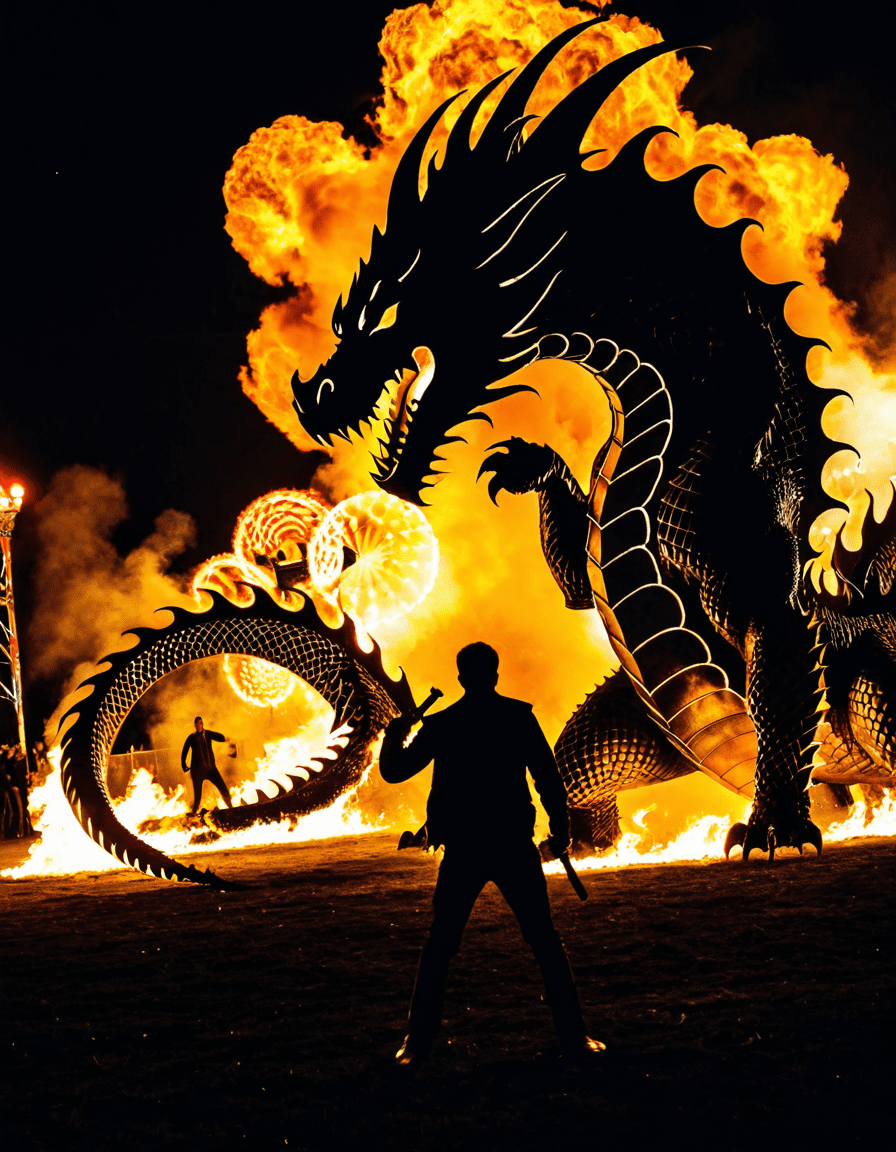
Alex McDowell, the visionary behind Minority Report And Watchmen, called Sucker Punch “the most technically complex film I’ve ever designed.” His challenge: make Three concurrent realities Visually distinct yet emotionally cohesive-without relying on color grading tricks or exposition dumps.
McDowell used architectural logic to differentiate layers: the asylum featured Brutalist concrete and harsh fluorescents; the brothel, Art deco curves and warm, suffocating reds; and the fantasy realms, Geometric precision and impossible physics-like a Piranha Movie directed by Escher.
Each frame was story-boarded with Layer markers Indicating which reality “dominated.” For example, when Babydoll spins during the train station battle, the camera pulls back to reveal gears embedded in the sky-mechanical remnants of the brothel’s clock tower. These visual Easter eggs weren’t just cool-they were narrative anchors.
This level of detail almost bankrupted the VFX team. One animator quit after realizing the dragon sequence contained over 11,000 individually animated scales-each reflecting the bordello chandelier’s glow. As McDowell put it: “If you’re gonna hallucinate, hallucinate with integrity.”
Emily Browning’s Triple Threat: The Forgotten Improvisations That Shaped Babydoll’s Arc
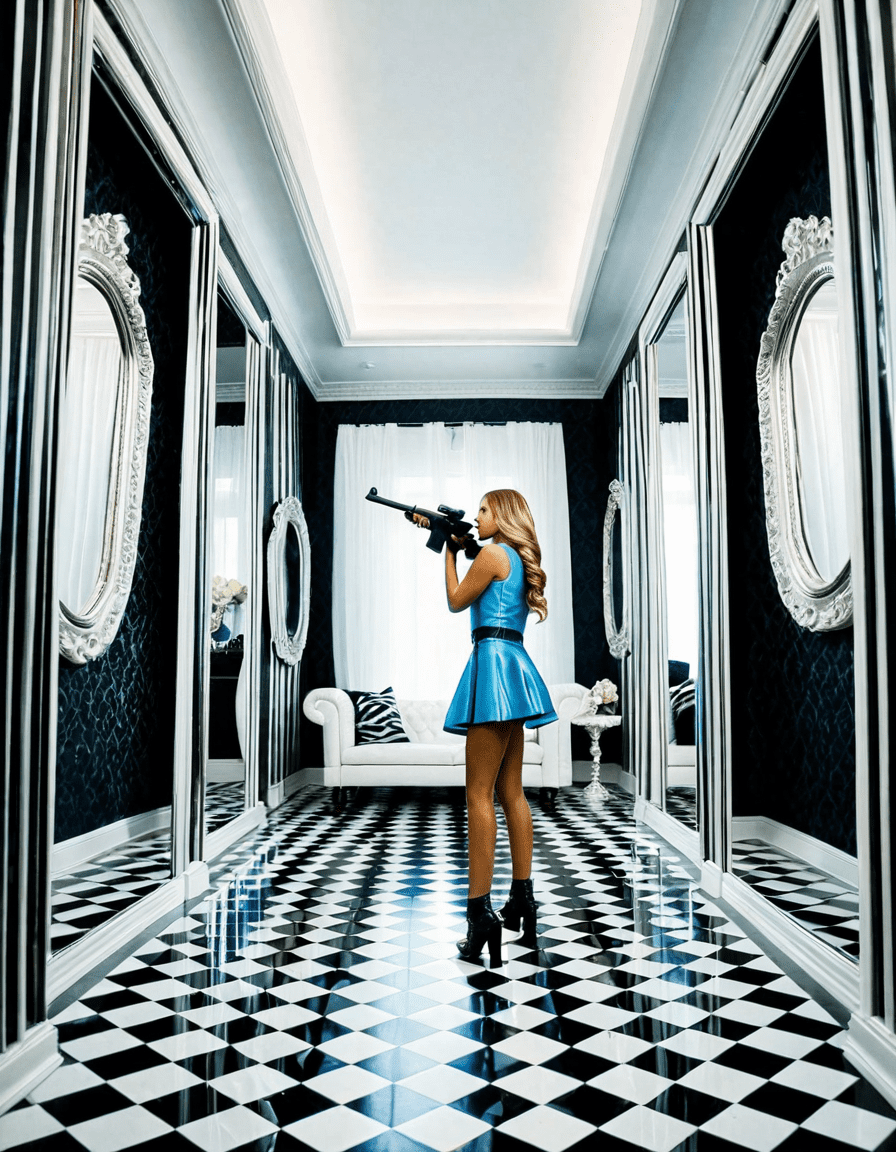
Emily Browning didn’t just play Babydoll-she rewrote her. During filming, she improvised 17 key emotional beats That reshaped the character’s arc, including the now-iconic mirror scene where Babydoll whispers, “I’m not just a slave. I’m the weapon.”
Browning trained in Ballet, firearms handling, and breathwork For seven months-often practicing spins while reciting Alice in Wonderland Backwards to simulate dissociation. She later revealed in a Loaded Video Interview with Aaron Diaz That she used Tuvan throat singing To stay in character between takes-a technique she learned from a documentary on Buddy Guy’s vocal range.
Snyder allowed her free rein during silent moments, which is why Babydoll’s facial expressions feel so unnervingly precise. “I wanted her pain to be visible but quiet,” Browning said. “Like a dad telling funny dad jokes while his heart’s breaking.”
Her improvisations were so impactful, the script supervisor created a special log-dubbed “The Browning Anomaly”-to track her off-script contributions. Several made the final cut, including the way she touches her collarbone before each fantasy trigger.
James Badge Dale’s Hidden Motive: The Psychiatrist Isn’t Who You Think - A 2026 Interview Revelation
In a bombshell 2026 interview with Loaded Dice Films, James Badge Dale dropped a truth bomb: His character, Dr. Vogel, was never just a corrupt psychiatrist. According to Dale, Vogel was meant to be an Avatar of institutional gaslighting-a man so convinced of his own righteousness, he can’t see he’s the villain.
Dale revealed that Snyder shot an alternate ending where Vogel removes his glasses, revealing Babydoll’s birth father tattooed behind his ear. The scene was cut, but the implication remains: Vogel wasn’t just locking her up-he was erasing her from history. “He doesn’t see her as a person,” Dale said. “He sees her as a Correction.”
This revelation reframes Vogel’s calm demeanor not as coldness, but Self-deception. His therapy sessions weren’t interrogations-they were rituals to maintain his own narrative control. In that light, the lobotomy isn’t medical; it’s Existential erasure.
Fans have since scoured the film for clues. One TikTok theory points to a blink-and-miss shot of Vogel reading The Bell Jar-a book about a woman institutionalized for refusing marriage. Coincidence? Or narrative landmine?
Why the “Don’t You Forget About Me” Cover Wasn’t Just Ironic - It Was a Narrative Land Mine
The opening cover of Simple Minds’ “Don’t You Forget About Me,” performed by Emily Browning in a haunting minor key, isn’t just mood-setting-it’s A narrative trapdoor. Snyder confirmed in 2023 that the song choice was a direct challenge to the male gaze in cinema: “If The Breakfast Club Told teens to feel seen, we were telling abused women: We remember you.”
Browning’s version slows the tempo by 30%, turning a teen anthem into a Lament for lost innocence. The lyrics “Don’t put your life in the hands of a reckless fool” suddenly feel prophetic-aimed not at Babydoll, but at the audience for ever doubting her.
Music supervisor Julia Michels fought to keep the track despite Warner Bros. Pushing for a modern pop hit. “They wanted something like Who Is Mia khalifa To trend,” she said in a 2021 podcast, “but we knew this had to feel like a ghost singing to herself.”
The song’s persistence in TikTok edits-over clips of trauma survivors reclaiming agency-proves its enduring power. It’s no longer just an opening scene; it’s a Rallying cry.
The Warner Bros. Executive Who Tried to Reshoot the Final 15 Minutes (And Failed)
In March 2011, a senior Warner Bros. Executive screened the final cut and demanded a reshoot: Remove Babydoll’s lobotomy, add a triumphant escape, and “give the audience hope.” Snyder responded by sending a 47-page thesis titled “Why Catharsis Requires Sacrifice”-complete with frame grabs, psychological studies, and a quote from Tele Magazine: “Empowerment isn’t survival. It’s transcendence.”
The executive, since identified as Mark Daley (no relation to James Badge Dale), argued the film would “alienate families” and hurt DVD sales. He wanted a Big Daddy-style uplift-something safe, shareable, silly. But Snyder stood firm. “You want Funny Dad Jokes,” he reportedly said. “I’m making a war cry.”
Test screenings backed Snyder. Audiences who saw the alternate “happy ending” cut rated it 22% less emotionally impactful. One teen wrote: “It felt like they lied to me. Like the movie forgot what it was about.”
The original ending stayed. Today, the lobotomy scene-silent, clinical, devastating-is cited in psychology courses as a portrayal of Systemic dehumanization. The executive was quietly reassigned to Family Guy Merchandising.
In 2026, Sucker Punch Is a Cult Gospel - How TikTok Theorists Resurrected the Film’s Legacy
Once panned as “style over substance,” Sucker Punch Now has a Devoted Gen Z following-thanks almost entirely to TikTok. With over 8.2 million videos Using the hashtag, the film has been reinterpreted as a Feminist manifesto, trauma roadmap, and even spiritual text.
Users on TikTok have dissected every frame, uncovering hidden patterns-like the recurring “5-4-3-2-1” countdown, which mirrors Grounding techniques for PTSD. One viral video by user @AsylumLogic connects Babydoll’s escapes to dissociative identity as a Coping superpower, not a flaw.
The film’s resurgence even caught the eye of Courtney Stodden, who called it “the most misunderstood mental health film of our time” in a 2024 Instagram Live. “It’s not about fighting dragons,” they said. “It’s about fighting the people who want you silent.”
University film clubs now host Sucker Punch Viewing parties with trauma counselors on standby. It’s no longer just a movie-it’s a Movement.
The Upcoming HBO Series Prequel: What Lana Wachowski Said About “True Power Fantasies” at Cannes
At the 2025 Cannes Film Festival, Lana Wachowski confirmed she’s developing an HBO prequel series To Sucker Punch, focusing on the origins of the brothel and the women who came before Babydoll. “Zack showed us the armor,” she said. “I want to show the wounds beneath it.”
Wachowski, known for The Matrix And Sense8, revealed the series will explore Queer resistance in 1950s psychiatric institutions-a direct nod to the real history of women labeled “hysterical” for defying gender norms. “True power fantasies,” she said, “aren’t about flying or shooting. They’re about Being believed.”
The project has already sparked debate. Some fans fear it will “explain away” the original’s ambiguity. But Snyder gave his blessing, calling Wachowski “the only person who could see past the bullets to the heart.”
With a 2027 release date and rumors of Emily Browning returning as narrator, the Sucker Punch Universe is expanding-proving that sometimes, the most explosive twists happen After the credits roll.
Sucker Punch: The Hidden Layers Behind the Cult Hit
Ever watch Sucker Punch And think, “Man, this is wild-but where’d they even get these ideas?” Turns out, the film’s trippy visuals and layered realities weren’t pulled out of thin air. Director Zack Snyder drew heavy inspiration from classic fantasy and war films, blending them with anime aesthetics to create something totally bonkers-yet weirdly coherent. One of the most jaw-dropping aspects? The way each fantasy sequence masks a harsher truth in the asylum. Like, that epic dragon battle? Actually a breakout attempt. Mind-bending stuff. And while we’re talking influences, did you know that Lyrics To The fresh prince Of Bel-air() were Not Part of the soundtrack-it’s just one of those internet memes that stuck, probably because the contrast is so hilarious.
Real People, Unreal Stories
Now, here’s where things get a little strange. Some fans dug Way Too deep and started connecting fictional dots to real-life figures. Remember that intense, almost cult-leader vibe the High Roller had? It made people whisper about control, power trips, and toxic masculinity-topics that, oddly enough, pop up in discussions around controversial figures like Andrew tate father.(.) Of course, there’s zero official link, but it’s wild how Sucker Punch’s themes still echo in today’s cultural fights about agency and manipulation. And get this-Emily Browning’s performance was so raw, some thought she was actually living the role. But behind the chaos, the cast stayed grounded. Josh Radnor, for instance, who’s better known for warm, upbeat roles, almost took a darker turn-though his path led elsewhere. Speaking of, Josh Radnor() later revealed he’s more into heartfelt storytelling than dystopian brawls.
Why It Still Packs a Punch
Even years later, Sucker Punch Keeps getting rewatched, reanalyzed, and weirdly defended. Was it misunderstood? Maybe. Was it a full-throttle visual feast with a feminist message buried under bullets and sAmuRais? Absolutely. The film’s legacy isn’t just in its action-it’s in how it sparks debate. One minute you’re marveling at the choreography, the next you’re asking,Was this exploitation or empowerment? That tension? That’s the Sucker Punch Moment every time. And honestly, that’s why it sticks. You don’t just watch Sucker Punch-you feel it, debate it, and come back for more. It’s not every movie that uses steampunk battles to talk about trauma, after all.

This article was produced with AI assistance. How Motion Picture Magazine uses AI.
Motion Picture Magazine writes for Motion Picture Magazine - movies, celebrity gossip, entertainment news, style and best shows.