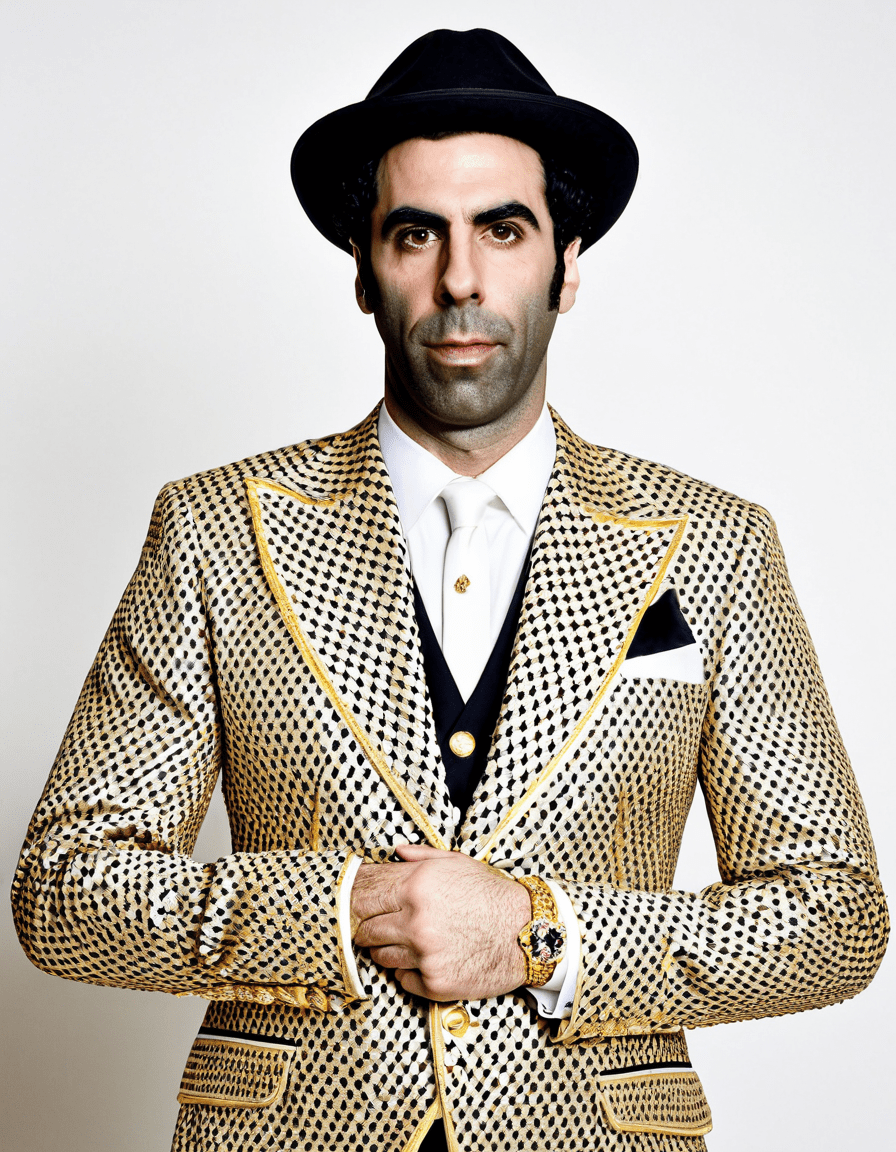
When it comes to comedy, Sacha Baron Cohen doesn’t just tiptoe around subjects—he dives headfirst into the deep end. With a talent for craftily weaving humor into sharp societal critique, Cohen has presented characters that make us laugh, cringe, and think all at once. His alter egos—like Borat, Ali G, and Bruno—don’t just entertain; they challenge us to confront issues of prejudice, ignorance, and power dynamics head-on. In this article, we’ll unveil the impact of some of Sacha Baron Cohen’s most provocative roles and explore the genius behind his character development, while diving into the enduring legacy of his work.

The Impact of Sacha Baron Cohen’s Most Provocative Roles
Is there a more polarizing figure in the comedy circuit than Sacha Baron Cohen? His characters aren’t just bold; they’re downright explosive, igniting conversations about race, identity, and culture. Let’s break down seven standout personas that describe his remarkable career:
Borat, the fictional Kazakh journalist, quickly became Cohen’s signature character. In “Borat: Cultural Learnings of America for Make Benefit Glorious Nation of Kazakhstan” (2006), he portrayed a bumbling fool whose wild antics served to highlight the rampant prejudices in America. The film didn’t just serve up laughs; it ignited national discussions about racism and anti-Semitism. Who knew comedy could peel back so many layers of societal ignorance?
Ali G kicked off the Sacha Baron Cohen phenomenon in the late ’90s. With a faux-hip-hop persona, Ali navigated interviews with celebrities and politicians, exposing the absurdities in social stereotypes. Whether he was asking David Beckham about the UK’s socio-political issues or questioning George W. Bush’s policies, Ali G held up a mirror to society’s often naive assumptions about youth and culture.
Sacha Baron Cohen took bold to a whole new level with Bruno (2009). This flamboyant Austrian fashionista critiqued everything from celebrity culture to LGBTQ+ representation. The film fearlessly tackled issues of media exploitation and homophobia, leaving audiences to confront their views on society’s often hypocritical standards.
With “The Dictator” (2012), Cohen reinvented political satire as he transformed into General Aladeen, a dictatorial character personifying the absurdity of authoritarian rule. By exaggerating his portrayal, Cohen highlighted real-world oppressive regimes and the ridiculousness that often comes with political power. This character wasn’t just a wildcard; he provoked thought about human rights and the absurdity of dictatorship.
Sacha’s Showtime series “Who Is America?” featured several characters, but Nicky, the Israeli “anti-terrorism expert,” stunned audiences and revealed alarming realities concerning public discussions about critical issues. Nicky’s outlandish approaches to subjects like gun control showcased how easily misinformation spreads, blending comedy with some eye-opening truths.
Cohen’s encounters with basketball legend Dikembe Mutombo serve as comedic gems that reflect celebrity culture. By incorporating Mutombo’s persona into various sketches, Cohen demonstrates how fame can create absurd expectations and identity confusion—reminding us that even stars are often just puppets to public perceptions.
Cohen’s role as a mock documentarian in “This Is America” echos the themes of gun violence and racism. This striking blend of absurdity and reality forced viewers to reckon with contemporary societal issues in a captivating way. With comedic flourish, Cohen exposes uncomfortable truths, urging audiences to examine their beliefs.
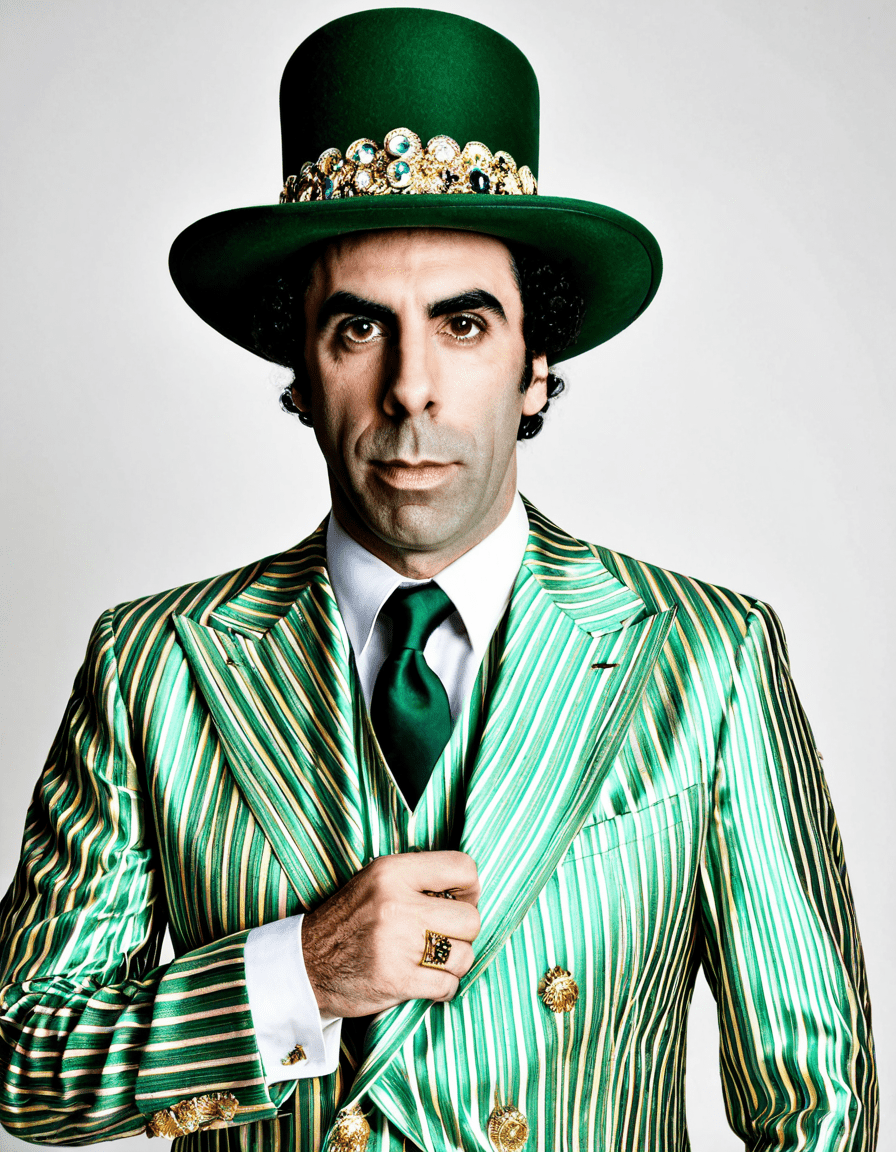
Exploring the Methodology Behind Sacha Baron Cohen’s Character Development
Sacha Baron Cohen’s genius lies in his methodical approach to character creation. He invests considerable time—sometimes years—researching cultures and stereotypes before bringing them to life. For Borat, Cohen traveled across Kazakhstan and interacted with locals, while getting into the nitty-gritty of the fashion world and LGBTQ+ communities for Bruno.
His commitment to authenticity doesn’t end there. Cohen’s characters act as more than just vehicles for humor—they spark vital discussions. He merges discomfort with laughter, challenging audiences to navigate their beliefs about society. Given the state of the world today, his insights are as relevant as ever.
Another aspect of Cohen’s craft is his ability to capture real reactions through compelling interviews. The spontaneous nature of his interactions often reveals unexpected truths about ignorance and acceptance. By placing us in the middle of these social experiments, Cohen keeps us engaged, prompting self-reflection and conversations we may otherwise avoid.
The Enduring Legacy of Sacha Baron Cohen’s Characters
At the heart of Sacha Baron Cohen’s characters is a desire to challenge social norms. His audacious performances generate more than just titters—they stimulate national conversations about critical issues, like identity and ethics. By weaving humor into his sharp critiques, Cohen illustrates that laughter can indeed be a tool for change.
The variety of reactions elicited by his characters—ranging from belly laughs to outrage—reflect our society’s polarized views. In a time when many shy away from serious topics, Cohen embraces them, leaving us pondering our own beliefs and biases.
As we look to the future, we can trust that Sacha Baron Cohen’s contributions to comedy and social discourse remain significant. His body of work not only entertains but challenges viewers to take a good hard look in the mirror. This isn’t just comedy; it’s a call to action, reminding us that while we may laugh together, there’s also a world of complicated truths just waiting to be explored.
In a world that often avoids hard topics, Sacha Baron Cohen has made it clear that laughter and discussion can coexist, giving audiences a reason to come back for more. As his characters continue shedding light on societal absurdities, we can only imagine what daring personas he’ll create next!
Sacha Baron Cohen: Shocking Truth Behind His Bold Characters
The Man Behind the Madness
Sacha Baron Cohen isn’t just a comedian; he’s an anarchist of humor, flipping societal norms with his outrageous characters. Did you know that he often immerses himself so deeply into his roles that he sometimes changes his appearance completely? For instance, when embodying Borat, he gained immense attention, and even sparked discussions on cultural stereotypes, akin to the buzz around other contemporary icons like Bjork, who also uses her art to challenge norms. The commitment of Sacha Baron Cohen to his roles has made him a household name, and interestingly, his journey has parallels with the intense narratives found in shows like Yellowjackets episodes, where characters face extreme situations.
Quirky Inspirations
Cohen’s characters are often inspired by real-life personas, blending fact with creative fiction. For example, Ali G emerged as a satire of British youth culture, making the public question their beliefs—similar to how some actors, like O.T. Fagbenle, bring true-life inspiration into their performances, blurring the lines between authenticity and creativity. Another fun tidbit: whenever Cohen appears at public events, he often shocks attendees by staying in character, just as those attending events at the iconic Fuente de la Cibeles might be surprised by its stunning architecture and history while navigating their own experiences.
Cultural Commentary
What sets Sacha Baron Cohen apart is his fearless approach to delivering social commentary, all while making audiences laugh. He’s used his platform to bring attention to serious issues, akin to the modern discussion on voting topics, like the Ohio issue 1 Results. His unconventional methods might resemble a kind of performance art, echoing grand narratives in films like Masquerade, which captivate audiences through their dramatic flair. In essence, Cohen’s craft not only entertains but often invites conversations on current societal issues, making his humor a quirky yet powerful tool for cultural commentary.
In this intriguing landscape of bold storytelling, Sacha Baron Cohen stands as a polarizing figure, much like how the wild compilations from Bloodhound Lil jeff resonate with fans today. His characters continue to captivate while sparking reflection, serving as reminders that humor can indeed be a powerful vehicle for change.