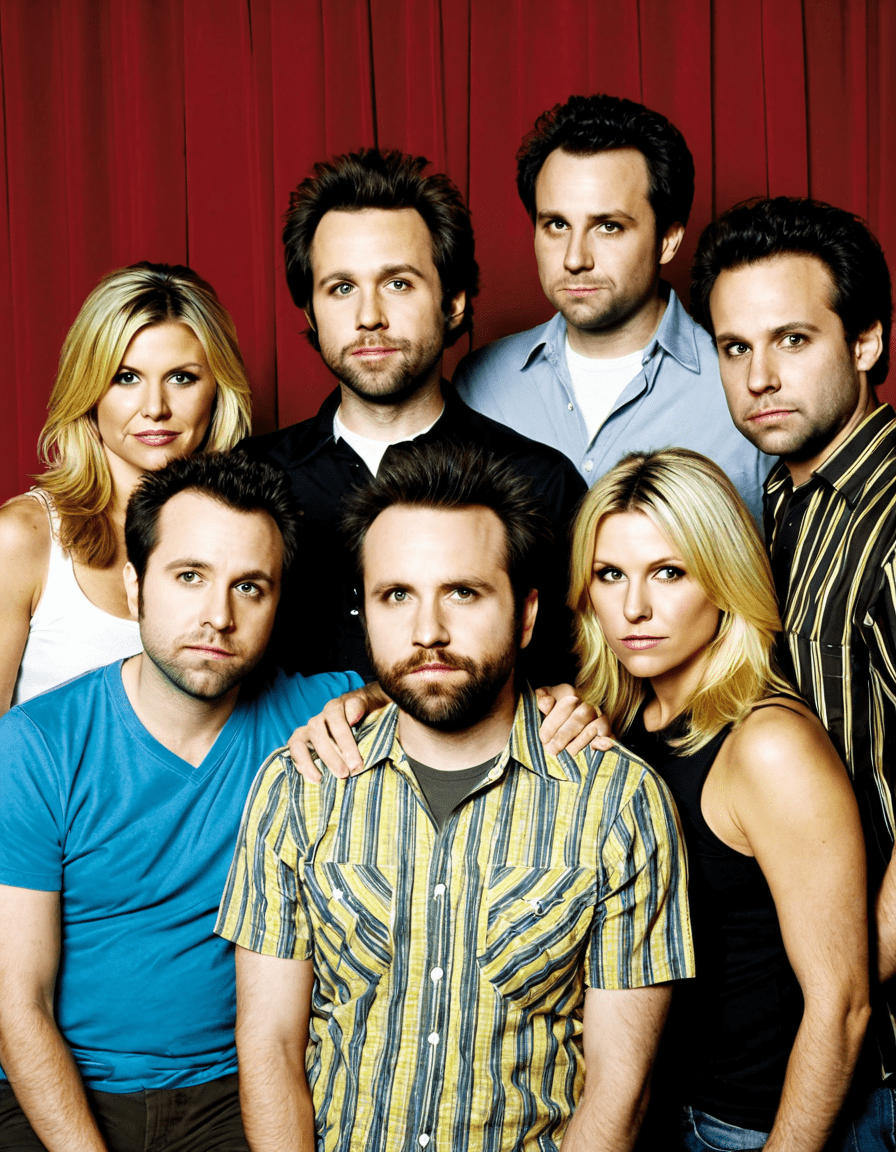
When you think about dark humor on television, It’s Always Sunny in Philadelphia pops up faster than a fly in a Philly cheesesteak. Known for tackling taboo topics with a wink and a nudge, this show makes us laugh while making us feel slightly uncomfortable. From political incorrectness to social satire, the characters in Always Sunny have not only built a legacy but also shaped the current landscape of comedy. Let’s dive into the gang’s antics and explore the characters who redefine dark humor and give viewers a chuckle—often mixed with self-reflection. Buckle up; it’s gonna be a wild ride!
Top 7 Always Sunny Characters Who Defined Dark Humor

1. Dennis Reynolds: The Manipulative Mastermind
Dennis is like that thin mustache you spot at a party—creepy but shocking enough to make you do a double-take. His infamous “Dennis System, a twisted method for seduction, showcases just how far he’s willing to take manipulation. The episode The Gang Gets a New Member pulls back the curtain on Dennis’s ego and privilege, laying bare the absurdity of entitlement and toxic masculinity. His icy demeanor and lack of boundaries lead viewers to dark territory, making us ponder real-life consequences of charm gone awry.
2. Charlie Kelly: The Epitome of Ignorance and Innocence
Charlie is the lovable, naive friend we all know, who’s also the kind of disaster that could only happen in a sitcom. In The Gang Goes on Family Fight, his obliviousness collides with the gang’s crude humor, resulting in a mixture of chaos and poignant moments. His pure-hearted perspective amidst the madness highlights how humor can thrive even in dark places. You can’t help but root for him, even when he’s unintentionally causing more trouble than he can comprehend.
3. Dee Reynolds: The Aspiring Starlet with a Dark Side
Oh Dee! The aspiring actress with dreams that seem a tad delusional, especially in episodes like The Gang Goes to Hell. Her struggle for fame brings out the cringe, revealing how desperate ambition can lead people to questionable places. She embodies the lengths to which individuals will go for validation, often delivering laughter wrapped in painful truths. Like trying to land a role in a rom-com, but instead of a happy ending, the journey’s littered with darkly comic moments that make us reflect on our own quests for success.
4. Frank Reynolds: The Eccentric Instigator
Frank is that wild uncle who says things you wish you could unhear. Always out of pocket, he ventures into the grotesque with his outlandish schemes. Remember his memorable line, “I’ll eat your eyes” from Philadelphia, Here We Come!? It perfectly encapsulates his brand of dark humor—along with teaching us about the absurdity of morality and chaos in American life. Frank pushes every envelope until it tears, prompting viewers to laugh while reconsidering the ethical lines drawn in society.
5. Mac: The Struggles of Self-Identity and Acceptance
Mac’s evolution throughout the series opens up sensitive conversations about identity and acceptance. His struggles, especially highlighted in The Gang Goes to Hell, show a blend of humor and darkness that resonates with many viewers. The dance number he performs in Season 13 paints a picture of his internal conflict, capturing how comedy can bridge the gaps between laughter and genuine emotional resonance. Like a scene from True Lies, Mac keeps us guessing about his true self amid the gang’s overwhelming chaos.
6. The Gang: A Collective of Moral Ambiguity
The collective dynamic among the gang is palpably hilarious yet sobering. The crew challenges societal norms while justifying their outlandish behavior, as seen in The Gang Gets Analyzed. Each member amplifies the others’ moral failings, creating a perfect storm of dark humor. The ensemble delivers insightful observations on accountability—or the lack thereof—encapsulated by their frequent refrain of “my fault,” which makes us ponder how real-life people dodge responsibility in our adult lives.
7. The Veil of Comedy: The Impact of Dark Humor in ‘Always Sunny’
Ultimately, Always Sunny stands as a bizarre yet fascinating experiment in dark humor. Episodes like Frank’s Back in Business hold up a mirror to American culture, revealing our societal flaws through the kaleidoscope of comedy. The repeated phrases and absurd situations create a space where laughter meets self-examination, ensuring that the show isn’t just a collection of jokes, but commentary on the human condition.

The Influence of ‘Always Sunny’ on Modern Comedy
The ripple effects of It’s Always Sunny in Philadelphia on modern comedy are unmistakable. It’s as influential as the most adorable pig in Charlotte’s Web, mixing humor with serious themes. Programs like Never Have I Ever capture that same blend of teenage angst and dark humor, reminiscent of how the gang does life in Philly. As we see it echoed in shows like My Hero Academia, the quest for catharsis through laughter has taken root in various forms of storytelling.
In exploring humor through flawed characters, Always Sunny gives a voice to societal critiques, making viewers laugh while they ponder deep questions. The gang represents a mix of relatability and caution, reflecting our own struggles while making us chuckle at our collective foibles. So, whether you’re a die-hard fan or just diving in, the lessons learned from the gang’s antics are invaluable to navigating our intimate dance with dark humor.
In a world where everything else feels chaotic, Always Sunny remains an ironic comfort. So grab your best makeup Brushes, and let’s get ready for more wild adventures—just remember, there’s always room for a little darkness in the laughter! Cheers!
Always Sunny Characters Who Defined Dark Humor
A Dash of Dark Comedy
“Always Sunny in Philadelphia” is a treasure trove of dark humor that’s both outrageous and brilliant. It showcases characters so flawed, yet hilariously relatable. Frank Reynolds, played by Danny DeVito, truly takes the cake with his zany antics and unpredictable moral compass. Fun fact: DeVito’s improvised lines often make it to the final cut, showcasing the on-the-fly creativity that fuels the show. This improvised dialogue might remind some viewers of the ad-libbing style seen in romantic comedies like those starring Kevin James. Just like in those rom Coms, the unexpected moments can often lead to unforgettable laughs.
The Gang’s Inspirations
The characters in “Always Sunny” often remind us of other iconic figures in the entertainment world. Take Charlie Kelly, for instance, whose childlike innocence intertwined with depravity mirrors the quirky character traits seen in films like “Charlotte’s Web.” When Charlie sings, “The Nightman Cometh,” it vibes perfectly with the absurdity that defines the show. Plus, some behind-the-scenes stories reveal that the scriptwriters draw influence from classic films such as True Grit, reflecting the characters’ rugged determination, albeit in their hilariously twisted way.
Humor Beyond Limits
One of the wildest aspects of “Always Sunny” is the way it tackles sensitive subjects with unabashed humor. Mac’s famous dance sequences, especially in the iconic “Chardee MacDennis” episode, highlight a unique way the show embraces absurdity. Interestingly, this kind of comedic bravado has been a long-standing tradition in other entertainment genres, including the classic Just Friends, where humor often hinges on uncomfortable situations. So, why do we love this madness? Perhaps it taps into our desire for honest laughter, even if it comes dressed in Ysl Heels of absurdity. In the end, it’s that unapologetic approach to comedy that keeps fans tuned in, where every episode feels like a rollercoaster – thrilling and often shocking, but always fun!