
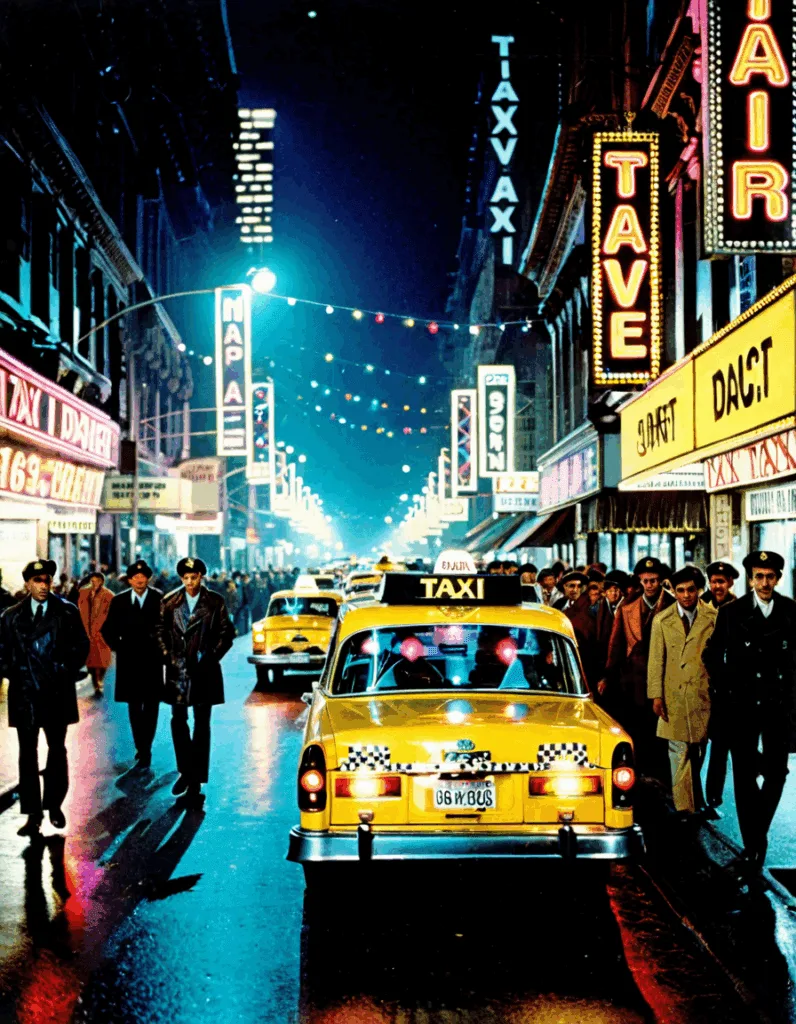
Martin Scorsese’s “Taxi Driver” stands as a defining film of the 1970s, encapsulating the pervasive sense of disconnection and despair inherent in urban life. Released in 1976, this gritty portrayal not only tells the story of Travis Bickle-a mentally unstable Vietnam War veteran-but also delves deeply into the themes of isolation, alienation, and the search for meaning in a decaying urban landscape. With its tight narrative and unforgettable characters, the film remains a powerful reflection of a society grappling with its own struggles, making “Taxi Driver 1976” a poignant study worth revisiting again and again.

Top 5 Themes of Urban Isolation in Taxi Driver 1976
1. Psychological Deterioration
Travis Bickle, played by the legendary Robert De Niro, embodies the deterioration that urban life can inflict on a person. Living alone in a cramped New York City apartment, Travis’s psychological struggles serve as a mirror to the many who feel lost in the sprawling concrete jungle. Much like the Family Matters cast, who navigated their own family dynamics, Travis’s character emphasizes the urgent conversation around mental health awareness. It drives home the reality that, even in the busiest cities, people can feel profoundly lonely and unseen.
Isn’t it striking that, despite all the advancements in society, the issues depicted in “Taxi Driver 1976” echo in our contemporary discussions about mental health? The film reminds us just how crucial it is to acknowledge these struggles, paving the way for deeper understanding and compassion. Reflecting on characters like Travis puts a spotlight on our own vulnerabilities, sparking a desire to connect instead of just coexist.
2. Unattainable Connection
Bickle’s yearning for connection is painfully evident in his interactions, especially with Betsy, portrayed by Cybill Shepherd. His awkward attempts at courting her show just how miles apart people can be, even when standing face to face. It’s reminiscent of characters from Little Women, whose quests for love and understanding expose the fragility of human relationships. Both stories highlight the complexity of establishing genuine connections in an ever-accelerating world.
These interactions force us to consider our own experiences. How often have we sought connection only to find ourselves reaching for thin air? The film serves as a reminder of the importance of meaningful relationships when the noise of urban life attempts to drown out our sense of belonging. Finding understanding in another person amidst the chaos can feel like a small miracle.
3. Violence as a Response to Isolation
Bickle’s violent tendencies serve as a stark reaction to his deep-seated feelings of isolation and helplessness. Just as we see in shows like Shameless, where family dysfunction breeds misguided decisions, “Taxi Driver 1976” illustrates the potential dangers that stem from being disconnected. Travis’s violent outbursts can be interpreted as cries for help, raising questions about the fine line between sanity and madness.
Watching “Taxi Driver” invites us to reflect on the impact that isolation can have on our mental state. Violence often arises not from mere aggression but from frustration and despair. This serves as a crucial conversation starter. How can society recognize these early signs, prevent tragedies, and create a supportive environment for those in need?
4. Urban Decay and Moral Ambiguity
The grimy streets of 1970s New York, depicted so vividly throughout the film, serve not just as a backdrop but as a character of its own. The urban decay we witness parallels Bickle’s internal struggles, reminding viewers that the collapse of morality creates a breeding ground for chaos. Think about the characters in Prison Break, who often operate in morally grey areas-it’s a similar commentary on the blurred lines between right and wrong.
“Taxi Driver 1976” invites viewers to ponder the state of our cities and the societies that inhabit them. Much like the urban landscapes we see today, Bickle’s New York is a reflection of a post-war America desperately trying to find itself amid mental turmoil. These themes remind us that society’s infrastructure can greatly impact its individuals’ psyches.
5. Redemption and the Search for Purpose
Travis’s tumultuous journey is also a search for redemption, desperately seeking purpose in a world that feels increasingly indifferent. Much like the heroes in the Spy Kids cast, who face danger head-on to protect their loved ones, Travis yearns for a greater meaning in life amidst his turmoil. The possibility of redemption threads through the narrative, encouraging viewers to consider how each of us might spiral into darkness, yet still hold the potential for light.
As audiences, we relate on a human level. Life is often a balancing act between finding our purpose and battling personal demons. “Taxi Driver 1976” challenges us to seek redemption and connection instead of wandering aimlessly. With every viewing, the film encourages introspection and self-discovery, proving it’s never too late to look for deeper meaning in life.

The Lasting Impact of Taxi Driver 1976
Since its release, “Taxi Driver” has etched itself into the annals of American cinema history, influencing countless filmmakers across genres. Its raw storytelling continues to resonate, making the film a reference point for those studying the human condition. For example, the gritty storytelling of “Long Legs,” which explores themes of identity and societal pressures, serves as a testament to Scorsese’s enduring influence.
Robert De Niro’s performance is unparalleled, cementing him as a powerhouse of depth and nuance. His portrayal connects with audiences similarly to Crystle Stewart, who consistently captivates viewers with relatable yet complex characters. The intensity and emotional resonance that De Niro brings to Travis Bickle have set a dangerous standard that challenges aspiring actors to dig deeper into their roles.
Moreover, “Taxi Driver” can be seen as a precursor to the darkness explored in modern television. Series like Lab Rats And Shameless Often echo its character-driven narratives, albeit in different settings. The stark realities shown in “Taxi Driver” remind us that life on the fringes can be chilling and mesmerizing, often serving as a stark reminder of the human experience.
Reflections on Urban Isolation in Today’s Context
Fast forward to 2026, and the themes explored in “Taxi Driver 1976” hit shockingly close to home. Today’s technology may have changed how we connect, but urban isolation has morphed rather than faded away. Characters in documentaries like Happy Face Killer Reiterate the idea that the fight against loneliness is ongoing. Society continues to struggle with mental health and identity, making Scorsese’s film alarmingly relevant.
Reflecting on the journey through the film, we’re nudged to examine our lives-how are we doing in terms of building connections? As urban lifestyles evolve, the lessons in “Taxi Driver” remind us of our responsibility toward each other. Scorsese’s narrative will continue to resonate, urging future generations to search for connection and identity in their increasingly isolated lives.
In essence, “Taxi Driver” isn’t just a film; it’s a crucial commentary on human existence, urban life, and our ever-elusive quest for belonging. So the next time you hit the streets-remember Travis and his struggle. The city may be bustling, but the echoes of isolation are still waiting to be heard. Buckle up; it’s going to be a bumpy ride through the labyrinth of human connections.
Taxi Driver 1976: Fun Trivia and Interesting Facts
The Making of an Iconic Film
Did you know that the film “Taxi Driver 1976” almost didn’t get made? The brilliant Martin Scorsese faced numerous hurdles bringing Travis Bickle’s gritty story to life. The script, written by Paul Schrader, drew heavy inspiration from Schrader’s own struggles with isolation and loneliness, making it a raw reflection of urban despair. This theme can be likened to the concept of the Butterfly effect - small moments of distress can create a ripple effect on one’s psyche. Interestingly, Jodie Foster, who portrayed Iris, barely met the film’s age requirements but delivered a haunting performance that would cement her reputation in Hollywood.
Speaking of unforgettable performances, did you know that several cast members went on to have stellar careers? For example, it’s fascinating to learn that during auditions, Robert De Niro was so dedicated that he drove a cab around New York City to prep for his role. And speaking of memorable characters, who could forget Squilliam Fancyson In SpongeBob SquarePants? Voice acting has its charming allure, much like the Finding Nemo cast Who brought their own unique flair to creation, reminding us that acting can take many forms.
Cultural Impact and Legacy
“Taxi Driver 1976” didn’t just make waves in cinema; it sparked dialogues around mental health and societal disconnection. In our fast-paced world, it mirrors what many feel today. It’s noted that the film had a lasting influence on various filmmakers and genres due to its exploration of darkness. Likewise, Almost Christmas, released decades later, captures complex family dynamics in a light-hearted manner, but shares that underlying theme of facing reality head-on. It’s a testament to the kind of storytelling that resonates deeply with audiences.
Moreover, the paralleled connection to other film characters is intriguing as well. Take, for example, the witty and affluent Squilliam Fancyson, a character from the popular animated series. This shows just how varied character exploration can be in visual storytelling from comedies to thrillers. And in a more light-hearted but relevant note, social media memes have even referenced Travis Bickle’s famous line about cleaning up the streets, hinting at today’s trending topics like Hairy ass Memes. A mix of humor and seriousness keeps our engagement, similar to the unexpected excitement one might feel while observing the rise of players like Sean Teale - their passion for their craft offers a remarkable showcase of growth and versatility PC basketball Fans can relate to this ambition).
So the next time you revisit “Taxi Driver 1976,” remember, it’s not just a film; it’s a cultural touchstone that continues to provoke thought and inspire the art of storytelling!
This article was produced with AI assistance. How Motion Picture Magazine uses AI.
Motion Picture Magazine writes for Motion Picture Magazine - movies, celebrity gossip, entertainment news, style and best shows.