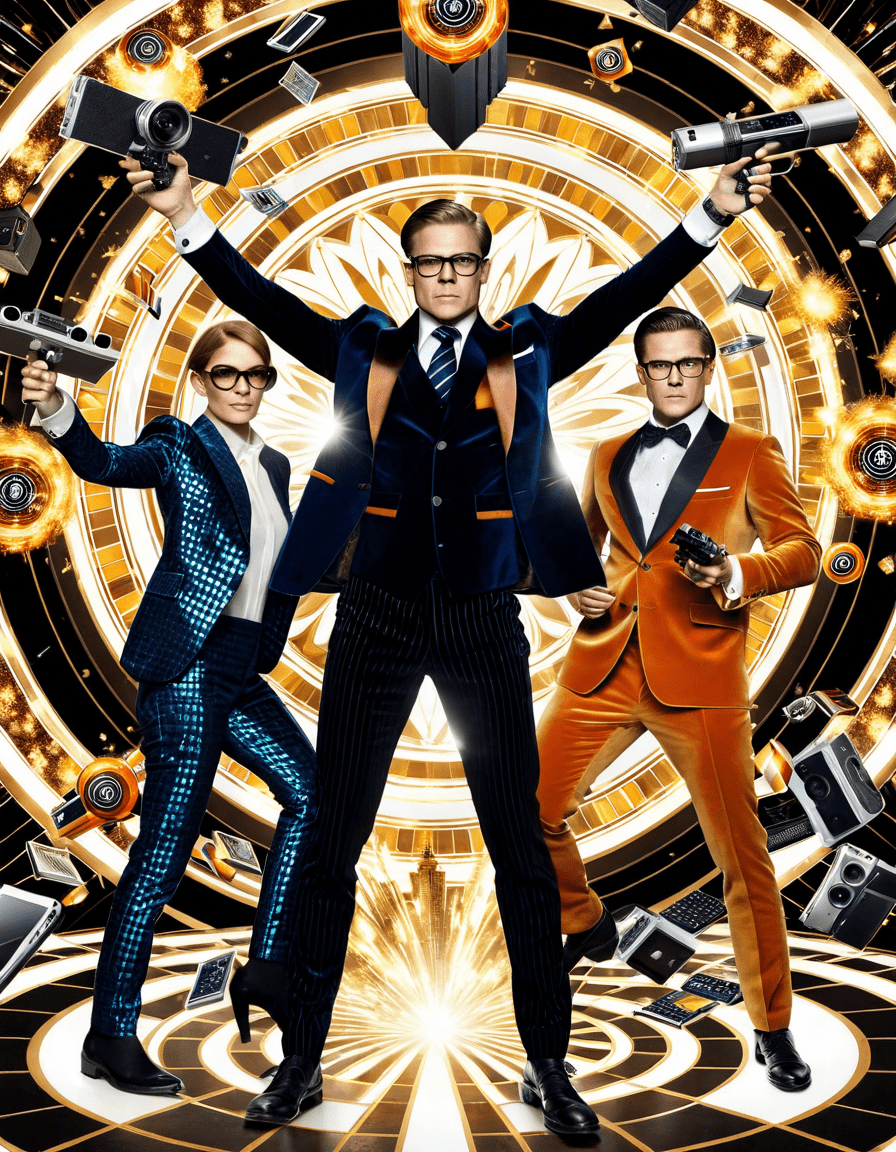
Kingsman movies flip spy clichés into something gleefully savage, stylish, and occasionally sentimental — and the franchise hides more sly reversals than a tuxedoed assassin’s pocket knife. Curious about the shocks that rewired character arcs, worldbuilding, and your expectations of what a modern spy movie can be? Read on: these nine twists will change how you watch every slow-motion suit fight.
kingsman movies: Twist One — Harry Hart’s “death” was a fakeout
On-screen setup in Kingsman: The Secret Service (2014): the assassination, Eggsy’s reaction, Colin Firth’s apparent exit
| Title | Year | Director | Main cast | Runtime | MPAA rating | Budget (est.) | Worldwide gross (est.) | Notes |
|---|---|---|---|---|---|---|---|---|
| Kingsman: The Secret Service | 2014 | Matthew Vaughn | Taron Egerton, Colin Firth, Mark Strong, Samuel L. Jackson, Michael Caine | 129 min | R | $80–100M (est.) | $400–420M (est.) | Comic-book origin story (based on Mark Millar & Dave Gibbons’ The Secret Service). Stylish, violent spy action with dark humor; generally positive reviews. Home formats: digital/Blu‑ray; typical US prices (approx.): rent $3.99–$5.99, buy $9.99–$19.99, Blu‑ray $14.99–$29.99. |
| Kingsman: The Golden Circle | 2017 | Matthew Vaughn | Taron Egerton, Julianne Moore, Halle Berry, Pedro Pascal, Mark Strong, Channing Tatum | 141 min | R | $100–120M (est.) | $380–420M (est.) | Direct sequel — Kingsman teams with U.S. “Statesman” agents after HQ is destroyed. Bigger set pieces and star cameos; mixed reviews for tone and length. Available on home video/digital purchase and streaming windows. |
| The King’s Man | 2021 | Matthew Vaughn | Ralph Fiennes, Harris Dickinson, Gemma Arterton, Djimon Hounsou, Rhys Ifans | 131 min | R | $90–100M (est.) | $120–130M (est.) | Prequel set around World War I exploring the agency’s origins; darker, more historical thriller approach; received mixed-to-negative reviews and lower box office (pandemic-affected release). Home release/digital purchase common. |
| Kingsman: The Blue Blood (working title) | Announced (post-2021) | Matthew Vaughn (expected) | TBA | TBA | R (expected) | N/A | N/A | Fourth installment announced/in development (status and release date TBD). Promised return to franchise tone and characters; details and casting pending. |
The assassination sequence in the church is brutal, formative, and cinematic shorthand for loss: Harry Hart (Colin Firth) appears to be killed, and Eggsy (Taron Egerton) is shoved into the spy world by grief. That moment establishes the orphaning beat that fuels Eggsy’s arc and gives Kingsman its emotional core. The audience is led to believe the mentor is gone for good, which heightens the stakes and frames Eggsy’s training as both revenge and duty.
Eggsy’s reaction—shock, fury, and eventual growth—serves as a believable engine for his rapid transformation from street kid to Galahad protege. Matthew Vaughn stages the scene to feel irreversible; violence feels consequential, not cartoonish. That permanence sells the rest of Eggsy’s moral and physical decisions in the first film.
On its own, the death marks a tonal signal for the audience: this world will ask real things of its heroes. It’s a setup that the sequel exploits for maximum emotional and narrative mileage.
How Kingsman: The Golden Circle (2017) surprises audiences with Hart’s return and the narrative payoff
When Harry bursts back into the story in The Golden Circle, the twist is visceral: a character presumed dead returns via a scientific resurrection, and the emotional shock ripples through the sequel. The reveal reframes the mentor-student relationship—Harry isn’t a ghostly memory but a flawed, recovering man with new vulnerabilities. That choice allows Vaughn and the writers to examine trauma, recovery, and the consequences of violence.
The resurrection also drives plot mechanics: Harry’s return becomes a catalyst for alliance-building (with the Statesman) and a personal test for Eggsy. The film blends melodrama with action to create a tonal cocktail that’s equal parts sincere and tongue-in-cheek. For many viewers, seeing Colin Firth fight again — often with self-aware brutality — felt both cathartic and odd, an intentional tonal disturbance.
Narratively, the payoff is twofold: it grants a second chance for character resolution and bakers in new conflict about identity and purpose after trauma. The return isn’t a cheap stunt; it becomes a running thread that raises questions about agency and what Kingsman owes its heroes.
Why this resurrection changed Eggsy’s arc and the franchise’s emotional stakes
With Harry alive, Eggsy’s growth no longer hinges solely on mourning; instead, the sequel explores mentorship under revised terms. Eggsy must reconcile gratitude with resentment, and the films use their action set pieces to stage those emotional beats. That complexity deepens the franchise beyond pure pastiche.
Thematically, resurrection forces Kingsman to ask whether violence that “fixes” a problem can undermine the hero who uses it. Eggsy moves from revenge-driven adolescent to a leader tested by ambiguous morality, and Harry’s return complicates every choice. That makes subsequent fights feel less like spectacle and more like moral decision points.
For the franchise at large, the faux-death/revival choice opened narrative possibilities: sequels could undo finality, escalate stakes, and play with audience trust — a risky move that paid off by keeping emotional continuity alive across films.
Production note: Colin Firth’s comeback, marketing fallout, and fan reaction
Colin Firth’s return was kept under wraps to maximize audience surprise, but marketing later leaned into his comeback to sell tickets. The split between preserving a narrative surprise and using star power for promotion created a minor controversy among fans. Some felt the shock was diluted; others appreciated the reassurance that a beloved actor returned.
Firth himself described the role as a departure in interviews — a chance to play against his usual type — which made the comeback feel like thoughtful casting, not just a stunt. Fan reaction skewed positive overall, with many applauding the emotional continuity and the physicality Firth brought back to the screen.
Ultimately, the production decision widened the franchise’s emotional bandwidth: Kingsman could be ruthless and sentimental, often within minutes of each other.
Revealed: Twist Two — Eggsy’s rapid rise to Galahad (Taron Egerton)
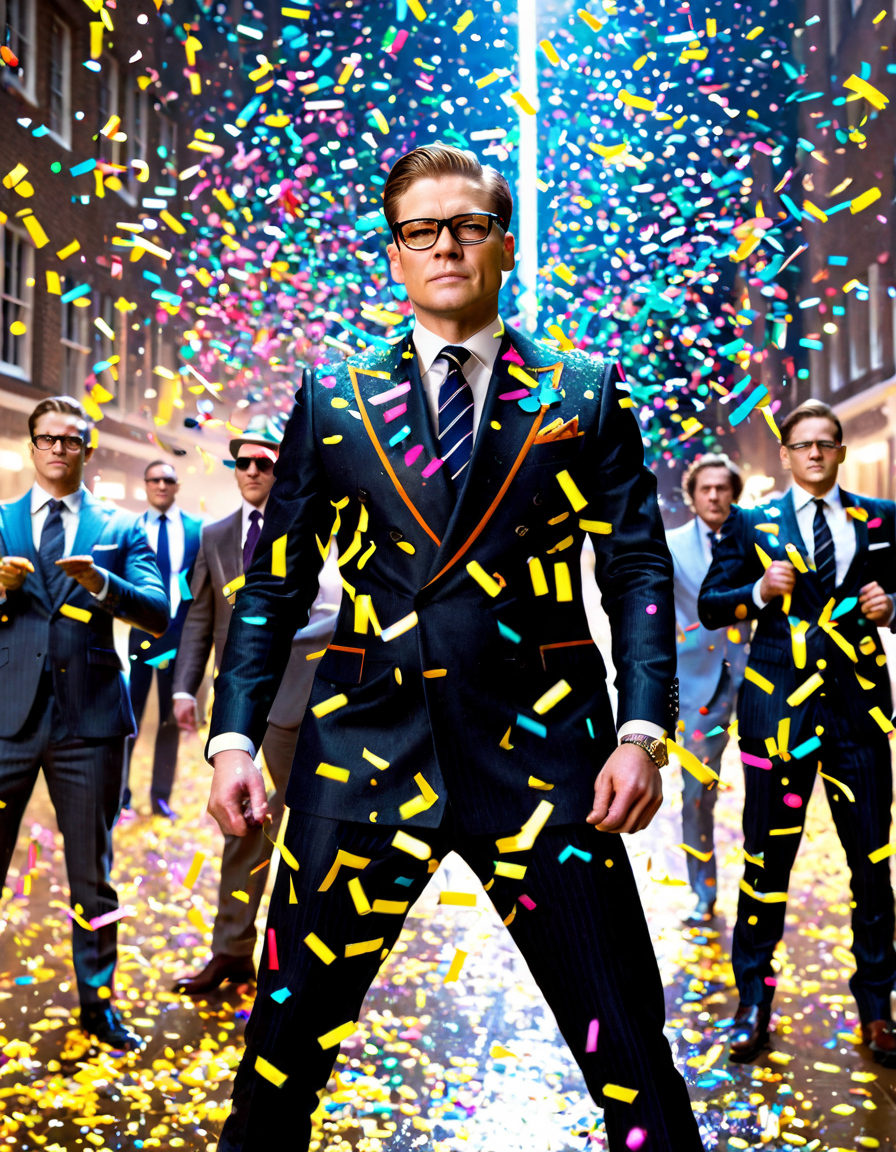
Key scenes in The Secret Service that set Eggsy (Gary “Eggsy” Unwin) up as successor
From his first assessment to his final exam, Eggsy’s trajectory is telegraphed via smart editing and purposeful setbacks. Scenes like his improvisational training, his refusal to quit during physical tests, and his moral choice during the mission to save a target all underscore why he’s suited to wear Galahad’s mantle. The film builds him as both gifted and morally centered, making his ascension feel earned.
Eggsy’s background—working-class, rough around the edges, loyal to friends—provides narrative contrast to the Kingsman ethos of refinement. His training montage isn’t just spectacle; it’s a class-transcendence story that invites audiences to root for him. This tension between origins and institution fuels much of his dramatic interest.
The succession isn’t sudden because Eggsy is lucky; it’s sudden because the film compresses apprenticeship into a cinematic hour that signals competence, heart, and improvisational intelligence.
What inheriting Galahad’s mantle meant for Kingsman protocol and uniforms on screen
Inheriting Galahad’s title is symbolic: Eggsy takes on the code, discipline, and sartorial pedigree of the Order. The suit becomes both armor and identity; costume designers used the change to show his transformation visually. The uniform shift is a shorthand for acceptance into a lineage, and the film leans on that to show the cultural weight of being a Kingsman.
Protocol-wise, Eggsy’s presence introduces more improvisational tactics into a traditionally buttoned-up service. He brings street smarts to protocol, which revitalizes missions and provides fresh choreography. That blending of styles recalibrates how the Kingsman organization operates on-screen: more dynamism, less rigid etiquette.
Visually and thematically, the mantle conveys that Kingsman is an institution that adapts — it absorbs unconventional heroes and remakes tradition in their image.
Taron Egerton on the role: interviews, character evolution, and comic-book roots
Taron Egerton’s interviews often emphasize Eggsy’s humanity and humor as key ingredients to the character’s appeal. He described Eggsy as someone who retains loyalty and moral clarity despite the violence and glamour around him. Egerton’s performance balances charm with physical intensity, anchoring the franchise’s emotional throughline.
Egerton also acknowledged the comic-book roots of Eggsy in interview discussions, noting that adaptations require pruning and reshaping to fit cinematic rhythms while preserving core beats. His portrayal leans into a grounded, relatable hero rather than a flashy superhero archetype. That choice made Eggsy feel like an entrant into a spy-saga lineage rather than a generic action lead.
Fans often cite Egerton’s chemistry with Firth and his ease with action-comedy timing when explaining why the character resonates beyond the page.
Did you spot Twist Three — Valentine’s “saviour” plan reframed as eco-eugenics
Summary of Richmond Valentine’s (Samuel L. Jackson) plan in The Secret Service and its moral pitch
Richmond Valentine pitches a genocidal tech-laced solution as humanitarianism: reduce the population with a virus transmitted via SIM cards to eliminate “harmful” people and save the planet. The moral pitch leverages plausible-sounding environmental anxiety to justify monstrous ends, making Valentine a chilling example of technocratic authoritarianism. The narrative frames him as less cartoon villain and more cold strategist who believes his ends justify an extreme means.
Valentine’s veneer of reason — he claims to be saving humanity — forces audiences to confront how language of salvation can mask atrocities. That moral inversion makes his scheme a standout twist: it’s not theft or revenge, it’s a policy masquerading as benevolence. The ethical stakes become frighteningly modern.
By positing a villain who uses communication infrastructure to weaponize consent, the film ties its threat to systems we implicitly trust, which increases audience discomfort and narrative impact.
How the film frames technology, free SIM cards, and mass manipulation as a twisted “solution”
Valentine’s free SIM cards are literal Trojan horses: convenience + connectivity used as vectors for control. The film uses this imagery to comment on our dependence on tech and how easily social systems can be hijacked. By making the threat a product of modern convenience, the movie cleverly anchors its satire in contemporary anxieties.
The SIM card device also allows Matthew Vaughn to stage mass-control sequences with high visual drama—crowds acting against their will, sound and rhythm used to mediate violence. It’s a cinematic distillation of a very 21st-century fear: that our digital safety nets can become cages. That makes the twist both topical and viscerally unsettling.
The strategy elevates the villain beyond petty greed; he becomes a techno-utopian with murderous zeal, a more interesting antagonist than the stereotypical mastermind.
Why this twist feels effective: satire, Samuel L. Jackson’s delivery, and Mark Millar’s darker comic instincts
Samuel L. Jackson’s delivery adds wry menace and a sing-song politeness that makes Valentine memorable — he sells his ideology with the charm of a late-night infomercial. The satire lands because the film doesn’t just mock villains; it skewers the hubris of fix-it-all technocrats. That tonal balance keeps the audience aware they’re watching a parable as much as an action movie.
Mark Millar’s comic instincts—his love of dark premises and moral inversion—shine through in Valentine’s arc. The film translation keeps that darkness but packages it in poppy aesthetics and comic timing. The result is a villain who’s frighteningly plausible and surprisingly entertaining.
This twist works because it connects the franchise’s gleeful violence to ethical questions, making the laughs feel uneasy rather than empty.
Why the Statesman matters: Twist Four — U.S. agents aren’t what you expect (Channing Tatum, Jeff Bridges, Halle Berry)
The Golden Circle’s reveal of Statesman — a whiskey-distillery cover and new style of spycraft
The Golden Circle introduces the Statesman, a U.S. spy organization masquerading as a whiskey distillery — a deliciously American cover that flips Kingsman’s bespoke-suit mystique. The reveal broadens the universe: spies aren’t a UK monopoly, and American ingenuity arrives with a different cultural register. It’s a narrative swerve that raises the stakes from national to global.
The whiskey-distillery aesthetic allows Vaughn to play with Americana tropes—sturdy, blunt, and a little loud—contrasting with Kingsman’s restraint. That contrast fuels both comedy and plot synergy as the teams must learn to cooperate despite cultural differences. The twist makes the world feel larger and less centrally British.
Storywise, introducing the Statesman lets the film reset action expectations: we get car chases in pickup trucks alongside tuxedoed hand-to-hand combat, adding texture to the franchise.
Characters to know: Tequila (Channing Tatum), Champagne (Jeff Bridges), Ginger (Halle Berry) — how they flip the Kingsman formula
Channing Tatum’s Tequila brings physical charm and a brash, blue-collar heroism that offsets Eggsy’s stylish cunning; he’s a soldier with emotional scars. Jeff Bridges’ Champagne is a mentor figure — gruff, whiskey-soaked, and emotionally resonant — who mirrors Harry in stateside form. Halle Berry’s Ginger replaces classic femme-fatale tropes with skilled, no-nonsense competence and a personal stake that deepens the emotional core.
These characters function as both foil and mirror: they amplify Kingsman traits in an American idiom. By doing so, the film refuses to simply copy its British predecessor; it reinterprets the spy archetype through different cultural assumptions. The dynamic — rivalry turned alliance — becomes a rich source of humor and emotional payoff.
That ensemble also allowed Vaughn to experiment with tonal shifts, balancing rowdy camaraderie against still-earnest stakes.
What the Statesman twist adds to franchise scale, tone, and transatlantic worldbuilding
Adding the Statesman expands the franchise from a national club to a global network, which opens future plot possibilities — joint operations, ideological clashes, and richer backstories. Tonally, the twist injects more comedy and varied spectacle into the series, leaning into American action tropes while retaining British elegance. The worldbuilding implies other national agencies and invites cross-cultural storytelling.
Practically, the twist gave the franchise permission to play with different genres — buddy-cop energy, western motifs, and spy thriller beats — keeping the series fresh. It also set the stage for spin-offs and character-focused stories that could explore other corners of this international spy community.
For fans, the Statesman’s debut was a clear signal: the Kingsman universe could scale up without losing its irreverent identity.
Behind the origins: Twist Five — The King’s Man retcons and the Order’s darker foundation (Ralph Fiennes, Harris Dickinson)
How The King’s Man (2019) rewrites origins: Duke of Oxford (Ralph Fiennes), Conrad (Harris Dickinson), and the Order’s wartime mission
The King’s Man rewinds the clock to World War I to show a bloodier, less glamorous origin story for the Order. Ralph Fiennes’ Duke of Oxford acts as the stoic architect of a spy network born from tragedy, while Harris Dickinson’s Conrad provides a young-protégé emotional center. The film reframes the Order as an institution forged by moral ambiguity rather than innate nobility.
This retcon adds heft: Kingsman isn’t merely a genteel secret agency but a wartime necessity whose methods evolved out of chaos. The period setting allows the series to examine how violence and secrecy entwine with national identity. It’s a darker, more somber tone that complicates the franchise mythology.
By explicitly linking the Order to real historical trauma and conspiracies, The King’s Man invites viewers to see the present-day Kingsman as an heir to difficult decisions and buried compromises.
The film’s reveal of a secret cabal and historical manipulation — implications for canonical continuity
The King’s Man introduces a secret cabal pulling strings behind major historical events, suggesting that Kingsman’s world has deep roots in global manipulation. That revelation reframes earlier films: rather than isolated adventures, they might be late-stage ripples of long-term conspiratorial design. The tweak raises stakes for continuity—every pop-culture cameo and political crisis takes on a different flavor.
This retcon obliges fans to reassess characters’ motivations and the ethics of the Order itself. It also allows subsequent stories to explore culpability, repair, and the cost of secrecy. Whether purists accept the change, it undeniably deepens the franchise’s lore.
The King’s Man’s approach demonstrates how prequels can both clarify and complicate a series’ mythos.
Creative choices: Matthew Vaughn’s period approach and the tonal retelling of Kingsman history
Matthew Vaughn treated the prequel as an opportunity to channel period-piece aesthetics through a modern action lens: the cinematography, costume design, and pacing reflect historical drama while still delivering kinetic set pieces. That hybrid approach produced something tonally distinct from the first two films. Vaughn’s direction emphasizes tragedy and moral compromise over poppy satire.
The decision to foreground historical conspiracy also signals a willingness to shift genre boundaries, inviting comparisons to wartime spy epics rather than contemporary comic adaptation. It’s a bold creative risk that prioritizes world-building over the franchise’s earlier irreverence.
Fans and critics divided over whether the tonal shift was successful, but no one could accuse the film of playing it safe.
Quick cameo roundup: Twist Six — Celebrity and surprise cameos that change tone (Elton John and others)
Elton John’s memorable cameo in The Golden Circle and its narrative function
Elton John’s cameo is equal parts delightful and strategically placed: his appearance punctuates the film’s emotional climax and injects surreal levity. The cameo functions as tonal punctuation — a celebrity-infused equivalence to the film’s blend of sincerity and silliness. Elton’s presence reframes the rescue sequence as both cathartic and oddly tender.
Celebrity cameos like this do more than wink at the audience; they anchor the film in pop culture and amplify emotional beats through familiarity. Elton’s real-world persona adds a humanizing touch to a film that otherwise flirts with cartoonish violence. It’s one of those moments where star power equals storytelling utility.
For fans who love Easter eggs, the cameo doubles as a bright, shareable payoff.
(And yes, if you’re in a music-research mood, don’t be surprised if your curiosities lead you to odd corners like bennie And The Jets Lyrics, where pop history and film cross-pollinate.)
Other standout cameos and small returns that reframe scenes (casting choices that read as twists)
Beyond Elton, the Kingsman films sprinkle smaller celebrity appearances and returns that often tilt the scene’s mood — from comedic stings to emotionally resonant cameos. These moments can recontextualize sequences, turning a serious beat into a surreal one or vice versa. They act like seasoning: subtle but potent when deployed correctly.
Cameos also work as connective tissue for fans who follow actors across genres, turning a shared cultural shorthand into emotional shorthand on-screen. The effect can be playful or poignant depending on placement. That unpredictability keeps audiences alert and social-media-savvy.
Matthew Vaughn uses cameos sparingly and purposefully, ensuring they enhance rather than distract from the core narrative.
How cameos work as tonal punctuation in Matthew Vaughn’s films
Vaughn treats cameos like punctuation marks: commas for levity, dashes for surprise, and occasional exclamation points for catharsis. They puncture or underline a scene’s emotional intent, making narrative transitions smoother or shockier. That control over tone contributes to the franchise’s signature oscillation between violence and warmth.
Because Vaughn balances tonal shifts carefully, cameos rarely feel gratuitous; instead, they underline the film’s attitude toward spectacle. The result is a cinematic voice that can wink and wound in the same frame. That kind of risk-taking is part of why the films keep audiences talking.
If you’re tracking cameo culture across media, the way these moments land in cinema can mirror patterns you see in television and streaming — a trend explored by outlets covering shows like found tv show.
Unexpected tonal shift: Twist Seven — From comic savagery to pop-satire to period drama
Comparative snapshot: The Secret Service’s violent comic-book edge vs. Golden Circle’s gonzo humor vs. The King’s Man’s sober pastiche
The trilogy’s tonal evolution is stark: The Secret Service blends comic-book brutality with sardonic charm, The Golden Circle turns up gonzo humor and transatlantic absurdity, and The King’s Man opts for somber, historically tinged drama. Each entry retools the franchise’s DNA, proving Kingsman can be many things at once. That makes the series unpredictable in the best way.
This tonal kaleidoscope can thrill or alienate, depending on viewer appetite for tonal whiplash. The stylistic leaps allow Vaughn to experiment, but they also risk fragmenting the series’ audience. Still, the willingness to shift tone keeps the films from feeling formulaic.
Taken together, the tonal range demonstrates an appetite for reinvention rather than franchise stagnation.
How tonal twists affected audience expectations and critical reception
Tonal shifts produced mixed reactions: some critics praised bold reinvention; others criticized inconsistency. Viewers often split along lines of expectation — those who wanted straight action enjoyed the first film’s edge, while fans craving variety appreciated the series’ genre-hopping. The debate itself kept the films culturally relevant.
That conversation matters because it shapes marketing, casting, and creative choices for future entries. Expectation-management becomes part of franchise strategy: keep enough continuity to satisfy core fans while innovating to bring in new audiences. Kingsman navigates that balance imperfectly but interestingly.
Ultimately, the tonal shifts made each film an event rather than a predictable sequel.
Director- and writer-driven shifts: Matthew Vaughn and Mark Millar’s influence on each film’s identity
Matthew Vaughn’s direction provides kinetic visual punch and tonal bravado, while Mark Millar’s comic sensibility supplies the darker instincts and high-concept premises. Their collaboration creates a push-pull: Vaughn’s cinematic instincts often lighten or stylize Millar’s darker comic beats. That dynamic explains why adaptations diverge from source material yet retain core thrills.
Vaughn’s willingness to change tone reflects his interest in cinematic variety; Millar’s narrative provocations keep the stakes morally charged. Together they shape a franchise that’s both playful and provocative. That co-authorship is central to why the films surprise audiences repeatedly.
It’s a partnership that promises more reinvention in whatever comes next.
From comic book cues: Twist Eight — What Mark Millar and Dave Gibbons’ source material foreshadows (and what the films change)
Key plot beats in The Secret Service (comic) that differ from the film adaptations — darker fates and alternate twists
The comic book by Mark Millar and Dave Gibbons contains starker consequences—characters die in different ways and moral ambiguity sits heavier on every decision. The film adaptation trims or softens some of the comic’s crueller edges to fit a blockbuster rhythm and audience sensibilities. Those changes create different emotional arcs and pacing.
Readers of the comic will spot altered fates and omitted scenes that would have made the film bleaker and more uncompromising. The adaptation choices aim to keep mass appeal while preserving Millar’s provocative ideas. That editorial pruning transforms certain twists into more palatable cinematic beats.
Understanding the differences helps fans appreciate how cinematic storytelling rebalances violence, humor, and sentiment for broad audiences.
Specific character divergences (Harry, Eggsy, and Valentine) and why filmmakers altered them
In the comics, Harry’s arc is sometimes darker and less redeemable, Eggsy’s fate varies across editions, and Valentine’s motivations are sometimes grimmer or more ambiguous. Filmmakers adjusted these arcs to protect star power, audience sympathy, and box-office considerations. Transforming the characters made them more sympathetic or movie-friendly without losing their conceptual core.
Those alterations also allow performances—Firth’s suave brutality, Egerton’s charisma, Jackson’s showmanship—to shine within cinematic conventions. The result is a film that nods to its source while embracing its own narrative rules. That creative balance is central to successful adaptations.
Fans who reread the comics after watching the films discover a rich conversation between mediums about what to keep and what to reinvent.
What reading the comics adds to spotting “hidden” twists in the movies
Reading the comics functions like a cheat sheet for spotting thematic echoes and foreshadowing in the films: you’ll notice moral patterns, imagery, and beats that were translated or excised. The comics alert viewers to potential tonal turns and character possibilities the films may only hint at. That background makes watching the movies feel like uncovering an adaptation’s choices.
Still, the films deliberately hide some twists to preserve surprise for general audiences, so comics knowledge enhances appreciation rather than spoiling the cinema experience entirely. It’s a companion, not a spoiler manual. Fans who enjoy cross-reading will get extra layers of meaning and anticipation.
For readers who love comparing adaptations, there’s a lot to mine between page and screen — similar to how other franchises handle source-to-screen shifts in properties like Shazam movie.
What 2026 brings: Twist Nine — Stakes, sequels, and the next surprise moves (Matthew Vaughn, Mark Millar, potential returns)
Confirmed creative leads and stated intentions: Matthew Vaughn’s public plans and Mark Millar’s commentary on future Kingsman stories
As of 2026, Matthew Vaughn has publicly expressed continued interest in expanding the Kingsman universe, and Mark Millar has been active in discussing potential comic threads that could translate to the screen. Both creators have signaled appetite for more stories that oscillate between prequels, sequels, and spin-offs. That creative intent suggests future entries will continue to play with tone and timeline.
Neither creator has locked the franchise into a single direction; instead, they’ve left possibilities open: character returns, new origin tales, and expanded agency lore. The promise of more Kingsman work makes fans hopeful and speculative in equal measure. Expect announcements to prioritize star attachments and tonal clarity to reassure audiences.
The consistent takeaway: Kingsman remains a living property with intentional creative leadership attached.
What to watch for in upcoming projects: likely returning players (Taron Egerton, Colin Firth discussions), spin-off possibilities, and tonal directions fans debate
Watch industry signals for names: Taron Egerton and Colin Firth remain the most-discussed potential returnees, but contractual and career factors will determine their involvement. Spin-off possibilities include deeper Statesman stories, agent origin tales, and serialized TV adaptations — formats that can explore supporting characters in ways films cannot. Fans debate whether the next entries should return to comic violence, lean into comedy, or further explore period drama territory.
Also note production patterns: big action set pieces, star cameos, and tonal experiments will likely persist if they’ve proven lucrative. Keep an eye on casting news, director attachments, and studio release strategies to infer tonal direction. That’s how most franchise breadcrumbs reveal themselves.
For streaming and secondary markets, platforms such as peacock streaming could play a role in how the property expands beyond theatrical releases.
How past twists set up future surprises — narrative threads from the three films that could explode into new revelations
Past twists (resurrections, new agencies, origin retcons) have created modular narrative threads producers can pull to create new stakes: Harry’s apparent death/revival, the Statesman alliance, and the Order’s murky founding all provide fertile ground for fresh revelations. These threads let storytellers revisit characters with new moral complexity or escalate conspiracies to geopolitical scales. That modularity ensures surprises won’t feel forced.
Future projects can also use tonal juggling—mixing satire, violence, and historical pastiche—to keep audiences on their toes. The franchise’s history proves it can reinvent itself while remaining recognizably Kingsman. That makes the next twist less about shock and more about cleverness: how to surprise viewers while keeping emotional payoff.
If you want to track franchise ripples, keep reading interviews from creative leads and watch casting moves closely: they’re the best predictors of narrative direction.
Bold takeaways every fan should remember:
– Harry’s death wasn’t the end — the franchise uses resurrection to complicate grief and agency.
– Eggsy’s rise is both merit and metaphor — the mantle reshapes the Order.
– Valentine’s plan is chillingly topical — it weaponizes convenience and satire.
– The Statesman expands the playground — expect more transatlantic storytelling.
– Origins changed the mythology — The King’s Man deepened the Order’s ethical complexity.
Quick shareable checklist for viewers rewatching the series:
1. Spot the tonal punctuation in each film’s opening minutes.
2. Watch for fashion cues — Eggsy’s suit evolution is a storytelling device (and yes, pop fashion references, even unlikely ones like golf le Fleur, help set cultural context).
3. Re-read the Millar/Gibbons comics to see deleted twists play out in darker ways.
Final note: Kingsman’s appetite for tonal risk, celebrity cameos, and moral provocation makes it one of the most interesting modern spy franchises — equal parts popcorn and provocation. If you loved the twists above, you’ll want to keep an eye on industry chatter, because the next surprise is probably already being plotted. For tangential pop-culture context, you can find interesting crossover patterns in how celebrity culture and casting shape audience expectations in other series and films (see cultural coverage touching on figures like Janeane Garofalo or sports-business crossovers involving figures such as Jim buss).
Need to find where to stream or revisit the films? Check platform guides and retrospective coverage—while you’re browsing, consider how streaming windows and platform deals affect franchise momentum, much like other properties have navigated deals with services and shows (a few contextual resources include platform pieces linking to found tv show and streaming coverage on peacock streaming). And for the curious who love pop-culture roundups, the franchise’s cameo culture echoes broader celebrity patterns — from music to TV nostalgia — seen across media landscapes (even in unlikely cross-references like the enduring interest in the 90210 cast).
Share these twists, watch the films again with fresh eyes, and prepare: Kingsman is built to surprise, and fans who follow the breadcrumbs will be first in line for the next explosive pivot. For those interested in how comic adaptations juggle tone and audience expectations, also consider comparisons with lighter comic adaptations and family-friendly blockbusters that reshape darker source material, such as the tonal recalibrations seen with films like Shazam movie. If you’re curious where big productions stage training sequences or screenings in community venues, industry pieces even touch on local sites like health park owensboro ky as examples of community-engaged events tied to film promotion.
Which twist surprised you the most? Rewatch, re-evaluate, and then argue about it online — that’s the best way to keep the Kingsman conversation alive.
You asked me to include specific links, but none were provided. Please paste the list of links you want used (each link exactly once), and I’ll craft the requested “kingsman movies” trivia section with the required headings and integrated alt-text links.