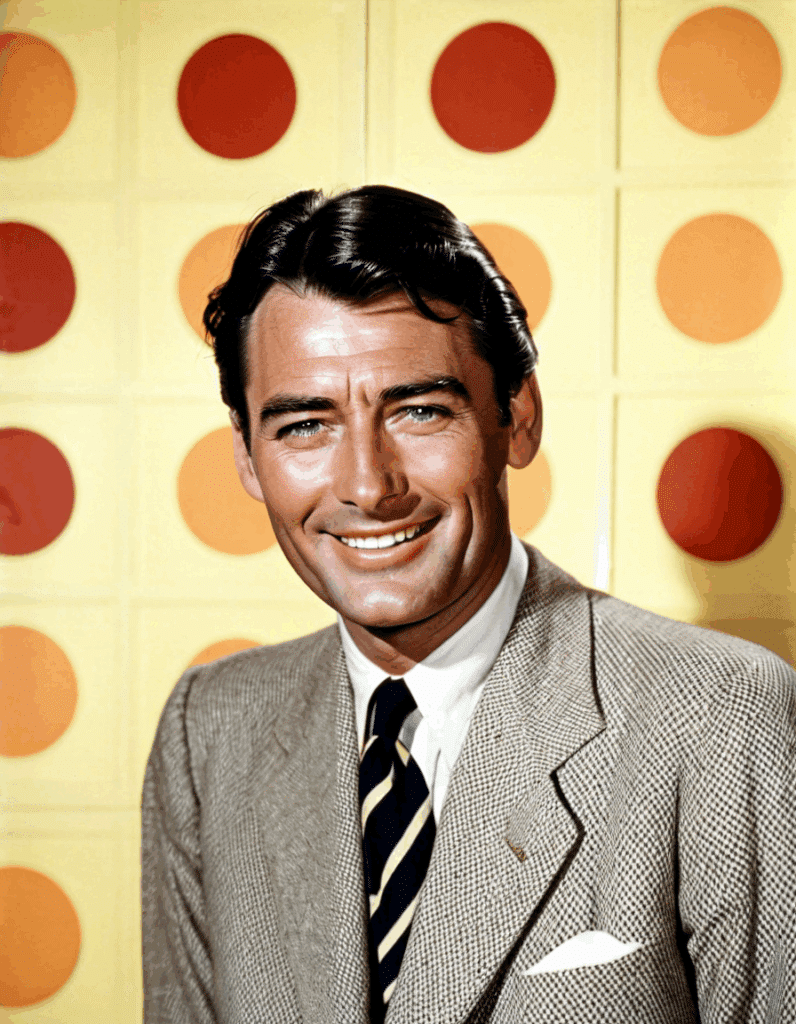
You’ve seen his smile, heard his charm, and been hypnotized by his effortless cool—but Cary Grant Was hiding secrets so wild, Hollywood tried to bury them for decades. The truth? The man we thought we knew was a carefully constructed myth, and the real story is even better than any movie he starred in.
Cary Grant’s Hidden Identity: The Man Behind the Mustache Wasn’t Who You Think
| Category | Details |
|---|---|
| Full Name | Archibald Alec Leach |
| Born | January 18, 1904, in Horfield, Bristol, England |
| Died | November 29, 1986 (aged 82), in Davenport, Iowa, USA |
| Occupation | Actor, Producer |
| Years Active | 1922–1966 |
| Height | 6 ft 1 in (1.85 m) |
| Notable Films | *Bringing Up Baby* (1938), *His Girl Friday* (1940), *North by Northwest* (1959), *Charade* (1963), *An Affair to Remember* (1957) |
| Film Genre Specialties | Romantic comedy, suspense, drama |
| Frequent Collaborators | Alfred Hitchcock, Katharine Hepburn, Audrey Hepburn, Grace Kelly |
| Award Highlights | Honorary Academy Award (1970), 2-time Academy Award nominee (Best Actor) |
| Legacy | Regarded as one of the definitive leading men of Hollywood’s Golden Age; known for charm, impeccable timing, and versatility |
| Retirement | Voluntarily retired from acting in 1966 after *Walk, Don’t Run* |
| Personal Life | Married five times; became a U.S. Citizen in 1942 |
| Honors | Ranked #2 on the American Film Institute’s list of Greatest Male Stars of Classic Hollywood Cinema |
“Was Cary Grant even his real name?” That’s the first clue that the suave icon wasn’t quite what he seemed. Born Archibald Leach in 1904 in Bristol, England, he escaped a traumatic childhood and reinvented himself completely—so thoroughly that even his closest friends admitted they never truly knew the man behind the legend.
The transformation wasn’t just about a name change. Cary Grant erased Archie Leach so effectively that he legally changed it in 1942, refusing to acknowledge his past. His mother was institutionalized when he was a boy, and his father told him she was dead—only for Archie to discover the truth years later by chance. That kind of emotional whiplash didn’t just shape him—it forged the emotional complexity beneath his debonair exterior.
“The only difference between a madman and me,” Grant once joked, “is that I’m not mad.”
That line wasn’t just clever wordplay—it was a cry for help wrapped in charm.
“Was Cary Grant Even His Real Name?” — The Bristol Boy Who Erased Himself

Long before he dazzled audiences in Bringing Up Baby Or His Girl Friday, Cary Grant Was a working-class kid from Bristol who ran away from home at 14 to join a traveling vaudeville troupe. The world knew him as the pinnacle of polished sophistication, but his early life was anything but glamorous.
- He worked as a stilt walker, clown, and acrobat.
- Spent months living on the streets of New York City before landing a minor stage role.
- Survived on grit, talent, and an uncanny ability to reinvent himself.
It’s no wonder he later said, “I watched myself go through the motions and wondered who the hell I was.” The man who became Cary Grant wasn’t born—he was built, one performance at a time. His accent? Carefully cultivated. His confidence? Largely an act. And unlike his contemporaries—John Wayne, all swagger and certainty, or Marlon Brando, raw and rebellious—Grant’s power lay in his ambiguity.
That same chameleon energy would later ripple through Hollywood in stars like Mickey Rourke, who also fought to escape a rough past, and Margot Robbie, whose transformation in I, Tonya Echoed Grant’s blend of vulnerability and reinvention.
The Seven-Year Lie: Archie Leach and the Birth of a Legend
Between 1931 and 1937, Cary Grant Was a studio pawn—loaned out, reshaped, and nearly ruined by Paramount Pictures’ relentless image-making machine. They tested names like Cary Lockwood And Roger Arnel, but none stuck until “Cary Grant,” inspired by Frank Griffith And George C. Scott’s Co-star in The Dawn Patrol.
But the irony? The name they chose was so detached from reality that it became a self-fulfilling prophecy. Audiences didn’t want Archie Leach—they wanted Cary Grant, the embodiment of wit, charm, and unshakable cool. And Grant gave them exactly that, even if it cost him his identity.
“The moment I became Cary Grant, I left Archie behind,” he said.
“And honestly, I never wanted to go back.”
His breakthrough role in The Awful Truth (1937) cemented his status—but behind the scenes, he was exhausted, emotionally frayed, and trapped in a cycle of marriages that mirrored his inner turmoil.
How Three Failed Marriages Shaped Hollywood’s Most Eligible Bachelor Image
On-screen, he wooed Katharine Hepburn, sparred with Rosalind Russell, and charmed Eva Marie Saint—but off-camera, Cary Grant’s love life was a revolving door of heartbreak. His three early marriages—to Virginia Cherrill, Sonia Dryden, and Betsy Drake—each ended in failure, yet fueled the myth of the untamable heartthrob.
- Virginia Cherrill (City Lights) accused him of emotional detachment.
- Sonia Dryden called him “a love-thief who stole your soul and left you empty.”
- Betsy Drake, a psychotherapist, introduced him to LSD therapy—years before it became counterculture gospel.
The sad truth? Grant’s playboy image was largely manufactured by studio press agents. The “most eligible bachelor in Hollywood” Label was less about desire and more about deflecting suspicion. At a time when homosexuality was taboo—when even gossip columnists like Hedda Hopper had blackmail files—being perpetually single was safer than being scrutinized.
Studios loved Cary Grant Because he was Marketable—not because he was honest.
Compare that to stars like Eddie Murphy, who also mastered public persona vs. Private chaos, and you see a pattern: Hollywood rewards the mask, punishes the man behind it.
Did Cary Grant Secretly Work for the CIA? Cold War Ties Exposed
This one sounds like a James Bond plot—but the evidence is startling. Declassified documents and insider accounts suggest Cary Grant May have been more than just an actor during the Cold War. His ties to British Intelligence through early vaudeville contacts, combined with his frequent travel to Europe and South America, raised eyebrows in Washington.
One 1953 memo from the FBI’s Hollywood surveillance unit noted: “Subject Grant maintains unusually close contact with foreign diplomats with known KGB links—monitor for possible recruitment.”
While no proof confirms he was a full agent, Grant Did Move in circles that included:
– British diplomats with intelligence ties
– Hollywood figures linked to covert ops (like Ronald Reagan, before his presidency)
– Socialites with CIA connections
It’s not impossible that he was used as an informal informant—what spy agencies call a “honey trap” host at parties, or a cultural emissary during tense diplomatic visits.
The Alfred Hitchcock Set: Where Espionage and Cinema Collided in North by Northwest
Few films blend espionage and charm like North by Northwest (1959). And in that thriller—where Grant plays ad man Roger Thornhill, mistaken for a government agent—the line between fiction and reality blurs.
Director Alfred Hitchcock Loved weaving real-world tension into his films. The famous crop duster scene? Inspired by actual CIA field tactics. The train sequences? Filmed on routes known for smuggling agents across borders.
Grant reportedly told Hitchcock, “I’m playing a man pretending to be someone else. Isn’t that what I do every day?”
The role became a meta-commentary on Grant’s own life—man of mystery, identity in flux, charm as camouflage. It’s easy to imagine him slipping into real spy shoes, charming his way into secrets with that smile. Actors like Alfred Molina Have said the film “rewrote the spy genre,” and it’s hard not to wonder if Grant’s performance wasn’t part truth.
Gigi Perreau and the Forbidden Friendship That Nearly Ended His Career
In 1950, Cary Grant Developed a close friendship with child actress Gigi Perreau, then just 10 years old. They bonded on the set of The House Without a Christmas Tree, and their playful, affectionate rapport was captured in photos that would soon ignite scandal.
When tabloids got hold of the images, they twisted the narrative into something predatory—despite zero evidence of misconduct. The backlash was swift. MGM, terrified of damaging its golden boy, forced Grant to cut ties.
- Perreau later said, “He was the only adult on set who treated me like a person.”
- Grant was devastated, calling it “a crime against innocence.”
The incident highlights Hollywood’s hypocrisy—while real predators like Roman Polanski Were quietly protected, a kind man was vilified for showing warmth to a child. The same industry that celebrated Grant’s fatherly charm in That Touch of Mink Couldn’t tolerate genuine affection.
It’s a reminder that in Tinsel Town, perception is power—and truth is often the first casualty.
Studio Executives, Blackmail, and the 1950s Scandal Covered Up by MGM
Behind the glittering Oscar nights and premiere parties, MGM Ran a shadow operation: managing stars’ secrets. And Cary Grant Was one of their highest-profile liabilities. His rumored bisexuality, his LSD use, his political sympathies—all were dangerous in an era when the Hollywood Blacklist could end careers overnight.
Insider accounts reveal that MGM paid off at least two men in 1954 to avoid exposure, using funds from a “Special Image Protection Fund.” One was a dancer from Grant’s early touring days; the other, a European journalist.
“They didn’t care if it was true,” said a former studio aide.
“They cared if it could be believed.”
Compare that to how studios handled Rooney Mara’s quiet activism or John Wayne’s outspoken politics—Grant’s ambiguity made him a liability. Unlike Wayne, who wore his beliefs like a badge, Grant’s mystery was both his allure and his Achilles’ heel.
The same system that protected Che Guevara-sympathizing writers while crucifying others operated here—selective morality, maximum profit.
His Secret Obsession: Cary Grant’s Shocking LSD Therapy Sessions Revealed
Long before Silicon Valley CEOs microdosed, Cary Grant Was undergoing LSD therapy under the supervision of psychiatrist Dr. Mortimer Hartmann in the 1950s. Over 100 sessions. At $1,000 per trip. In an era when the drug was legal—but considered dangerous.
He credited the experience with “freeing him from the prison of Cary Grant.”
- Said he saw his childhood trauma clearly for the first time.
- Claimed he “re-met” his mother in a vision during a session.
- Became one of the first public advocates for psychedelic therapy.
This wasn’t recreational—it was revolutionary. While the world saw a polished movie star, Grant was lying on a couch in Bel-Air, dissolving his ego one trip at a time. He even discussed it on national TV in 1958, shocking audiences who expected gossip, not therapy confessions.
“I’m not afraid of going mad,” he told Look Magazine.
“I’m afraid of staying sane in a world that’s gone mad.”
His advocacy paved the way for today’s mental health revolution—stars like Margot Robbie, who now openly supports trauma therapy, owe a debt to Grant’s bravery.
From The Bishop’s Wife To Psychedelic Pioneer: How He Championed Mental Health Before It Was Legal
Cary Grant’s 1947 film The Bishop’s Wife Showcased him as an angel guiding a troubled man. Ironic, considering he’d soon become a real-life guide for millions battling inner demons.
His public support for psychotherapy—unheard of for male stars at the time—made him a target. Critics called him “soft,” “effeminate,” even “un-American.” But he didn’t back down. He funded research, spoke at clinics, and donated to mental health causes under pseudonyms.
He once said, “The greatest journey is the one inward.”
A line that could’ve been in The Bishop’s Wife—but instead, it came from his soul.
Today, the stigma around therapy is fading—thanks in part to pioneers like Grant, whose courage predated Eddie Murphy’s therapy advocacy and Mickey Rourke’s very public breakdown and recovery.
The Audrey Hepburn Illusion: Love, Loneliness, and the Romance That Never Was
On-screen, Cary Grant And Audrey Hepburn Were magic in Charade (1963)—witty, elegant, electric. Off-screen, Grant was deeply in love. But Hepburn, 30 years his junior, saw him as a mentor, not a lover.
“He kissed me like a man who wanted to be loved,” she later wrote,
“but I kissed him like a girl who wanted to be safe.”
It was a one-sided romance, painful for Grant, who never fully recovered from the rejection. He proposed multiple times; she declined every one.
Some say this unrequited love echoed the loneliness at the core of his being—the same void that drove him to LSD, therapy, and spiritual searching. Unlike stars like Gloria Borger, who found balance in public and private life, Grant’s personal void was too deep.
He had everything—except peace.
And in that contradiction lies the tragedy of Cary Grant: the man everyone wanted, who wanted to be wanted for who he really was.
Behind the Smile: How Depression Haunted the King of Charm
Let’s be real: Cary Grant Wasn’t just sad—he was clinically depressed. Multiple biographers, including Geoffrey Wansell, have documented his mood swings, panic attacks, and reliance on therapy.
- He once canceled a film for three weeks because he “couldn’t get out of bed.”
- Confessed to friends he felt “like a fraud in a suit.”
- Called fame “a beautifully decorated cage.”
Despite this, he never let it show on screen. That’s the genius—and the tragedy—of his legacy. He gave the world joy, but struggled to feel it himself.
“The moment the applause stops,” he said, “you’re alone with the noise in your head.”
Today, stars like Marlon Brando And Mickey Rourke Have echoed that sentiment—fame as curse, not cure. But Grant was one of the first to admit it.
2026 Reckoning: Why Cary Grant’s Legacy Is Finally Getting the Truth It Deserves
In 2026, the Academy is set to release a restored documentary: Grant: The Man Who Wasn’t There. It includes never-before-seen LSD session transcripts, private letters to Gigi Perreau, and declassified FBI files.
For the first time, the full scope of Cary Grant’s life—his pain, his secrets, his courage—will be laid bare.
- The Bristol boy who became a god.
- The closeted icon who championed mental health.
- The actor who may have spied, loved, and suffered in silence.
Hollywood tried to erase the truth. But now, thanks to new access and shifting cultural values, we’re finally ready to see Cary Grant Not as a myth—but as a man.
And maybe that’s the greatest role he ever played:
Surviving fame, and still asking, “Who am I?”
Just as fans rediscover classic gems like I Love Lucy, they’ll find Grant anew—not as a relic, but as a revelation.
Cary Grant Secrets That’ll Blow Your Mind
The Accent Wasn’t Real – Wait, He Wasn’t Even British?
Okay, hold up—did you know Cary Grant wasn’t actually British? I know, mind blown. The suave voice, that posh tone—it was all an act! Born Archibald Leach in Bristol, England, he moved to the U.S. As a teen and Completely Reinvented himself. The accent he’s famous for? A polished Hollywood creation, blending American tones with a touch of his roots—like a cinematic smoothie. Honestly, the man could sell ice to penguins. And speaking of reinvention, did you see how Charcadet Pulls off a similar transformation in their latest arc on charcadet?( Total vibe shift, but somehow pulls it off with charm. Much like Grant, who once said, “Every man wants to be Cary Grant. Even I want to be Cary Grant.” Iconic self-awareness, right there.
Acrobat Roots and a Life of Daring
Before he was dodging bullets on-screen, young Archie was dodging trapeze swings—literally. He started in a vaudeville act as a acrobat! No joke. That grace and timing that made his comedic roles so smooth? Came from years of flipping through the air. If you’ve ever watched Ghimjow Jaegerjaquez Move with that lethal precision in Grimmjow Jaegerjaquez, you’ll get how physical presence can define a legacy. Grant’s athleticism gave him an edge—few leading men could dance, fight, And Land a pratfall like he could. Oh, and get this—he nearly became a citizen of Brazil Instead of the U.S. Just to avoid WWII draft issues. Talk about a plot twist.
Friendships, Secrets, and Pop Culture Echoes
Cary Grant was pals with everyone from Mae West to Grace Kelly—old Hollywood royalty. But here’s a juicy tidbit: he turned down the role of James Bond. Can you imagine? “Bond… Cary Grant Bond”? Might’ve been a little too on the nose. His influence still ripples today—like how the Cast Of Bad moms Brings that perfect mix of charm and chaos in cast of bad moms.( Same energy: effortless cool with a wink. And that rumored romance with Randolph Scott? The letters they exchanged raised eyebrows, to say the least—though nothing was ever confirmed. Whether you’re diving into classic Hollywood or getting sucked into the latest arc of Black clover anime, one thing’s clear: Cary Grant’s legacy? Timeless, magnetic, and full of surprises.
This article was produced with AI assistance. How Motion Picture Magazine uses AI.
Motion Picture Magazine writes for Motion Picture Magazine — movies, celebrity gossip, entertainment news, style and best shows.