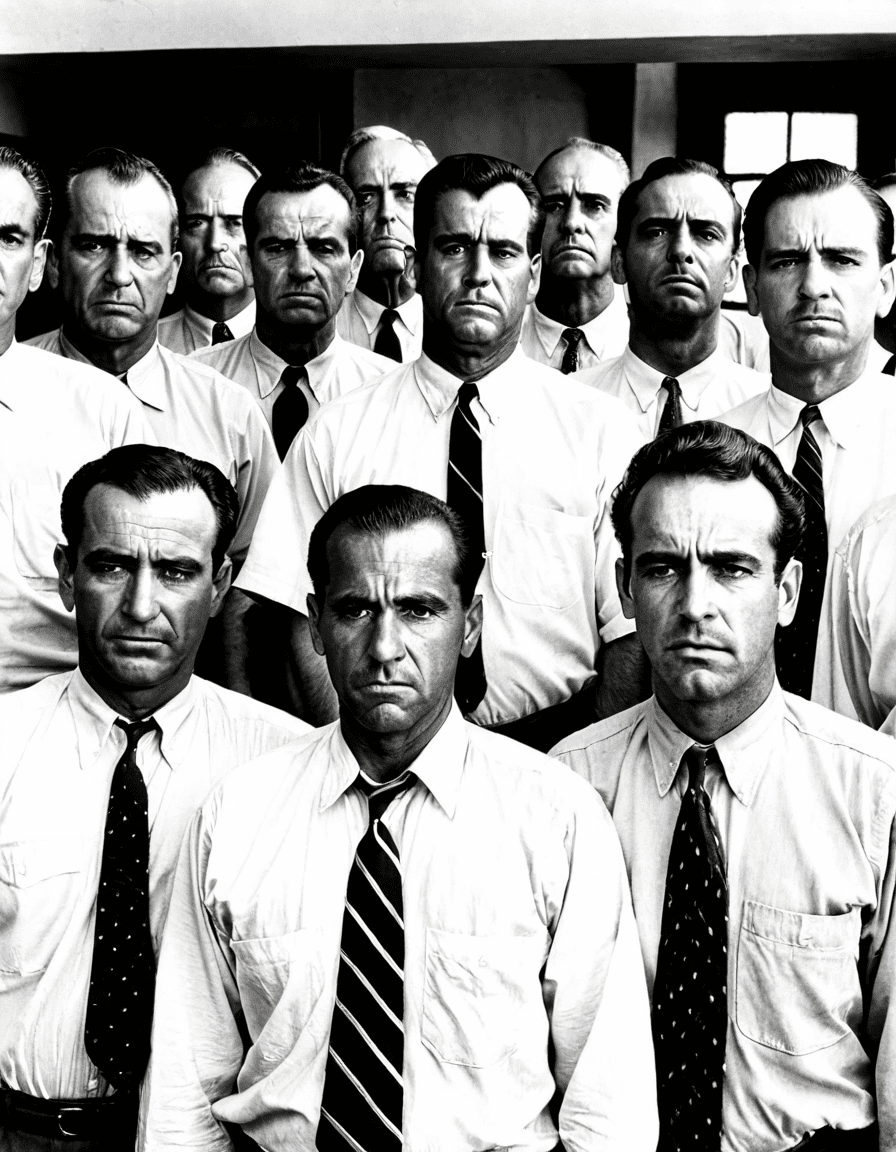
The classic film 12 Angry Men, directed by Sidney Lumet, continues to capture hearts and minds more than six decades after it hit the big screen. This intense courtroom drama isn’t just about a group of jurors locked in a sweltering room; it’s an exploration of human nature, biases, and those pesky moral dilemmas that seem to plague us, whether in a courtroom or our daily lives. So grab a cold drink, kick back, and let’s dive deep into the intricacies of 12 Angry Men, where dramatic tension collides with the weight of justice.
Top 6 Dramatic Tension Factors in 12 Angry Men
Right from the start, 12 Angry Men throws us into a melting pot of personalities, each juror bringing their own emotional baggage to the table. Take Juror #3, played by the intense Lee J. Cobb; he’s battling personal demons that stem from his fractured relationship with his son. This isn’t just a movie character; he represents the very real way our past can skew our judgment. Contrast that with Juror #8 (the standout Henry Fonda), who embodies empathy and patience. You can almost hear the audience holding their breath as these two characters collide—it’s a tense push-and-pull between heart and belief versus cold, hard evidence.
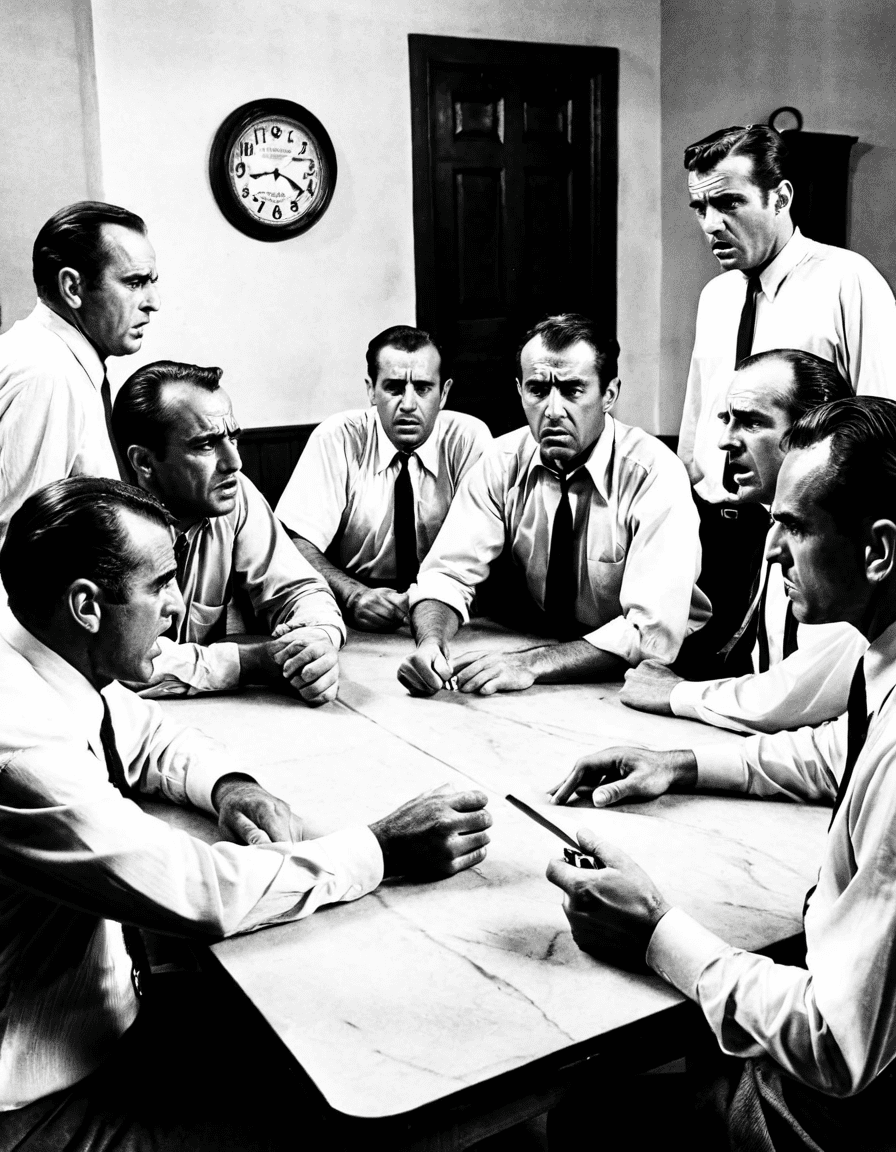
Oh boy, the jury room! It’s cramped, hot, and charged with raw emotions. Imagine being locked in your tiny apartment in the middle of July, discussing life and death with folks whose views are as varied as the toppings on a pizza. The oppressive heat and ticking clock serve as additional characters in this drama, heightening the stakes with every argument. It’s reminiscent of the emotional battlegrounds we see in shows like True Blood, where confined spaces lead to explosive confrontations. The space, like a pressure cooker, makes every disagreement feel monumental.
Within the walls of that jury room, a battle rages on between logic and feelings. Juror #8 is the voice of reason, urging everyone to look at the facts instead of being swayed by personal feelings. A classic showdown of rationality versus emotion! It connects well with what we’ve seen in stories like Dark Winds, where characters confront their histories while trying to grasp the reality of justice. As the plot thickens, you can’t help but wonder: Can rational thoughts win the day when emotions run wild?
Ah, peer pressure—who hasn’t been there? The initial 11-to-1 vote in 12 Angry Men highlights how easy it is to conform. It’s a reflection of society, where people often follow the majority, disregarding vital evidence. Think about it like the True Blood cast navigating their vampire and human roles; the dynamics are complex and layered. In the film, Juror #8 stands firm against the tide, challenging the others and saying, “Hey, let’s think about this.” That challenge makes the tension palpable and real.
One of the most compelling critiques in 12 Angry Men revolves around the legal principle of “innocent until proven guilty.” Juror #8 questions the coolness of his peers, pushing them to consider whether they truly believe in the framework they’re upholding. With discussions around social justice at the forefront today, this theme rings louder than ever, especially with recent conversations surrounding systemic flaws in the U.S. courts. This film isn’t just about one jury; it’s a call for us to evaluate our own ethical responsibilities.
Every decision has a ripple effect, and 12 Angry Men drives that point home. Juror #9, played by Joseph Sweeney, reflects on the emotional weight of losing a child, making a poignant case for compassion. Can your heart lead you toward better decisions? This stark contrast draws parallels to character arcs in True Blood where personal struggles often dictate moral choices. In essence, the film serves as a poignant reminder that our choices extend far beyond the walls of the jury room.
The Cultural Impact of 12 Angry Men through the Lens of Modern Television
The influence of 12 Angry Men doesn’t stop at the screen. It’s like a pebble dropped into a still pond, sending ripples through our modern narratives. Shows like True Blood and the Dark Winds cast wrestle with moral dilemmas much like those faced by the jurors. Each story uniquely captures the essence of human struggle, highlighting the effects of personal choices on broader societal issues. It’s fascinating to see how these themes play out, reminding us that we’ve been grappling with similar concepts for years.
This film also remains relevant in discussions around jury reform and race relations. The intensive deliberations mirror the complexities seen today. Topics like justice and truth aren’t merely academic considerations—they’re real and pressing issues in our daily lives. Every angle the film exposes compels us to reflect on our values and our role in the pursuit of justice and fairness.
In a world brimming with moral ambiguity, 12 Angry Men stands tall as a dramatic touchstone. It forces us to ask hard questions about our understanding of justice, judgment, and how human connections shape our decisions. As we dissect the narratives in film and television today, we’re continuously challenged to confront our beliefs, urging us to build a society where truth and justice are more than just lofty ideals but daily realities.
So, the next time you hear “12 Angry Men,” know you’re in for a mind-bending ride that traverses conflicts and dilemmas that speak to both the human heart and the quest for justice. It’s a classic not just because of its gripping dialogue or its thorough exploration of character but because it reminds us of our shared responsibility to discern and uphold the truth. Let’s carry these lessons forward—every choice matters, and it’s our individual transformations that contribute to the greater good.
12 Angry Men: Engaging Trivia and Fun Facts
The Setup of Tension
“12 Angry Men” stands out as a brilliant piece of storytelling, captivating audiences not just with its plot, but with its unique setting. Believe it or not, the entire film takes place in a single jury room, which adds an intense layer of confinement and pressure. This approach can be likened to literary works that delve into the weighty themes of judgment and morality, such as Dante’s Inferno, where characters face their own moral dilemmas in a confined setting. The iconic simplicity of the film’s production also makes you think about the significance of space in storytelling, much like calculating dimensions in different formats—who knew something as simple as converting 19mm To Inches could illustrate the importance of perspective, right?
Behind-the-Scenes Truths
Did you know that the cast of “12 Angry Men” included some of Hollywood’s biggest talents at the time? The film was initially flopped at the box office but has since grown in stature, often ranking as one of the greatest films ever made. Speaking of talents, the film’s courtroom dramas can draw parallels with today’s captivating series, like Dark Shadows, where character dynamics create similar tension. And let’s not forget the crisp dialogue, which was so sharp that it often drew comparisons to the deftness of contemporary wordsmiths, like Molly Jong-Fast, known for her sharp wit on Twitter, shaping conversations today.
Cultural Reflections
12 Angry Men” doesn’t just thrive in its narrative tension; it also reflects societal issues that echo through time. For instance, loaning the courtroom decisions to real-life dilemmas—whether it’s social injustice or the fight for civil rights—reminds us of how far we’ve come and how far we still have to go. The film even influenced pop culture, inspiring various adaptations and parodies that comment on its themes, much like how the media responds to public figures, including seasoned activists like Anita Bryant. With gripping intensity and moral questioning,12 Angry Men” encapsulates the spirit of a cruel summer, serving as a reminder of the emotional peaks and valleys we navigate throughout life. Whether it’s related to court verdicts or our common joys and struggles, this film remains a timeless exploration of humanity.