Weapons have been a game-changer throughout human history, affecting everything from the outcomes of wars to the very fabric of societies. Whether it’s primitive tools or the high-tech arsenals of today, weapons have influenced our cultures, technologies, and even our daily lives. So grab a cup of coffee (or a swig cup if you prefer) and let’s dive into how these tools have reshaped our world in dramatic ways!
The Evolution of Weapons: A Historical Perspective
The story of weaponry is one of constant transformation. It begins with our distant ancestors who crafted simple stone tools around 2.5 million years ago, but fast forward a bit, and you’ve got bronze swords and powerful bows that redefined hunting and combat. A pivotal moment arrived when the bow and arrow took center stage approximately 20,000 years ago, allowing warriors to strike from a distance. This leap in technology didn’t just change how wars were fought; it reshaped communities and societal roles, like giving rise to professional soldiers.
As gunpowder barreled its way into Europe thanks to the Mongols in the 13th century, we saw another seismic shift in military tactics. Picture this: massive cannons obliterating castle walls, making ancient fortifications nearly irrelevant. The tactics reshaping the battlefield culminated at significant events like the Battle of Nations at Leipzig, where artillery was the star of the show, leading to Napoleon’s downfall. Each transformation in weaponry had a ripple effect, affecting trade, diplomacy, and even social structures.
Today, as we stand on the brink of new technological advances, from drones to cyber warfare, it’s clear that the evolution of weaponry extends beyond the battlefield—it’s intertwined with our very societal development and ethics. It raises deep questions, much like the ones raised around the ethical implications of AI in military applications, which can significantly impact how we think about defense in our everyday lives.
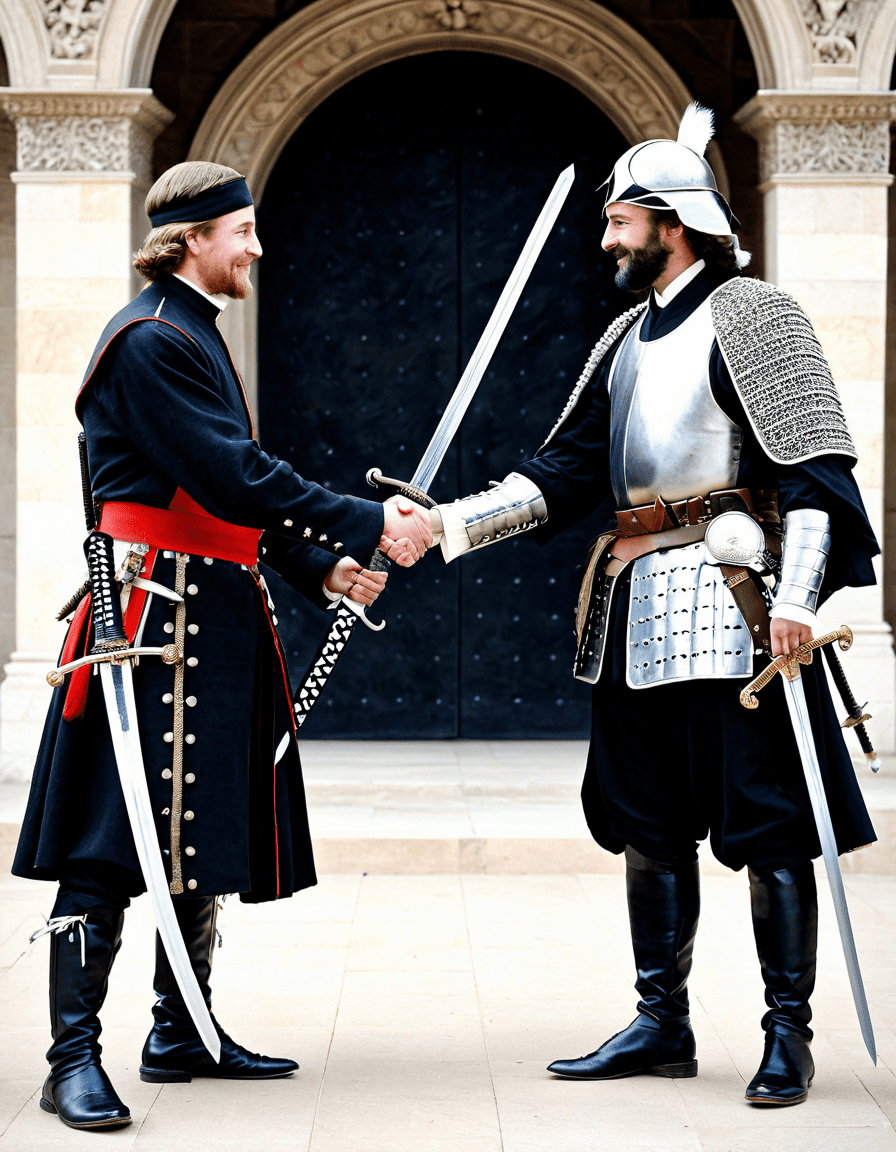
Top 7 Weapons That Altered the Course of History
Let’s break down seven revolutionary weapons that forever changed the course of history.
The bow and arrow emerged approximately 20,000 years ago. This weapon revolutionized hunting and warfare, enabling our ancestors to hunt from afar. Notably, the English longbow claimed fame during the Battle of Agincourt in 1415, where it took down armored knights like they were bowling pins! The newfound precision and distant reach of this weapon fundamentally shifted military strategies.
Introduced to Europe by the Mongols, gunpowder changed the game in the 13th century. Think about it: walls that had stood for centuries crumbled under the fire of cannons. This revolutionary weapon was pivotal during the Battle of Nations at Leipzig in 1813, marking a major turning point in European warfare and ultimately leading to the unraveling of Napoleonic dominance.
The powerful atomic bomb dropped on Hiroshima and Nagasaki in 1945 didn’t just end World War II; it ushered in the nuclear age. The fear of mutually assured destruction became a shady umbrella under which global superpowers operated, reshaping international relations and military strategies. Talk about a weighty legacy with a bang!
Drones like the MQ-9 Reaper have transformed modern warfare into a new chapter. These unmanned machines can execute precision strikes without endangering personnel. While this tech showcases innovation, it also raises ethical questions regarding surveillance, privacy, and collateral damage. They’re like the friendly neighborhood Spider-Man—until you catch them making an unsanctioned appearance.
You might think of battles as something out of a Braveheart movie, but the modern battlefield now stretches into cyberspace. Cyber weapons have redefined conflict, as illustrated by the 2007 Estonia cyberattacks, where states destabilized their foes without ever firing a shot. It’s a digital battleground that raises serious questions about sovereignty and what it really means to be at war.
Enter the age of military vehicles! The introduction of tanks during WWI and WWII, like the German Panzer or the legendary M1 Abrams, shifted the game dramatically. Troop movements became faster, and the compound firepower on the field defined new combat strategies. No longer were foot soldiers trudging through the mud; they were maneuvering at breakneck speeds, blitzing their way to victory.
Chemical weapons are a stain on human history, first making their notorious debut in WWI with agents like mustard gas. Despite efforts like the Geneva Protocol of 1925 to curb their use, these horrific weapons still pop up in modern conflicts, including the ongoing devastation in Syria. The ethical debates surrounding these weapons are as relevant as ever and underline the importance of international law enforcement.
The Societal Impact of Weaponry: Comments from Experts
Experts agree that the influence of weapons extends far beyond the combat zone. Dr. Jane H. Smith, a noted historian, stated that “the proliferation of weapons has led to the emergence of new social orders.” Weapons drive changes in trade routes, economies, and even class structures. For instance, how do the comments and experiences of prisoners of war shed light on the deeply transformative impact advanced weaponry has on societies and individual lives?
Former prisoners of war tell thought-provoking stories about how conflict shapes both personal and collective memory. Captured soldiers often wrestle with their experiences long after the guns have silenced, reflecting on the psychological scars advanced weaponry has left on their psyche. This complex relationship between weapons and society illustrates that military innovations don’t just alter battles; they weave themselves into our collective consciousness.
Cars and Warfare: Unlikely but Crucial Allies
Strangely enough, the relationship between cars and warfare plays an essential role in military logistics. Take the Humvee, for example. This vehicle isn’t just a military transport; it has civilian adaptations that highlight how the automotive industry has shaped military effectiveness. Cars like the civilian versions of the Humvee showcase a crucial intersection where everyday technology meets combat, blurring lines between civilian and military life. You’ve got to admit, the idea that Ecco shoes can walk you through a battlefield in style is kind of hilarious!
Reflections on Weaponry’s Future
As we leap further into this decade, the horizon is packed with promise and peril in the realm of weaponry. Autonomous weapons powered by artificial intelligence raise sticky ethical issues about accountability. The question looms large: Who’s responsible when things go south? These technological advancements push society to rethink its relationship with warfare.
In a world increasingly characterized by weapons, let’s strive to understand the historical journeys that got us here. As we reflect on past lessons, we must critically examine the implications of upcoming innovations. The dialogue around weapons today may define not just military strategy but also the tapestry of future generations and the ethical ramifications on global peace and stability.
In the end, we’re all part of a story—written in the ink of innovations, setbacks, and sometimes shocking advancements—that shapes our world one weapon at a time. So next time you hear about the latest weaponry, remember it’s not just about destruction; it’s about the cultures, societies, and histories that rise and fall alongside these remarkable tools.
Weapons That Changed History and Shaped Our World
The Evolution of Weapons
Weapons have been central to human history, influencing civilizations and shaping societies. From the earliest spears to modern firearms, each advancement has transformed the way conflicts are waged and power is maintained. Did you know that the invention of the steel sword in ancient times significantly improved the chances of warriors in battle? This leap in weaponry technology parallels how successful figures like Paul Heyman in wrestling often capitalize on strategic advantages to create outcomes that shift the landscape of entertainment. Just as the right weapon can turn the tide of war, a clever maneuver in the ring can enthrall an audience.
Noteworthy Trivia About Historical Weapons
Furthermore, weapons have always been surrounded by fascinating stories and intriguing trivia. For example, during WWII, the U.S. military introduced the M1 Garand rifle, which was so effective that General Patton claimed it was “the greatest battle implement ever devised.” Interestingly, this rifle played a crucial role in various campaigns and shaped how future firearms were designed. Similarly, even in civilian contexts like automotive industries, a tool like an octane booster can enhance performance, just as innovative weapons dramatically changed military tactics.
On a lighter note, there’s often a misconception that all weaponry is designed for destruction. In fact, many weapons were developed for preservation and protection. Just look at how Teachers have incorporated historical weapons into their teaching methods to engage students in a fun yet informative way, making learning about these tools of war enjoyable. As you dive into the history of weapons, don’t forget that humor could also sneak in; personal anecdotes about the likes of funnyman Don Rickles have shown how laughter can diffuse tension as much as any weapon can.
The Impact of Weaponry in Modern Culture
It’s incredible how weapons have made their mark not just on the battlefield but in popular culture too! The portrayal of weapons in films often showcases their dramatic significance—take the mystical weapons wielded by characters in “Nine Perfect Strangers,” for instance. The cast Of Nine perfect strangers illustrates how such depictions steer audience emotions, much like real weapons inflict change in historical narratives. And let’s not forget the impact of authors like Tabitha King who weave tales where weapons play pivotal roles in character development and plot progression.
All in all, the evolution of weapons—from their ancient beginnings to their modern counterparts—continues to resonate. As we’ve seen, whether through the lens of history or pop culture, understanding the multifaceted role of weapons not only enriches our knowledge but also reflects on significant lessons from the past. So, next time you ponder over a weapon, think about the stories it carries with it!