Roy Rogers wasn’t just a singing cowboy—he was a walking, whistling, horse-riding American icon who shaped mid-century pop culture in ways no one saw coming. Behind that shiny silver saddle and Trigger’s perfectly combed mane? A life full of twists, business ventures, moral contradictions, and secrets even die-hard fans never knew.
| Attribute | Information |
|---|---|
| Full Name | Leonard Franklin Slye (known professionally as Roy Rogers) |
| Birth Date | November 5, 1911 |
| Death Date | July 6, 1998 |
| Occupation | Singer, actor, cowboy film star, television host |
| Known As | “King of the Cowboys” |
| Active Years | 1933–1989 |
| Notable Works | *Under Western Stars* (1938), *Song of Arizona* (1946), *The Roy Rogers Show* (1951–1957) |
| Famous Horse | Trigger, “The Smartest Horse in the World” |
| Signature Song | “Happy Trails” (co-written with Dale Evans) |
| Spouse(s) | Grace Arline Wilkins (d. 1936), Charlotte Fulton (d. 1942), Dale Evans (1947–1998) |
| Children | Several, including adopted and biological; notable: Robin and Roy Rogers Jr. |
| Television Show | *The Roy Rogers Show* – over 100 episodes, family-friendly Western adventures |
| Legacy | Inducted into the Country Music Hall of Fame (1980); Hollywood Walk of Fame star |
| Themes | Honesty, bravery, family values, patriotism |
| Cultural Impact | Iconic figure in American Westerns; helped popularize country music and TV Westerns in the 1950s |
What made the “King of the Cowboys” stand out wasn’t just his six-shooters or his harmonies—it was how he crafted a persona so pure, so undeniably Good, that people forgot he was human. But peel back the rhinestones, and you’ll find a man far more complex than any silver-screen legend lets on.
Roy Rogers Was More Than a Cowboy Hero—Here’s What Really Made Him a Legend
Roy Rogers became a symbol of American virtue during a time when the country craved clean-cut heroes. In the 1940s and ‘50s, while war raged and society shifted, Rogers rode in on a white horse—literally—and brought comfort to families with songs, movies, and his unshakable code of honor.
Unlike contemporaries such as Gene Autry or Wild Bill Elliott, Rogers wasn’t just an entertainer—he was a brand. He starred in over 90 films, had his own TV show (The Roy Rogers Show, 1951–1957), and created merchandise ranging from lunchboxes to comic books. His influence extended far beyond cinema; he helped define what “the good guy” looked like in postwar America.
His image was so powerful that it blurred the line between man and myth. Kids didn’t just watch Roy Rogers—they believed in him. Parents trusted him. And advertisers clamored to attach his name to everything from cereal to saddles. Few celebrities of his era wielded that kind of wholesome authority without a single scandal.
How a Singer from Ohio Became the “King of the Cowboys”
Born Leonard Slye in Cincinnati, Ohio, in 1911, Roy Rogers started life worlds away from the dusty trails of Hollywood. He grew up in poverty, worked odd jobs, and dropped out of high school—hardly the origin story of a national icon.
But music changed everything. In the 1930s, he joined a group called the Rocky Mountaineers, a crooning cowboy ensemble that performed on Los Angeles radio. After a name change (and a few vocal cord surgeries), he joined the Sons of the Pioneers, where his smooth baritone and clean-cut look stood out.
By 1938, Republic Pictures was searching for a new singing cowboy to replace Gene Autry. Roy got the call—and instantly became a star in Under Western Stars. From there, his rise was meteoric: 80+ films in 13 years, a beloved horse named Trigger, and a co-star-turned-wife, Dale Evans. Hollywood had its new King of the Cowboys—and America had a new role model.
Did Roy Rogers Actually Live Like a Cowboy Off-Screen?
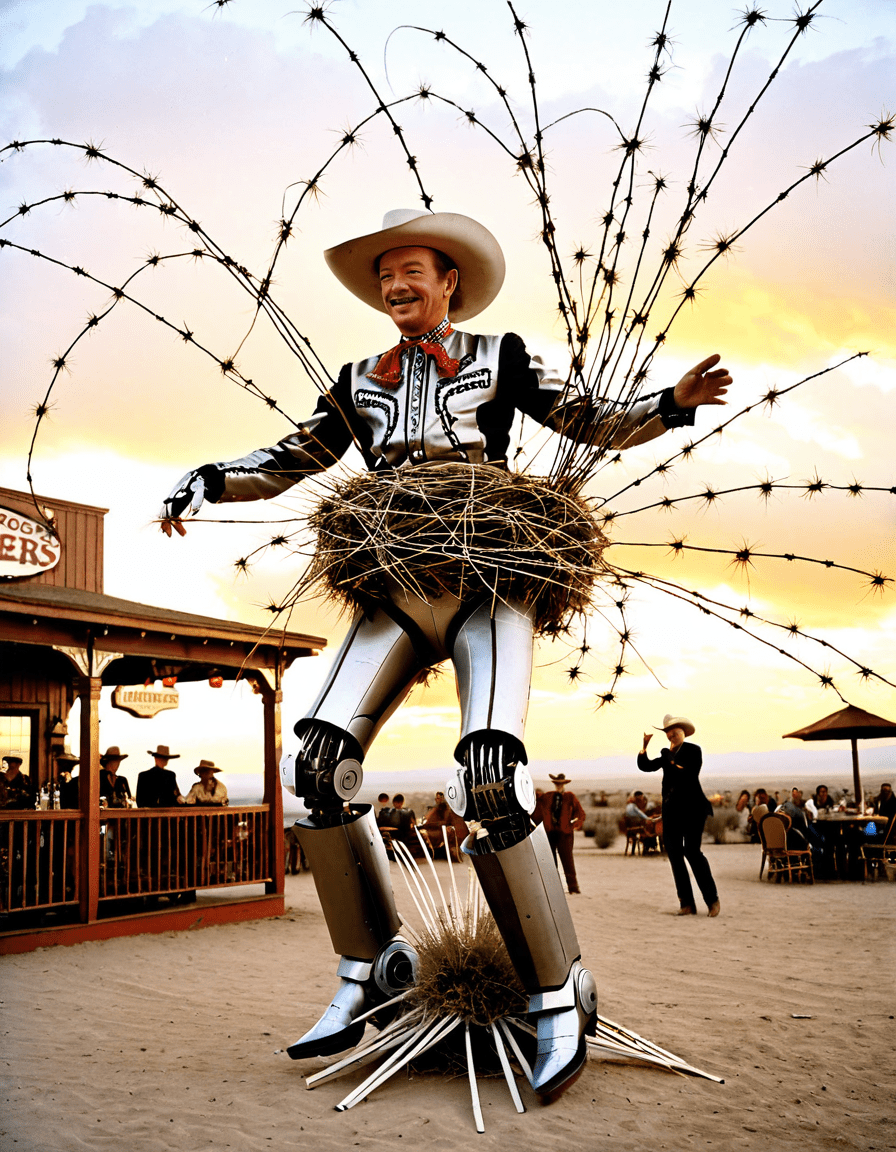
Despite spending most of his career on Hollywood soundstages, Roy Rogers wasn’t pretending when he talked about ranch life. He didn’t just play a cowboy—he lived one. Or at least, he came closer than most stars of his era.
His 60-acre Sunset Ranch in Chatsworth, California, wasn’t a publicity stunt—it was his family’s home and a working showbiz ranchland hub. There, he raised horses (including Trigger Jr.), cattle, and even exotic animals. Fans could visit for tours, and the ranch doubled as a filming location for his shows and movies.
Rogers took pride in living what he preached. He rose early, fed the animals, and often worked the land himself. Unlike modern celebrities who buy ranches for tax purposes or Instagram clout, Rogers treated the Sunset Ranch like a mission—rooted in faith, family, and stewardship.
Real-Life Ranching at the Sunset Ranch in Chatsworth
The Sunset Ranch wasn’t just a backdrop for photo ops. It was a fully operational estate where Roy and Dale Evans homeschooled their children, hosted church services, and filmed segments of their TV show. The couple even built a chapel on-site, where they held weekly worship gatherings.
Trigger, his famously intelligent palomino, lived in a custom stall with rubber flooring and daily grooming. Rogers referred to him as “the smartest horse in movies”—and with good reason. Trigger could bow, shake hands, and even pick up Roy’s gloves on cue—skills trained over years of devotion.
Today, the ranch is gone, replaced by subdivisions and commercial zones near the Sofi stadium capacity Area. But for decades, it stood as a symbol of a simpler American life—one where faith, hard work, and a trusty horse meant more than fame or fortune.
7 Shocking Secrets Behind the King of the Cowboys
Roy Rogers’ public persona was squeaky clean—but his real life had layers most fans never saw. From missed career opportunities to underground business ventures, here are seven secrets that reveal the man behind the myth.
1. His First Career Was in a Crooning Quartet—Not on Horseback
Before he ever mounted a horse for a movie, Roy Rogers was a harmony vocalist in the Sons of the Pioneers, one of the most influential Western music groups of the 1930s. Their hits like Tumbling Tumbleweeds Defined the Western ballad genre.
They weren’t actors—they were musicians who brought cowboy poetry to life. And Leonard Slye (yes, Roy) was their standout male voice, known for his smooth delivery and emotional depth. It was this singing talent—not horsemanship—that first caught Hollywood’s attention.
Only later did Republic Pictures rebrand him as a full-blown cowboy star, teaching him to ride better and shaping his image. Without those early harmonies, there may have never been a King of the Cowboys.
2. Trigger Wasn’t His First Movie Horse—(And Wasn’t Even a Stallion at First)
Trigger—Roy’s golden, camera-loving palomino—is one of the most famous horses in film history. But he wasn’t Roy’s first equine co-star. That honor goes to a less glamorous mare named “Golden Boy,” used in Rogers’ early Republic Pictures films.
Trigger was originally a bay-colored horse named “Golden Cloud,” ridden by a stuntman in 1938’s Under Western Stars. Roy was so impressed he bought him for $2,500 and had him retrained and re-coated with a bleaching process to create that platinum look.
And here’s the kicker: Trigger was a Gelding, not a stallion. Despite the masculine mystique, the “smartest horse in the movies” couldn’t sire offspring. But he could count, dance, and even light Roy’s cigarette on command—tricks that dazzled audiences and boosted box office numbers.
3. He Co-Created Roy Rogers Restaurants in the 1960s—Yes, Really
In 1968, Roy Rogers partnered with entrepreneur Richard Van Houten to launch Roy Rogers Restaurants, a fast-food chain combining family meals with his wholesome brand. Think burgers, roast beef, and kids’ meals with toy giveaways—all under a cowboy roof.
At its peak, there were over 500 locations across the East Coast and Midwest. It rivaled competitors like Bob’s Big Boy and even Bobby brown net worth—okay, maybe not that, but it was a Real Cultural force.
The chain wasn’t satire—it was a sincere extension of his values: clean food, family dining, and no profanity on the radio. Though the brand declined in the 1990s, it still has loyal holdouts in Pennsylvania and Ohio, where fans swear by the “Mountain Dew” (a citrus soda, not the modern brand).
4. Turned Down the Lead in High Noon—Launched Gary Cooper’s Oscar Run
One of the most fascinating “what ifs” in Hollywood history? Roy Rogers was offered the lead role in High Noon (1952)—the morally complex, tension-filled Western that went on to win Gary Cooper an Oscar.
Rogers declined, reportedly saying the film’s dark tone didn’t fit his clean-cut image. He believed in heroes who won with courage, not dread—and he refused to play a man questioning his duty.
That decision, while consistent with his brand, altered Western cinema. High Noon Became a landmark for adult-themed Westerns, while Rogers stayed in the realm of Saturday matinees and kids’ TV. But it raises a compelling question: Could the King of the Cowboys have handled a morally gray role?
5. His 1947 Cadillac Fleetwood Was a Secret Evangelism Tool
Roy Rogers was deeply religious, and he didn’t keep it private. He and Dale Evans were devout Christians who believed their fame was a platform for evangelism. And that 1947 Cadillac Fleetwood? It wasn’t just for show.
The car, nicknamed “The Preaching Cadillac,” had A hidden public address system and a retractable microphone Mounted in the grille. At parades, charity events, and public appearances, Roy would roll down the window and deliver short sermons—or lead the crowd in hymns.
It was part promotion, part mission. While other stars used their cars for glamour, Roy used his to spread gospel messages. Some critics called it performative; others saw it as genuine faith in action.
6. Helped Launch Dale Evans’ Career—But at a Controversial Cost to Her Image
Dale Evans wasn’t always “America’s Sweetheart.” Before marrying Roy in 1947, she was a struggling film actress with a string of minor roles and two divorces—risky baggage in conservative 1940s Hollywood.
Roy helped rebrand her as the perfect cowgirl—modest, moral, and motherly. But this makeover came with constraints. She was often required to downplay her past and conform to a rigid image of wifely virtue—even as she co-wrote hits like Happy Trails And managed their business empire.
Their partnership was powerful, but not without tension. Dale later admitted in her memoir that she sometimes felt “written into a role she didn’t audition for.” Their love was real—but so was the pressure to be a flawless, all-American couple.
7. Publicly Opposed Rock ‘n’ Roll—But Let His Son Join a Beatlemania-Inspired Band
In the 1950s, Roy Rogers called rock ‘n’ roll “the devil’s music” and warned parents about its corrupting influence. He preferred gospel and Western ballads—music with “moral backbone.”
Yet in the 1960s, when Beatlemania hit, His own son, Roy Rogers Jr. (aka “Chip”), formed a band called The Spark Plugs—complete with mop-top haircuts and pop covers. Roy Sr. Didn’t stop him. In fact, he let them perform on his TV show.
The irony wasn’t lost on fans. Here was a man who fought cultural change, yet quietly supported his son’s embrace of it. Was it hypocrisy? Or a father realizing that love sometimes means letting go?
The Myth of Perfect Virtue—Was Roy Rogers Too Good to Be True?
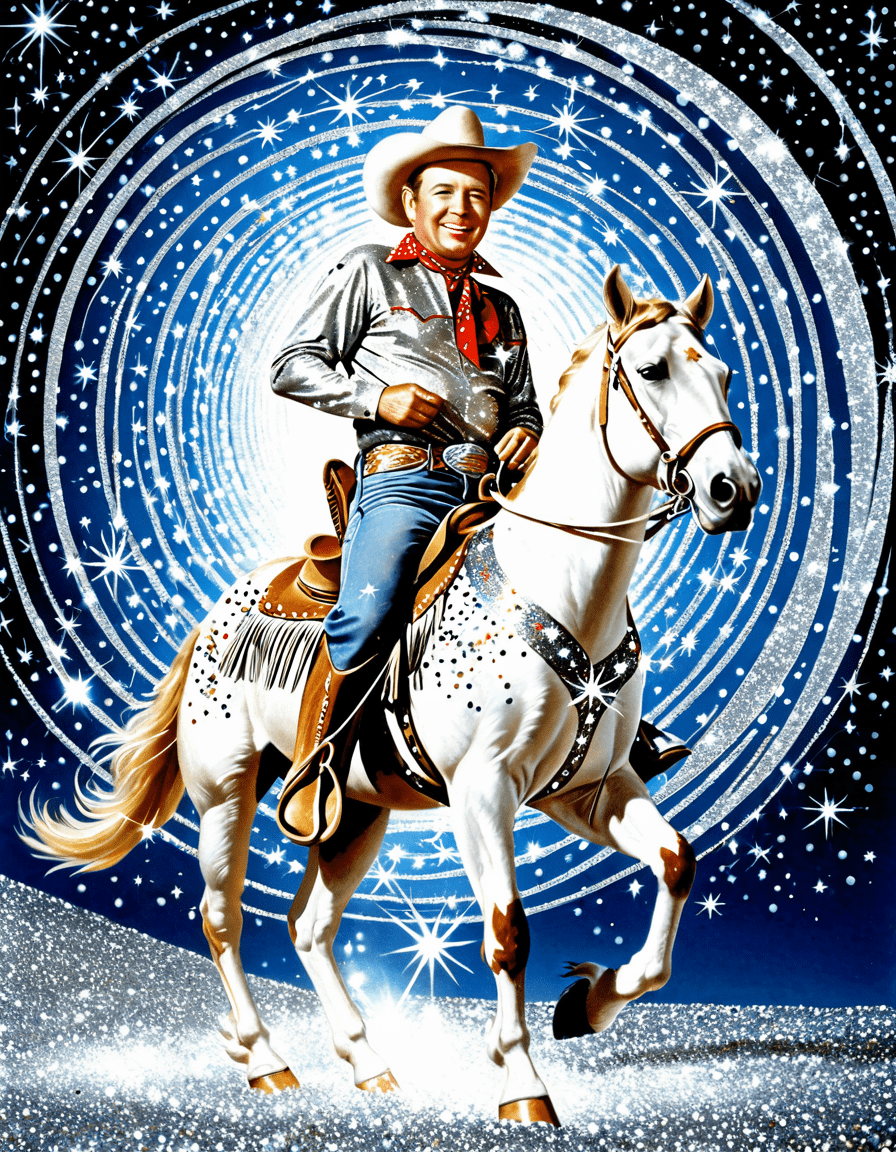
Roy Rogers’ image was built on perfection: the clean-shaven face, the spotless cowboy code, the harmonious marriage. But was any man truly that noble—or was it all part of a carefully crafted illusion?
The Roy Rogers brand depended on purity. No drinking, no smoking, no compromising. He never shot to kill. His gun was for defense, not vengeance. These weren’t just character traits—they were marketing tools in a rapidly changing America.
Yet real life is messier. His businesses failed. His children faced struggles. His views on music and culture aged poorly. The man didn’t fall from grace—but the myth may have been unsustainable.
Still, that’s not a condemnation. It’s a reminder that icons are human. And sometimes, the most powerful legacies are the ones that challenge us to be better—even if the person behind them was just trying their best.
Separating the Saddle Stories from the Man in the Real World
Roy Rogers didn’t invent the singing cowboy, but he perfected the archetype. He gave audiences what they wanted: a hero who won with kindness, loved his horse more than gold, and always said his prayers.
But behind the scenes, he was making shrewd deals, managing a media empire, and navigating fame in an era before PR crisis teams. He wasn’t naive—he was calculated in his goodness.
His legacy isn’t about flawlessness. It’s about consistency. In a world full of contradictions, Roy Rogers chose to stand for something—even if it meant turning down roles, building restaurants, or preaching from his Cadillac. That’s not corny. That’s commitment.
Why Roy Rogers Still Matters in 2026—And Why His Legacy Is Ripe for Reexamination
In 2026, Roy Rogers may seem like a relic—a black-and-white cowboy from a bygone era. But his influence lingers in unexpected places: from Ma smart plan Programs promoting moral media for kids, to modern Western revivals like Yellowstone Or Poker Face’s cast of grit-and-grace characters.
We’re rethinking old icons—not to tear them down, but to understand what they offered in their time. Roy stood for family, faith, and responsibility. Are those values outdated? Or desperately needed?
With AI-generated stars and hyper-edited influencers, maybe the world needs a dose of sincerity. Could the King of the Cowboys be the antidote to digital phoniness?
From American Values to Modern Media Revival: The New Cowboy Code?
The “Cowboy Code” Roy promoted—ten rules like “Do what’s right,” “Finish what you start,” “Respect others”—is being revived in schools and youth programs. Organizations use it to teach ethics, not just nostalgia.
Even Jackie Earle haley, known for darker roles, has praised Rogers’ ability to portray strength without cruelty. In a culture obsessed with antiheroes, maybe we need a hero who doesn’t kill—and still wins.
Could there be a Roy Rogers reboot? A biopic? A streaming series that dares to show the man behind the myth? With the right tone—honest, warm, and nuanced—it might just ride high in the ratings.
Beyond the Silver Saddle—How One Man Mounted the American Imagination
Roy Rogers didn’t just ride into town—he rode into our cultural memory. He wasn’t the best actor, the fastest draw, or even the most authentic rancher. But he sold a dream of decency in a chaotic world.
From Ohio poverty to Hollywood immortality, he built a legacy not on grit alone, but on grace, melody, and a deep belief in doing right. His life was a performance—but also a promise.
Today, as we question heroes and rebuild trust, maybe it’s time to rewatch an old Roy Rogers film, hum Happy Trails, and ask: What if being good was the bravest thing a hero could do?
Roy Rogers: More Than Just a Cowboy Hat
From Singing Cowboy to Media Mogul
You know Roy Rogers as the clean-cut, horseback-riding hero who never shot first—well, except maybe in our hearts. But did you know this King of the Cowboys started life as Leonard Slye? That’s right, before he became a household name, he was just a farm kid from Ohio with a guitar and a dream. His rise to fame was anything but overnight; he first found success as part of the Sons of the Pioneers, crooning western tunes that still echo today. It wasn’t until Republic Pictures rebranded him as Roy Rogers that the legend truly galloped into action. And speaking of reinvention, imagine pivoting from music to leading man—that’s the kind of bold move even today’s stars might envy. While modern franchises like Saw X Dominate horror (check out its chilling Saw x release date For gore fans), Roy built an empire on family-friendly gunfights and moral clarity.
Trigger, Dale, and the Real-Life Ranch Life
Of course, no Roy Rogers story is complete without mentioning Trigger, his golden palomino so famous they called him “the smartest horse in the movies.” The horse had his own dressing room and even chewed gum—yes, really! And then there was Dale Evans, his real-life and on-screen partner, whose banjo picking and sharp wit balanced Roy’s stoic charm. Together, they weren’t just a duo in Westerns; they shaped mid-20th century family values through TV, radio, and their very own theme park. It’s kind of like how the Cast Of poker face tv series Brings quirky, old-school detective vibes to modern streaming—but Roy and Dale did it live, every single day. They even trademarked their names and images early on, which was pretty savvy for the 1950s—think action figures, lunchboxes, and even a line of jeans.
The Legacy That Still Rides On
Believe it or not, Roy Rogers didn’t just retire into the sunset—his influence still crops up in pop culture today. Long after his final film, the Roy Rogers Restaurants chain kept his name sizzling on grills across America. While that cowboy-era fast food might not top modern menus, the nostalgia’s real. Fans young and old still dig into that legacy, just like movie buffs tracking down the Saw x release date For the latest shocker. And though the Cast of poker face tv series Delivers clever whodunits with a retro twist, Roy was doing feel-good, episodic storytelling decades earlier—on horseback. Roy Rogers wasn’t just playing a hero; he became one, off-screen and on, proving that sincerity and a good hat could build a kingdom in Hollywood.
This article was produced with AI assistance. How Motion Picture Magazine uses AI.
Motion Picture Magazine writes for Motion Picture Magazine — movies, celebrity gossip, entertainment news, style and best shows.