There’s a quiet revolution happening on screen-not with explosions or algorithmic sequels, but in the stillness of an octopus’s gaze, the knowing tilt of a dog’s head, or the deliberate gesture of a primate communicating across species. These are the moments when cinema reminds us that intelligence isn’t measured solely in words, but in connection, curiosity, and the courage to reach across the divide between human and animal.
And lately, Films That center on animals of Remarkable intelligence Have begun to dominate not just box office conversations, but our emotional landscapes. They aren’t just charming diversions-they’re mirrors, reflecting back our own hopes, griefs, and need for belonging through the eyes of creatures we too often underestimate.
A Deep Dive into Cinematic Tales of Exceptional Animal Intelligence
It’s no accident that some of the most moving Films Of the past decade have starred non-human leads. From a stray dog navigating the ruins of a post-collapse city to a cephalopod unraveling the mysteries of human emotion, these stories tap into something primal: our longing to believe that we’re not alone in our capacity to feel, to think, to love.
What makes these portrayals so compelling isn’t just the technical wizardry behind animatronics or CGI. It’s the Authenticity of emotion-the way a single blink can carry grief, or how a creature’s choice to stay, rather than flee, speaks volumes about loyalty and trust. These aren’t trained responses; they’re narrative decisions that elevate instinct into intention.
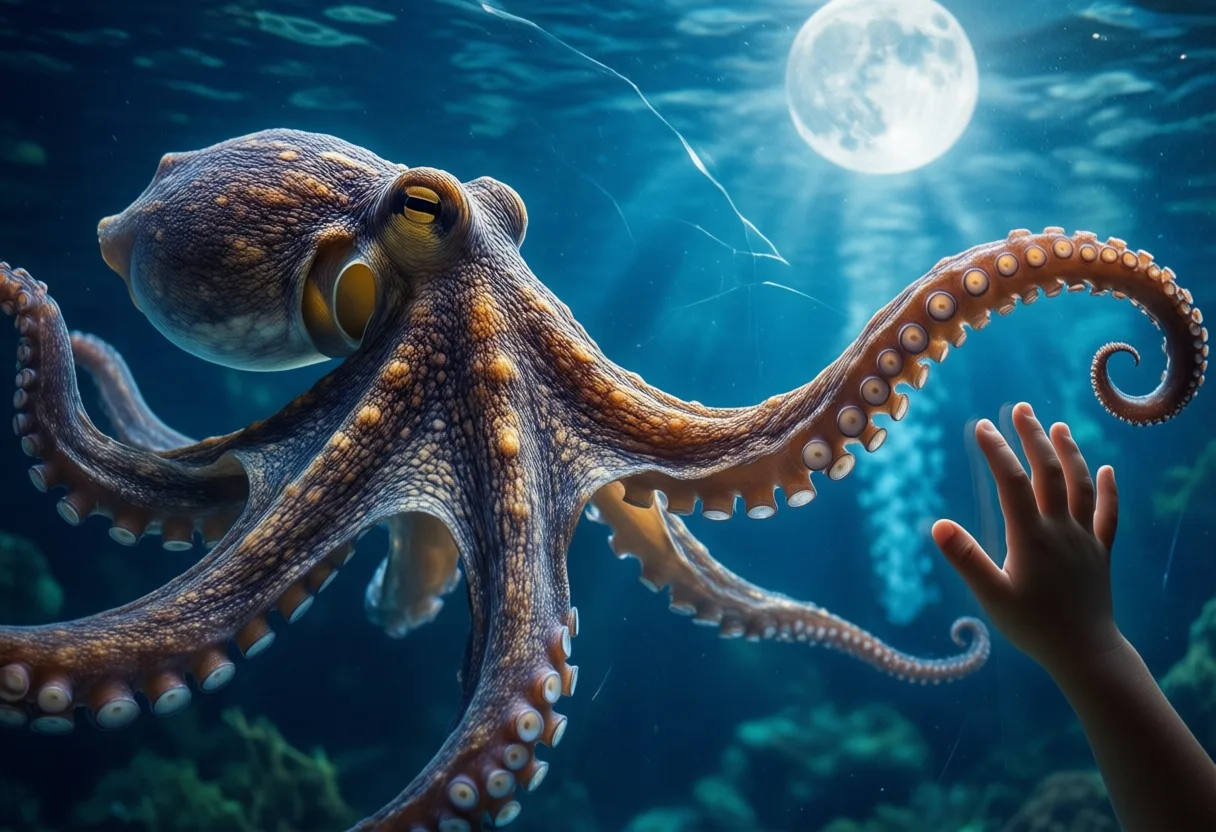
Consider the growing trend of animal protagonists whose intelligence isn’t just a plot device, but the emotional engine of the story. In one such film, a solitary sea creature forms an unlikely bond with a widowed aquarium keeper, using problem-solving not for spectacle, but for connection. The result? A story that lingers long after the final frame. Explore more in this thoughtful take on Remarkably Bright Creatures.
What Sets Stories of Brilliant Animals Apart in Modern Cinema?
Not all animal stories are created equal. While slapstick pets and cartoonish sidekicks still have their place, there’s a new wave of Films That treat animal intelligence with the same narrative seriousness as human drama. These aren’t tales of pets doing tricks-they’re explorations of Cognitive depth, emotional nuance, and moral agency.
What sets them apart is their refusal to anthropomorphize recklessly. Instead of giving animals human voices or exaggerated expressions, these films trust subtlety. A flicker of the eyes, a change in posture, the timing of a pause-these become the language of thought. The audience is invited not to laugh, but to Witness.
This shift reflects a broader cultural awakening. As science continues to Reveal The complex inner lives of animals-from crows crafting tools to elephants mourning their dead-filmmakers are responding with stories that honor that complexity. The result is cinema that feels not only entertaining, but Ethically engaged.

The Emotional Core Behind Films Featuring Highly Intelligent Creatures
At their best, these films aren’t really about animals at all. They’re about Loneliness, healing, and the fragile bridges we build to overcome isolation. The intelligent creature on screen often serves as a catalyst-a mirror that reflects the emotional state of the human characters, or a guide that leads them back to themselves.
Think of the widow who finds purpose in decoding an octopus’s behavior, or the child who learns empathy through a parrot’s mimicry of lost conversations. The animal isn’t just smart-they’re Therapeutic, not because they fix people, but because they offer a different kind of understanding. One rooted in presence, not words.
And that’s where the true power lies. These stories don’t ask us to believe that animals think exactly like us. They ask us to believe that they think At all-and that their thoughts matter. In doing so, they expand our definition of consciousness, compassion, and kinship.
Why Audiences Keep Returning to Heartfelt Animal Narratives
Let’s be honest: we’re drawn to animals on screen. But our repeated return to these stories suggests something deeper than mere cuteness. There’s a Visceral comfort In watching a creature navigate the world with instinct, intelligence, and integrity-especially in times when human behavior feels chaotic or disheartening.
These films offer a kind of emotional clarity. Animals don’t lie, perform, or manipulate (at least not in the human sense). Their actions feel True, which makes their relationships feel earned. When a dog chooses to stay, we believe it. When a whale sings across oceans, we feel it.
They also provide a rare space for Quiet storytelling In an age of sensory overload. No need for jump cuts or viral one-liners-just a gaze, a gesture, a moment of mutual recognition. It’s cinema at its most elemental, and audiences are responding with both tears and ticket sales.
From Whimsy to Wisdom: The Evolution of Animal Protagonists on Screen
Gone are the days when animal characters existed solely for comic relief or moral lessons wrapped in fur. The journey from Lassie To Project Nim To recent indie darlings shows a clear evolution: from symbols to subjects, from sidekicks to Full-fledged protagonists with interior lives.
Early films often used animals as blank slates-projections of human virtue or vice. But today’s narratives grant them agency. They make choices, experience conflict, and even challenge human assumptions. A chimpanzee might reject a lab experiment not out of instinct, but principle. A dolphin might refuse to perform, not from disobedience, but grief.
This shift reflects both advances in animal behavior science and a growing ethical awareness in storytelling. We’re no longer content to watch animals Act; we want to understand how they Think. And filmmakers are rising to the challenge with scripts that treat animal minds as worthy of serious exploration.
How Storytelling Elevates the Inner Lives of Non-Human Characters
Great storytelling doesn’t require speech-it requires Intention. And that’s where modern films about intelligent animals shine: in their ability to convey thought without dialogue. Through pacing, music, framing, and performance (both human and animal), they construct a narrative logic that feels internal, not imposed.
A lingering shot on a crow arranging objects isn’t just visually striking-it suggests deliberation. A sequence where a dog avoids a certain street corner isn’t just behavior; it’s memory. These moments are built not on exposition, but on implication, trusting the audience to Feel The mind behind the eyes.
Even the sound design plays a role. The absence of a score can heighten the realism, while subtle shifts in ambient noise-waves, wind, distant voices-can mirror an animal’s heightened perception. It’s a kind of Sensory empathy, inviting us to experience the world as they might.
Beyond Tricks and Training: Portraying Genuine Animal Insight
Let’s dispel a myth: intelligence on screen isn’t about how many commands a dog can follow or how neatly a parrot recites poetry. True insight is shown in Problem-solving, emotional awareness, and social complexity-and the best films capture these in ways that feel authentic, not staged.
Consider a scene where an octopus unscrews a jar not for a treat, but to explore the contents. Or a horse that senses its rider’s anxiety and alters its gait to soothe them. These aren’t trained behaviors; they’re narrative choices that suggest Understanding-a bridge between species built on observation and response.
It’s a delicate balance. Too much realism risks losing the audience; too much fantasy risks disrespecting the animal’s nature. But when done right, these portrayals feel revelatory-like we’ve been granted access to a hidden world, one that’s been there all along, just beyond our notice.
When Animals Take Center Stage, Emotion Follows
There’s a reason the most talked-about scenes in these films often involve silence. A dog waiting at a train station. A gorilla gently touching a child’s hand through glass. An elephant standing vigil over a fallen companion. In these moments, Emotion transcends species.
When animals lead the story, the stakes feel different. We’re not just rooting for a character to succeed-we’re witnessing a form of courage that doesn’t seek recognition. Their loyalty isn’t performative. Their love isn’t conditional. And that purity resonates in a world that often feels anything but pure.
These films remind us that connection doesn’t require language. Sometimes, all it takes is presence. And in a culture obsessed with noise, that quiet fidelity is nothing short of revolutionary.
The Quiet Power of Connection in Creature-Centric Films
In the end, it’s not the intelligence alone that moves us-it’s what that intelligence enables: Connection. The ability to reach across the species divide and say, in whatever way possible, I see you.
These films thrive in the spaces between words. A shared meal. A synchronized movement. A glance held a second too long. These are the moments that build trust, not through grand gestures, but through consistency, patience, and mutual respect.
And perhaps that’s why they resonate so deeply. In a world where relationships can feel transactional or fleeting, the bond between human and animal offers a model of something simpler, truer. Not perfect-but present. Not loud-but lasting.
Finding Humanity Through the Eyes of Remarkable Beings
Paradoxically, it’s often through non-human characters that we rediscover our own humanity. When we watch an animal display empathy, resilience, or self-sacrifice, we’re not just admiring them-we’re Measuring ourselves Against their example.
What would it mean to love as unconditionally as a dog? To grieve as openly as an elephant? To problem-solve with the curiosity of a raven? These films don’t just entertain-they Challenge, inviting us to expand our circle of compassion.
They ask us to consider: if a creature without language, without culture, without our so-called “advancements” can demonstrate such depth, what does that say about us? And more importantly, what might we learn?
Why These Films Resonate Long After the Credits Roll
The best films stay with you. Not because of their plot twists or visual effects, but because they alter something inside. And stories of remarkably bright creatures do this with particular potency-They shift our perception, not just of animals, but of connection itself.
You might find yourself watching your own pet differently, wondering what they’re thinking when they stare out the window or nudge your hand at just the right moment. You might feel a new respect for the crow on the fence or the squirrel navigating city streets.
These films don’t offer easy answers. But they do offer something rarer: a sense of wonder. A reminder that intelligence comes in many forms, and that the most profound stories are sometimes told without a single word. For a moving exploration of this theme, don’t miss Remarkably Bright Creatures.
| Aspect | Detail |
|---|---|
| Visual Effects | Mix of practical effects and subtle CGI |
| Setting | Pacific Northwest coastal towns as emotional mirrors |
| Sound Design | Low-frequency underwater tones in key scenes |
| Scientific Accuracy | Octopus can recognize individual humans |
| Animal Intelligence | Shown through problem-solving and emotional connection |
| Narrative Approach | Facts woven into casual dialogue, not dramatized |
A Closer Look at the Film’s Reception
Fan Reactions and Hidden Details
While Remarkably Bright Creatures Is cherished for its emotional depth, movie reviews have quietly celebrated a few lesser-known aspects of its adaptation. The film's central octopus character was brought to life using a mix of practical effects and subtle CGI, a choice that surprised many viewers who assumed advanced animation powered the entire performance. Critics noted how this blend added a tactile realism, making the creature’s interactions with human characters feel grounded and sincere.
A recurring point in reviews is the film’s use of Pacific Northwest coastal towns as more than just backdrop-they become silent storytellers. The weathered docks, fog-draped marinas, and quiet tide pools mirror the protagonist’s internal journey, a detail several reviewers mentioned as an understated strength. One critic even pointed out that the sound design subtly incorporates low-frequency underwater tones during key emotional scenes, creating an almost subconscious sense of immersion.
Though not widely advertised, the screenplay includes small nods to marine biology facts-like an octopus’s ability to recognize individual humans-which aren’t dramatized but woven into casual dialogue. These touches earned quiet praise from science-minded audiences who appreciated accuracy over sensationalism. Overall, the film’s charm lies as much in these thoughtful details as in its heartfelt plot, making it a standout for those who enjoy stories where feeling and fact swim in tandem.
Frequently Asked Questions
What makes the animal portrayals in Remarkably Bright Creatures feel authentic?
The film uses a mix of practical effects and subtle CGI to bring the octopus to life, creating a tactile realism. This blend makes the creature’s interactions with humans feel grounded and sincere.
How does the film use its setting to enhance the story?
The Pacific Northwest coastal towns serve as more than backdrop-they mirror the protagonist’s internal journey. Weathered docks, fog-draped marinas, and quiet tide pools reflect emotional themes.
What role does sound design play in the film’s emotional impact?
The sound design incorporates low-frequency underwater tones during key emotional scenes. These tones create an almost subconscious sense of immersion for the viewer.
Are there any real marine biology facts included in the film?
Yes, the screenplay includes accurate details such as an octopus’s ability to recognize individual humans. These facts are woven into casual dialogue rather than dramatized.
This article was produced with AI assistance. How Motion Picture Magazine uses AI.
Cassiel examines celebrity fashion as narrative-how red carpet moments, brand partnerships, and personal aesthetics influence public perception. They spotlight emerging designers and the visual language of fame across film and music icons.