
A Psychological Pressure Cooker Unfolds on Screen
There’s a special kind of horror that doesn’t need blood or jump scares-just a room full of people, a few unspoken tensions, and one invitation too many. The Invite Builds its dread like steam in a sealed pot, quietly, steadily, until you’re not sure if you’re watching a Dinner party Or a slow-motion breakdown. This is the kind of film that makes you check your own pulse halfway through, wondering when exactly your shoulders crept up to your ears.
What starts as a polite gathering soon becomes a masterclass in social unease. Every smile feels rehearsed, every laugh a half-beat too long. The film leans into the idea that The most dangerous moments are the ones we mistake for normal. Conversations loop like scratched records, and characters orbit each other with the cautious energy of strangers in an elevator-except the doors won’t open.
You’ve been there-maybe not in this exact situation, but close. That cousin’s birthday where the ex showed up. The work event where someone said Just a little too much. The Invite Taps into those universal cringes and stretches them into something darker. It’s not about what’s said, but what’s Left hanging in the air, thick enough to choke on. For those who’ve ever faked a phone call to escape a room, this one will feel eerily familiar. The Invite
Silence Speaks Volumes in This Claustrophobic Narrative
The real power of The Invite Isn’t in its dialogue-it’s in the spaces between. Whole scenes pass with barely a word, yet the tension mounts like a held breath. You could hear a napkin drop-and you’d probably flinch when it did. The film treats silence not as emptiness, but as a presence, something heavy and watchful.
Characters retreat into themselves, their eyes darting, their hands fidgeting with silverware or glassware like they’re searching for escape routes. The camera lingers just a second too long on a face, making you wonder: Are they thinking about leaving? Or are they planning something worse? There’s no frantic music, no flashing lights-just the quiet hum of a house that suddenly feels like a cage.
It’s remarkable how much unease can be built from stillness. Most Thrillers Rely on motion-chases, cuts, chaos. But this one? It’s like watching a spider sit in the center of a web, waiting. You know something’s coming, but the waiting is the point. The silence isn’t empty-it’s Loaded with implication, and every viewer fills it with their own fears.
Performances That Blur the Line Between Real and Acted
The cast of The Invite Doesn’t so much perform as Inhabit. You don’t watch them act-you watch them Unravel. There’s no Showboating, no grand monologues. Instead, the actors communicate through micro-expressions: a twitch at the corner of the mouth, a blink held a fraction too long, a laugh that doesn’t reach the eyes.
One moment, a character is passing the bread; the next, their entire demeanor shifts like a cloud passing over the sun. You can’t pinpoint why, but you Feel It. That’s the genius of the performances-they make psychological unraveling look casual, almost mundane. And that mundanity is what makes it so unsettling.
There’s no clear villain, no hero. Just people-flawed, nervous, trying to keep it together. You’ll catch yourself wondering: Is that person lying? Or am I just Projecting? The line between performance and reality blurs until you’re not sure what’s scripted and what’s instinct. It’s acting so subtle, it feels like eavesdropping.
The Invitation as a Catalyst for Unraveling Minds
An invitation should be a simple thing-a piece of paper, a text, a verbal ask. But in The Invite, it’s a detonator. The moment the guests arrive, something shifts. The air changes. Politeness becomes a performance, and every gesture feels coded.
It’s not the food, the setting, or even the host that’s off-it’s the Expectation Of normalcy in a situation that’s anything but. The invitation promised connection, but what it delivers is exposure. Old wounds, buried tensions, unspoken rivalries-all of it bubbles up under the pressure of forced civility.
- One guest brings a bottle of wine and a grudge.
- Another smiles through clenched teeth, hiding panic behind small talk.
- A third watches the exits like an animal scanning for traps.
The invitation wasn’t just a request to attend-it was a trapdoor disguised as a welcome mat. And once you’re inside, there’s no graceful way out.
Cinematography That Traps the Viewer in the Room
From the first frame, the camera behaves like an unwilling guest-present, observant, but never quite welcome. The shots are tight, often framed through doorways or just over shoulders, making you feel like you’re eavesdropping from the next room. You’re not watching the story-you’re Trapped in it.
Walls seem to close in as the night wears on. The house, once elegant, becomes a maze of long hallways and dim corners. Even wide shots feel claustrophobic, as if the camera itself is afraid to pull back too far. There’s no escape through scenery-just rooms, more rooms, and the growing sense that You’re not supposed to be here.
Lighting plays a quiet but crucial role. Shadows stretch like fingers Across faces, and the warm glow of chandeliers starts to feel less inviting, more like interrogation lamps. The cinematography doesn’t scream for attention-it Whispers, pulling you deeper with every frame. You don’t realize you’ve stopped breathing until the screen cuts to black.

Sound Design as a Weapon of Dread
In The Invite, sound isn’t just background-it’s a slow drip of psychological torture. The clink of a fork. The hum of a refrigerator. The creak of a floorboard down the hall. Each noise is amplified, isolated, turned into a potential threat. It’s not what you hear, but How You hear it.
There’s no score to guide your emotions. No swelling strings to tell you when to be afraid. Instead, the silence is punctuated by everyday sounds that start to feel sinister. A door closing too softly. A breath held too long. The rustle of a coat being put on-Too early. You begin to listen not for dialogue, but for the absence of it.
The film weaponizes the familiar. That’s what makes it so effective. It takes the sounds of home-the place where you’re supposed to feel safe-and turns them into signals of danger. You’ll find yourself leaning in, ears straining, wondering: Did that glass just rattle… or was it my imagination?
Misreading the Mood: When Politeness Masks Panic
One of the film’s sharpest insights is how easily we misread social cues-especially when we Want To believe everything’s fine. A nervous laugh is mistaken for humor. A shaky hand is chalked up to wine. A sudden exit is politely ignored. The Invite Shows how Politeness can be the most dangerous form of denial.
We’ve all done it. Stayed too long at a party. Nodded along to a conversation that made our skin crawl. Smiled when we wanted to scream. The film taps into that universal instinct to Keep the peace, even when the peace is a lie. And in doing so, it makes us complicit.
The characters aren’t just lying to each other-they’re lying to themselves. Each one chooses the comfortable fiction over the uncomfortable truth. But the longer they stay, the thinner the fiction becomes. And when it finally tears? There’s no polite way to clean up what spills out.
Context Is Everything: Setting the Stage Without Saying a Word
Nothing in The Invite Is explained outright. No backstory dumps. No expositional dialogue. Instead, the film trusts you to piece things together from glances, gestures, and the occasional loaded pause. A photo on the mantel. A name mentioned once, too quietly. A chair left empty at the table.
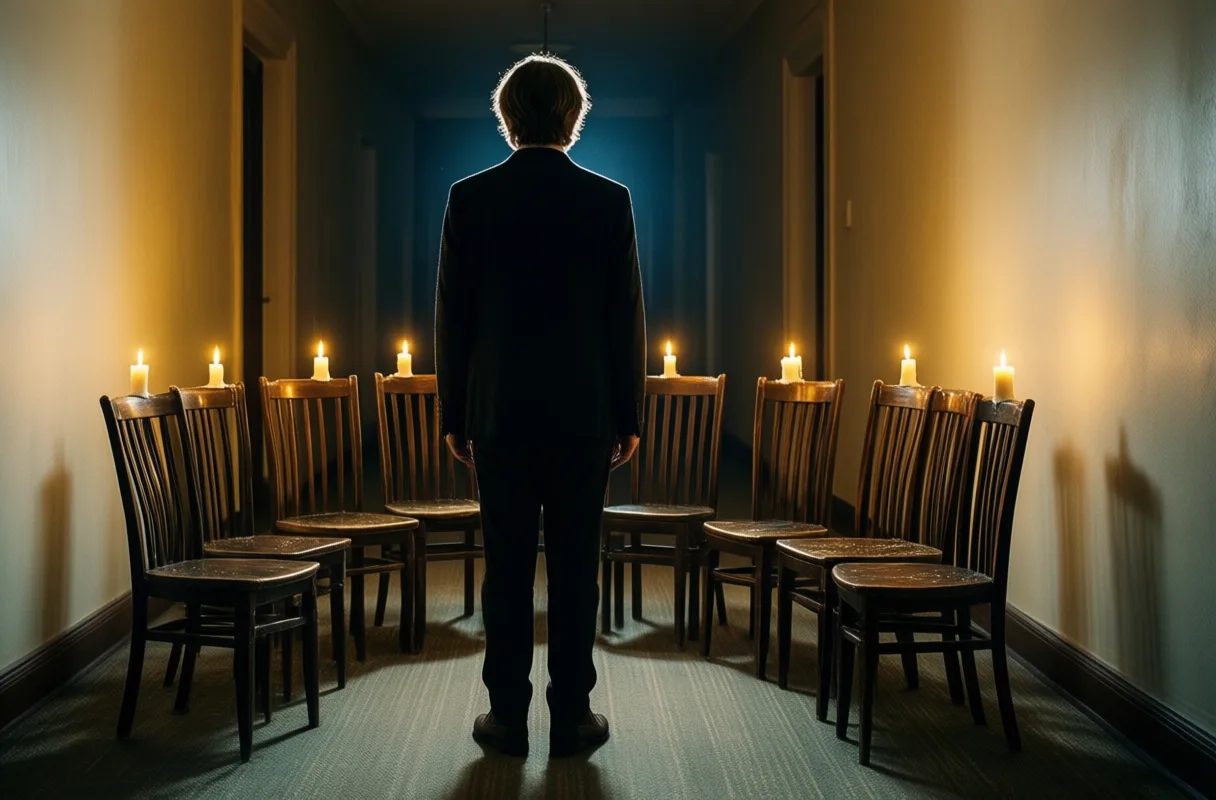
The house itself tells a story. The decor is elegant but worn, like a family trying to maintain appearances. The seating arrangement feels deliberate-someone is isolated, someone is too close. Even the menu feels symbolic, each dish a quiet nod to past conflicts. Nothing is accidental.
You’re not handed context-you Earn It. And the more you pay attention, the more the layers reveal themselves. It’s a film that rewards patience and punishes distraction. Miss a look, a line, a shift in tone-and you might miss the key to the whole puzzle. The Invite
What the Critics Agree On-And Where They Clash
Movie reviews Of the invite consistently praise its ability to generate tension without relying on traditional horror tropes. Most agree that the film’s strength lies in its restraint-its refusal to explain, to escalate, to give easy answers. The slow burn is not a flaw; it’s the point.
Where critics diverge is in their interpretation of the ending. Some see it as a devastating commentary on human denial. Others find it unsatisfying, craving a clearer resolution. A few argue the ambiguity is too heavy-handed, while others call it brave.
Still, one thing is clear: no one walks away indifferent. Whether you love it or leave frustrated, The Invite Sticks with you. It’s the kind of film that sparks debate in parking lots and group chats. And in an age of disposable content, that’s no small feat.
Takeaways for Fans of Slow-Burn Suspense
If you love films that make you lean forward instead of flinch backward, The Invite Is essential viewing. It’s not about shocks-it’s about The slow creep of discomfort, the kind that settles in your bones and stays long after the credits roll.
Pay attention to the details. Rewatch with friends. Debate the meanings. This is a film built for conversation, not passive viewing. And if you find yourself checking the locks after watching? Well, that’s probably by design.
For fans of The Invitation (2015), Coherence, or Funny Games, this one fits right in. It’s proof that the most terrifying thing in the world isn’t a monster under the bed-it’s the person sitting across from you, smiling, saying everything’s fine.
Final Impressions: A Masterclass in Controlled Unraveling
The Invite Doesn’t explode-it implodes. Quietly. Irreversibly. It’s a film that understands the power of restraint, the horror of hesitation, and the danger of staying too long in a room where the air has gone stale.
It won’t satisfy those craving action or clear answers. But for those who appreciate psychological depth, nuanced performances, and filmmaking that trusts its audience? This is A slow burn worth the wait.
In the end, the most haunting question isn’t What happened-it’s Why didn’t anyone leave? And as the screen fades to black, you might find yourself wondering: Would I have? The Invite
A Closer Look at The Invite And Its Reception
Hidden Details That Critics Picked Up On
From the very first scene, The Invite Sets a tone that’s equal parts elegant and unnerving. One subtle touch that several reviewers highlighted was the use of mirror reflections throughout the film-characters are often seen only in glass, mirrors, or darkened windows, reinforcing the theme of hidden identities and fractured truths. The dinner table itself, where most of the tension unfolds, was designed with asymmetrical seating, subtly unbalancing the visual frame and mirroring the psychological instability of the guests.
A number of critics pointed out how the film’s score plays a quiet but crucial role in building suspense. Instead of dramatic swells, the soundtrack leans on near-silent moments punctuated by faint, off-kilter sounds-a creaking chair, a delayed laugh, a glass placed down a fraction too hard. These micro-sounds, almost imperceptible at first, accumulate to create a sense of unease that lingers long after scenes end. Some viewers even reported replaying certain sequences just to catch what they missed in the audio.
What makes The Invite Stand out in the crowded thriller genre is how little it relies on exposition. There are no flashbacks spelling out character backstories, no dramatic monologues revealing motives. Instead, the film trusts the audience to piece things together through glances, silences, and the occasional loaded comment. Reviewers praised this restraint, noting that the ambiguity isn’t frustrating-it’s intentional, making the final act all the more impactful when the pieces finally click. It’s a film that rewards attention, where the real story often lives in what’s left unsaid.
Frequently Asked Questions
What kind of thriller is The Invite?
The Invite is a tense psychological thriller that builds dread through social unease, silence, and unspoken tensions rather than jump scares or violence.
How do the performances contribute to the film’s tension?
The cast delivers subtle, nuanced performances using micro-expressions and restrained behavior, making the psychological unraveling feel natural and deeply unsettling.
What role does sound play in the film?
Sound design amplifies everyday noises like a creaking floorboard or clinking fork, turning familiar sounds into sources of dread and psychological tension.
Why do critics disagree about the film’s ending?
Critics are divided on the ending-some find its ambiguity a brave commentary on denial, while others see it as unsatisfying due to the lack of clear resolution.
This article was produced with AI assistance. How Motion Picture Magazine uses AI.
Rowan explores how streaming platforms shape viewing habits and global storytelling, blending data with cultural insight. They focus on the rise of niche genres, international hits, and the evolving relationship between audiences and algorithms.