The dust hasn’t settled on the outback, and neither has the myth of the lone gunman riding into chaos with nothing but a code and a rifle. Quigley Down Under Isn’t just another six-shooter saga-it’s a sun-bleached, wind-scarred reimagining of what a Western Can be, swapping canyons for red-earth plains and trading saloon doors for sprawling sheep stations. This is the kind of film that doesn’t just borrow from the genre-it rides it hard, then leaves it standing a little taller.
A Fresh Spin on the Classic Western Formula
Westerns Have long been America’s mirror-polished with gunsmoke and pride, reflecting ideals of justice, grit, and reinvention. But Quigley Down Under Flips the script, dropping an American sharpshooter into the Australian outback, where the rules are different, the stakes are higher, and the ground feels just as unforgiving. It’s a genre-bending move that feels less like imitation and more like evolution-a Western not bound by borders, but by ethos.
The film leans into its outsider status with quiet confidence. There’s no forced twang, no rehashing of frontier clichés. Instead, it builds tension through silence, wide-open spaces, and the unspoken tension between cultures. You don’t need a showdown at high noon to feel the weight of a stare across a sunbaked yard.
And yet, for all its differences, the soul remains familiar. The lone hero. The corrupt land baron. The moral line in the dirt. But here, those elements aren’t rehearsed-they’re Reborn. The result? A story that feels both classic and startlingly new. For a fresh take on timeless themes, check out this Fresh Movie Review Insightful Thoughts And Highlights.
Charisma and Conflict: The Heart of the Story
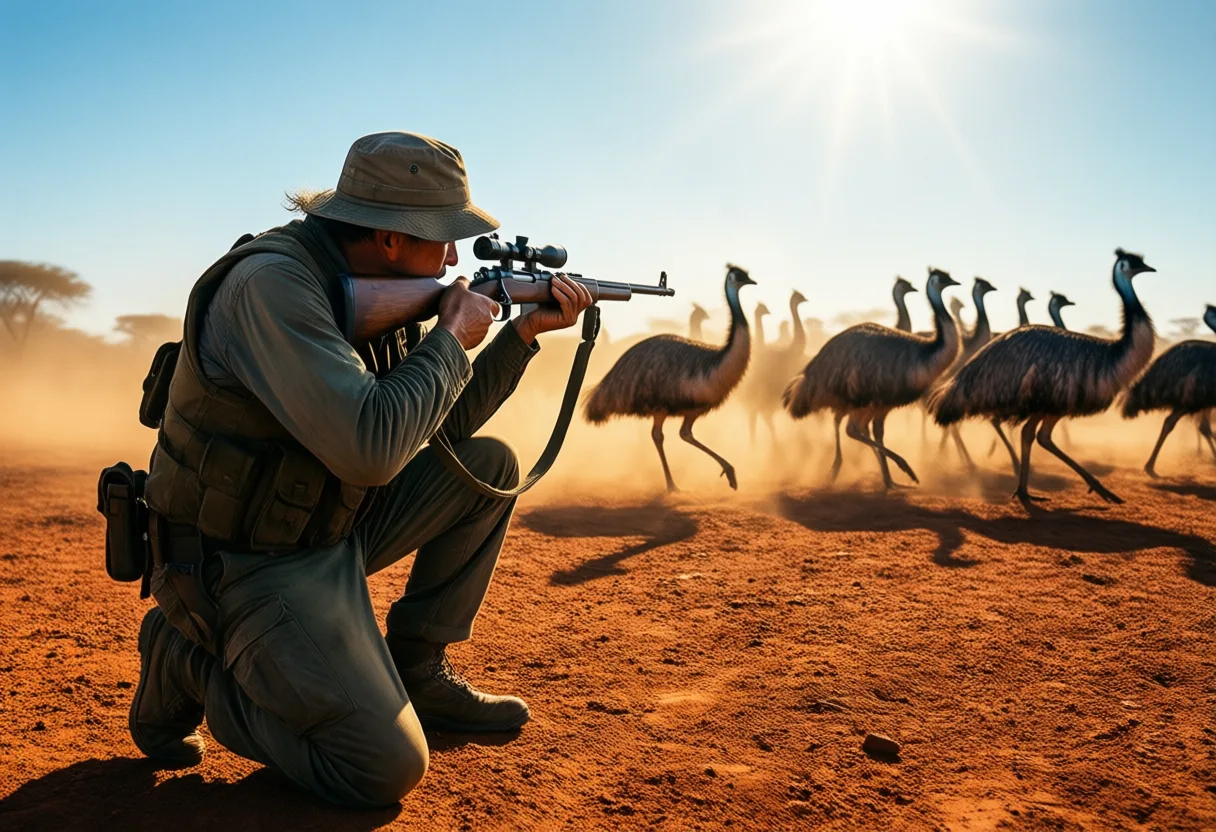
At the center of it all is Matthew Quigley, a man of few words but unshakable principles. He’s not a vigilante or a bounty hunter-he’s a marksman hired for a job, only to find that the truth of it is far uglier than he imagined. When the offer comes to shoot kangaroos for a remote station, he arrives expecting to help manage wildlife, not exterminate people.
The real drama isn’t in the bullets-it’s in the silence between them. Quigley’s quiet dignity clashes with the arrogance of Elliott Marston, a land baron whose cruelty is masked by colonial entitlement. There’s no mustache-twirling villainy here-just cold calculation dressed in fine wool and polished boots.
And then there’s Crazy Cora, a fierce, unpredictable woman who challenges Quigley at every turn. She’s not a damsel, not a sidekick-she’s a survivor with her own code, shaped by the harshness of a land that doesn’t forgive weakness. Their chemistry isn’t flashy, but it simmers-like embers waiting for wind.
Landscape as Character: Australia’s Rugged Terrain
The outback isn’t just a backdrop-it Breathes. It swallows sound, distorts time, and demands respect. The film captures this with long, patient shots of endless plains, cracked riverbeds, and skies so vast they make you feel small. It’s not scenery-it’s a presence.
You can Feel The heat shimmering off the ground, the grit in your teeth, the way the wind carries whispers across the plain. This isn’t Hollywood’s version of wilderness-it’s raw, unfiltered, and indifferent. The land doesn’t care who wins. It only watches.
- The camera lingers on dust devils dancing across the plain.
- Night falls like a weighted blanket, stars sharp as splinters.
- Even the silence feels deliberate, as if the earth itself is holding its breath.
In this world, survival isn’t about speed or strength-it’s about knowing when to move and when to stand still. And Quigley, for all his skill, learns quickly that the land won’t be tamed.
Tom Selleck’s Commanding Lead Performance
Tom Selleck doesn’t just play Quigley-he Becomes Him. With a frame built for wide-brimmed hats and a voice like gravel wrapped in velvet, he brings a quiet authority that feels earned, not performed. This isn’t the charming detective from Magnum, P.I.-this is a man who speaks with his eyes and moves with purpose.
His performance is all restraint. No grand speeches, no dramatic breakdowns. Just a steady hand, a steady gaze, and the weight of a man who knows what he’s capable of-and what he’s willing to do. When he says, “I don’t shoot women or children,” it’s not a boast-it’s a boundary.
And yet, there’s warmth beneath the stoicism. You see it in the way he listens to Cora, in the way he treats the Aboriginal man who saves his life. He’s not a legend in the making-he’s just a man trying to live by a code in a world that’s forgotten what one looks like.
The Clash Between Civilization and Cruelty
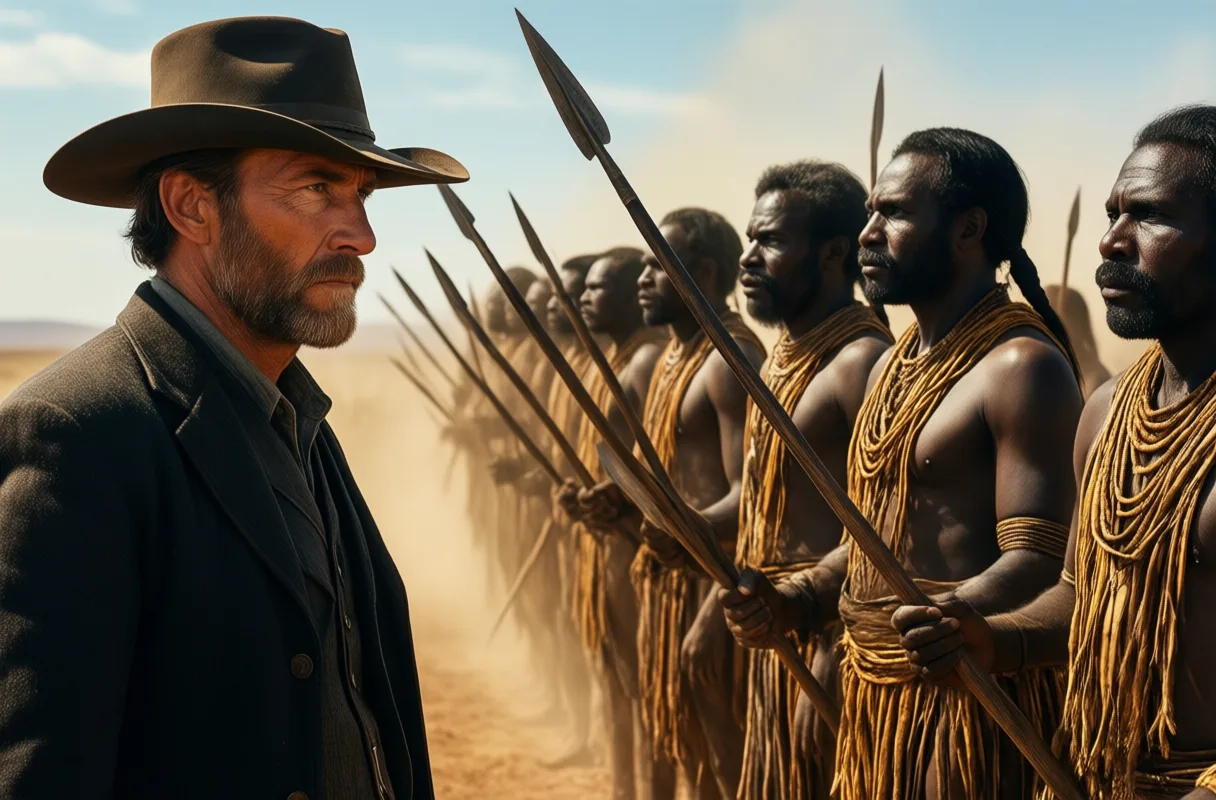
Marston’s station isn’t a frontier outpost-it’s a fortress of false order. Fences stretch across the land like scars, and the workers move with the numbness of men who’ve seen too much. This isn’t progress-it’s possession, dressed up as civilization.
Quigley’s arrival disrupts the illusion. He doesn’t bow to authority. He doesn’t flinch at threats. And when he refuses to use his rifle for slaughter, it’s not rebellion-it’s Integrity. The film doesn’t preach, but the message is clear: power without morality is just violence with better clothes.
- The Aboriginal people are not props-they are present, watchful, resilient.
- Their displacement is not backstory-it’s the wound beneath the soil.
- And Quigley’s growing awareness isn’t sudden-it’s a slow, painful awakening.
This isn’t just a story about one man’s journey-it’s about the cost of conquest, and the quiet courage of those who resist it.
Action with Purpose: Gunfights That Advance the Plot
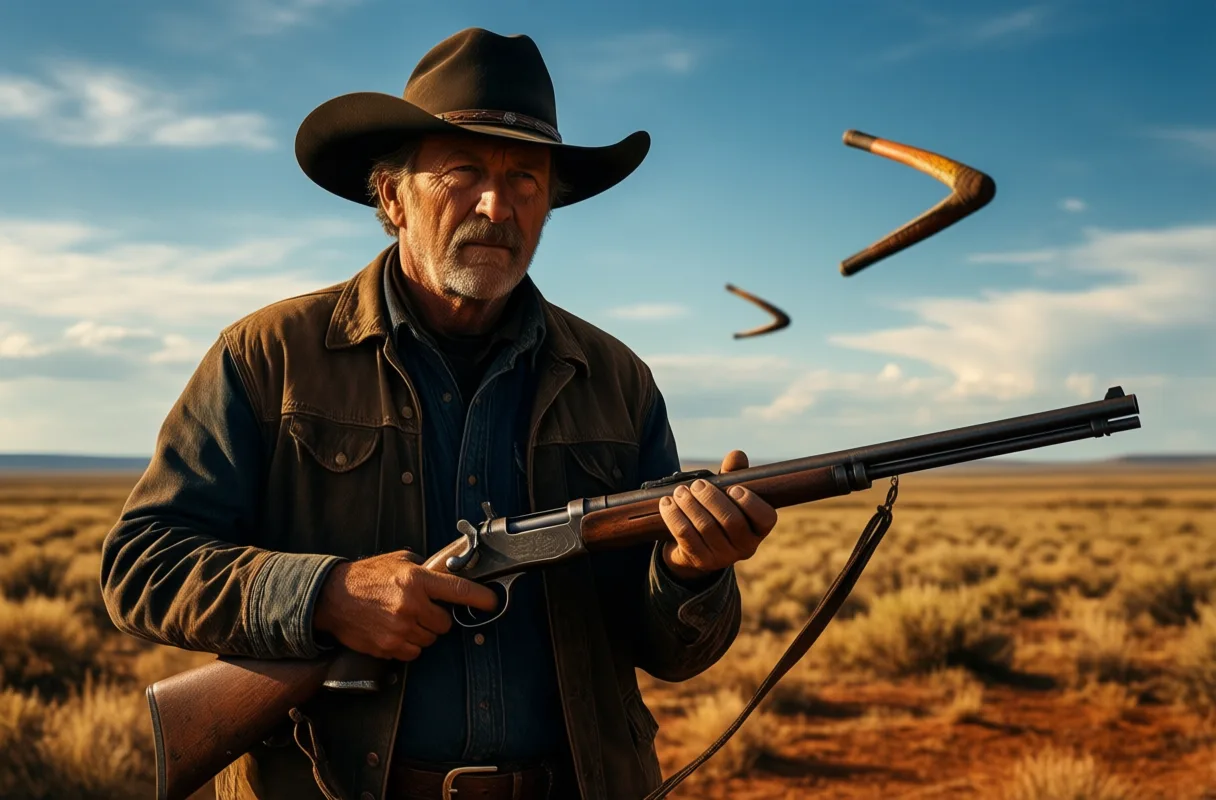
The action in Quigley Down Under Isn’t spectacle for spectacle’s sake. Every shot matters. Every bullet carries weight. When Quigley finally draws his .50-caliber Sharps rifle-a beast of a weapon with a range that defies belief-it’s not to show off. It’s to Survive.
The climactic shootout isn’t a chaotic blur-it’s a chess match played with lead and distance. Quigley uses the land, the light, the silence. He doesn’t charge in-he calculates, waits, and strikes with precision. This is gunplay with Intent, where tactics trump theatrics.
And the rifle? It’s not a toy. It’s a symbol-a tool of such power that using it carelessly would be a sin. When Quigley fires, you feel the recoil in your bones. You hear the crack split the air like thunder. And when the dust settles, you know something has changed.
A Subtle Take on Cultural Misunderstanding
What makes Quigley Down Under Linger isn’t the action-it’s the quiet moments of connection. The way Quigley learns to listen. The way he begins to see the land not as empty, but as Occupied. The Aboriginal man who saves him doesn’t speak English, but his actions speak volumes.
There’s no easy resolution, no magical understanding. But there is respect. And in a genre that often flattens cultural difference, that’s revolutionary. The film doesn’t pretend to have answers-it just asks the right questions.
Quigley doesn’t become a savior. He becomes an ally. And that’s more powerful than any heroic myth.
Why This Western Stands Apart from the Pack
So many Westerns rely on nostalgia-on the idea of a simpler time, a clearer right and wrong. Quigley Down Under Rejects that. It’s not about returning to glory-it’s about facing the cost of so-called progress. It’s about the loneliness of doing right when no one’s watching.
It doesn’t glorify the gunman-it questions him. It doesn’t romanticize the frontier-it exposes its wounds. And in Tom Selleck, it finds an unlikely icon: a man whose strength lies not in his weapon, but in his silence, his choices, his soul.
This is a Western that earns its dust. It doesn’t need to shout to be heard.
Final Shot: A Western Worth Revisiting
Years after its release, Quigley Down Under Still feels ahead of its time. It’s not the loudest Western, nor the fastest. But it’s one of the truest. A film about honor in a world that mocks it. About courage that doesn’t wear a badge. About a man who walks away not because he lost-but because he refused to become what he fought.
If you’ve only seen it once, watch it again. This time, listen to the silence. Watch the horizon. Feel the weight of every decision. Because in the end, it’s not the bullets that stay with you-it’s the man who chooses when to fire, and when to walk away.
Why Quigley Made Waves in the Western Genre
Back in 1990, audiences got a fresh twist on the classic Western with Quigley Down Under. Starring Tom Selleck in one of his most memorable roles post-Magnum, P.I., the film flipped the script by sending an American sharpshooter all the way to the Australian outback. It wasn’t just the setting that stood out-Quigley’s weapon of choice, a customized .50-caliber Sharps rifle, became almost as iconic as the man himself. That long-range power wasn’t just for show; it played a crucial role in the film’s most intense standoffs, where precision meant survival.
A Hero With a Conscience
What set Quigley apart from your typical gunslinger wasn’t just his skill, but his moral code. Hired under false pretenses, he quickly realizes the dark truth behind his employer’s mission and switches sides to protect the Aboriginal people being targeted. This moment of conscience added real depth to the character and gave the story more weight than a standard shoot-em-up. Selleck brought a quiet strength to the role, balancing rugged determination with a dry sense of humor that made Quigley feel grounded and real.
Outback Filming and Lasting Appeal
Shot entirely on location in Western Australia, the movie’s sweeping desert landscapes weren’t studio magic-they were the real deal. The rugged terrain around Woomera and the vast emptiness of the outback gave the film an authentic, almost haunting beauty that studio backlots could never replicate. Though it didn’t dominate the box office at first, Quigley Down Under Found a passionate audience on home video and cable, becoming a cult favorite. Fans still quote lines, admire the sharpshooting scenes, and appreciate how it blended classic Western themes with a unique setting and a hero who stood for something. Explore more stories, videos, and creators on Loaded.
Frequently Asked Questions
What makes Quigley Down Under different from traditional Westerns?
It reimagines the Western genre by setting the story in the Australian outback instead of the American frontier. The film emphasizes cultural tension, moral choices, and the harshness of the land, offering a fresh take on classic themes.
Who plays the lead role in Quigley Down Under?
Tom Selleck stars as Matthew Quigley, bringing quiet authority and moral integrity to the role. His performance balances restraint, purpose, and subtle warmth.
What weapon does Quigley use in the film?
Quigley uses a customized .50-caliber Sharps rifle, a powerful long-range weapon that plays a crucial role in key standoffs and symbolizes precision over spectacle.
Where was Quigley Down Under filmed?
The movie was shot entirely on location in Western Australia, including the rugged terrain around Woomera. The real outback landscapes contribute to the film’s authentic and haunting atmosphere.
This article was produced with AI assistance. How Motion Picture Magazine uses AI.
Cassiel examines celebrity fashion as narrative-how red carpet moments, brand partnerships, and personal aesthetics influence public perception. They spotlight emerging designers and the visual language of fame across film and music icons.