What Kicked Off the Live-Action Scooby-Doo Era?
Back when flip phones were cool and pop-punk ruled the radio, Hollywood looked at Saturday morning cartoons and said, “What if we made that… real?” The early 2000s were a golden age of cartoon-to-cinema conversions-think The Flintstones, Inspector Gadget, or Yogi Bear. But none carried quite the cultural weight of Scooby-Doo. For decades, he’d been the lovable coward with a voice like gravel in a blender, solving mysteries with a snack-powered engine. Turning him into a Live-action dog (well, mostly) felt both inevitable and slightly unhinged.
Enter the year 2002: a time when CGI dogs still looked suspiciously like they’d escaped from a video game demo. The idea wasn’t just to adapt the cartoon-it was to Reimagine the gang as actual teenagers, not eternal high schoolers frozen in animation limbo. This wasn’t just a movie; it was a full-on cinematic experiment. Could the goofy charm of Velma’s glasses and Shaggy’s munchies survive under studio lights and Practical effects?
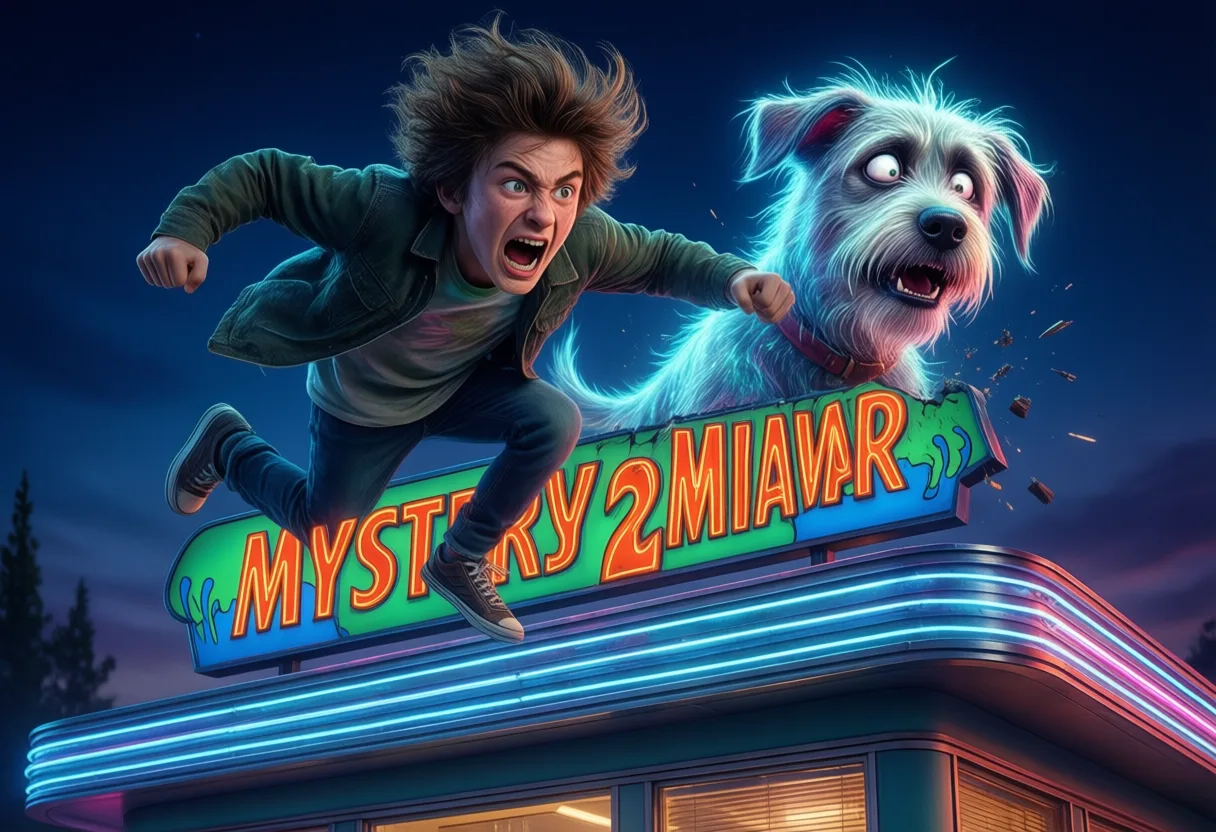
The answer came in the form of a neon-drenched, mystery-packed blockbuster that leaned hard into camp. It balanced nostalgia with modern snark, treating the source material with affection but not reverence. And while purists raised eyebrows at talking dogs and romantic subplots, audiences showed up-curious, nostalgic, and maybe just hungry for something fun. This launchpad would set the tone for a franchise that would zigzag between theaters and television over the next eight years.
The First Big-Screen Adventure: A Look at the 2002 Film
Scooby-Doo (2002) Wasn’t just a movie-it was a sensory overload wrapped in a Hawaiian shirt. Directed by Raja Gosnell, who somehow also helmed Home Alone 3 And Beverly Hills Chihuahua, the film dropped Mystery Inc. Onto Spooky Island, a theme park where the rides were real and the danger might be too. The plot? Classic Scooby fare: fake monsters, hidden motives, and enough slapstick to fill a decade of Saturday mornings.
What stood out wasn’t the story, though-it was the Bold visual style. Think Day-Glo colors, slow-mo entrances, and musical numbers that felt ripped from a teen pop tour. Freddie wore ascots like armor, Daphne rocked platform boots, Velma’s sweater vests had attitude, and Shaggy and Scooby? They were basically one organism fueled by Scooby Snacks and panic. The casting nailed the spirit: Freddie Prinze Jr., Sarah Michelle Gellar, Linda Cardellini, and Matthew Lillard slipped into their roles like well-worn sneakers.
And yes, Scooby talked. Not just grunts and “Ruh-rohs”-full sentences. It was jarring at first, like hearing your dog file a complaint with HR. But the film leaned into the absurdity, making it part of the fun. Critics were divided-some called it dumb, others called it delightfully dumb-but audiences didn’t care. It made nearly $275 million worldwide, proving there was an appetite for this kind of nostalgic reinvention. If you're craving more high-octane fun, check out some free Action movies That Will Blow Your Mind Right Now on Toonw.com.
Why the 2004 Sequel Ramped Up the Chaos
If the 2002 film was a neon vacation, Scooby-Doo 2: Monsters Unleashed (2004) Was the hangover-with extra monsters. Picking up after the gang had gone their separate ways, the sequel brought them back together when classic baddies started terrorizing Coolsville. This time, the threat wasn’t just one villain in a mask-it was a whole museum of monsters coming to life. The Shaggy & Scooby Show? More like the Shaggy & Scooby Panic Hour.
The tone doubled down on spectacle. Giant robots, underground lairs, and even a monster costume warehouse straight out of a cosplay convention gone rogue. There was more action, more jokes, and somehow even more product placement. The humor leaned heavier into self-awareness, with characters acknowledging how ridiculous their lives were. “We’ve been doing this for years,” Velma groans at one point, “and we still don’t get paid.”
But beneath the chaos, there were glimmers of growth. The friendship fractures felt real-even if resolved in about ten minutes with a heartfelt speech and a sandwich. And Matthew Lillard fully embraced his inner Shaggy, delivering lines like “Like, zoinks!” With the gravitas of Shakespeare. While the box office dipped compared to its predecessor, it still proved the formula had legs-especially when served with a side of mayhem.
From Theaters to Television: The Shift in 2009
By 2009, the big-screen magic had cooled. The theatrical Scooby era had run its course, and Warner Bros. Pivoted-hard-to television. Instead of aiming for stadium-sized spectacle, they went smaller, younger, and more serialized. The focus shifted from star power to origin stories, targeting a new generation raised on YouTube and ICarly.
This wasn’t just a budget move; it was a Strategic reset. The Live Action Scooby Doo movies in order had reached a turning point. The audience that grew up with the 2002 film was now in college, while a fresh crop of tweens needed their own version of Mystery Inc. So rather than continue the existing storyline, the studio decided to go back to the beginning-way back.
The result? A made-for-TV prequel that didn’t just reboot the gang-it reimagined them as freshmen navigating high school drama, social hierarchies, and, oh yeah, supernatural threats. It was less about saving amusement parks and more about surviving homeroom. The shift mirrored broader trends in kids’ entertainment, where serialized storytelling and character development mattered more than standalone stunts.
How the 2009 Prequel Reimagined the Gang’s Origins
Scooby-Doo! The Mystery Begins, which aired on Cartoon Network on September 13, 2009, wasn’t just a movie-it was a time machine. Set during the group’s first year at Coolsville High, it showed how five strangers became a team bound by mystery and mutual suspicion. Before the van, before the catchphrases-there was awkwardness, doubt, and a shared fear of the dark.
Freddie was a conspiracy theorist with a camcorder. Daphne was a popular girl trying to break free from her image. Velma was the brainy outsider, Shaggy the anxious loner, and Scooby? Still a stray with impeccable timing and questionable hygiene. Their first case-a haunted dorm, ghostly chants, and disappearing students-forced them together by accident. But by the end, they’d formed something real: a found family with a knack for catching frauds.
The film leaned into teen movie tropes-clique divisions, locker decorations, and that one teacher who definitely knows more than they’re letting on. But it also honored the core DNA of Scooby-Doo: teamwork, curiosity, and the belief that no monster is real unless proven otherwise. It was lighter on gags, heavier on heart, and surprisingly effective at making you root for these kids.
What Changed in the 2010 Follow-Up Television Film
A little over a year later, on October 16, 2010, Scooby-Doo! Curse of the Lake Monster Hit the airwaves, continuing the story of the newly formed Mystery Inc. This time, the gang heads to summer camp-because what says “relaxation” like cursed lakes, amphibious creatures, and mysterious disappearances?
Gone was the high school setting; in its place was Camp Little Moose, a rustic getaway that felt equal parts Friday the 13th And Wet Hot American Summer. The stakes felt higher, the scares creepier, and the friendships deeper. You could see the bonds forming-not just between humans, but between Shaggy and Scooby, whose loyalty bordered on telepathic.
The tone balanced spookiness with humor, never tipping too far into horror but still keeping younger viewers on edge. There were underwater chases, secret tunnels, and a villain whose motive was oddly relatable (real estate fraud, anyone?). Most importantly, it treated the characters like real teens-flawed, funny, and figuring things out as they went.
It also marked a shift in production values. Shot quickly and affordably, it still managed strong performances and decent effects-proof that TV budgets didn’t have to mean low ambition. For fans wondering what else is on the horizon for live-action adaptations, the upcoming Snow White Live Action Brings Magic To Life In 2026 might be worth watching-details here.
A Closer Look at the Final Live-Action Entry Before the Decade Ended
With Curse of the Lake Monster, the 2000s live-action Scooby experiment quietly closed its case file. No grand finale, no box office showdown-just a solid, satisfying wrap-up to a two-part TV saga. It wasn’t trying to compete with summer blockbusters. Instead, it found its niche: a cozy, spooky, character-driven series that felt at home on Saturday mornings.
What made it memorable wasn’t the special effects or star wattage-it was the Authenticity of the relationships. These weren’t caricatures in costumes; they were kids learning to trust each other. The humor came from personality clashes, not canned gags. Even Scooby’s CGI felt more natural, integrated into scenes without dominating them.
Looking back, this final entry was a quiet triumph of restraint. It knew its audience, respected the legacy, and delivered a story that felt both fresh and familiar. And while it didn’t spark a third installment, it left the door cracked-just enough for future generations to walk through.
Why the Live-Action Approach Evolved Over Eight Years
Between 2002 and 2010, the live-action Scooby-Doo journey reflected bigger shifts in how studios approached beloved IP. The early 2000s were all about Bigger, louder, faster-taking cartoons and blowing them up into cinematic spectacles. But by the late 2000s, audiences craved connection over chaos.
The move from theaters to television wasn’t a downgrade-it was a recalibration. Filmmakers realized that Scooby-Doo’s strength wasn’t in explosions or celebrity cameos, but in the chemistry between five misfits who solve crimes between snack breaks. The TV films traded scale for intimacy, embracing serialized storytelling and emotional arcs.
Technology played a role too. In 2002, bringing Scooby to life required clunky suits and awkward CGI. By 2009, digital effects had improved enough to make him expressive without looking uncanny. The dog still talked, but now he felt more like a character-and less like a puppet with a voice modulator.
Ultimately, the evolution showed that adaptation isn’t about replicating the original-it’s about finding its soul and dressing it in today’s clothes.
Common Misconceptions About the Series’ Timeline
One of the most common mix-ups? Thinking the 2009 and 2010 films are sequels to the 2002 and 2004 movies. They’re not. They exist in entirely different continuities. The earlier films follow adult versions of the gang; the later ones are origin stories for teenage versions. There’s no crossover, no references, no shared universe.
Another myth: that The Mystery Begins And Curse of the Lake Monster Were box office failures. They weren’t released in theaters-they aired on TV, so traditional box office metrics don’t apply. Judged by ratings and fan response, they actually performed well within their target demographic.
And no, Matthew Lillard doesn’t play Shaggy in the TV films. He passed the sandwich bag to Robbie Amell, who brought a different energy-less manic, more grounded. Some fans missed Lillard’s wild-eyed delivery; others appreciated Amell’s relatability. Either way, it wasn’t a continuation-it was a fresh start.
Putting the Films in Context: Where They Fit in Scooby-Doo Lore
Scooby-Doo has existed in many forms since 1969-from Saturday morning cartoons to direct-to-video gems, from parody specials to animated crossovers. The live-action entries are just one branch on a wildly tangled tree.
Chronologically, the 2002 and 2004 films sit outside the main animated timeline. They’re best viewed as parallel adventures-what might happen if the gang grew up and hit the road in the real world. Meanwhile, the 2009 and 2010 films serve as modernized prequels, much like a YA novelization of the gang’s early days.
When piecing together the full Scooby experience, these live-action experiments are optional but fascinating detours. They show how flexible the formula can be-how five kids, a dog, and a van can be reinterpreted for any era. Whether you prefer the campy chaos of the early 2000s or the earnest origins of the late 2000s, there’s room for both.
For those diving deep, checking out the full Scooby-Doo chronological viewing order helps clarify where everything fits-including animated milestones like Scooby Goes Hollywood Or Those Meddling Kids.
What Fans Can Take Away From the Early 2000s Live-Action Experiment
Here’s the truth: not every attempt to bring cartoons to life works. But the live-action Scooby-Doo movies-from the flashy 2002 debut to the humble 2010 finale-proved something important. The heart of Scooby-Doo isn’t the monsters. It’s the friendship.
These films reminded us that behind the masks and the “Ruh-rohs,” there’s a simple message: stick together, ask questions, and always leave room for a snack. Whether played for laughs, scares, or sentiment, that core remains unshaken.
They also showed that reboots don’t have to erase the past. They can coexist-offering something for nostalgic adults and curious kids at the same time. One generation gets Freddie Prinze Jr. In an ascot; another gets a shy kid bonding with a scruffy dog over shared anxiety.
So if you ever find yourself flipping through channels and land on one of these films, lean in. Laugh at the dated fashion, roll your eyes at the cheesy lines, but don’t miss the warmth underneath. Because after all these years, Scooby and the gang are still solving mysteries-and reminding us that the real treasure was the friends we unmasked along the way.
| Film Title | Release Year | Format | Continuity Type |
|---|---|---|---|
| Scooby-Doo | 2002 | Theatrical | Adult Gang |
| Scooby-Doo 2: Monsters Unleashed | 2004 | Theatrical | Adult Gang |
| Scooby-Doo! The Mystery Begins | 2009 | Television | Teen Origin Story |
| Scooby-Doo! Curse of the Lake Monster | 2010 | Television | Teen Origin Story |
From Cartoon to Camera: The Live-Action Mystery Era
The early 2000s brought Scooby-Doo and the gang off the animation cel and onto the live-action big screen with a mix of theatrical releases and made-for-TV movies. While the 2002 and 2004 films featured big-name stars and blockbuster budgets, the later entries shifted to cable television, offering a fresh take on how the team first came together. These live-action adventures captured the spirit of the classic cartoon while adding modern humor and effects, giving fans a new way to enjoy the mystery-solving crew.
Behind the Scenes of the Mystery Machine
The 2002 film Scooby-Doo And its 2004 sequel Scooby-Doo 2: Monsters Unleashed Were major studio productions, filmed in Australia with real actors and a life-sized Mystery Machine. These movies leaned into comedy, with Freddie Prinze Jr., Sarah Michelle Gellar, Matthew Lillard, and Linda Cardellini stepping into the iconic roles-Lillard’s energetic portrayal of Shaggy becoming a fan favorite. After the theatrical run, the franchise pivoted to television with prequel stories, showing how the gang met in high school.
The Next Generation of Meddling Kids
In 2009, Scooby-Doo! The Mystery Begins Introduced a younger cast, reimagining the origins of Mystery Inc. With a made-for-TV movie that aired on Cartoon Network. This was followed a year later by Scooby-Doo! Curse of the Lake Monster, continuing the story with the same cast and a spooky lakeside setting. These films offered a more serialized, teen-drama twist on the classic formula, proving the gang’s appeal could stretch beyond the big screen while still delivering laughs, chills, and, of course, unmaskings.
Frequently Asked Questions
What order do the live-action Scooby-Doo movies from 2002 to 2010 go in?
The live-action Scooby-Doo movies in order are: Scooby-Doo (2002), Scooby-Doo 2: Monsters Unleashed (2004), Scooby-Doo! The Mystery Begins (2009), and Scooby-Doo! Curse of the Lake Monster (2010).
Are the 2009 and 2010 Scooby-Doo films sequels to the 2002 and 2004 movies?
No, they exist in entirely different continuities. The 2002 and 2004 films follow adult versions of the gang, while the 2009 and 2010 films are origin stories for teenage versions.
Who plays Shaggy in the 2009 and 2010 live-action Scooby-Doo films?
Robbie Amell plays Shaggy in the 2009 and 2010 television films. Matthew Lillard, who played Shaggy in the earlier movies, did not reprise the role.
Where were the 2002 and 2004 Scooby-Doo movies filmed?
The 2002 and 2004 Scooby-Doo films were filmed in Australia with real actors and a life-sized Mystery Machine.
This article was produced with AI assistance. How Motion Picture Magazine uses AI.
Rowan explores how streaming platforms shape viewing habits and global storytelling, blending data with cultural insight. They focus on the rise of niche genres, international hits, and the evolving relationship between audiences and algorithms.