
By Rowan Bellweather, Streaming Culture Reporter
Some actors shine bright the moment they step on-screen. Rami Malek Didn’t burst onto the scene-he seeped into it, like ink through paper, quietly staining our collective imagination. There was never a single explosion, just a slow, undeniable realization: This man is doing something different.
And when he finally stood center stage-crowned in gold teeth and platform boots-we blinked, confused. Was that the same person who once sat hunched over a keyboard in a Brooklyn apartment, whispering to his therapist through a wall? It was. And somehow, it wasn’t.
A Quiet Intensity: The Unmistakable Presence of a Modern Leading Man
Rami Malek Doesn’t command attention-he lets it gather around him like fog. You don’t See Him first. You Feel Him. A pause too long. A blink too slow. An angle of the jaw that hints at war inside. It’s the kind of presence that defies volume, thriving in silence and subtlety.
He’s not the loudest in the room, but he’s the one you can’t stop watching.
Like a magnet wrapped in velvet, he draws the eye without Force.
His performances don’t shout; they echo.
This quiet power has made him one of the most compelling actors of his generation, slipping between roles like a shadow under a door. He doesn’t just play characters-he dissolves into them, leaving only traces of himself behind. It’s not flashiness. It’s Total possession.
And in an age of oversaturation, that kind of Stillness feels Revolutionary.
From Hacker to Rock God: One Actor’s Journey Through Transformation
Malek’s rise wasn’t meteoric. It was tectonic-shifting beneath the surface before erupting without warning. He spent years weaving through guest roles and forgotten pilots, a ghost in the machine of Hollywood. Then came Mr. Robot, and the ground split open.
That role didn’t just change his career. It Changed What audiences believed one actor could hold.
A lead character with social anxiety, clinical depression, and dissociative identity disorder-rare air for a network drama.
Malek gave it a nervous precision, every tremor and glance calibrated like a heartbeat.
And then, almost as if to prove it wasn't a fluke, he became Freddie Mercury-not through imitation, but resurrection.
The swagger. The vulnerability. The sheer Sound Of it.
He didn’t mimic; he Lived It.
The journey from hacker to rock god could’ve felt like a stunt. Instead, it revealed something deeper: an actor so committed to transformation, he seems to shed his DNA with each role. He doesn’t chase fame-he disappears into the work.
You’d be hard-pressed to name two performances further apart-yet both feel completely, terrifyingly real.
The Role That Changed Everything
Mr. Robot Wasn’t just a show. It was a fever dream of digital paranoia, a love letter to disconnection in the age of infinite connection. At its center was Elliot Alderson-a cybersecurity engineer by day, vigilante hacker by night, and a man barely holding himself together.
Malek didn’t just play Elliot-he Breathed For him.
The way he addressed the camera, pulling viewers into his fractured psyche, made us unwilling accomplices.
It was intimate. Unnerving. Revolutionary.
For three seasons, the world watched, transfixed, as he unraveled and reassembled himself in real time.
The show redefined what an antihero could be: not a charismatic outlaw, but a fragile, brilliant mind drowning in truth. Malek’s portrayal was so raw, so unguarded, that Awards Followed-though they felt like afterthoughts.
The real prize was Cultural rewiring-a generation seeing mental illness not as a trope, but as lived, complicated reality.
And when the final episode aired, it left more than a legacy. It left a question: What does this actor do next?
How Mr. Robot Redefined Antihero Storytelling
Before Elliot Alderson, antiheroes were sharp suits and smug grins-Tony Soprano’s menace, Don Draper’s charm, Walter White’s descent. They were powerful men breaking bad. But Elliot? He wasn’t powerful. He was broken.
And that’s what made Mr. Robot Feel like a revelation.
The show didn’t glamorize its protagonist-it worried about him.
His victories felt hollow. His victories Haunted Him.
Malek’s performance stripped away the cool. No slow-motion walks. No killer one-liners. Just anxiety attacks, isolation, and the constant hum of digital dread. He made vulnerability the new danger.
In doing so, he Quietly dismantled The myth that leading men must be fearless.
Sometimes, courage looks like logging on when every fiber tells you to shut down.
Elliot wasn’t a rebel with a cause. He was a man looking for a self.
And Malek? He made us care-not because he was likable, but because he was Alive.
Breaking Into the Mainstream
Before Mr. Robot, Malek moved through the industry like a man walking through a party where no one knew his name. You might’ve seen him as museum tech Jonah in Night at the Museum, or as a nervous lab assistant in The Pacific.
But he was always there-watching, learning, waiting.
Small roles. Sharp focus.
He wasn’t coasting. He was Gathering tools.
There were glimpses-flickers-of what was to come. A tense stare. A voice that dropped an octave too soon. Even in fleeting moments, he left traces, like footprints in wet cement.
And when Mr. Robot Arrived, it felt less like a breakthrough and more like a long-awaited unveiling.
It’s easy to forget how much silence lives in transformation. Years of auditions. Rejected scripts. Forgotten callbacks. Every part he played before Elliot wasn’t wasted-it was rehearsal.
And when the world finally looked, he was ready.
Early Performances That Hinted at Greatness
Long before red hoods and worldwide fame, Malek lit up the edges of scenes others dominated. In HBO’s The Pacific, he portrayed a medic whose quiet resolve spoke louder than any battle cry.
His screen time was limited, but his presence wasn’t.
In those brief moments, he showed a mastery of stillness-how much pain can live behind a steady gaze.
Then came Night at the Museum, a franchise built on spectacle, where he played a timid yet sharp Egyptian security guard. Funny. Nervous. Memorable.
Even in a sea of animated dinosaurs and warring dioramas, he stood out-not by volume, but by specificity.
There were other roles-guest spots on crime procedurals, voice work, a pilot here and there.
But each one carried the same signature: An actor listening more than he spoke.
Hollywood loves flash. Malek offered depth-the kind that doesn’t announce itself. It waits.
And when it finally speaks, you lean in.
Becoming Freddie Mercury
When casting rumors first surfaced, fans balked. Rami Malek as Freddie? The man who sang like a deity, moved like fire-how could someone so quiet embody someone so loud?
Simple: by understanding that Mercury wasn’t just performance-he was armor.
Malek didn’t just study the concerts. He studied the man behind them-the loneliness, the defiance, the duality of being seen by millions and known by few. He spent months with dialect coaches, movement trainers, even a choreographer who helped him Uncouple His hips like Mercury did.
The transformation was surgical.
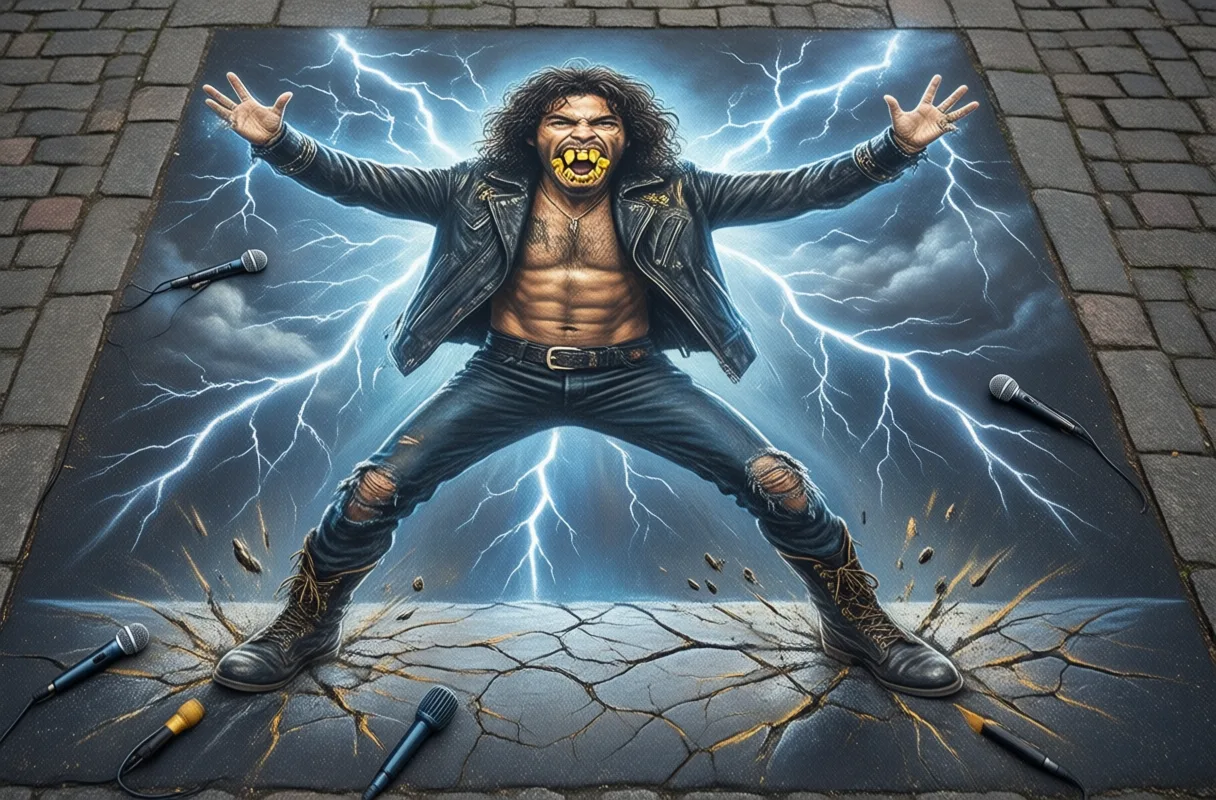
The teeth. The stance. The way he gripped a mic stand like it was a lightning rod.
But the real miracle wasn’t physical. It was emotional.
He captured the ache of a genius who gave the world everything-and still felt unseen.
And in the Live Aid sequence, when Malek-as-Freddie steps to the mic at Wembley, sweat-soaked and smiling, the line between actor and icon vanishes.
You don’t see Malek. You don’t see Mercury. You see Pure electricity.
It wasn’t imitating a legend. It was honoring one.
The Physical and Emotional Discipline Behind a Legend
To play Freddie Mercury, Malek didn’t just sing. He became a musician.
He trained for months to mimic Mercury’s vocal control, not to hit the notes, but to inhabit the Effort-how he used his entire body to produce sound.
And the physicality? That strut? That wild, untethered stage magic?
Every twitch was rehearsed. Every jump studied frame by frame.
But harder than the hips or the teeth was the solitude.
Mercury lived in a space between fame and isolation-a man loved by millions but guarded with his inner circle.
Malek had to learn how to feel that.
Not act it. Feel It.
He spent time with those who knew Freddie, absorbing not just stories, but silences. Because what made the performance so devastating wasn’t the showmanship-it was the moment the curtain dropped.
When the music ends, and the man is left alone in the dark.
And Malek made sure we Saw That.
Beyond the Biopic
After Bohemian Rhapsody, Malek could’ve spent a lifetime playing tortured geniuses. Audiences would’ve accepted it. Studios would’ve demanded it.
But he said no.
Instead, he took on No Time to Die, stepping into the tuxedo not as a hero, but as a villain-Lyutsifer Safin, a masked, whispering specter with a broken voice and a shattered past.
Here was a man erased by trauma, weaponizing silence.
And Malek played him with chilling restraint.
No grand speeches. No cackling. Just stillness-and the threat that lives within it.
He didn’t steal scenes. He Haunted Them.
Then came Oppenheimer, where he slipped into the shoes of Egyptian physicist Abdus Salam, a man operating in the shadows of history. Brief. Impactful. Impossible to forget.
These choices weren’t accidents.
They were Refusals-to be pinned down. To be labeled. To become predictable.
He’s not building a brand. He’s expanding a universe.
And every role feels like a new planet.
Diverse Roles That Defy Categorization
Malek’s filmography reads like a mixtape curated by someone who hates genres.
From a paranoid hacker to a flamboyant rock icon to a soft-spoken physicist-no two notes are the same.
He doesn’t chase prestige. He chases Transformation.
The kind that requires shedding skin, not just changing a costume.
Take his turn in Buster’s Mal Heart, where he played a paranoid mountain man convinced the world was ending. No awards. No red carpets. But pure commitment-sleepless eyes, trembling hands, a mind unraveling in real time.
Or his appearance in The Little Things, a gritty crime thriller where he held his own alongside legends, not by matching their force, but by Withholding His.
And for those wondering what other shape-shifting actors are pushing boundaries, check out tom hardy Movies And tv Shows : 10 Explosive Roles You Won ’ T Believe or the fearless range of Zendaya Movies and shows That Redefine stardom.
Malek doesn’t compete with them. He complements them-part of a new wave of actors who treat identity not as fixed, but fluid.
He’s not just playing roles. He’s challenging what a leading man can be.
Chasing Shadows in James Bond
When Rami Malek was cast in No Time to Die, the internet buzzed with speculation. Could the quiet man from Mr. Robot Pull off a Bond villain?
Then Safin appeared on-screen-and the room went cold.
This wasn’t a clownish madman or a globe-trotting warlord. Safin wore pain like a mask, his voice fractured, his mission born from grief. Malek played him not as a monster, but as a Wound given form.
He didn’t dominate with violence. He Inhabited Silence.
A lingering stare. A soft threat. A stillness that made your skin crawl.
In a franchise built on spectacle, he chose minimalism-and made it terrifying.
No flamboyant lair. No army of henchmen. Just a man who believed love could be a weapon.
It was a bold move.
And bolder still, it worked.
He didn’t outshine Bond. He redefined the game.
Because sometimes, the most dangerous enemy isn’t the one who roars-but the one who waits.
A Villain Etched in Silence and Precision
Safin didn’t monologue. He whispered.
Didn’t rage. He calculated.
Didn’t demand attention-drew it, like a slow leak in a sealed room.
Malek understood that true menace doesn’t need noise.
It lives in the space Between Words.
The role was a masterclass in Negative space performance-doing more by saying less.
Every gesture weighed. Every silence loaded.
Compare that to the flamboyance of other Bond antagonists-over-the-top, gleeful in their evil. Safin had no joy. No ego. Just purpose.
And in that void, Malek found something chilling: a man who believed he was the hero.
It’s the kind of nuanced villainy that could’ve only worked with an actor who understands inner life.
Not evil for evil’s sake-but logic twisted by loss.
And again, Malek didn’t play it. He Became It.
The Power of Stillness
In a world obsessed with movement, Malek’s stillness feels radical.
While others sprint for the spotlight, he stands-planted, centered, Present.
Watch his face during a scene. The way his eyes shift. The way his breath changes.
He doesn’t need to speak to tell you what’s happening inside.
It’s a language of micro-movements, and he’s its poet.
Like a still pond that reflects the storm above.
This isn’t laziness. It’s control.
Every pause, every withheld glance-is a choice.
And in an era of fast cuts and louder is better, that restraint is Revolutionary.
He reminds us that sometimes, the loudest moment is the one before the scream.
Audiences are trained to expect grand gestures. Malek gives them something rarer: truth in quiet.
And in that truth, he finds power.
Why Minimalism Speaks Volumes in His Performances
Hollywood rewards energy-big laughs, loud fights, bigger emotions.
But Malek thrives in the hush.
When Elliot stares into the camera, trembling as he confesses his loneliness, there’s no music. No cutaways. Just Malek-and the chasm within.
It’s unbearable. And unforgettable.
That’s the gift of minimalism: it forces us to listen.
To Watch. To feel the weight of what’s unsaid.
Compare that to Freddie, who filled stadiums with sound-yet in private moments, Malek played him with the same interiority.
A man who Needed The crowd to stop hearing the silence inside.
It’s a thread through all his work: The war between outer show and inner storm.
And he navigates it not with fireworks, but with a glance. A breath. A single tear.
In a culture that values excess, Malek proves that less isn’t less. It’s more-felt deeper, remembered longer.
What We Misunderstand About His Range
Some say Malek plays variations of the same man: isolated, intense, introspective.
But that misses the point.
It’s not that he’s typecast. It’s that he chooses roles where The inner life is the story.
Elliot Alderson wasn’t just a hacker. He was a man at war with reality.
Freddie Mercury wasn’t just a performer. He was a man learning to be seen.
Safin wasn’t just a villain. He was grief turned to vengeance.
Malek doesn’t avoid range-he redefines it.
He’s not interested in accents or wigs for their own sake. He’s after the Core-the truth beneath identity.
And if that truth often lives in solitude, in silence, in pain-that’s not limitation. That’s focus.
For those curious about other actors who’ve shattered expectations, explore Colman domingo Movies And tv Shows You Won ’ T Believe He Was In or the endlessly surprising career of anna Faris Movies And tv Shows You Won ’ T Believe She Did.
Malek isn’t trapped by type. He’s drawn to depth.
And in a town that loves flashy range, he reminds us that the deepest transformations happen in the dark.
Dispelling the Myth of Typecasting
People see the quiet eyes, the lean frame, the intense focus-and assume he’s playing himself.
But that’s the illusion of great acting: when the work feels Inevitable, we forget the labor behind it.
To become Elliot, Malek studied dissociative identity disorder, social anxiety, cybersecurity.
To become Freddie, he spent hours learning the physics of a voice, the rhythm of a strut.
To become Safin, he explored trauma, isolation, vengeance.
Each role required a different body, a different mind, a different Soul.
Yes, there are threads-emotional, thematic. But that’s not typecasting. That’s Artistic obsession.
He’s not repeating himself. He’s excavating-digging into the human condition, one fractured man at a time.
And if that makes him hard to pin down? Good.
Because the best actors aren’t labels. They’re questions.
The Craft Behind the Characters
Malek doesn’t just act. He Prepares.
Like an athlete before a fight, he spends months shaping himself-mentally, physically, emotionally.
For Bohemian Rhapsody, he didn’t just watch footage. He lived it.
Singing daily. Practicing choreography. Studying Mercury’s interviews-not to copy, but to Commune.
It’s not method acting for show. It’s Devotion.
And his process isn’t public. No viral breakdowns. No dramatic interviews.
He does the work where no one sees.
That humility is rare. In an age of self-promotion, he lets the performance speak.
And because of it, when he steps on-screen, he’s not Becoming Someone.
He’s Being Them.
There’s no gap. No artifice. Just truth-carved from obsession and patience.
For more on the minds behind transformative performances, don’t miss Jeff Goldblum Movies And tv Shows : 10 Explosive Secrets You Must See.
Malek’s craft is a reminder: greatness isn’t found in spotlight. It’s forged in shadow.
Lessons in Commitment and Transformation
What can we learn from Malek’s journey?
First: mastery requires silence.
Not just stillness on-screen-but in life. No viral stunts. No loud proclamations. Just work.
Second: transformation isn’t about look. It’s about Lens.
How does this person see the world? What do they fear? What do they hide?
Third: vulnerability is strength.
Elliot’s breakdowns. Freddie’s loneliness. Safin’s pain-Malek doesn’t hide them. He Centers Them.
And finally: commitment isn’t loud.
It’s daily. Relentless. Unseen.
He doesn’t chase roles that prove his range.
He chooses roles that demand his soul.
And in return, he earns ours.
What Makes a Performance Iconic?
It’s not the applause. Not the awards. Not even the memes.
An iconic performance changes how we see.
Elliot Alderson made us empathize with anxiety, not dismiss it.
Freddie Mercury reminded us that joy and pain can sing in harmony.
Safin proved that evil doesn’t always shout-sometimes, it whispers through a mask.
Malek’s performances stay with us because they’re not performances.
They’re Experiences.
They linger in the spine. In the breath. In the quiet moments when we recognize a piece of ourselves on-screen.
And perhaps that’s the highest praise: we don’t just watch him.
We Feel With him.
He doesn’t act. He Connects.
And in a world of noise, that connection is rare. Precious.
Iconic.
The Legacy of Becoming, Not Just Acting
Rami Malek never just plays a character.
He becomes a vessel.
For pain. For genius. For silence. For sound.
He doesn’t imitate. He Inhabits.
His legacy isn’t defined by one role, or even two.
It’s defined by Transformation as truth-telling.
He’s shown us that heroism can look like recovery.
That villainy can stem from love.
That fame and loneliness can wear the same face.
And in doing so, he’s redefined what it means to lead.
Not with charisma. Not with force.
But with depth.
Look at where he’s been.
Then wonder where he’ll go.
Because one thing’s certain: wherever it is, he’ll disappear into it.
And we’ll be waiting-ready to see the world through his eyes once more.
From Hacks to Rock Legends: The Many Faces of Rami Malek
Breaking Into the Spotlight
Before Rami Malek became a household name, he spent years grinding through guest roles on TV, often playing characters with a quiet intensity. One of his early appearances was on a sitcom where he shared scenes with a veteran actress known for her sharp comedic timing-fans of that era might remember her work in shows like 3rd Rock from the Sun, and you can explore more of her standout performances in Kristen Johnston movies And Tv Shows You Need To See. These small parts helped him hone his craft, though few could have predicted the dramatic turn his career was about to take.
The Mr. Robot Revolution
Malek’s breakout came in 2015 with Mr. Robot, where he played Elliot Alderson, a cybersecurity engineer and hacker battling social anxiety and corporate control. The role demanded a delicate balance of vulnerability and steely resolve, and Malek delivered with a performance so immersive that fans often forget they’re watching an actor. He didn’t just portray a hacker-he became one in the public imagination, sparking widespread discussion about mental health, privacy, and digital rebellion. The show’s cult following grew rapidly, and Malek earned an Emmy for his performance, a rare feat for a lead in a cable drama with such an unconventional tone.
From Screen to Stage to Stardom
Though best known for Mr. Robot, Malek’s transformation into Freddie Mercury for Bohemian Rhapsody Stunned audiences and critics alike. He spent months studying Mercury’s mannerisms, voice, and stage presence, even rehearsing the Live Aid sequence down to the smallest gesture. His performance wasn’t an impersonation-it was a full embodiment that captured the singer’s charisma and complexity. The film went on to win multiple Academy Awards, and Malek took home the Oscar for Best Actor, becoming the first actor of Egyptian descent to win in that category. His journey from indie TV roles to Hollywood’s highest honor remains one of the most inspiring arcs in modern cinema.
Frequently Asked Questions
What was Rami Malek's breakout role?
Rami Malek's breakout role was as Elliot Alderson in the 2015 series Mr. Robot. His performance as a cybersecurity engineer and hacker battling social anxiety earned him an Emmy.
How did Rami Malek prepare to play Freddie Mercury?
Malek spent months studying Freddie Mercury’s voice, mannerisms, and stage presence. He worked with dialect coaches, movement trainers, and choreographers to fully embody the role.
What awards did Rami Malek win for Bohemian Rhapsody?
Rami Malek won the Academy Award for Best Actor for his role in Bohemian Rhapsody. He became the first actor of Egyptian descent to win in that category.
What other major roles has Rami Malek played besides Mr. Robot and Bohemian Rhapsody?
Malek played the villain Lyutsifer Safin in No Time to Die and portrayed physicist Abdus Salam in Oppenheimer. He also starred in Buster’s Mal Heart and The Little Things.
This article was produced with AI assistance. How Motion Picture Magazine uses AI.
Rowan explores how streaming platforms shape viewing habits and global storytelling, blending data with cultural insight. They focus on the rise of niche genres, international hits, and the evolving relationship between audiences and algorithms.