
By Rowan Bellweather, Streaming Culture Reporter
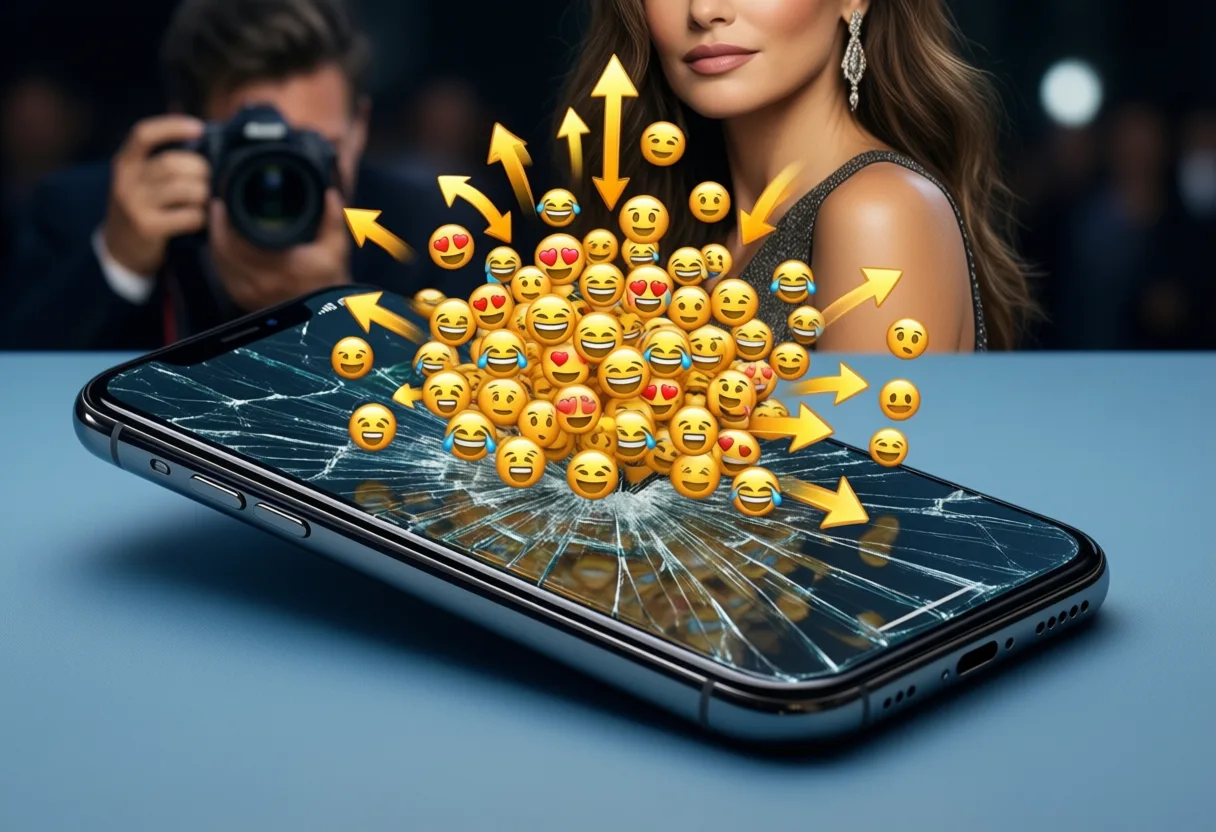
The lights dim, the credits roll, and yet the real show often begins After The screen goes dark. In living rooms and late-night scrolls, we’re not just talking about plot twists-we’re chasing the invisible drama behind them. Who’s dating whom, who’s feuding behind the scenes, and who just dropped a cryptic Instagram story at 2 a.m.? Welcome to the unscripted sequel playing out across Celebrity Gossip And rumor blogs-where the line between truth and theater is thinner than a red carpet gown.
What Fuels the Frenzy Behind Today’s Top Hollywood Speculation?
Let’s be honest: we can’t look away. There’s something magnetic about the idea that stars, for all their glamour, might be just as messy, uncertain, or impulsive as the rest of us. A blurry photo, a deleted tweet, a sideways glance at an awards show-these tiny sparks ignite massive speculation. And in Today’s digital Ecosystem, A single moment can morph into a narrative within hours.
We’re not just passive consumers anymore. We’re detectives, theorists, and sometimes, unintentional accomplices. Every comment, share, and reaction adds fuel. The algorithms know it, the blogs know it, and frankly, so do the celebrities-even when they pretend not to. It’s a feedback loop: we click, they post, we obsess, they react (or don’t), and the cycle spins faster.
It’s not just about scandal. Sometimes, it’s hope. We want our favorite actor to be happy in love. We want the pop star to finally get her flowers. And when the storylines don’t match our wishes, we invent ones that do. That’s the quiet engine of Modern gossip: Our desire to believe in a story that feels true, even if it isn’t.
The Line Between Rumor and Reality in Modern Entertainment Coverage
How Anonymous Tips Shape the Stories We Read About Stars
You’ve seen the phrases: “Sources close to the couple,” “insiders reveal,” “a trusted tipster.” These aren’t just flourishes-they’re the scaffolding of modern entertainment reporting. But here’s the catch: No one’s showing their ID. An “insider” could be a former assistant, a jealous ex, or someone who just really Likes drama And has Wi-Fi.
And yet, these tips often become headlines. Why? Because in a 24-hour news Cycle, speed beats verification. A blog that breaks a story-even a shaky one-gets the clicks, the shares, the momentum. Waiting for confirmation? That’s a luxury few can afford when the next rumor is already trending.
That doesn’t mean every tip is a lie. Some come from people with real access. But the system rewards sensation, not nuance. A vague whisper about “tension on set” becomes “Cast Feuding Behind the Scenes!” By lunchtime. And once that headline lands, The damage-or the delight-is already done.
Why Even Denials Can’t Stop a Gossip Spiral in Its Tracks
Try telling a wildfire it’s not allowed to burn. That’s what happens when a Celebrity denies A rumor. The statement drops: “This is completely false,” “They’re just friends,” “No comment.” And the internet replies, “Sure… and I’m the Queen of England.”
Denials often backfire because they confirm Something Happened. Silence? Suspicious. Denial? Proof of cover-up. It’s like saying, “I didn’t eat the last cookie,” while crumbs fall from your hoodie. The brain fills in the gaps-and usually picks the juiciest version.
Worse, the denial rarely gets the same spotlight as the original claim. The rumor spreads like a meme; the correction? Buried in paragraph seven of a follow-up post. That imbalance is built into the machine. And that’s why A lie can travel halfway around the world before the truth puts on its shoes.
When a Single Blog Post Sparks a Media Firestorm
It starts small. A niche blog drops a post with a headline that raises eyebrows. Maybe it’s a screenshot, a grainy video, or a “leaked” text. Then, someone bigger picks it up. Then a podcast mentions it. Then a late-night host jokes about it. Suddenly, it’s on the news.
This isn’t conspiracy-it’s content economics. Outlets don’t need to believe a story to report on it. They just need it to be talked about. And once a rumor becomes a conversation, it becomes “relevant,” even if it’s baseless.
Remember that time a paparazzi shot of two actors at a coffee shop turned into a “secret engagement”? Or when a singer wore a ring and the internet declared her married before she’d even checked her DMs? These aren’t outliers. They’re the norm. And they prove one thing: Context is the first casualty of virality.

The Role of Fan Theories in Amplifying Unverified Claims
Fans aren’t just audiences-they’re communities. And like any community, they build myths, rituals, and shared beliefs. When a favorite star disappears from social media, fans don’t assume they’re on vacation. They assume They’ve been canceled, abducted, or secretly filming a Marvel movie.
Fan theories start as fun. “What if these two characters are actually twins?” “What if the director left clues in the trailer?” But when those theories bleed into real life-“What if they’re secretly dating?”-the line blurs. And once a theory gains traction, it’s hard to unring the bell.
Platforms like Reddit and TikTok turn speculation into sport. Videos dissect clothing choices, emoji usage, and background noise in home videos. Every detail is evidence. Every silence is a clue. And when a theory goes viral, it doesn’t matter if it’s true-It matters that it feels satisfying.
That’s the power of narrative. We don’t just want facts. We want stories that make sense of the chaos. And if reality doesn’t provide one, we’ll write our own.
Which Platforms Dominate the Conversation-and Why
Not all platforms play the same role in the gossip ecosystem. Each has its rhythm, its audience, and its rules.
- Twitter (X): The breaking news wire. Where rumors ignite and spread fastest. A single tweet with a screenshot can crash a trending tab.
- Instagram: The visual clues. Fans scan stories, outfits, and tagged photos like archaeologists decoding hieroglyphs.
- TikTok: The theory engine. 60-second videos that package speculation into snackable, shareable content.
- YouTube: The deep dive. Long-form breakdowns that give rumors the weight of documentaries.
- Forums and niche blogs: The incubators. Where rumors are born, tested, and sent into the wild.
And then there’s the quiet powerhouse: Anonymous message boards, where tips are dropped like seeds in the dark. Some wither. Others grow into full-blown narratives, picked up by bigger outlets who never trace them back to the source.
The cycle is clear: start small, go viral, get amplified, become “real.” And through it all, the audience keeps watching, clicking, and wondering: Is this actually happening?
Where Do the Most Persistent Rumors Actually Begin?
Ever notice how some rumors just won’t die? The “secret child,” the “closeted star,” the “feud that goes back decades”? These aren’t random. They tap into deeper cultural currents-our fears, our biases, our unresolved questions about fame and identity.
Many start in obscurity: a comment under a video, a whisper in a podcast, a line in an old interview taken out of context. Then, someone with a following repeats it. Then a blog runs with it. Then it becomes “common knowledge,” even if no one can name the original source.
And here’s the twist: Some rumors persist because they’re never fully denied-or denied too late. Silence reads like guilt. Vagueness reads like evasion. And in the absence of clarity, the story fills the void.
It’s not always malice. Sometimes, it’s just momentum. A rumor becomes so big that addressing it feels like giving it power. So stars stay quiet. And the rumor lives on, like a ghost in the machine.

Inside the Machine: How a Single Allegation Can Go Global Overnight
The Hidden Lifecycle of a Viral Celebrity Story
Picture this: a 2 a.m. Post on a little-known blog. A blurry photo. A claim. No names, just hints. By 6 a.m., it’s on three gossip sites. By 9 a.m., a podcast host is discussing it. By noon, it’s a trending topic. By dinner, the celebrity’s team is in crisis mode.
That’s the lifecycle. And it’s not linear-it’s exponential. Each share, each reaction, each “Wait, is this true?” Comment pushes it further. Algorithms reward engagement, not accuracy. And controversy? That’s engagement’s best friend.
The story evolves as it spreads. Details get added, twisted, exaggerated. A “rumored dinner” becomes a “secret meeting.” A “possible split” becomes “filing for divorce.” By the time it reaches mainstream outlets, It’s no longer a rumor-it’s a phenomenon.
And the origin? Often forgotten. No one remembers the blog. No one checks the source. The story has taken on a life of its own.
Why Some Stars Lean Into the Noise While Others Retreat Completely
Not every celebrity fights the rumor mill. Some dance with it. A cryptic tweet. A playful denial. A wink at an interview. They know the game-and sometimes, they play to win.
For rising stars, a little gossip can mean visibility. For veterans, it can mean relevance. And for some, it’s just easier to ride the wave than fight it. A well-timed joke can defuse tension, turn mockery into charm, and make fans feel like they’re in on the joke.
But others disappear. No social media. No interviews. No comment. They retreat, not from guilt, but from exhaustion. Because Living under constant speculation is its own kind of prison.
And let’s be real: the cost isn’t just emotional. Careers can stall. Relationships strain. Mental health suffers. The spotlight doesn’t just illuminate-it burns.
What We Get Wrong About Gossip in the Digital Age
We treat gossip like junk food-guilty pleasure, low value. But it’s more than that. It’s cultural commentary. It’s social bonding. It’s how we process fame, power, and identity in real time.
The problem isn’t that we talk about celebrities. It’s that we forget they’re people. We reduce complex lives to headlines, relationships to hashtags, pain to punchlines. And we do it without thinking about the cost.
Yes, fame comes with exposure. But Consent to be watched isn’t consent to be misjudged. And in the rush to be first, we often sacrifice empathy.
We also pretend the system is neutral. But it’s not. Rumors about women are more likely to focus on relationships and appearance. Rumors about men? Power, success, scandals. The biases in our culture show up in our gossip, loud and clear.

The Truth About “Insider Sources” and Their Reliability
Let’s talk about the elephant in the room: “insider sources” are often anything but. The term sounds official, like a White House leak. But in gossip, it could mean a friend of a friend who once saw someone at a gym.
These sources are rarely named. Rarely questioned. Rarely held accountable. And when stories fall apart, the source vanishes-no retractions, no apologies, just silence.
That doesn’t mean all tips are fake. But the system rewards drama, not diligence. And when a blog’s survival depends on clicks, the pressure to publish often outweighs the duty to verify.
So next time you read, “Sources say…”, ask: Who? How do they know? What’s their motive? Because The most dangerous rumors aren’t the wild ones-they’re the plausible ones.
Lessons from Years of Headlines That Were Right-and Dangerously Wrong
Some rumors turn out to be true. A breakup announced months after fans “knew.” A casting leak confirmed at Comic-Con. A scandal that was whispered for weeks before it exploded.
But others? They leave wreckage. Careers derailed. Lives upended. Mental health crises triggered by lies spread as fact.
Remember the time a beloved actor was falsely accused of a crime based on a doctored video? Or when a pop star was declared “canceled” over a misunderstood lyric? These weren’t just errors. They were Digital mob justice without a trial.
The lesson isn’t to stop talking. It’s to talk Better. To pause before sharing. To question before believing. To remember that behind every headline is a human being.
And maybe, just maybe, to care a little more about truth than traffic.
What Really Happens After the Headlines Fade
The internet moves fast. Today’s scandal is tomorrow’s forgotten tweet. The frenzy dies. The热搜 clears. Life goes on.
But for the person at the center? The echo lingers. A Google search still pulls up the rumor. A fan brings it up in a Q&A. A casting director wonders, Is that true?
And the blogs? They’ve already moved on. Chasing the next spark. The next fire. The next click.
If you want to follow the trail of speculation, drama, and the occasional truth bomb, check out the Bossip Secrets Behind The Bold Celebrity Gossip-where the stories unfold as fast as they ignite.
But remember: in the end, the most powerful story isn’t the one the blogs write. It’s the one we choose to believe.
Behind the Screens: The Buzz Behind the Buzz
The Accidental Trendsetters
Long before mainstream media caught on, gossip blogs broke some of Hollywood’s biggest stories-often by accident. A blurry paparazzi photo posted with a cheeky caption on a small rumor site once sparked a chain reaction, leading outlets worldwide to confirm a surprise celebrity engagement. These platforms thrive on tips, speculation, and fast publishing, which means they sometimes get the scoop purely by being in the right digital place at the right time. While not all rumors stick, the speed at which these blogs operate gives them an edge in the 24/7 news cycle.
From Fan Chats to Front Pages
Many now-famous gossip sites started as simple fan forums or personal blogs run by movie buffs sharing casting rumors and red carpet critiques. One early blog, originally a place for fans to dissect soap opera plot twists, evolved into a go-to source for breaking casting news after an anonymous tip about a major reboot went viral. The line between fan passion and professional reporting has blurred, with some bloggers developing sources inside studios and agencies. Their influence is so strong that publicists sometimes leak info to specific blogs to test public reaction before a wide announcement.
The Meme That Broke the Story
In one bizarre twist, a fake “leaked” photo of a celebrity duo sparked a wave of memes-only for the couple to later confirm they were actually dating. The image was staged by fans, but the joke gained so much traction that the stars themselves referenced it when going public. This shows how gossip blogs don’t just report trends-they feed into a loop where satire, speculation, and reality collide. Even when stories start as pure fiction, the attention they generate can shape how celebrities manage their public image. Explore more stories, videos, and creators on Loaded.
This article was produced with AI assistance. How Motion Picture Magazine uses AI.
Rowan explores how streaming platforms shape viewing habits and global storytelling, blending data with cultural insight. They focus on the rise of niche genres, international hits, and the evolving relationship between audiences and algorithms.